

AI Infrastructure Demands More Than Computing Power—It Demands Reliable Electrical Connections
Artificial Intelligence is transforming industries at an unprecedented pace. From large language models and autonomous driving to cloud computing and scientific research, AI applications require enormous computational resources. Behind every AI model is a network of high-performance servers operating continuously inside modern data centers.
Unlike traditional enterprise data centers, AI data centers are built around dense GPU clusters capable of processing massive volumes of data simultaneously. As computational density increases, so does electrical power consumption. A single AI rack can consume more power than an entire row of conventional servers from just a few years ago.
This dramatic increase in power demand has shifted industry attention toward one often-overlooked component: high-current electrical terminals.
Although processors, power supplies, and cooling systems receive most of the attention, the electrical terminals connecting these systems play an equally important role. Every watt of electricity delivered to GPUs, power distribution units (PDUs), battery backup systems, and busbars passes through electrical connection points. If those connections fail, the entire AI infrastructure is at risk.
For AI data centers, electrical terminals must do far more than simply conduct electricity. They must maintain stable electrical performance under continuous high current, withstand elevated temperatures, resist corrosion over years of operation, and remain mechanically secure despite vibration and thermal cycling.
As AI infrastructure evolves toward higher rack densities and larger power distribution systems, selecting the right high-current terminal solution has become a critical engineering decision rather than a routine hardware choice.
In this article, we’ll explore why AI data centers require specialized high-current terminal solutions, the technical challenges they address, the materials and manufacturing technologies behind reliable terminals, and how manufacturers like Qianwei Precision support the next generation of AI infrastructure.
Why AI Data Centers Consume More Power Than Traditional Data Centers
Power consumption has become one of the defining characteristics of modern AI infrastructure. Compared with traditional enterprise computing environments, AI data centers require significantly higher electrical capacity to support continuous large-scale computation.
Understanding why this happens helps explain why high-current terminal solutions have become indispensable.
AI Training Requires Massive GPU Clusters
Traditional data centers primarily host web services, databases, email systems, and business applications. These workloads are distributed across standard CPU-based servers with relatively moderate power requirements.
AI workloads are fundamentally different.
Training large AI models involves processing billions—or even trillions—of parameters across thousands of GPUs working simultaneously. Modern AI servers are designed to maximize computational throughput, often integrating eight or more high-performance GPUs into a single chassis.
Each GPU may consume hundreds of watts individually. When combined with CPUs, high-speed networking, memory modules, and storage systems, total server power consumption increases dramatically.
For example:
| Server Type | Typical Power Consumption |
|---|---|
| Traditional Enterprise Server | 500W–1.5kW |
| GPU Computing Server | 5–15kW |
| AI Training Server | 20–40kW |
| High-Density AI Rack | 80–250kW+ |
As AI models continue to grow larger, these figures are expected to increase further over the coming years.
Higher Rack Power Density
Rack power density has increased dramatically over the last decade.
Traditional server racks typically consumed between 5 and 10 kilowatts.
Today’s AI infrastructure commonly operates at:
- 80 kW racks
- 120 kW racks
- 150 kW racks
- 250 kW racks
Some next-generation AI facilities are already preparing for 500 kW per rack architectures.
Higher rack density means significantly larger currents flowing through power distribution systems. Every connection—from incoming power feeds to busbars, copper terminals, and battery backup systems—must safely carry these increased electrical loads without excessive heat generation.
Continuous High-Load Operation
Industrial equipment often experiences fluctuating workloads with periodic downtime.
AI infrastructure does not.
AI data centers frequently operate:
- 24 hours a day
- 7 days a week
- 365 days a year
Training clusters may run continuously for weeks or months without interruption.
This constant high-current operation creates unique electrical challenges, including:
- Continuous heat accumulation
- Thermal expansion and contraction
- Contact surface wear
- Long-term material fatigue
Electrical terminals must maintain stable contact resistance throughout years of continuous service.
Growing Demand for Energy Efficiency
Electricity represents one of the largest operating costs of AI data centers.
Even a small increase in electrical resistance can produce measurable energy losses across thousands of connections.
Poor electrical connections lead to:
- Higher contact resistance
- Increased heat generation
- Greater cooling requirements
- Reduced overall power efficiency
When multiplied across an entire AI facility, these inefficiencies can significantly increase operational costs.
For this reason, hyperscale operators increasingly prioritize low-resistance, high-conductivity terminal solutions designed specifically for high-current environments.
What Are High-Current Terminal Solutions?
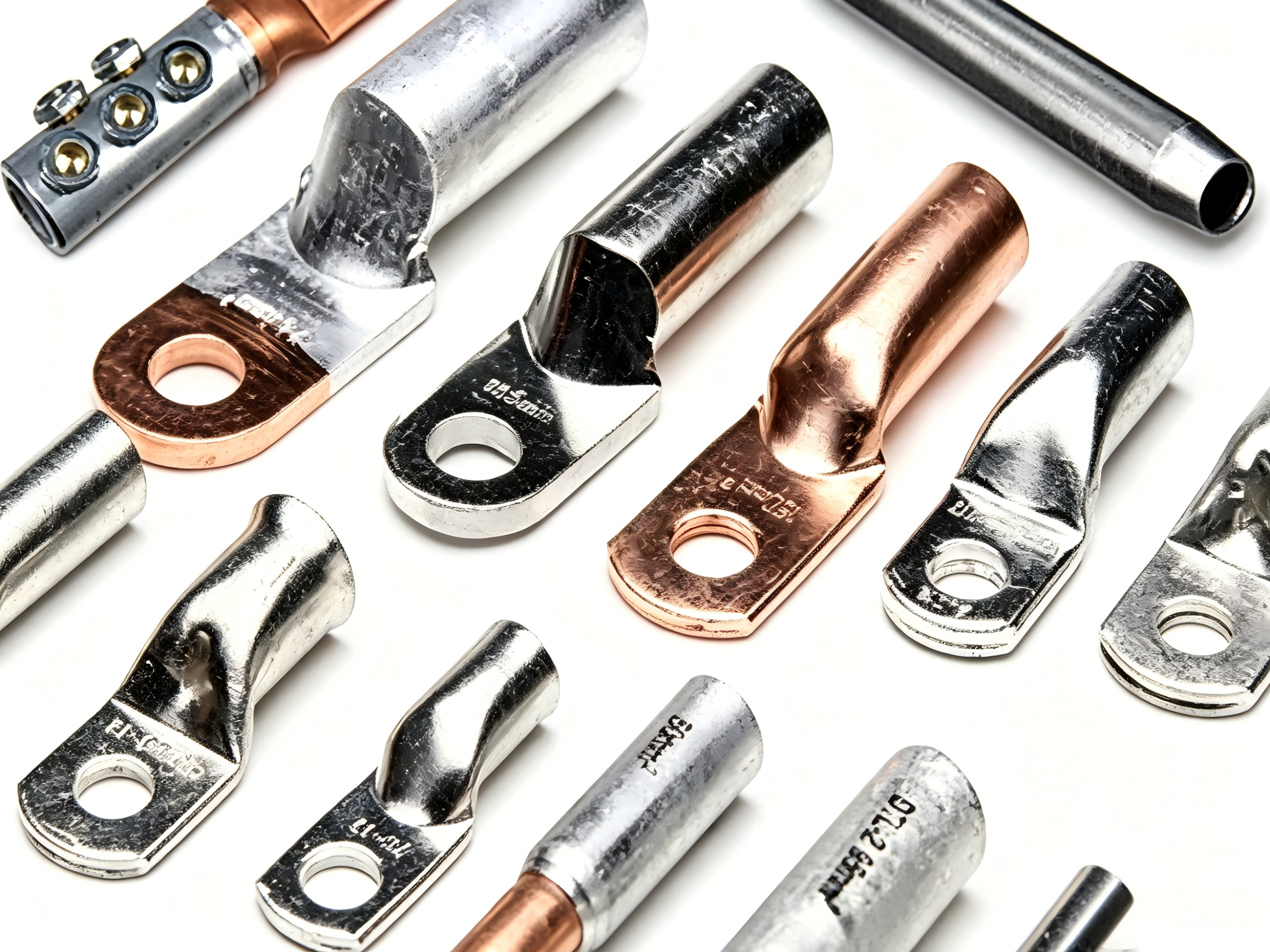
High-current terminal solutions are specialized electrical connection components engineered to safely transmit large amounts of electrical current while minimizing resistance, voltage drop, and heat generation.
Unlike standard signal terminals, these components are specifically designed for demanding power distribution applications where reliability and electrical efficiency are essential.
Depending on the application, high-current terminals may be manufactured as:
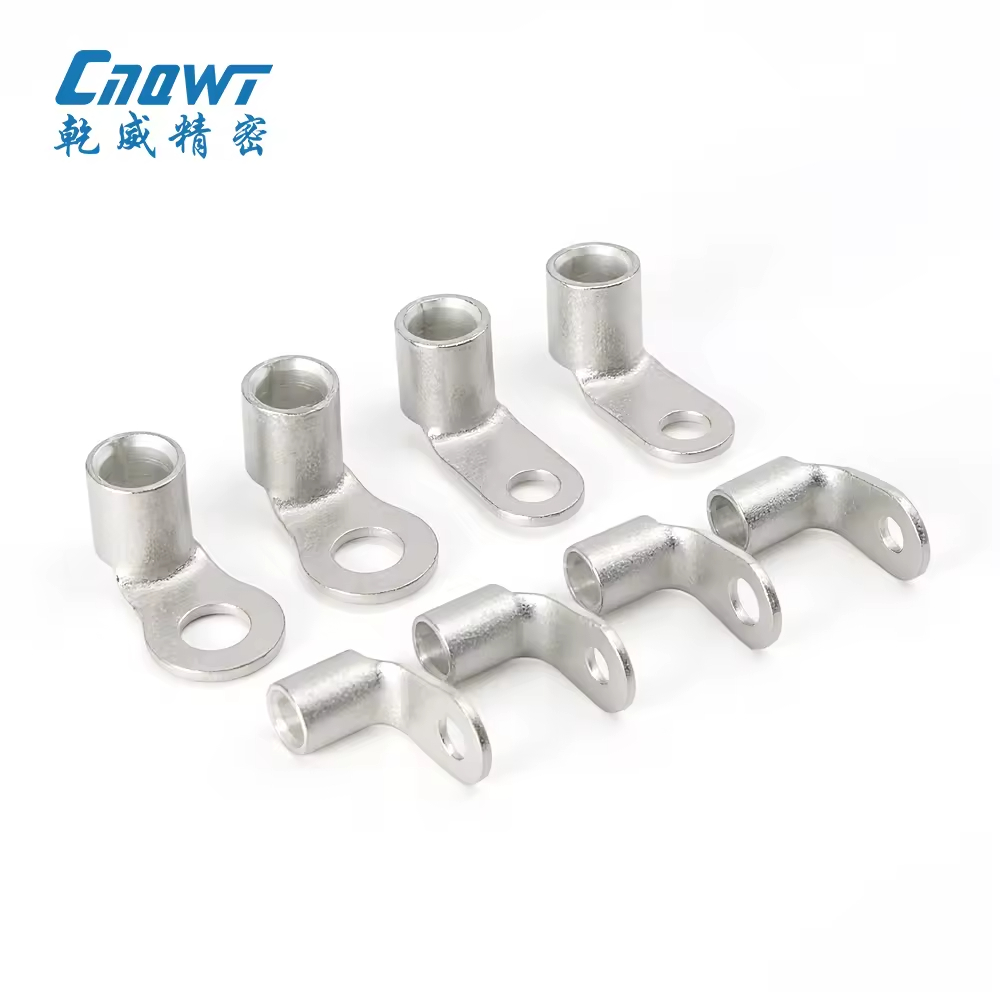
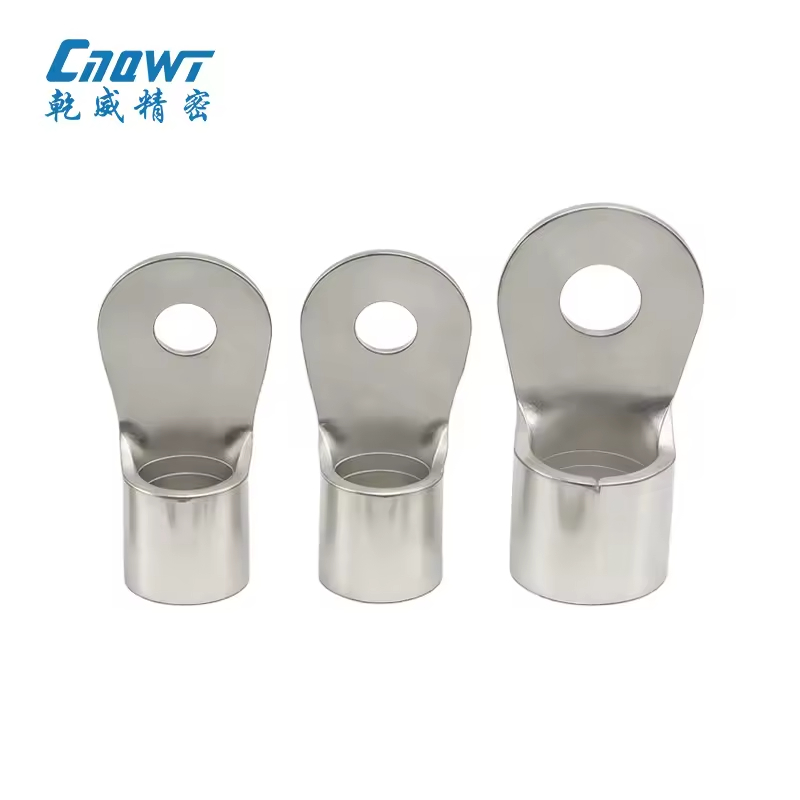
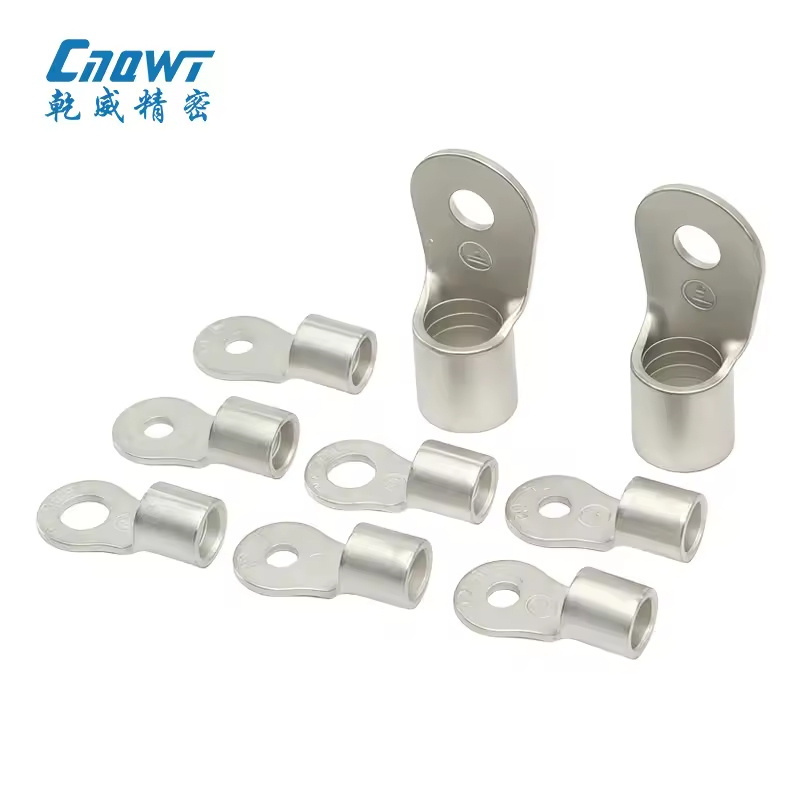
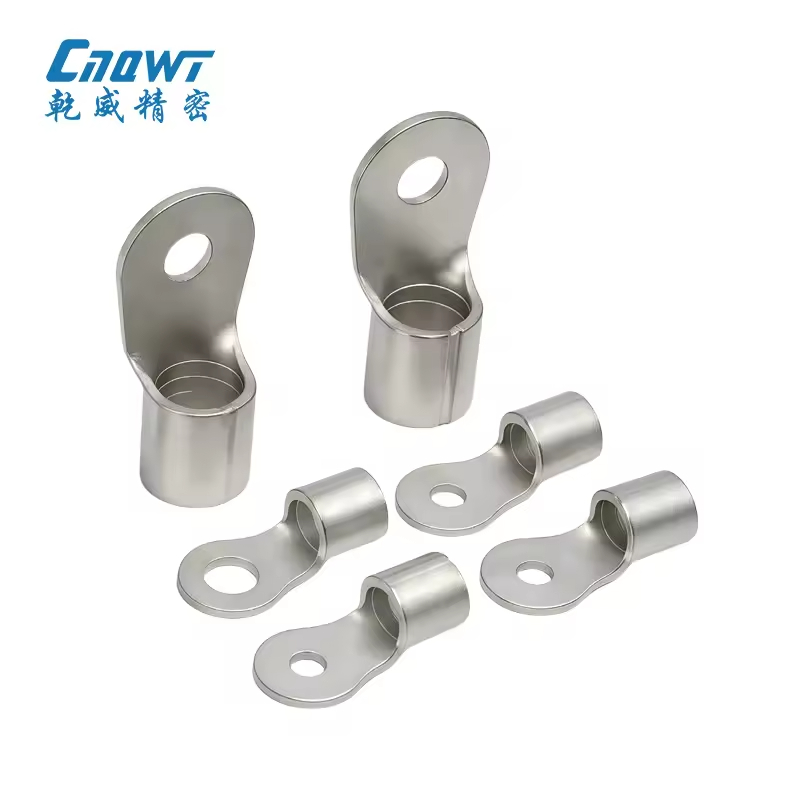
- Ring terminals
- Copper lugs
- Busbar terminals
- Battery terminals
- Press-fit terminals
- Power distribution terminals
- Custom stamped copper terminals
Although their shapes differ, their engineering objectives remain the same:
- Maximize electrical conductivity
- Minimize contact resistance
- Reduce temperature rise
- Improve mechanical retention
- Increase service life
In AI data centers, these terminals are commonly installed within:
- Power Distribution Units (PDUs)
- GPU server power modules
- UPS systems
- Battery Energy Storage Systems (BESS)
- Busbar assemblies
- DC power distribution cabinets
- High-current cable assemblies
Every one of these applications demands long-term electrical stability under continuous heavy loads.
Why Standard Electrical Terminals Are No Longer Enough
Many electrical terminals originally designed for industrial automation or consumer electronics cannot meet the performance requirements of AI infrastructure.
As current levels continue increasing, traditional terminal designs begin to expose several critical limitations.
Excessive Heat Generation
Electrical current naturally produces heat whenever resistance is present.
Although the resistance of a single connection may appear extremely small, continuous operation at hundreds of amperes can generate substantial thermal energy.
Poorly designed terminals may experience:
- Hot spots
- Thermal deformation
- Insulation damage
- Accelerated oxidation
- Reduced electrical conductivity
Over time, excessive heat further increases resistance, creating a cycle of performance degradation.
High-current terminals combat this problem through optimized contact geometry, precision manufacturing, and highly conductive materials such as high-purity copper.
Increased Voltage Drop
Every electrical connection introduces some voltage loss.
As current increases, even small resistance values become increasingly significant.
Excessive voltage drop can lead to:
- Lower server performance
- Reduced power supply efficiency
- Increased operating temperature
- Higher energy consumption
Modern AI facilities therefore prioritize terminal designs capable of maintaining consistently low contact resistance throughout years of operation.
Mechanical Fatigue Under Thermal Cycling
Continuous operation causes conductors to repeatedly expand and contract as temperatures fluctuate.
Over thousands of operating cycles, this movement can gradually loosen poorly designed electrical connections.
Mechanical degradation may eventually result in:
- Reduced contact pressure
- Increased resistance
- Electrical arcing
- Unexpected downtime
High-quality terminals are engineered with optimized spring force, material elasticity, and structural stability to maintain secure electrical contact despite repeated thermal cycling.
Reliability Has Become a Mission-Critical Requirement
For AI infrastructure, reliability is no longer simply desirable—it is essential.
A single failed electrical connection can interrupt GPU clusters worth millions of dollars, halt AI model training, or trigger costly maintenance events.
As a result, modern AI data centers increasingly specify terminal solutions that combine:
- High current capacity
- Excellent thermal performance
- Low contact resistance
- Long mechanical life
- Corrosion resistance
- Precision manufacturing
- Strict quality validation
Electrical terminals have evolved from simple connectors into mission-critical components supporting the reliability, efficiency, and scalability of next-generation AI infrastructure.
Key Requirements for High-Current Terminal Solutions in AI Data Centers
Selecting a high-current terminal for an AI data center involves far more than choosing a component that meets a specific current rating. AI infrastructure operates under continuous high-load conditions where reliability, efficiency, and safety are equally important.
A well-designed terminal must maintain stable electrical performance over years of uninterrupted operation while supporting increasingly dense power architectures.
The following characteristics define a high-quality high-current terminal solution for AI applications.
High Current Carrying Capacity
The primary purpose of a high-current terminal is to safely transfer large amounts of electrical power without overheating.
Depending on the application, current requirements may range from 50A in auxiliary systems to more than 800A in power distribution cabinets, battery energy storage systems (BESS), and AI server busbars.
Typical current ranges include:
| Application | Typical Current |
|---|---|
| Server Power Module | 50–150A |
| GPU Power Distribution | 150–300A |
| Rack Power Distribution Unit (PDU) | 300–600A |
| Busbar System | 600–1000A+ |
| Battery Energy Storage System | 500–1500A |
A terminal’s current rating depends on multiple factors, including conductor material, cross-sectional area, contact design, ambient temperature, and installation method. Simply increasing conductor size is rarely sufficient. The entire contact interface must be optimized to prevent localized heating and maintain stable electrical performance.
Low Contact Resistance
One of the most important indicators of terminal quality is contact resistance.
Whenever electricity passes through a connection point, a small amount of resistance is created. Although measured in micro-ohms or milli-ohms, this resistance directly affects heat generation and overall system efficiency.
Benefits of low contact resistance include:
- Lower operating temperatures
- Reduced power loss
- Improved energy efficiency
- Greater power delivery stability
- Longer component lifespan
For hyperscale AI data centers with thousands of electrical connections, even a minor reduction in resistance can translate into measurable energy savings over the life of the facility.
Superior Thermal Performance
Heat management has become one of the defining challenges of AI infrastructure.
While much attention is given to liquid cooling and airflow optimization, electrical terminals must also withstand elevated temperatures generated by continuous high-current operation.
A well-designed high-current terminal should:
- Minimize temperature rise during full-load operation
- Maintain stable contact pressure despite thermal expansion
- Resist oxidation at elevated temperatures
- Preserve mechanical strength after repeated heating cycles
Stable thermal performance directly contributes to longer service life and reduced maintenance frequency.
High Electrical Conductivity
Conductivity determines how efficiently electricity flows through a conductor.
Higher conductivity results in:
- Lower electrical resistance
- Less heat generation
- Reduced voltage drop
- Improved overall efficiency
For this reason, high-current terminals used in AI infrastructure are typically manufactured from high-purity copper or specially engineered copper alloys.
Material selection balances several performance factors:
- Conductivity
- Mechanical strength
- Fatigue resistance
- Manufacturability
- Cost
Choosing the right material depends on the application’s electrical and mechanical requirements.
Long-Term Mechanical Reliability
Electrical performance alone is not enough.
High-current terminals must also maintain consistent mechanical retention throughout years of operation.
Potential challenges include:
- Thermal cycling
- Equipment vibration
- Installation stress
- Cable movement
- Routine maintenance
Loss of contact pressure can increase resistance, accelerate heating, and ultimately compromise system reliability.
Precision stamping, controlled forming processes, and optimized terminal geometry help ensure long-term mechanical stability.
Corrosion Resistance
Although AI data centers are climate-controlled environments, electrical connections remain vulnerable to oxidation and environmental contamination over time.
Surface plating protects the base material while maintaining consistent electrical performance.
Common plating options include:
- Tin plating
- Silver plating
- Nickel plating
- Gold plating (for specialized signal applications)
Selecting the appropriate plating depends on operating current, environmental conditions, mating cycles, and budget.
Materials Used in High-Current Terminal Manufacturing
Material selection has a direct impact on electrical performance, manufacturing consistency, and product lifespan.
Different applications require different combinations of conductivity, strength, corrosion resistance, and cost.
Copper: The Preferred Material for High-Power Applications
Copper remains the industry standard for high-current terminals because of its exceptional electrical conductivity.
Advantages include:
- Excellent current-carrying capability
- Low electrical resistance
- Superior thermal conductivity
- Stable long-term performance
- Excellent compatibility with busbar systems
High-purity copper is widely used in:
- AI server power systems
- Battery terminals
- Busbar connectors
- High-current cable lugs
- Power distribution assemblies
Although copper is more expensive than many alternative materials, its performance advantages often justify the investment in mission-critical applications.
Brass: A Cost-Effective Alternative
Brass combines copper with zinc to improve mechanical strength and machining performance.
Advantages include:
- Higher structural rigidity
- Good wear resistance
- Excellent dimensional stability
- Lower manufacturing cost
Brass is commonly selected for medium-current applications where mechanical durability is prioritized over maximum electrical conductivity.
Surface Plating Options
Surface treatment plays an essential role in maintaining long-term electrical performance.
Different plating materials offer different advantages.
| Plating | Conductivity | Corrosion Resistance | Typical AI Application |
|---|---|---|---|
| Tin | Excellent | Excellent | General high-current terminals |
| Silver | Outstanding | Very Good | High-performance power distribution |
| Nickel | Moderate | Excellent | Harsh environments |
| Gold | Excellent | Excellent | Signal and communication terminals |
Tin Plating
Tin plating is the most common solution for AI power terminals because it provides an excellent balance of conductivity, corrosion resistance, solderability, and cost.
Silver Plating
Silver offers the highest electrical conductivity among common plating materials.
It is frequently selected for:
- Ultra-high-current applications
- High-frequency switching systems
- Premium power distribution equipment
Although more expensive, silver plating minimizes contact resistance and improves heat dissipation.
Nickel Plating
Nickel provides excellent hardness and corrosion resistance.
It is commonly used where terminals must withstand mechanical wear or elevated temperatures.
Engineering Design Considerations
Designing terminals for AI infrastructure involves far more than selecting the right material.
Engineers must optimize every aspect of the electrical connection.
Current Distribution
Current should flow evenly across the entire contact surface.
Uneven current distribution creates localized hot spots that accelerate wear and increase resistance.
Modern terminal designs maximize effective contact area while maintaining sufficient contact pressure.
Contact Pressure
Adequate contact pressure is essential for maintaining stable electrical performance.
Too little pressure increases resistance.
Too much pressure may deform the conductor or damage mating components.
Proper spring geometry and precision forming ensure consistent pressure throughout the terminal’s service life.
Temperature Rise Control
Every terminal should be designed to limit temperature rise under maximum rated current.
Engineers evaluate:
- Material conductivity
- Contact geometry
- Heat dissipation paths
- Ambient operating temperature
- Ventilation conditions
Lower operating temperatures improve both electrical efficiency and long-term reliability.
Creepage and Clearance Distance
As operating voltages increase, electrical insulation becomes increasingly important.
Proper creepage and clearance distances help prevent:
- Flashover
- Short circuits
- Electrical tracking
- Arc formation
These design parameters are especially critical in high-voltage DC power distribution systems used in modern AI data centers.
Compact Design for High-Density Systems
AI servers pack enormous computing power into limited physical space.
Terminal solutions must therefore combine:
- High current capacity
- Small installation footprint
- Easy assembly
- Automated manufacturing compatibility
Precision metal stamping enables manufacturers to produce compact, repeatable terminal geometries while maintaining excellent electrical performance.
Applications of High-Current Terminals in AI Data Centers
High-current terminals are used throughout the AI power distribution chain.
| Application | Function |
|---|---|
| GPU Server Power Supply | Deliver stable power to GPUs and CPUs |
| Rack Power Distribution Units (PDUs) | Distribute incoming power across multiple servers |
| Busbar Systems | Transfer high current efficiently throughout the rack |
| UPS Systems | Ensure uninterrupted operation during outages |
| Battery Energy Storage Systems (BESS) | Store and supply backup power |
| Liquid Cooling Power Modules | Provide electrical connections for cooling equipment |
| DC Distribution Cabinets | Manage high-current DC power across infrastructure |
As rack power density continues to increase, every one of these systems requires terminals capable of carrying higher current while occupying less space.
Manufacturing Technologies Behind Reliable High-Current Terminals
High-current terminals used in AI data centers are expected to perform reliably for years under continuous electrical load. Achieving this level of reliability requires more than selecting the right material—it depends on precision manufacturing, strict process control, and comprehensive quality assurance.
Every stage of production, from raw material preparation to final inspection, influences electrical conductivity, dimensional accuracy, mechanical strength, and long-term durability.
For manufacturers serving the AI infrastructure industry, consistency is just as important as performance. A terminal that performs well in testing but cannot be reproduced consistently at scale is unsuitable for mission-critical applications.
Precision Metal Stamping
Precision stamping remains the most widely used manufacturing process for high-volume electrical terminals.
Using progressive dies, copper or brass strip material is fed through a sequence of stamping stations. Each station performs a specific operation such as blanking, piercing, bending, embossing, or forming until the finished terminal is produced.
Advantages of Precision Stamping
- Exceptional dimensional consistency
- High production efficiency
- Reduced material waste
- Excellent repeatability
- Cost-effective mass production
Modern AI infrastructure projects often require hundreds of thousands—or even millions—of identical terminals. Progressive stamping ensures every part meets tight dimensional tolerances while maintaining production efficiency.
Progressive Die Technology
A progressive die is one of the most valuable investments a precision terminal manufacturer can make.
Instead of producing one feature at a time, progressive tooling completes multiple forming operations within a single production cycle.
Typical operations include:
- Material feeding
- Hole punching
- Coining
- Embossing
- Forming
- Cut-off
Benefits include:
- High-speed production
- Stable product quality
- Minimal dimensional variation
- Lower manufacturing cost
- Improved process reliability
For AI data center components, where consistency directly affects electrical performance, progressive die technology is often the preferred manufacturing solution.
CNC Machining for Complex Terminal Components
Although stamped terminals are ideal for high-volume production, some AI power systems require components with complex geometries or extremely tight tolerances.
In these situations, CNC machining provides:
- High precision
- Excellent surface finish
- Flexible customization
- Rapid prototype production
CNC machining is commonly used for:
- Busbar interfaces
- Power distribution blocks
- Custom copper terminals
- Prototype development
- Low-volume specialized components
Many manufacturers combine precision stamping with CNC machining to achieve the optimal balance between cost and performance.
Cold Forming Technology
Cold forming reshapes metal without applying heat, preserving the material’s grain structure and enhancing its mechanical properties.
Compared with traditional machining, cold forming offers several advantages:
- Increased mechanical strength
- Improved fatigue resistance
- Better material utilization
- Reduced production waste
- Enhanced dimensional stability
For high-current terminals subjected to continuous mechanical stress, cold forming contributes to longer service life and greater reliability.
Automated Production and Smart Manufacturing
As AI infrastructure expands, manufacturers must deliver not only high-quality components but also consistent large-scale production.
Modern electrical terminal factories increasingly incorporate automation throughout the manufacturing process.
Examples include:
- Automated material feeding
- Robotic handling systems
- Vision-guided inspection
- Automatic sorting
- Real-time production monitoring
- Digital process traceability
Automation minimizes human error while ensuring every production batch meets the same quality standards.
Quality Testing for AI Data Center Terminal Solutions
Performance claims have little value without verification. High-current terminals must undergo rigorous testing to ensure they can operate safely under demanding conditions.
Comprehensive testing evaluates electrical performance, mechanical durability, and environmental resistance before products are approved for shipment.
Current Carrying Capacity Test
This test verifies that the terminal can safely carry its rated current without excessive temperature rise or structural degradation.
Engineers evaluate:
- Rated current
- Overload performance
- Continuous operating capability
- Temperature stability
Testing conditions often simulate real-world operating environments to ensure reliable performance in actual installations.
Temperature Rise Test
Temperature rise is one of the most critical indicators of terminal quality.
During testing, the terminal carries its rated current continuously while engineers monitor the increase in temperature at the contact area.
A well-designed terminal should:
- Maintain stable operating temperatures
- Avoid localized hot spots
- Prevent thermal deformation
- Meet applicable IEC and UL requirements
Lower temperature rise generally indicates lower contact resistance and higher energy efficiency.
Contact Resistance Measurement
Contact resistance testing measures the electrical resistance across the connection interface.
Even extremely small increases in resistance can result in significant energy loss and heat generation when hundreds of amperes are flowing through the terminal.
Manufacturers carefully monitor this parameter because it directly influences:
- Power efficiency
- Thermal performance
- Service life
- Operational reliability
Tensile Strength Test
Mechanical retention is essential for maintaining stable electrical contact.
During tensile testing, controlled force is applied until the connection separates.
The test verifies:
- Crimp strength
- Material integrity
- Mechanical durability
- Compliance with customer specifications
Strong mechanical retention reduces the risk of loose connections during long-term operation.
Vibration Resistance Test
Although data centers are relatively stable environments, vibration can still occur due to:
- Cooling equipment
- Large fans
- Power systems
- Equipment transportation
- Routine maintenance
Vibration testing evaluates whether terminals maintain secure electrical contact after prolonged mechanical movement.
Salt Spray Corrosion Test
Corrosion can gradually increase contact resistance and reduce electrical performance.
Salt spray testing accelerates environmental exposure to evaluate the effectiveness of protective surface plating.
This test is especially important for terminals used in:
- Coastal facilities
- Humid environments
- Energy storage systems
- Outdoor power equipment
Thermal Cycling Test
AI servers operate continuously under changing electrical loads.
Repeated heating and cooling causes metals to expand and contract, placing stress on electrical connections.
Thermal cycling tests evaluate whether the terminal maintains:
- Stable contact pressure
- Mechanical integrity
- Low resistance
- Reliable performance
after thousands of heating and cooling cycles.
Life Cycle Testing
Some terminals are connected and disconnected repeatedly during maintenance or equipment upgrades.
Life cycle testing evaluates:
- Wear resistance
- Contact stability
- Surface durability
- Mechanical fatigue
This testing helps ensure reliable operation throughout the product’s intended service life.
International Standards and Certifications
AI infrastructure projects often involve global supply chains, making compliance with internationally recognized standards essential.
Although certification requirements vary by application and customer, manufacturers commonly design and produce terminals in accordance with:
| Standard | Purpose |
|---|---|
| ISO 9001 | Quality management system |
| IATF 16949 | Automotive-quality manufacturing processes |
| RoHS | Restriction of hazardous substances |
| REACH | Chemical substance compliance |
| UL | Product safety requirements |
| IEC | International electrical standards |
Meeting these standards demonstrates a manufacturer’s commitment to consistent quality, regulatory compliance, and reliable production processes.
Future Trends in AI Data Center Power Connectivity
As AI models become larger and computational demand continues to rise, electrical interconnection technologies must evolve alongside power architectures.
Several emerging trends are expected to shape the next generation of high-current terminal solutions.
Ultra-High Rack Power Density
AI racks are rapidly moving beyond 120 kW toward 250 kW and even 500 kW configurations.
Higher power density requires terminals capable of carrying significantly greater current while occupying less physical space.
Transition to High-Voltage DC Power Distribution
Many next-generation facilities are exploring higher-voltage DC architectures to reduce conversion losses and improve transmission efficiency.
This trend places greater emphasis on:
- Creepage distance
- Clearance distance
- Insulation performance
- Arc resistance
- Precision manufacturing
Liquid Cooling Becomes Mainstream
As air cooling reaches its practical limits, liquid cooling is becoming increasingly common in AI data centers.
Power distribution components must now operate reliably alongside advanced cooling systems, where compact layouts and higher ambient humidity demand enhanced corrosion resistance and long-term sealing performance.
Busbar-Based Power Distribution
Traditional cable assemblies are gradually being replaced by busbar systems in high-density AI racks.
Busbars offer:
- Lower electrical resistance
- Better heat dissipation
- Reduced installation complexity
- Improved space utilization
- Higher current carrying capability
As a result, demand for precision-engineered busbar terminals is expected to grow significantly.
Smarter Electrical Interconnections
The next generation of power connectors is expected to integrate monitoring functions, enabling real-time measurement of:
- Temperature
- Current
- Contact resistance
- Connection status
These intelligent terminals will support predictive maintenance, reduce unplanned downtime, and improve overall data center reliability.
Why Qianwei Precision Is Your Trusted Partner for High-Current Terminal Solutions
As AI infrastructure continues to evolve, electrical connection technology must advance alongside increasing power density, higher operating currents, and more demanding reliability requirements.
Choosing a terminal supplier is no longer just about price or production capacity. Manufacturers of AI servers, power distribution equipment, battery energy storage systems, and intelligent power infrastructure require engineering partners capable of delivering consistent quality, custom development, and scalable production.
At Qianwei Precision, we specialize in precision-engineered electrical terminals designed for high-performance industries where reliability cannot be compromised.
Custom Engineering for Complex Power Applications
Every AI power distribution system has unique electrical and mechanical requirements.
Rather than offering only standard catalog products, Qianwei Precision works closely with customers to develop customized terminal solutions that match specific application needs.
Our engineering team supports customers from concept to production, including:
- Custom terminal design
- Material selection
- Current capacity optimization
- Contact structure improvement
- Prototype development
- Design for Manufacturability (DFM)
- Production validation
Whether the application involves a GPU server, rack-level PDU, battery energy storage system, or high-current busbar assembly, our engineers help optimize both electrical performance and manufacturing efficiency.
High-Precision Manufacturing Capabilities
Reliable electrical performance begins with manufacturing precision.
Qianwei Precision combines advanced equipment with strict process control to ensure consistent product quality across every production batch.
Our manufacturing capabilities include:
- Progressive die stamping
- High-speed precision stamping
- CNC machining
- Cold forming
- Automatic tapping
- Precision bending
- Automated assembly
- Laser marking
- Vision inspection
With highly automated production lines, we can manufacture millions of precision terminals while maintaining tight dimensional tolerances and excellent repeatability.
Premium Materials for Maximum Performance
Material selection directly influences electrical conductivity, thermal performance, and long-term reliability.
Depending on customer requirements, Qianwei Precision manufactures terminals using:
- High-conductivity copper
- Brass
- Copper alloys
- Phosphor bronze
- Beryllium copper (for specialized applications)
Available surface treatments include:
- Tin plating
- Silver plating
- Nickel plating
- Gold plating
Each material and plating combination is selected based on the application’s current rating, operating environment, corrosion resistance requirements, and expected service life.
Comprehensive Quality Control
Mission-critical applications require uncompromising quality.
Every production stage is carefully monitored to ensure products meet both customer specifications and international quality standards.
Our quality control system includes:
Incoming Material Inspection
Raw materials are verified before entering production to ensure chemical composition, mechanical properties, and dimensional consistency.
In-Process Inspection
Production parameters are continuously monitored throughout stamping, forming, and plating operations to minimize process variation.
Final Product Inspection
Finished terminals undergo dimensional, visual, and functional inspections before shipment.
Inspection methods include:
- Optical measurement
- Coordinate measuring systems
- Vision inspection
- Surface finish evaluation
- Dimensional verification
Electrical Performance Testing
Depending on customer requirements, products can be tested for:
- Contact resistance
- Current carrying capacity
- Temperature rise
- Insulation resistance
- Voltage withstand performance
Mechanical Reliability Testing
Additional validation may include:
- Pull-out testing
- Crimp force testing
- Fatigue testing
- Vibration testing
- Thermal cycling
- Salt spray corrosion testing
These comprehensive testing procedures help ensure long-term performance under demanding operating conditions.
Scalable Production for Global Customers
AI infrastructure projects often require high-volume production with strict delivery schedules.
Qianwei Precision supports both prototype development and large-scale manufacturing, allowing customers to transition smoothly from product development to mass production.
Our manufacturing system is designed to provide:
- Stable production capacity
- Consistent product quality
- Short lead times
- Flexible production planning
- Global supply support
Whether customers require thousands or millions of terminals, we are committed to delivering reliable products on time.
Looking Ahead: The Future of AI Power Connectivity
Artificial intelligence is reshaping the world’s digital infrastructure, and power connectivity is becoming an increasingly important part of that transformation.
Several long-term trends are expected to influence future terminal design:
- Higher rack power density
- Increased adoption of 800V and high-voltage DC architectures
- Expansion of liquid-cooled AI clusters
- Growth of modular data center construction
- Integration of battery energy storage systems (BESS)
- Wider adoption of copper busbar power distribution
- Smart terminals with embedded monitoring capabilities
As these technologies mature, electrical terminals will play an even greater role in improving efficiency, reliability, and operational safety.
Manufacturers that invest in advanced materials, precision manufacturing, and rigorous quality control will be better positioned to support the next generation of AI infrastructure.
Conclusion
Artificial intelligence is driving one of the most significant transformations in modern computing. As AI workloads continue to expand, data centers must deliver greater computational performance while managing unprecedented levels of electrical power.
In this environment, every electrical connection matters.
High-current terminal solutions are no longer simple hardware components—they are essential elements of reliable power distribution. Low contact resistance, superior thermal performance, robust mechanical strength, and long-term durability all contribute to higher energy efficiency, improved system uptime, and reduced maintenance costs.
Selecting the right terminal solution requires careful consideration of materials, manufacturing technology, testing standards, and application-specific requirements.
For equipment manufacturers building the next generation of AI servers, power distribution units, battery energy storage systems, and intelligent electrical infrastructure, partnering with an experienced precision terminal manufacturer provides a strong foundation for long-term success.
At Qianwei Precision, we combine engineering expertise, precision manufacturing, and strict quality control to deliver customized high-current terminal solutions that meet the evolving needs of AI data centers worldwide.
Whether you’re developing a new AI power architecture or upgrading an existing system, our team is ready to help you build safer, more efficient, and more reliable electrical connections.
Frequently Asked Questions (FAQ)
1. What is a high-current terminal?
A high-current terminal is an electrical connector designed to safely transmit large amounts of electrical current while minimizing resistance, heat generation, and voltage drop. These terminals are commonly used in AI data centers, energy storage systems, electric vehicles, and industrial power distribution.
2. Why do AI data centers require high-current terminals?
AI servers consume significantly more power than traditional computing systems. High-current terminals ensure efficient and reliable power delivery to GPUs, power supplies, busbars, and battery systems while reducing energy loss and improving operational safety.
3. Which material is best for high-current terminals?
High-purity copper is generally the preferred material because it offers excellent electrical conductivity and thermal performance. Brass and copper alloys may also be selected depending on mechanical requirements and application conditions.
4. What plating is commonly used on high-current terminals?
Tin plating is the most common choice due to its balance of conductivity, corrosion resistance, and cost. Silver plating is often used for premium high-current applications requiring the lowest possible contact resistance.
5. How can low contact resistance improve data center efficiency?
Lower contact resistance reduces heat generation and voltage drop, allowing electrical systems to operate more efficiently while lowering cooling requirements and overall energy consumption.
6. What tests should high-current terminals pass?
Typical validation includes current carrying tests, contact resistance measurement, temperature rise testing, pull-out force testing, vibration testing, thermal cycling, and salt spray corrosion testing.
7. Can high-current terminals be customized?
Yes. Many AI infrastructure manufacturers require custom terminal designs to match specific busbars, cable assemblies, current ratings, installation spaces, and production requirements.
8. What industries use high-current terminals besides AI data centers?
High-current terminals are widely used in battery energy storage systems (BESS), electric vehicles (EVs), renewable energy, industrial automation, telecommunications, rail transportation, marine equipment, and aerospace power systems.
9. How do busbar terminals improve power distribution?
Busbar terminals reduce electrical resistance, improve heat dissipation, simplify installation, and support higher current capacities compared with conventional cable-based power distribution.
10. Why choose Qianwei Precision?
Qianwei Precision provides custom-engineered electrical terminals backed by advanced stamping technology, precision manufacturing, strict quality control, and scalable production. Our solutions help customers build reliable electrical systems for AI infrastructure, renewable energy, automotive, and industrial applications.

