

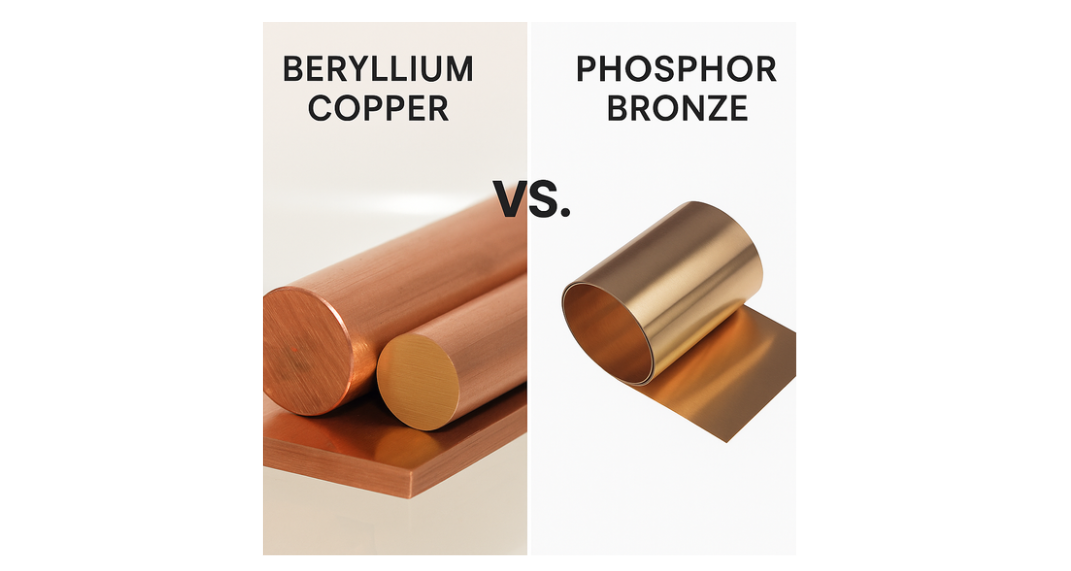
Introduction
Selecting the right material is one of the most important decisions when designing reliable electrical terminals and connectors. The material directly affects electrical conductivity, contact stability, mechanical strength, corrosion resistance, service life, and manufacturing cost.
Among various copper alloys used in terminal manufacturing, phosphor bronze and beryllium copper are two of the most widely used materials for electrical contacts, spring terminals, and precision connector components.
Both materials provide excellent performance compared with ordinary metals, but they are designed for different application requirements.
Phosphor bronze terminals are known for their balanced performance, good corrosion resistance, stable spring characteristics, and cost efficiency. They are widely used in automotive wiring harnesses, industrial equipment, household appliances, and general electrical connectors.
Beryllium copper terminals, on the other hand, are considered a high-performance material choice because of their exceptional strength, elasticity, fatigue resistance, and contact force retention. They are commonly found in aerospace, medical equipment, precision electronics, and demanding connector applications.
So, when choosing between phosphor bronze and beryllium copper terminals, which material is better?
The answer depends on the specific application requirements, including:
- Current carrying capability
- Contact force requirements
- Operating environment
- Mechanical stress
- Mating cycle requirements
- Production cost
This article provides a complete comparison of phosphor bronze vs beryllium copper terminals, helping engineers and purchasing teams select the most suitable material for their electrical connection solutions.
Understanding Phosphor Bronze Terminals
What Is Phosphor Bronze?
Phosphor bronze is a copper alloy primarily composed of copper, tin, and phosphorus. The addition of tin improves strength and corrosion resistance, while phosphorus enhances wear resistance and manufacturing performance.
Common phosphor bronze grades used in electrical terminals include:
- C51000
- C51900
- C52100
Compared with pure copper, phosphor bronze provides higher mechanical strength while maintaining acceptable electrical conductivity. This makes it an ideal material for terminals that require both electrical performance and structural reliability.
During terminal manufacturing, phosphor bronze sheets are typically processed through:
- Precision stamping
- Bending and forming
- Surface plating
- Quality inspection
- Automated assembly
Because of its excellent balance between performance and cost, phosphor bronze remains one of the most popular materials for high-volume terminal production.
Key Advantages of Phosphor Bronze Terminals
1. Good Electrical Conductivity
Electrical terminals must transfer current efficiently while minimizing heat generation and energy loss.
Although phosphor bronze does not provide the same conductivity level as pure copper, it offers sufficient electrical performance for most connector applications.
Its advantages include:
- Stable current transmission
- Low contact resistance
- Reliable electrical connection
- Good performance in low and medium current systems
For applications such as:
- Automotive wire harness terminals
- Industrial control connectors
- Appliance terminals
- PCB connectors
phosphor bronze provides a practical balance between conductivity and mechanical strength.
2. Excellent Spring Performance
Many electrical terminals rely on spring force to maintain a stable connection.
Examples include:
- Female terminals
- Contact springs
- Battery contacts
- Signal connectors
Phosphor bronze has excellent elastic properties, allowing terminals to maintain consistent contact pressure after repeated insertion and removal.
Stable spring performance helps:
- Reduce intermittent electrical failures
- Maintain low contact resistance
- Improve connector reliability
This is especially important in applications exposed to vibration or mechanical movement.
3. Strong Corrosion Resistance
Electrical connectors often operate in challenging environments where moisture, temperature changes, and chemical exposure may cause oxidation.
Phosphor bronze provides excellent corrosion resistance due to its alloy composition.
It performs well in:
- Humid environments
- Industrial equipment
- Automotive systems
- Outdoor electrical applications
With additional surface treatments such as:
- Tin plating
- Nickel plating
- Gold plating
phosphor bronze terminals can achieve even better environmental durability.
4. Cost-Effective Material Choice
One of the biggest advantages of phosphor bronze is its excellent cost-performance ratio.
Compared with beryllium copper, phosphor bronze offers:
- Lower raw material cost
- Easier processing
- Better suitability for mass production
For manufacturers producing millions of terminals annually, material cost has a significant impact on overall product pricing.
Therefore, phosphor bronze is often preferred when:
- Large production volume is required
- Performance requirements are moderate
- Cost optimization is important
Understanding Beryllium Copper Terminals
What Is Beryllium Copper?
Beryllium copper is a high-performance copper alloy containing approximately 0.5–3% beryllium.
The most commonly used grade for electrical connectors is:
- C17200 Beryllium Copper
Unlike traditional copper alloys, beryllium copper achieves a unique combination of:
- High electrical conductivity
- Extremely high strength
- Excellent elasticity
- Superior fatigue resistance
Because of these properties, beryllium copper is widely used in applications where connector failure is unacceptable.
Typical applications include:
- Aerospace connectors
- Medical devices
- Precision instruments
- High-performance electronic equipment
- High-cycle connectors
Key Advantages of Beryllium Copper Terminals
1. Superior Mechanical Strength
The biggest advantage of beryllium copper is its outstanding mechanical performance.
Compared with phosphor bronze, beryllium copper provides:
- Higher tensile strength
- Better hardness
- Improved wear resistance
This allows terminals to maintain their shape and contact pressure even under severe mechanical stress.
Applications requiring high mechanical reliability include:
- Automotive connectors exposed to vibration
- Industrial machinery
- Aerospace systems
- Testing equipment
2. Excellent Elastic Recovery
Electrical contact reliability depends heavily on maintaining proper contact force.
When a terminal loses spring force, it can cause:
- Increased contact resistance
- Signal interruption
- Electrical overheating
- Connection failure
Beryllium copper has excellent elastic recovery characteristics, meaning it can return to its original shape after repeated mechanical loading.
This makes it especially suitable for:
- High-frequency mating connectors
- Precision contacts
- Spring terminals
3. Superior Fatigue Resistance
Many connectors experience thousands of insertion and removal cycles throughout their lifetime.
Beryllium copper performs exceptionally well under repeated stress.
Benefits include:
- Longer connector life
- Stable contact performance
- Reduced maintenance requirements
For applications where connectors are frequently connected and disconnected, beryllium copper provides significant advantages.
Examples:
- Test equipment
- Medical instruments
- Communication devices
- Industrial control systems
Phosphor Bronze vs Beryllium Copper Terminals: Key Differences
Although phosphor bronze and beryllium copper are both copper-based alloys, their performance characteristics are quite different.
The choice between these two materials depends on the balance between electrical performance, mechanical strength, reliability requirements, and cost considerations.
The following table summarizes the main differences:
| Property | Phosphor Bronze Terminal | Beryllium Copper Terminal |
|---|---|---|
| Main Alloy Elements | Copper + Tin + Phosphorus | Copper + Beryllium |
| Common Grades | C51000 / C51900 / C52100 | C17200 |
| Electrical Conductivity | Good | Good to Excellent |
| Mechanical Strength | Medium to High | Very High |
| Spring Performance | Excellent | Superior |
| Contact Force Retention | Good | Excellent |
| Fatigue Resistance | Good | Outstanding |
| Corrosion Resistance | Excellent | Excellent |
| Temperature Resistance | Good | Better |
| Wear Resistance | Good | Excellent |
| Manufacturing Difficulty | Easier | More complex |
| Material Cost | Lower | Higher |
| Mass Production Suitability | Excellent | Good |
| Typical Applications | Automotive, appliances, industrial connectors | Aerospace, medical, precision electronics |
Electrical Performance Comparison
Conductivity: Phosphor Bronze vs Beryllium Copper
Electrical conductivity is one of the most important factors when selecting terminal materials.
A terminal must transfer electrical current efficiently while preventing excessive heat generation.
Pure copper provides the highest electrical conductivity, but it lacks the mechanical strength required for many connector applications.
Therefore, copper alloys are often selected to achieve a better balance between:
- Electrical conductivity
- Mechanical durability
- Contact reliability
Phosphor Bronze Conductivity
Phosphor bronze provides moderate electrical conductivity.
Its advantages include:
- Stable current transmission
- Reliable contact performance
- Good resistance to electrical wear
Because of its excellent mechanical properties, phosphor bronze is widely used in terminals where moderate conductivity is sufficient.
Typical applications:
- Automotive wiring harnesses
- Industrial connectors
- Power control systems
- Household appliances
Beryllium Copper Conductivity
Beryllium copper provides conductivity that is generally comparable to or slightly higher than phosphor bronze depending on alloy condition.
However, its biggest advantage is not conductivity alone.
The key benefit is the combination of:
- Good conductivity
- Extremely high strength
- Excellent spring properties
This makes beryllium copper ideal for applications where maintaining electrical contact under mechanical stress is critical.
Mechanical Performance Comparison
Contact Force Retention
Contact force is one of the most important characteristics of electrical terminals.
A connector relies on mechanical pressure between contact surfaces to create a stable electrical path.
Insufficient contact force can lead to:
- Higher contact resistance
- Voltage drops
- Signal interruption
- Heat generation
- Connector failure
Phosphor Bronze Contact Performance
Phosphor bronze provides reliable spring performance and maintains stable contact pressure under normal operating conditions.
Advantages:
- Good elastic properties
- Stable deformation resistance
- Suitable for standard connector applications
It is commonly used for:
- Automotive terminals
- Wire-to-board connectors
- Electrical switches
- Industrial control terminals
For most general applications, phosphor bronze offers excellent reliability.
Beryllium Copper Contact Performance
Beryllium copper provides superior contact force retention.
Its high elasticity allows terminals to maintain pressure even after:
- Long-term compression
- Repeated mating cycles
- Mechanical vibration
- Temperature changes
This makes it the preferred material for high-reliability connectors.
Applications include:
- Aerospace connectors
- Medical equipment
- High-end electronic devices
- Precision measurement systems
Mating Cycle Performance
Why Mating Cycles Matter
The number of times a connector can be connected and disconnected directly affects product lifetime.
During repeated mating cycles, terminals experience:
- Mechanical friction
- Contact wear
- Spring fatigue
- Surface damage
A high-quality terminal material must maintain electrical performance after repeated use.
Phosphor Bronze Mating Performance
Phosphor bronze provides good durability for standard applications.
It performs well in:
- Automotive assemblies
- Industrial equipment
- Consumer electronics
For applications requiring moderate connection cycles, phosphor bronze is usually an economical and reliable choice.
Beryllium Copper Mating Performance
Beryllium copper offers superior fatigue resistance.
It can withstand:
- More insertion cycles
- Higher mechanical stress
- More frequent operation
Therefore, it is commonly selected for:
- Test connectors
- Laboratory equipment
- Professional electronic systems
where frequent connection and disconnection are required.
Temperature Resistance Comparison
Temperature stability is another important factor in terminal material selection.
Electrical terminals may experience high temperatures due to:
- High current flow
- Engine environments
- Industrial machinery operation
- Heat generated by electrical resistance
Phosphor Bronze Temperature Performance
Phosphor bronze maintains good mechanical stability under normal operating temperatures.
It is suitable for:
- Industrial control systems
- Appliances
- Automotive applications
with moderate thermal requirements.
However, under extreme temperature conditions, its mechanical properties may gradually decrease.
Beryllium Copper Temperature Performance
Beryllium copper provides better performance at elevated temperatures.
Advantages:
- Maintains spring properties longer
- Better resistance to stress relaxation
- Stable contact force
This makes it suitable for demanding environments such as:
- Engine compartments
- Aerospace systems
- High-temperature electronic equipment
Corrosion Resistance Comparison
Corrosion can significantly reduce terminal reliability by increasing contact resistance and damaging contact surfaces.
Both phosphor bronze and beryllium copper provide excellent corrosion resistance compared with ordinary copper materials.
Phosphor Bronze Corrosion Resistance
Phosphor bronze naturally provides strong resistance against:
- Oxidation
- Humidity
- Atmospheric corrosion
With tin or nickel plating, phosphor bronze terminals can achieve long-term protection in harsh environments.
Common applications:
- Outdoor electrical equipment
- Industrial control cabinets
- Automotive wiring systems
Beryllium Copper Corrosion Resistance
Beryllium copper also provides excellent corrosion resistance.
Additional plating options include:
- Nickel plating
- Gold plating
- Tin plating
Gold-plated beryllium copper contacts are especially common in applications requiring:
- Low contact resistance
- Signal stability
- Long service life
Examples:
- Communication equipment
- Medical devices
- Precision electronics
Manufacturing Considerations
Material selection affects not only terminal performance but also manufacturing processes and production costs.
For custom electrical terminal manufacturers, engineers must consider:
- Stamping performance
- Tool life
- Forming capability
- Plating requirements
- Production volume
Precision Stamping Performance
Phosphor Bronze Manufacturing
Phosphor bronze is widely used in precision stamping because it provides:
- Good formability
- Stable material properties
- Lower processing difficulty
Advantages:
✔ Suitable for high-speed stamping
✔ Lower mold wear
✔ Cost-effective production
This makes phosphor bronze ideal for large-volume terminal manufacturing.
Beryllium Copper Manufacturing
Beryllium copper requires more controlled processing due to its higher hardness and strength.
Manufacturing considerations include:
- Precision tooling
- Accurate forming parameters
- Strict quality control
However, its superior mechanical properties make it valuable for high-performance connectors.
Surface Plating Compatibility
Surface plating improves terminal performance by enhancing:
- Corrosion resistance
- Electrical conductivity
- Wear resistance
- Contact reliability
Common plating options include:
Tin Plating
Suitable for:
- Automotive terminals
- Power connectors
- Industrial applications
Benefits:
- Cost-effective
- Good conductivity
- Excellent solderability
Nickel Plating
Used for:
- High-temperature applications
- Corrosion protection
Benefits:
- Improved durability
- Better environmental resistance
Gold Plating
Used for:
- Signal connectors
- Precision electronics
Benefits:
- Extremely low contact resistance
- Excellent oxidation resistance
Cost Comparison: Which Material Is More Economical?
Material cost is an important consideration when developing electrical terminals, especially for high-volume manufacturing projects.
While both phosphor bronze and beryllium copper provide excellent performance, their price differences can significantly affect the total production cost.
The right choice is not always the most expensive material. Instead, engineers should select the material that provides the best balance between:
- Performance requirements
- Product lifetime
- Manufacturing cost
- Application environment
Phosphor Bronze: Cost-Effective Terminal Material
Phosphor bronze is widely selected for commercial and industrial applications because of its excellent price-performance ratio.
Advantages include:
- Lower raw material cost
- Mature manufacturing process
- Easy availability
- High production efficiency
For large-volume terminal production, phosphor bronze helps manufacturers achieve competitive pricing while maintaining reliable performance.
Typical applications include:
- Automotive wiring harness terminals
- Industrial connectors
- Appliance terminals
- Power distribution systems
- Control cabinet connections
For applications where extreme mechanical performance is not required, phosphor bronze is often the most economical solution.
Beryllium Copper: Premium Performance Material
Beryllium copper is more expensive because of:
- Higher alloy material cost
- More complex manufacturing processes
- Additional processing requirements
However, the higher cost provides significant performance advantages:
- Higher strength
- Better spring characteristics
- Longer service life
- Superior contact reliability
In critical applications, the additional material cost can be justified because it reduces:
- Connector failures
- Maintenance costs
- Downtime risks
Typical applications include:
- Aerospace connectors
- Medical equipment
- High-end electronics
- Precision testing systems
Phosphor Bronze vs Beryllium Copper: Which One Offers Better Value?
The answer depends on the application.
Choose Phosphor Bronze When:
✔ Large production quantities are required
✔ Cost optimization is important
✔ Standard electrical performance is sufficient
✔ Operating conditions are normal
✔ Moderate mechanical stress is expected
Choose Beryllium Copper When:
✔ Maximum reliability is required
✔ The connector experiences frequent mating cycles
✔ High vibration resistance is needed
✔ Stable contact force is critical
✔ The application has strict performance requirements
Application Comparison: Where Are These Materials Used?
Different industries have different requirements for electrical terminals.
Material selection should consider:
- Electrical load
- Environmental conditions
- Mechanical stress
- Product lifetime expectations
Applications for Phosphor Bronze Terminals
1. Automotive Electrical Systems
Modern vehicles contain thousands of electrical connections.
Terminal requirements include:
- Stable current transmission
- Vibration resistance
- Corrosion protection
- Cost efficiency
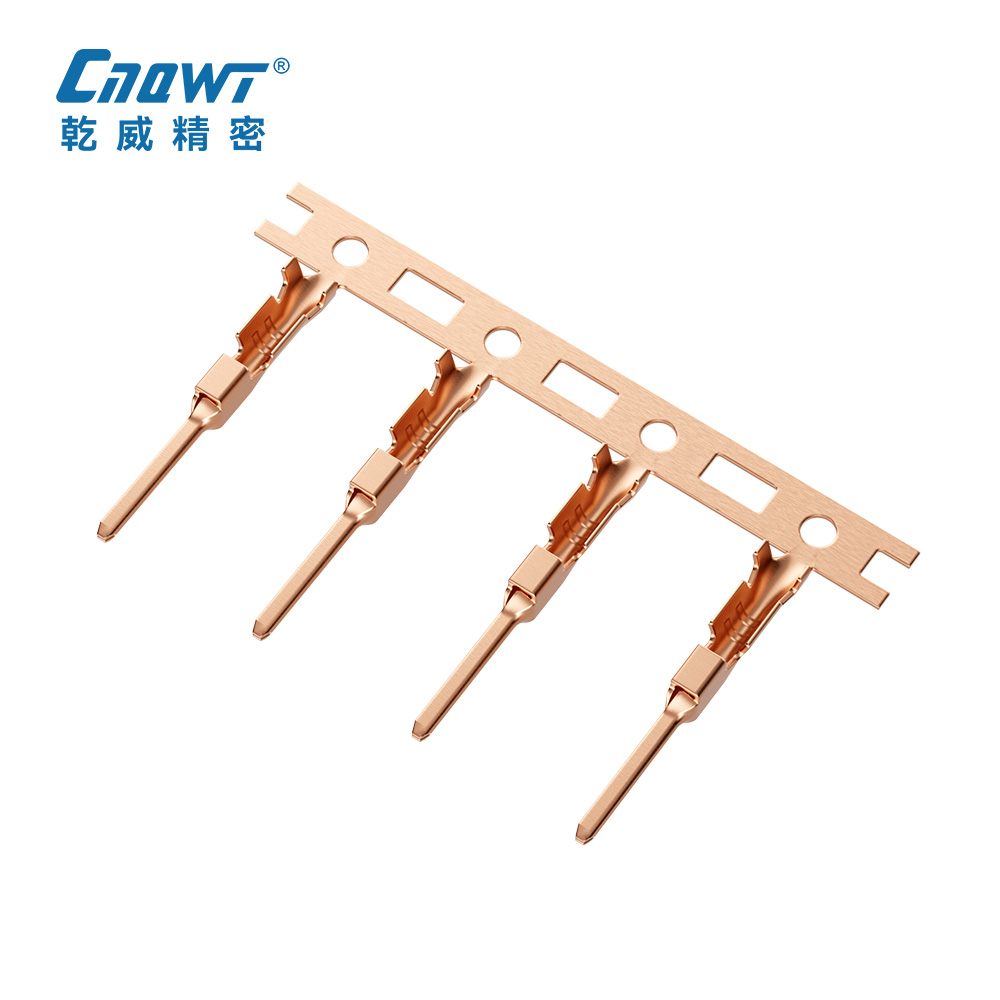
Phosphor bronze terminals are commonly used in:
- Wire harness connectors
- Sensor connectors
- Control modules
- Lighting systems
With tin or nickel plating, phosphor bronze terminals can provide excellent reliability in automotive environments.
2. Industrial Equipment
Industrial machinery requires reliable electrical connections under continuous operation.
Applications include:
- Control panels
- PLC systems
- Motor connections
- Automation equipment
Phosphor bronze provides:
- Good conductivity
- Mechanical durability
- Long service life
while maintaining reasonable production costs.
3. Household Appliances
Home appliances require safe and stable electrical connections.
Examples:
- Washing machines
- Refrigerators
- Air conditioners
- Kitchen appliances
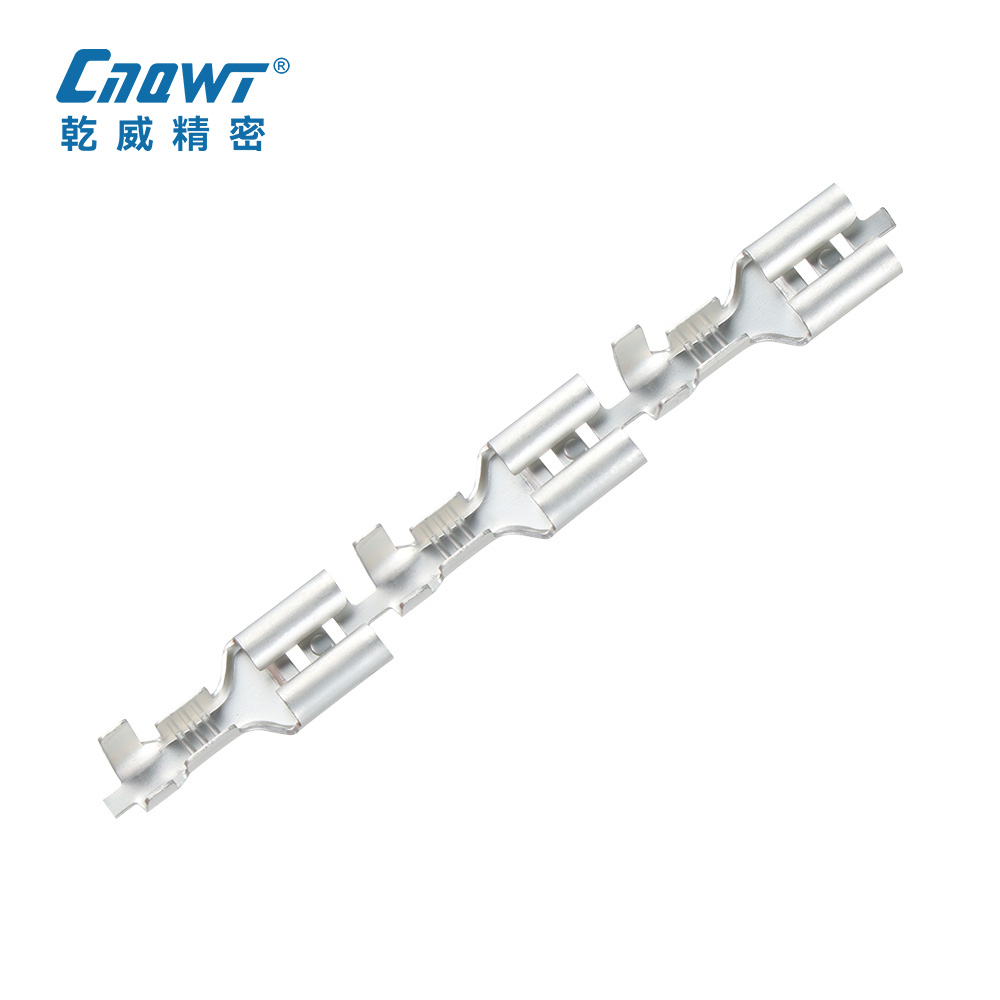
Phosphor bronze terminals are widely used because they offer:
- Reliable electrical performance
- Good corrosion resistance
- Cost advantages for mass production
Applications for Beryllium Copper Terminals
1. Aerospace Electrical Connectors
Aerospace systems require extremely reliable electrical connections.
Requirements include:
- High vibration resistance
- Lightweight design
- Long service life
- Stable performance under temperature changes
Beryllium copper is commonly selected because it maintains excellent mechanical properties in demanding conditions.
2. Medical Equipment
Medical devices often require precision electrical connections with very high reliability.
Applications include:
- Diagnostic equipment
- Monitoring systems
- Medical instruments
Beryllium copper provides:
- Stable contact pressure
- Low contact resistance
- Long-term reliability
3. Precision Electronic Equipment
Modern electronic devices require connectors that can maintain performance over thousands of cycles.
Applications include:
- Testing equipment
- Communication systems
- Semiconductor equipment
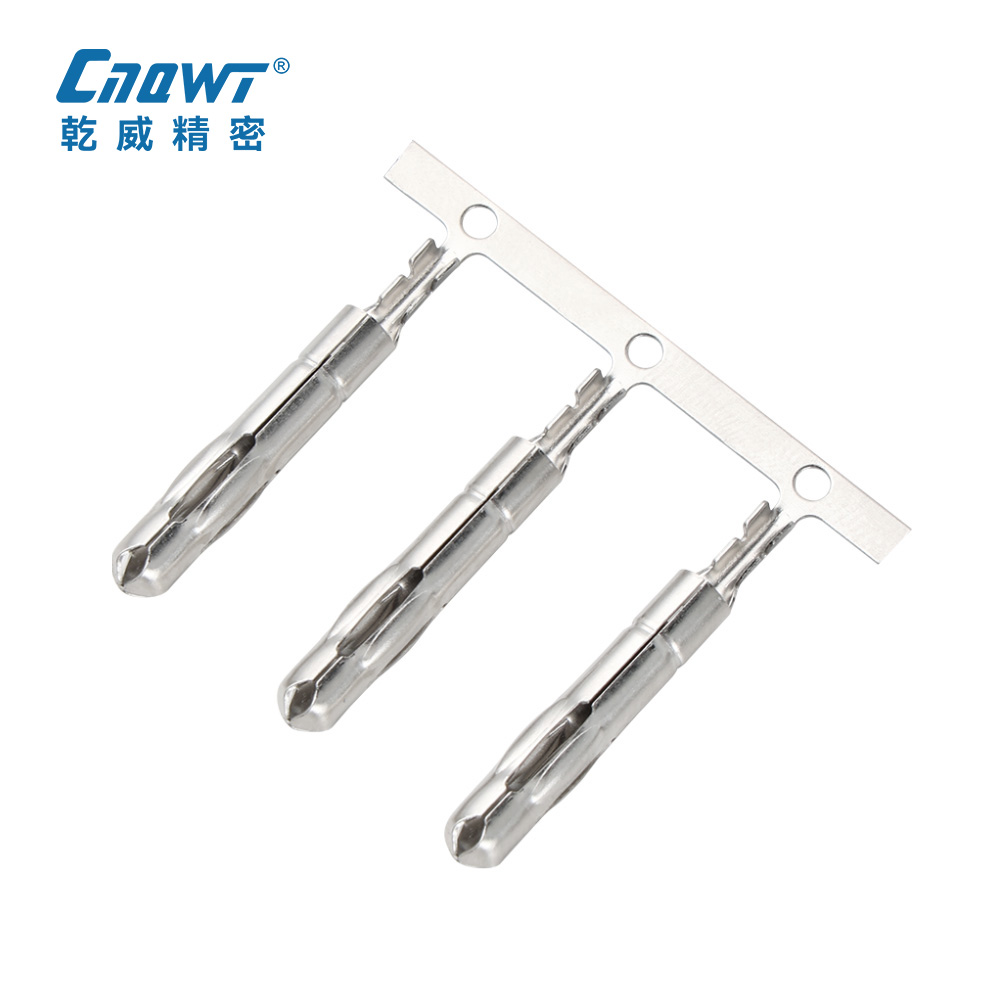
Beryllium copper is ideal because of its excellent spring performance and fatigue resistance.
How to Choose Between Phosphor Bronze and Beryllium Copper Terminals?
Choosing the correct terminal material requires a systematic evaluation of application requirements.
Engineers should consider the following factors:
1. Current Carrying Requirements
The first question is:
How much electrical current must the terminal handle?
Consider:
- Rated current
- Operating voltage
- Heat generation
- Contact resistance
For standard current applications:
→ Phosphor bronze is often sufficient.
For demanding electrical systems requiring long-term reliability:
→ Beryllium copper may provide additional benefits.
2. Mechanical Stress and Vibration
If the terminal operates in an environment with:
- Vehicle vibration
- Mechanical shock
- Continuous movement
material strength becomes critical.
Phosphor bronze:
- Good mechanical stability
Beryllium copper:
- Superior vibration resistance
- Better spring force retention
3. Mating Cycle Requirements
For connectors that are rarely disconnected:
Phosphor bronze is usually a practical choice.
For connectors requiring:
- Hundreds or thousands of mating cycles
- Frequent maintenance access
- Repeated connection
Beryllium copper provides longer service life.
4. Environmental Conditions
Consider:
- Temperature range
- Humidity
- Chemical exposure
- Outdoor installation
Both materials provide good corrosion resistance.
However, for extreme environments:
Beryllium copper combined with appropriate plating may provide additional reliability.
5. Production Volume and Budget
Production quantity directly affects material selection.
For:
High-volume applications:
Phosphor bronze offers:
- Lower cost
- Efficient manufacturing
- Stable quality
Premium applications:
Beryllium copper offers:
- Higher performance
- Longer lifetime
- Better reliability
Why Material Selection Matters for Custom Electrical Terminals
Selecting the right copper alloy is only the first step.
A reliable electrical terminal also depends on:
- Terminal structure design
- Stamping accuracy
- Surface plating quality
- Contact geometry
- Manufacturing consistency
A professional terminal manufacturer evaluates the complete connection system instead of focusing only on material selection.
Important design factors include:
Terminal Geometry
The shape of the terminal affects:
- Contact pressure
- Current flow path
- Heat dissipation
- Mechanical strength
Material Thickness
Proper thickness selection influences:
- Current capacity
- Spring force
- Mechanical durability
Surface Treatment
Plating selection affects:
- Contact resistance
- Corrosion protection
- Long-term reliability
Qianwei Precision Custom Electrical Terminal Manufacturing Capability
As a professional electrical terminal manufacturer, Qianwei Precision provides customized terminal solutions for automotive, industrial, energy storage, and electronic applications.
Our engineering team supports customers from material selection to mass production.
Custom Material Solutions
Depending on application requirements, Qianwei Precision can support:
- Copper terminals
- Brass terminals
- Phosphor bronze terminals
- Custom copper alloy terminals
Engineers can customize:
- Material thickness
- Terminal structure
- Contact design
- Surface plating
Advanced Manufacturing Process
Qianwei Precision integrates multiple manufacturing capabilities:
Precision Metal Stamping
High-speed stamping ensures:
- Accurate dimensions
- Stable production quality
- Consistent terminal performance
Mold Design and Manufacturing
In-house tooling capability enables:
- Faster development
- Better dimensional control
- Customized terminal designs
Surface Plating
Available treatments include:
- Tin plating
- Nickel plating
- Other customized plating solutions
Assembly and Quality Inspection
Each batch is inspected through strict quality control processes.
Testing includes:
- Dimensional inspection
- Contact resistance testing
- Tensile strength testing
- Salt spray testing
- Electrical performance testing
Why Choose Qianwei Precision for Custom Terminals?
1. Professional Terminal Manufacturing Experience
With years of experience in precision connector manufacturing, Qianwei Precision understands different industry requirements.
2. Complete Manufacturing Capability
From:
- Mold development
- Stamping
- Injection molding
- Plating
- Assembly
Qianwei Precision provides complete manufacturing solutions.
3. Customized Engineering Support
We help customers optimize:
- Material selection
- Terminal design
- Production process
- Cost efficiency
4. Reliable Quality Control
Our quality system ensures:
- Stable production
- Consistent dimensions
- Reliable electrical performance
Conclusion: Phosphor Bronze or Beryllium Copper — Which Terminal Material Should You Choose?
Both phosphor bronze and beryllium copper are excellent materials for electrical terminals, but they serve different application needs.
Phosphor bronze terminals are ideal when you need:
- Reliable electrical performance
- Good corrosion resistance
- Cost-effective production
- Large-volume manufacturing
Beryllium copper terminals are the better choice when you require:
- Maximum mechanical strength
- Superior spring performance
- High mating cycles
- Extreme reliability
The best terminal material depends on your specific application requirements.
At Qianwei Precision, we help customers select the right material, design optimized terminal structures, and manufacture reliable custom electrical connection solutions.
Looking for a custom phosphor bronze or beryllium copper terminal solution? Contact Qianwei Precision today for engineering support and quotation.
FAQs
Q1: Is beryllium copper better than phosphor bronze?
Beryllium copper provides higher strength, better spring performance, and superior fatigue resistance. However, phosphor bronze offers excellent reliability at a lower cost and is suitable for many standard electrical terminal applications.
Q2: Which material has better electrical conductivity?
Both materials provide good electrical performance. Pure copper has higher conductivity, but phosphor bronze and beryllium copper provide better mechanical properties required for electrical connectors.
Q3: Are phosphor bronze terminals suitable for automotive applications?
Yes. Phosphor bronze terminals are widely used in automotive connectors because they provide good conductivity, corrosion resistance, and cost efficiency.
Q4: Why is beryllium copper used in high-performance connectors?
Beryllium copper provides excellent elasticity, high mechanical strength, and stable contact force, making it suitable for applications requiring long service life and high reliability.
Q5: Can terminal materials be customized?
Yes. Professional terminal manufacturers can customize:
- Copper alloy selection
- Material thickness
- Plating type
- Terminal structure
- Packaging requirements
according to customer specifications.

