

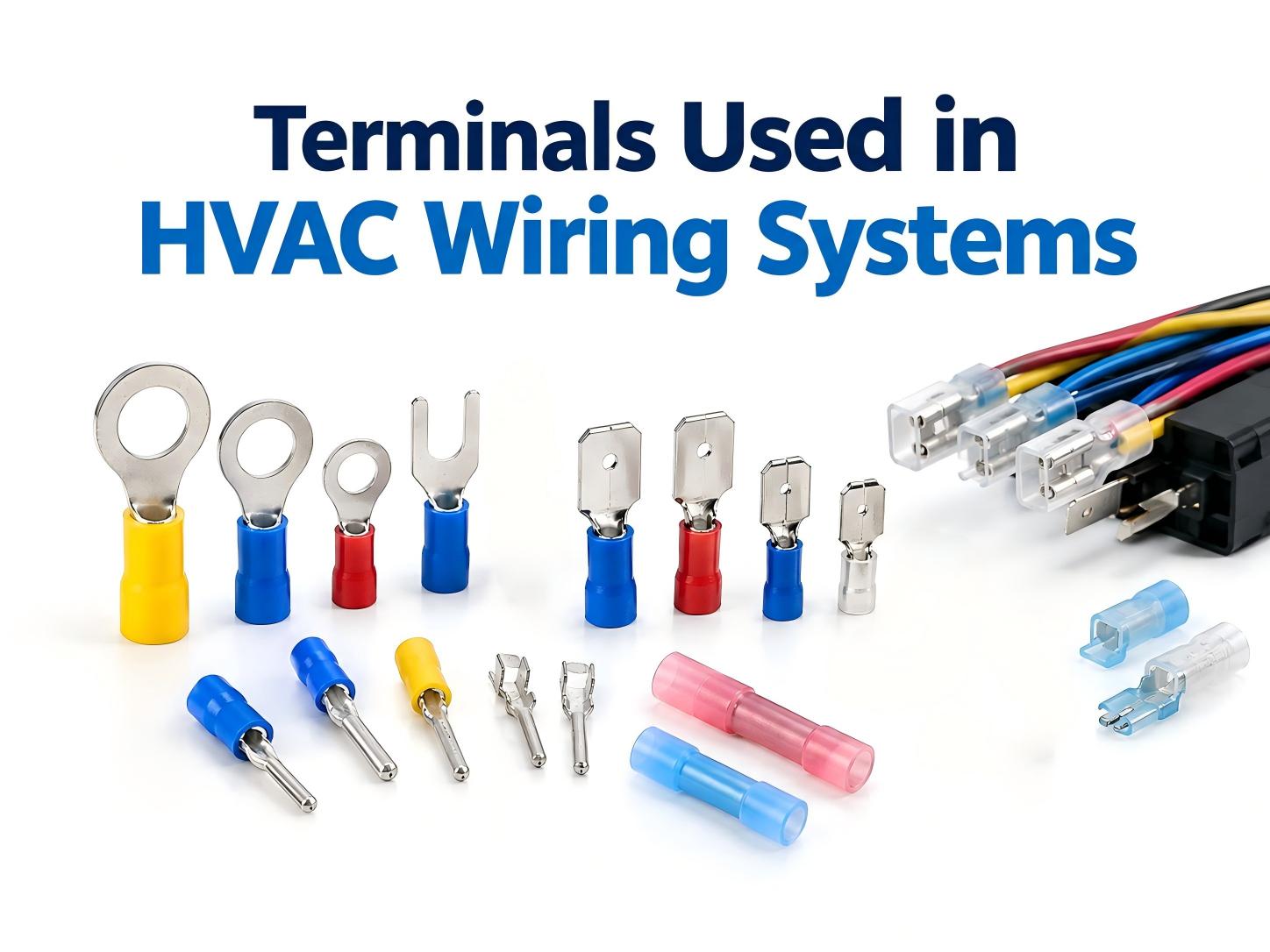
HVAC systems depend on reliable electrical connections to keep compressors, motors, fans, heaters, control boards, thermostats, and other components working properly. While terminals are small components, they play an important role in maintaining a stable connection between wires and electrical devices.
The right terminal can help reduce contact resistance, prevent loose connections, improve assembly efficiency, and support reliable operation under temperature changes, vibration, humidity, and other demanding conditions.
There is no single terminal that works for every HVAC application. Control circuits, motors, heating elements, grounding points, and wiring harnesses may require different terminal designs and connection methods.
This guide explains the common types of terminals used in HVAC wiring systems, where they are used, and the key factors to consider when selecting terminals for HVAC equipment.
What Are Terminals Used for in HVAC Wiring Systems?
Electrical terminals provide a reliable connection between wires and electrical components. In an HVAC system, they can be used to connect wires to motors, relays, contactors, terminal blocks, circuit boards, heating elements, grounding points, and other components.
Compared with simply twisting wires together or using an unsuitable connection method, a properly designed terminal provides a more controlled mechanical and electrical connection.
Electrical Connection Between Wires and Components
HVAC equipment contains many electrical circuits. Some carry relatively low currents for control signals, while others carry higher currents to operate compressors, motors, heaters, and other power-consuming components.
Terminals provide a defined connection point between the conductor and the component. Depending on the application, the connection may be made using crimping, screws, quick-disconnect mechanisms, or other connection methods.
Improving Connection Reliability
A reliable terminal connection should maintain good electrical contact while also resisting mechanical stress.
A poor connection can increase contact resistance. Over time, this may result in heat generation, voltage drop, intermittent operation, or even component failure.
For HVAC equipment that operates for long periods, terminal quality and crimping consistency can therefore have a direct impact on overall wiring reliability.
Supporting Assembly and Maintenance
Terminals can also make HVAC equipment easier to assemble and service.
For manufacturers producing large quantities of HVAC units, crimp terminals and wiring harnesses can help standardize the assembly process. For service technicians, removable terminals such as quick-disconnect terminals can make it easier to replace motors, switches, relays, or other components.
Common Types of Terminals Used in HVAC Systems
Different HVAC applications require different terminal structures. The following are some of the commonly used terminal types.
Ring Terminals
Ring terminals have a circular terminal end that fits over a screw, bolt, or stud.
They are commonly used for grounding connections, power connections, control panels, and other applications where the terminal needs to remain securely attached.
One advantage of a ring terminal is that the conductor connection remains mechanically secured even when the screw or bolt is partially loosened during maintenance.
Ring terminals can be manufactured from copper, brass, or other conductive materials and may be available with different plating options depending on the application environment.
Fork and Spade Terminals
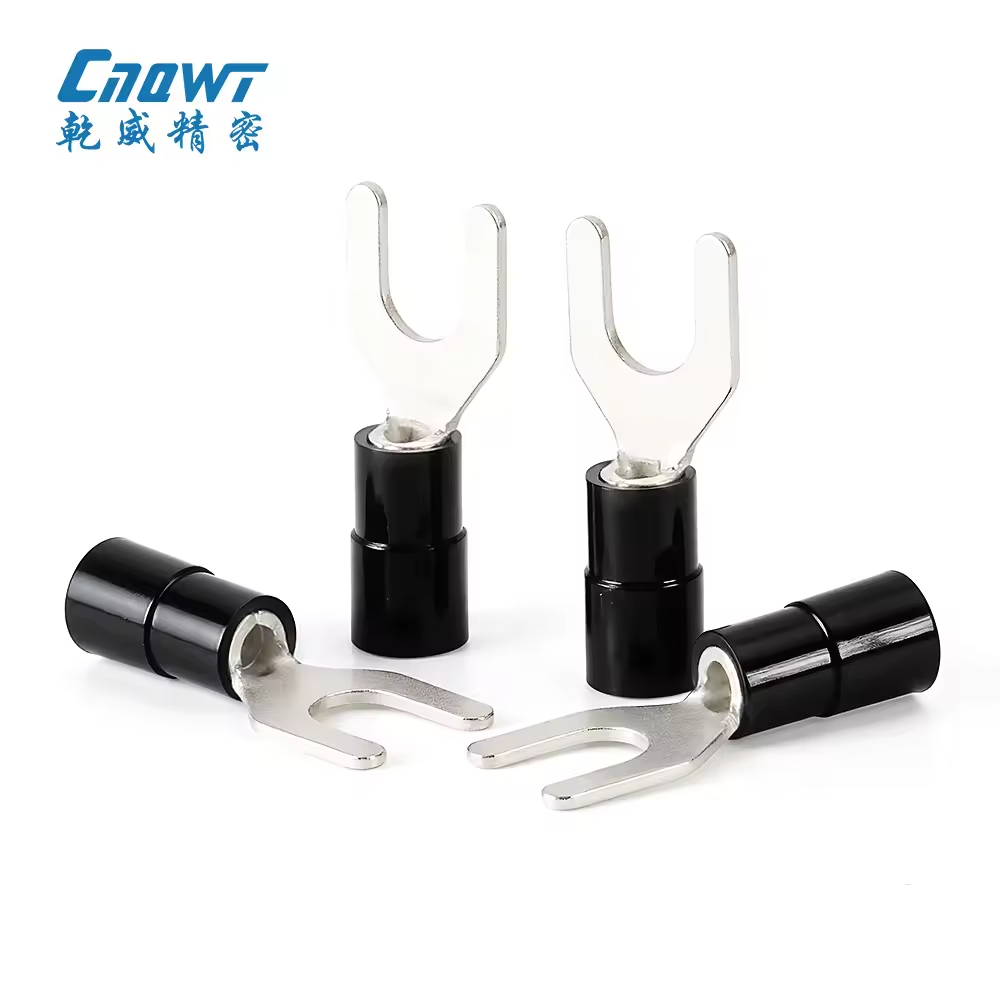
Fork or spade terminals have an open-ended connection area that can be installed under a screw without completely removing the fastener.
This makes them convenient for applications where quick installation or maintenance is important.
They are often used in control circuits, terminal blocks, switches, relays, and other HVAC electrical assemblies.
However, the correct thttps://www.qwterminals.com/product-category/terminals-splices/pin-terminals/erminal design should be selected based on the screw size, wire range, current requirements, and mechanical environment.
Pin Terminals
Pin terminals have a narrow pin-shaped connection area and are often used with screw-type terminal blocks.
They can help keep wire strands together when inserting a stranded conductor into a terminal block. This is particularly useful for smaller wires used in HVAC control circuits.
When selecting a pin terminal, the wire cross-section and terminal block dimensions should be matched carefully.

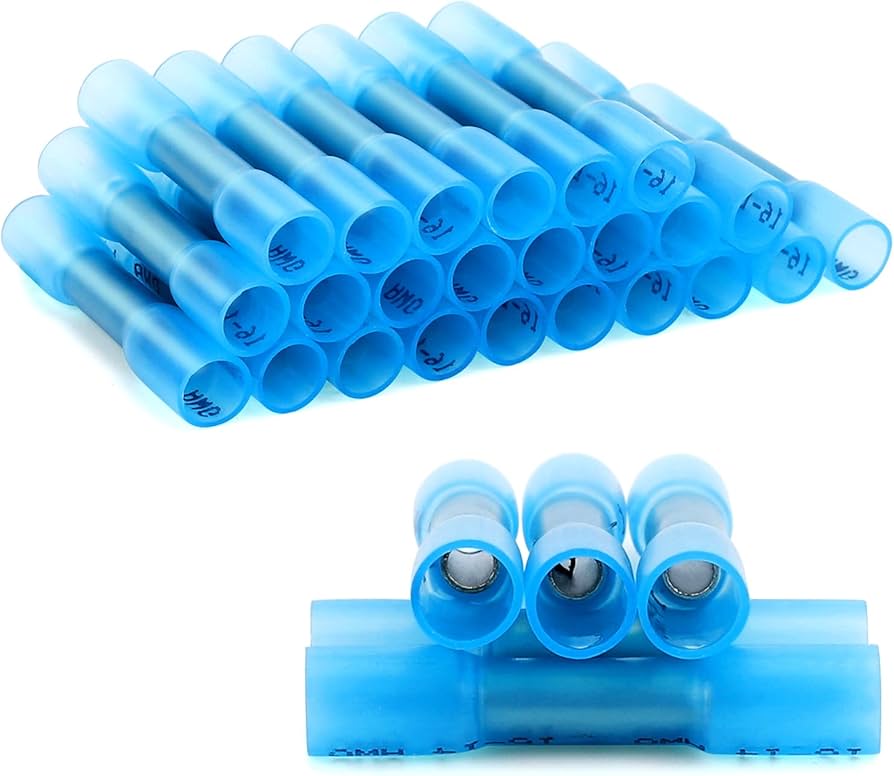
Butt Connectors
Butt connectors are designed primarily for wire-to-wire connections.
They are commonly used when two wires need to be joined within an HVAC wiring harness or during equipment repair. The wires are inserted into opposite ends of the connector and secured through crimping.
A properly crimped butt connector can provide a compact connection without requiring soldering, which makes it practical for many wiring applications.
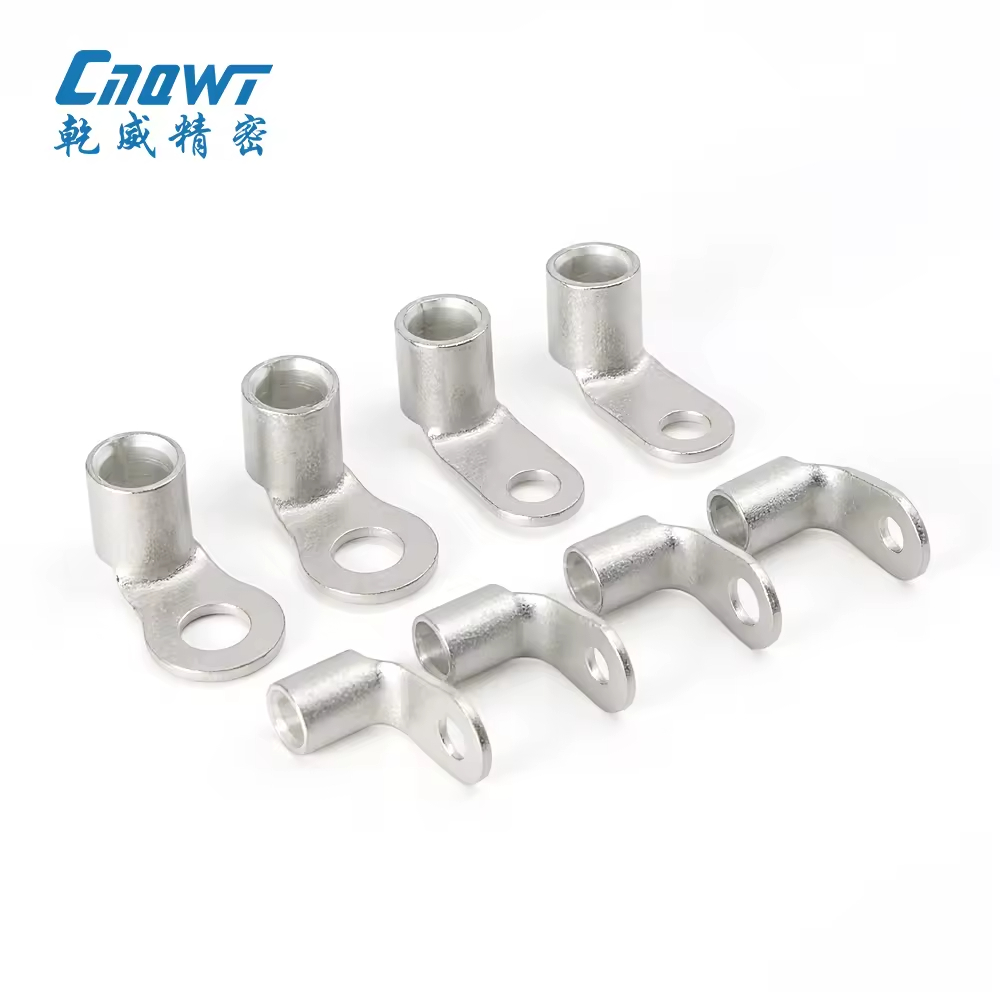
Flag Terminals
Flag terminals feature an angled connection that allows the wire to exit from the side rather than straight out from the terminal.
This design can be useful when space around the electrical connection is limited.
HVAC equipment often contains compact control boxes and densely arranged wiring. A 90-degree or angled terminal configuration can help improve wire routing and reduce the space required around a connection point.
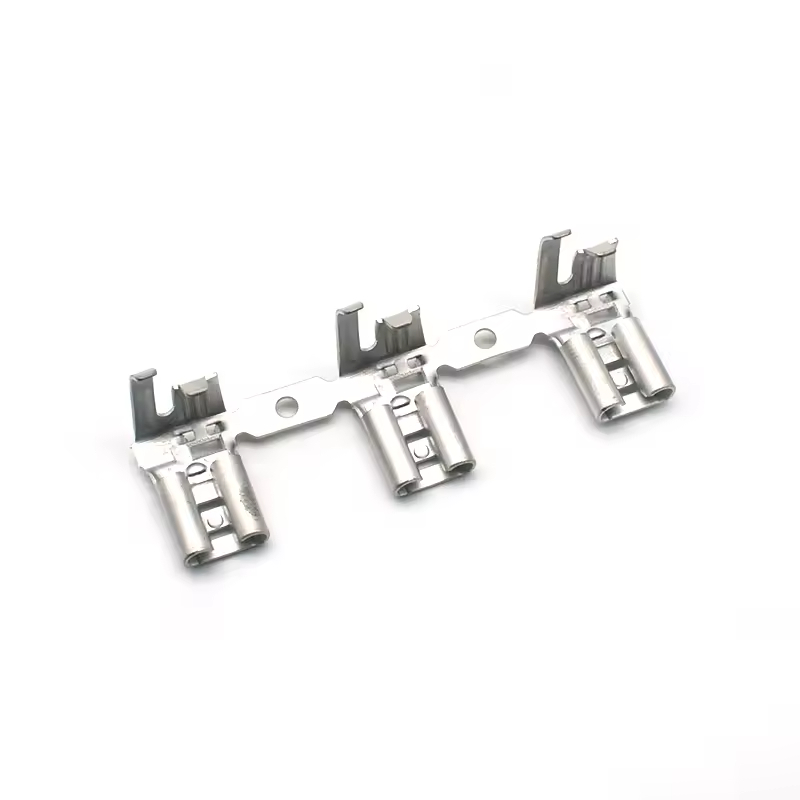
Quick-disconnect terminals are designed for applications where electrical components may need to be connected and disconnected during assembly or maintenance.
They are commonly used with motors, fans, relays, switches, and other HVAC components.
For these applications, terminal retention and contact quality are important. The terminal should maintain sufficient contact force after repeated connection and disconnection cycles.
Where Are Terminals Used in HVAC Equipment?
Terminals can be found throughout HVAC electrical systems rather than in only one specific location.
HVAC Control Panels
Control panels contain components such as relays, contactors, circuit protection devices, terminal blocks, and control wiring.
Depending on the design, ring, fork, spade, pin, and other terminal types may be used to connect wires to these components.
Because control panels may contain many connections in a relatively small space, terminal dimensions, wire routing, and insulation are important considerations.
Compressors
Compressors are one of the key power-consuming components in many HVAC systems.
Their electrical connections may experience higher current and temperature than low-voltage control circuits. Terminals used in compressor wiring therefore need to be selected according to the required current capacity, conductor size, temperature rating, and connection structure.
A secure connection is particularly important because compressors can also introduce mechanical vibration into the equipment.
Fan Motors and Blowers
Fan motors and blowers are another common application for HVAC wiring terminals.
The wiring connection must withstand the vibration associated with motor operation while maintaining stable electrical contact.
Quick-disconnect terminals and other crimp terminals may be used depending on the motor design and wiring configuration.
Thermostats and Control Wiring
Thermostat circuits and other control systems generally use smaller wires and lower electrical loads than compressor power circuits.
Pin terminals, small wire terminals, and terminal block connections may be used depending on the equipment design.
For these applications, accurate wire-size matching and reliable crimping are particularly important.
Heating Elements
Electric heating equipment can expose terminals to elevated temperatures and relatively high electrical loads.
For these applications, the terminal material, plating, insulation, and temperature rating need to be considered carefully.
The terminal should be suitable for the actual operating environment rather than selected only according to physical dimensions.
Grounding Connections
Grounding is an important part of HVAC electrical safety.
Ring terminals are commonly used to connect grounding wires to metal frames, grounding studs, or other grounding points.
The terminal must provide a stable mechanical connection and suitable electrical conductivity for the application.
HVAC Wiring Harnesses
Modern HVAC equipment may use wiring harnesses to connect multiple components together.
Crimp terminals are widely used in harness manufacturing because they can support repeatable connections and high-volume production.
For OEM HVAC manufacturers, custom terminals can also be designed to match specific wire sizes, connector housings, mounting requirements, and assembly processes.
How to Choose the Right Terminal for HVAC Wiring
Selecting an HVAC terminal should involve more than checking whether it physically fits the wire.
Several electrical, mechanical, and environmental factors should be evaluated.
Wire Size
Wire size is one of the first specifications to check.
Terminal manufacturers normally specify an applicable wire range, such as a particular AWG or mm² range. The terminal should match the conductor size to ensure that the crimp is properly formed.
Using an oversized or undersized terminal can result in poor crimping, weak mechanical retention, or unstable electrical contact.
Current Rating
Current requirements vary significantly within HVAC systems.
A thermostat control circuit may require a very different terminal from a compressor or heating circuit.
The conductor size, terminal material, contact area, and connection design all influence current-carrying capability. Terminals should therefore be selected according to the actual electrical load and application requirements.
Voltage Rating
The terminal and its insulation system should be suitable for the operating voltage.
For insulated terminals, the insulation material and design need to provide adequate protection against accidental contact and electrical breakdown under the expected operating conditions.
Terminal Material
Copper and copper alloys are commonly used for electrical terminals because of their electrical conductivity and mechanical properties.
Material selection should consider conductivity, strength, forming characteristics, corrosion resistance, and the requirements of the final application.
Plating
Terminal plating can influence corrosion resistance, electrical contact performance, and long-term reliability.
Tin plating is widely used for many electrical terminal applications because it provides good conductivity and corrosion protection while being suitable for cost-effective mass production.
Other plating options may be considered when the application requires specific environmental or temperature performance.
Operating Temperature
Temperature is an important consideration in HVAC applications because equipment may operate in both hot and cold environments.
Connections located close to compressors, motors, heaters, or other heat-generating components may experience higher temperatures.
The terminal material, plating, insulation, and crimp system should therefore be compatible with the expected operating temperature range.
Vibration and Mechanical Stress
HVAC compressors, motors, and fans can generate continuous vibration.
A terminal connection that works well in a stationary environment may not perform equally well under repeated mechanical stress.
Proper terminal retention, suitable terminal geometry, and consistent crimping are important for applications exposed to vibration.
Environmental Conditions
HVAC equipment can be exposed to humidity, condensation, dust, temperature cycling, and outdoor environmental conditions.
For outdoor or high-humidity applications, corrosion resistance becomes particularly important.
Terminal material and plating should be selected according to the actual environmental conditions rather than based only on cost.
Crimp Terminals vs. Screw Terminals in HVAC Applications
Both crimp terminals and screw-based connections have their place in HVAC systems.
Crimp terminals are particularly suitable for wiring harnesses and high-volume manufacturing. Once the correct terminal and tooling are selected, the crimping process can be standardized and repeated efficiently.
Screw terminals, on the other hand, can be convenient for control panels and applications where wires need to be connected or disconnected during installation and maintenance.
The choice depends on the equipment design, production process, available space, electrical requirements, and maintenance strategy.
For OEM production, crimp terminals can provide an efficient solution when consistent and repeatable wire termination is required.
Insulated vs. Non-Insulated Terminals
Insulated terminals include a protective insulating sleeve around the terminal barrel.
They are commonly used when additional protection against accidental contact or short circuits is required.
Non-insulated terminals do not include an integrated insulating sleeve. They can be useful in compact assemblies or applications where the terminal will be installed inside a connector housing or another protective structure.
The choice should depend on the installation environment, available space, voltage level, safety requirements, and the overall wiring design.
Common Problems Caused by Poor-Quality HVAC Terminals
A terminal may be small, but a poor-quality connection can create significant problems in an HVAC system.
Loose Connections
Insufficient mechanical retention can cause intermittent electrical contact, especially when the equipment is exposed to vibration.
Excessive Contact Resistance
Poor contact surfaces or improper crimping can increase electrical resistance and generate unwanted heat.
Overheating
If a terminal is undersized or poorly connected, excessive resistance may lead to localized heating.
Corrosion
Humidity and condensation can cause corrosion when unsuitable materials or plating are used.
Terminal Pull-Out
An improperly crimped terminal may separate from the conductor when subjected to mechanical force.
Poor Crimping
Incorrect crimp height, unsuitable tooling, or inconsistent production control can reduce both electrical and mechanical performance.
For this reason, terminal selection and crimping quality should be considered together.
How Are HVAC Terminals Manufactured?
For HVAC applications, consistent manufacturing quality is important because terminals are often produced in large quantities.
Precision metal stamping is commonly used to produce terminal components with consistent dimensions and repeatable geometry.
Tooling design is another important part of the manufacturing process. Progressive stamping dies can be developed for specific terminal structures and production requirements.
After stamping, terminals may undergo plating processes such as tin plating to improve corrosion resistance and electrical contact performance.
For wiring harness applications, terminals can then be crimped onto wires using appropriate tooling and process controls.
Quality inspection may include dimensional inspection, crimp-force testing, pull-out testing, electrical testing, and plating inspection.
A controlled manufacturing process helps ensure that terminals meet the requirements of OEM HVAC equipment and wiring harness production.
Custom Terminals for HVAC Applications
Standard terminals are suitable for many HVAC applications, but OEM manufacturers may sometimes require a customized design.
Custom terminals can be useful when the equipment has a limited installation space, unusual wire sizes, specific mounting requirements, or particular electrical and environmental requirements.
Depending on the application, terminal manufacturers may customize:
- Terminal dimensions
- Material
- Plating
- Wire range
- Barrel design
- Mounting configuration
- Connection angle
- Insulation
- Packaging
Working with a terminal manufacturer during the design stage can help HVAC manufacturers optimize the connection for both electrical performance and production efficiency.
How to Improve HVAC Wiring Reliability
Reliable HVAC wiring starts with selecting the right terminal for the actual application.
The most important considerations include wire size, current, voltage, operating temperature, vibration, humidity, corrosion exposure, and installation space.
Manufacturers should also use compatible crimping equipment and verify crimp quality during production. Pull-out testing and electrical testing can help identify problems before products reach the customer.
For high-volume HVAC production, standardized terminal specifications and controlled crimping processes can improve consistency across large production batches.
FAQs
What types of terminals are commonly used in HVAC systems?
Common options include ring terminals, fork or spade terminals, blade terminals, pin terminals, butt connectors, flag terminals, and quick-disconnect terminals. The appropriate type depends on the specific HVAC component and wiring configuration.
What is the best terminal for HVAC wiring?
There is no single best terminal for every HVAC application. The terminal should be selected according to wire size, current, voltage, temperature, vibration, installation space, and connection method.
Are crimp terminals suitable for HVAC applications?
Yes. Crimp terminals are widely suitable for HVAC wiring, especially for wiring harnesses and applications requiring repeatable, reliable wire termination. Proper terminal selection and crimping are essential.
What material is best for HVAC terminals?
Copper and copper alloys are commonly used because they provide good electrical conductivity and mechanical performance. The best material depends on the electrical load, mechanical requirements, temperature, and environmental conditions.
Why are tin-plated terminals commonly used?
Tin plating can provide good electrical contact performance and corrosion resistance while being suitable for many cost-sensitive electrical applications.
What terminals are used for HVAC motors?
Blade, quick-disconnect, ring, and other crimp terminals may be used for HVAC motors depending on the motor design, current requirements, wire size, and connection method.
Can HVAC terminals be customized?
Yes. Custom terminals can be developed for specific wire sizes, dimensions, mounting structures, connection angles, materials, plating requirements, and other OEM requirements.
How do I choose a terminal based on wire size?
First determine the conductor size in AWG or mm², then select a terminal whose specified wire range includes that conductor size. The terminal and crimping tooling should be matched to ensure proper mechanical and electrical performance.
Conclusion
Terminals are an essential part of HVAC wiring systems. They connect wires to compressors, motors, fans, control panels, heating elements, grounding points, and other electrical components while helping maintain reliable electrical and mechanical connections.
Choosing the right HVAC terminal requires consideration of more than just terminal shape. Wire size, current, voltage, material, plating, temperature, vibration, humidity, and installation space can all influence terminal performance.
For HVAC equipment manufacturers and wiring harness suppliers, working with an experienced terminal manufacturer can also provide greater flexibility when standard terminals do not meet a specific application requirement.
With precision stamping, tooling, plating, inspection, and wire assembly capabilities, a qualified terminal manufacturer can support both standard and custom terminal requirements for HVAC wiring systems.
Need Custom Terminals for Your HVAC Wiring System?
Choosing the right terminal is only the first step. For HVAC manufacturers and wiring harness suppliers, the terminal also needs to match your wire size, current requirements, installation space, operating temperature, and production process.
At Qianwei Precision, we manufacture electrical terminals for OEM applications and can support both standard and customized terminal requirements.
Our capabilities include:
- Precision metal stamping for electrical terminals
- Custom terminal design and tooling
- Copper and copper-alloy terminal materials
- Tin and other plating options
- Crimp terminals for HVAC wiring harnesses
- Wire and cable assembly
- Dimensional, electrical, crimp-force, and pull-out testing
- OEM production for high-volume applications
Whether you need a replacement for an existing terminal or are developing a new HVAC wiring system, our engineering team can evaluate your requirements and recommend a suitable terminal solution.
Looking for a reliable HVAC terminal manufacturer?
Send us your terminal drawing, sample, wire size, current requirement, or application details. We can review your requirements and provide a customized solution and quotation.
Contact Qianwei Precision today to discuss your HVAC terminal requirements.

