

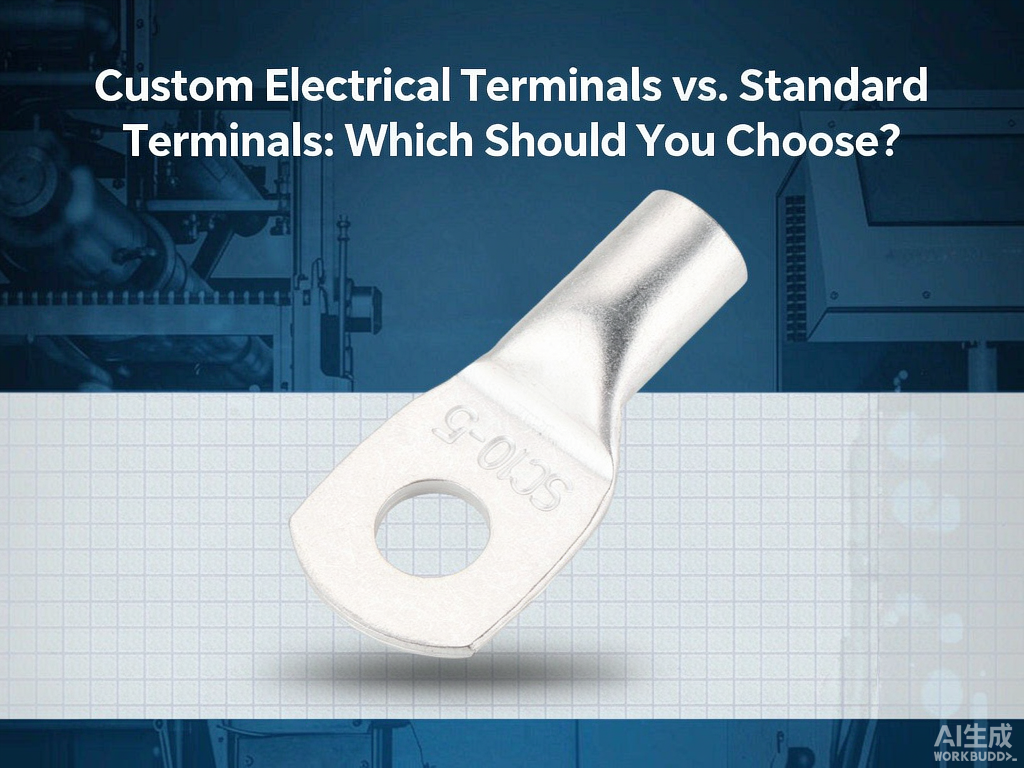
When selecting electrical terminals for a new product or wiring system, engineers and purchasing teams often face a simple but important question: Should we use a standard terminal or develop a custom electrical terminal?
Standard terminals are convenient, widely available, and usually cost-effective for common applications. However, they may not meet the dimensional, electrical, mechanical, or environmental requirements of a specialized product. Custom electrical terminals, on the other hand, can be designed around the exact requirements of an application, but they usually involve tooling and development costs.
The right choice depends on more than the initial unit price. Wire size, current, voltage, installation space, material, plating, production volume, and assembly method all need to be considered.
This guide explains the key differences between custom and standard electrical terminals and helps you determine which option is better for your application.
What Are Standard Electrical Terminals?
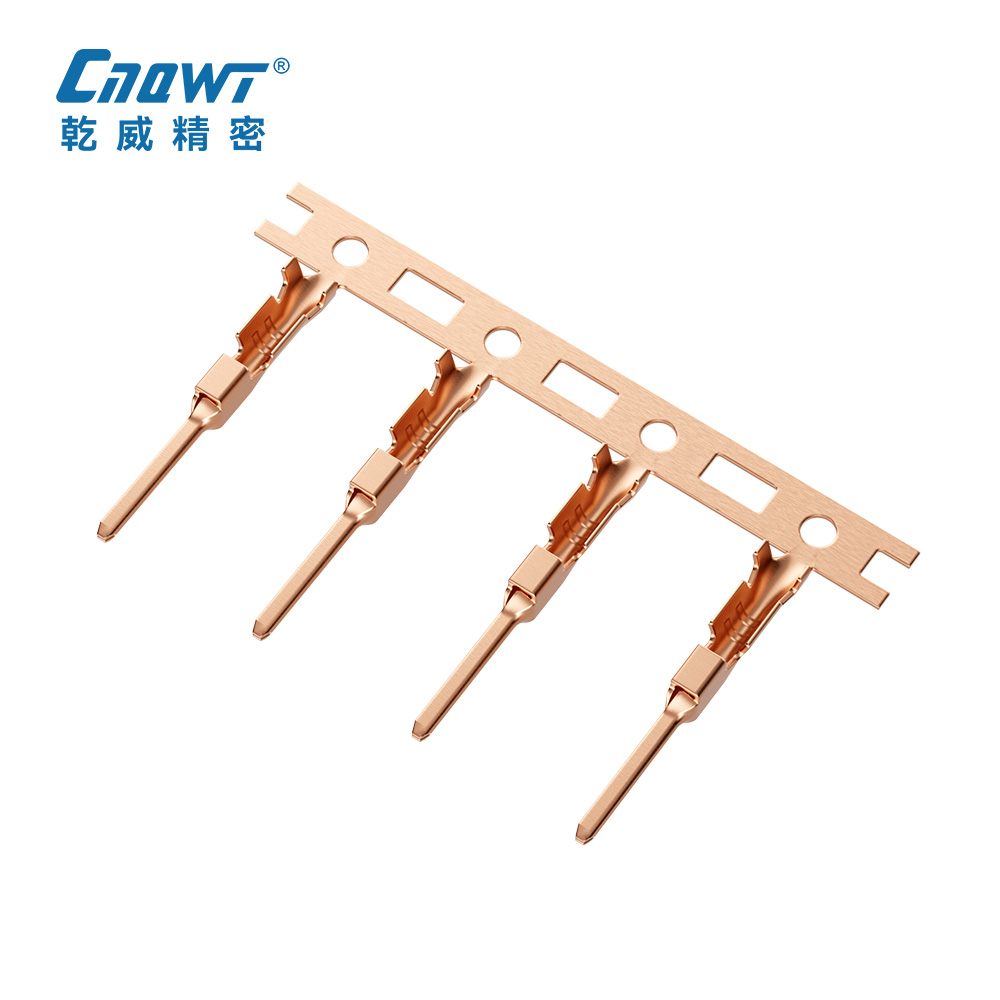
Standard electrical terminals are commercially available terminal products manufactured according to established designs and commonly used specifications. Examples include ring terminals, fork terminals, pin terminals, blade terminals, flag terminals, and various crimp terminals.
Because the design and tooling already exist, standard terminals can usually be purchased without developing a new terminal structure.
Advantages of Standard Terminals
Standard terminals are often a good choice when the application has conventional requirements.
Lower initial cost:
There is normally no new tooling investment, making standard terminals attractive for prototypes, maintenance, and smaller production runs.
Shorter lead time:
Existing products and tooling can shorten the development and production cycle.
Easy replacement:
Standard terminals are generally easier to source and replace because they are already used in common applications.
Proven designs:
Many standard terminals have already been used in similar electrical systems, reducing design uncertainty.
Limitations of Standard Terminals
The main limitation is flexibility.
A standard terminal may not have the exact:
- Dimensions
- Wire range
- Mounting hole
- Contact geometry
- Material
- Plating
- Locking structure
- Crimp configuration
required by your application.
When engineers have to modify the surrounding product to accommodate a standard terminal, the apparent cost advantage can disappear.
What Are Custom Electrical Terminals?
Custom electrical terminals are terminals designed and manufactured according to specific customer requirements rather than selected from an existing standard product range.
A custom terminal can be developed from a customer drawing, sample, technical specification, or application requirement.
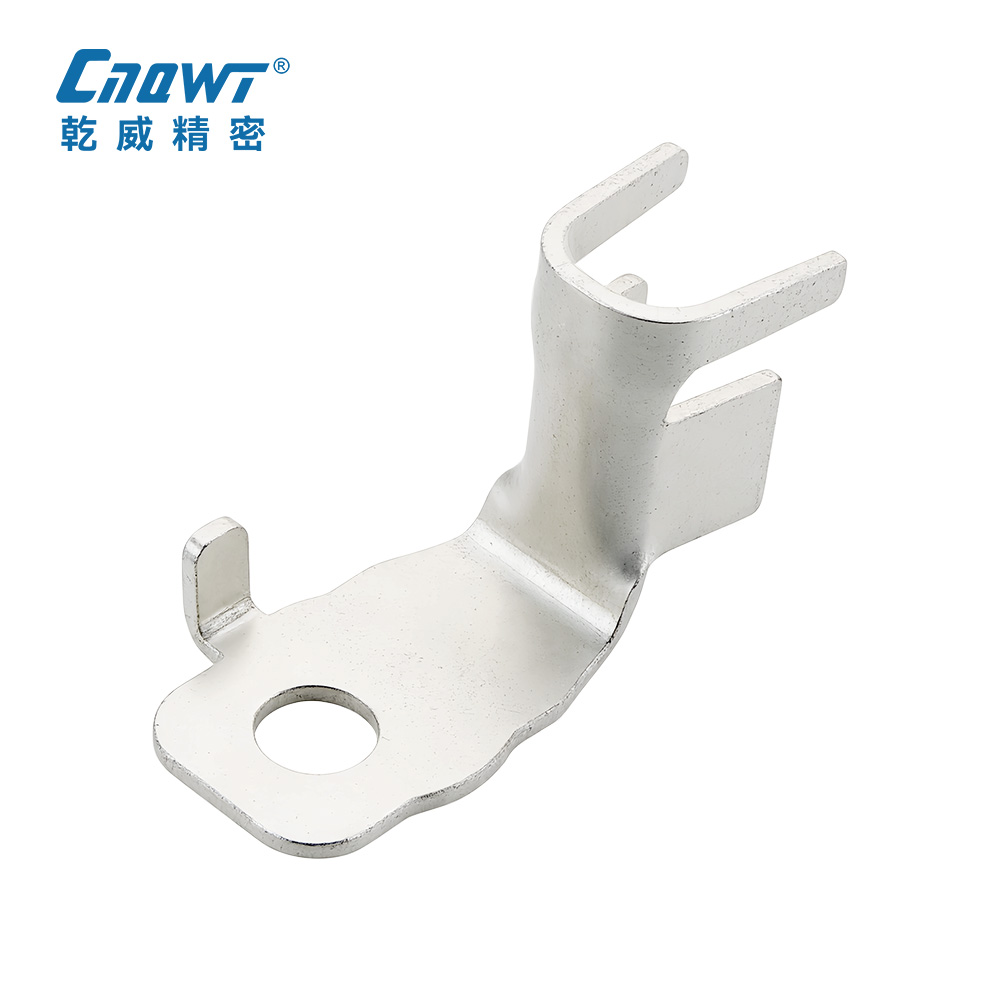
Depending on the project, customization may involve the terminal’s dimensions, material, plating, contact structure, crimp area, mounting features, or other details.
What Can Be Customized?
Terminal geometry
Dimensions such as length, width, thickness, hole diameter, contact area, and bend angles can be designed for the available installation space.
Material
Depending on the electrical and mechanical requirements, manufacturers may use copper, brass, or suitable copper alloys.
Plating
Surface plating can be selected according to conductivity, corrosion resistance, temperature requirements, and the intended application. Tin and nickel plating are common options for electrical terminals.
Crimp structure
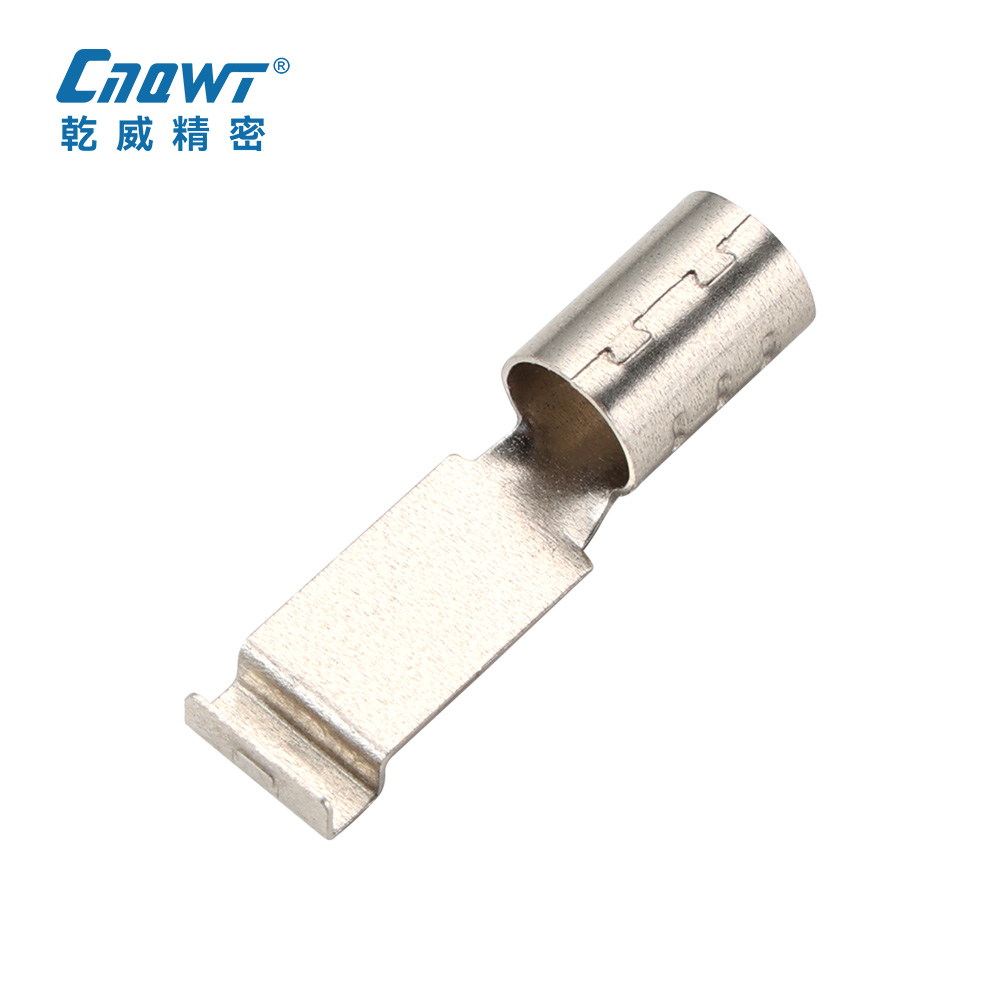
The wire barrel and crimping area can be designed for a specific wire size and assembly process.
Mounting and positioning features
Custom terminals can incorporate holes, tabs, slots, bends, locking features, or positioning structures required by the final assembly.
This flexibility makes custom terminals particularly useful for OEM products where the terminal must fit precisely into a specific housing, wiring harness, battery system, appliance, or electrical assembly.
Custom vs. Standard Electrical Terminals: Key Differences
The basic differences can be summarized as follows:
| Factor | Standard Terminal | Custom Terminal |
|---|---|---|
| Design | Existing design | Application-specific design |
| Tooling | Usually already available | New tooling may be required |
| Initial investment | Lower | Higher |
| Lead time | Usually shorter | Usually longer during development |
| Dimensions | Limited to available designs | Can be customized |
| Materials | Available standard options | Can be selected for the application |
| Plating | Standard options | Application-specific options |
| Performance optimization | Limited | Higher flexibility |
| Low-volume projects | Often suitable | May not be economical |
| High-volume OEM projects | Suitable if specifications match | Often advantageous |
| Special installation requirements | Limited | Excellent flexibility |
The important point is that custom terminals are not automatically better than standard terminals. They are better when the application has requirements that standard products cannot satisfy efficiently.
When Should You Choose Standard Electrical Terminals?
Standard terminals are usually the better choice when your application fits an existing product.
1. Your Wire Size Is Standard
If the terminal can securely accommodate your wire size and insulation dimensions, there may be little reason to develop a new terminal.
2. Electrical Requirements Are Conventional
If the required current, voltage, and temperature range are within the capabilities of an existing terminal, a standard product can simplify the project.
3. You Need a Fast Solution
For prototypes, replacement parts, maintenance, and urgent projects, using an existing terminal can significantly reduce development time.
4. Production Volume Is Low
If annual demand is small, the tooling investment associated with a custom terminal may not be justified.
5. Installation Space Is Not a Major Constraint
If there is sufficient space around the terminal and no unusual mounting requirements, an existing product may work perfectly well.
In these situations, standard terminals can provide a practical balance of cost, availability, and performance.
When Should You Choose Custom Electrical Terminals?
Custom electrical terminals become more attractive when the standard options create compromises or cannot meet the application’s requirements.
1. No Standard Terminal Fits Your Design
A common reason for choosing a custom terminal is simply that the available products do not fit.
For example, your design may require a specific:
- Terminal length
- Width
- Hole diameter
- Contact position
- Bend angle
- Wire entry direction
Developing a custom terminal allows the component to fit the product instead of redesigning the product around an existing terminal.
2. You Need Higher Current Capacity
High-current applications may require a larger conductive area, different material, increased terminal thickness, or a specialized contact structure.
Applications such as:
- Battery systems
- Energy storage systems
- EV systems
- Power distribution equipment
- Industrial electrical equipment
may require terminal designs that are not available as standard products.
3. You Use a Special Wire or Cable Size
A standard terminal may not provide the correct crimp range for a particular wire or cable.
A custom wire terminal can be designed around the actual conductor size and insulation dimensions, helping achieve reliable mechanical retention and electrical performance.
4. You Need Special Material or Plating
Different environments can create different requirements for conductivity, corrosion resistance, temperature performance, and contact reliability.
A custom terminal gives engineers more flexibility when selecting the appropriate material and surface treatment.
5. The Terminal Must Integrate With Other Components
Custom terminals are particularly useful when they need to work together with:
- Plastic housings
- Connectors
- Wiring harnesses
- Busbars
- PCB assemblies
- Automated assembly equipment
A customized locking, positioning, or mounting structure can simplify the overall assembly.
6. You Have High Production Volume
Tooling is an important consideration for custom terminals.
A custom project may require an initial tooling investment, but when production volume is high, the tooling cost can be distributed across a large number of parts.
Therefore, you should not compare only the tooling cost with the price of a standard terminal.
Instead, consider the total cost over the entire production program.
What Factors Should You Consider Before Choosing?
Before deciding between standard and custom electrical terminals, evaluate the complete application.
Current Rating
Determine the continuous and peak current requirements. Terminal design, material, contact area, and conductor size all influence current-carrying capability.
Voltage Rating
Consider the working voltage and the insulation or clearance requirements of the complete assembly.
Wire Size
The terminal must be compatible with the conductor and insulation dimensions. Crimp performance depends heavily on the relationship between the terminal barrel and wire size.
Terminal Material
Copper, brass, and other copper alloys offer different combinations of conductivity, strength, formability, and cost.
Plating
Plating can affect conductivity, corrosion resistance, solderability, and long-term contact performance.
Temperature
Consider the operating temperature of the terminal, including possible temperature rise caused by electrical resistance.
Mechanical Strength
The terminal must withstand the mechanical forces expected during installation and normal operation.
Vibration and Environment
Automotive, industrial, energy storage, and outdoor applications may expose terminals to vibration, humidity, temperature cycling, or corrosive environments.
Installation Space
A terminal that works electrically may still be unsuitable if its physical dimensions interfere with surrounding components.
Assembly Method
Consider whether the terminal will be:
- Crimped
- Soldered
- Inserted into a housing
- Mounted with a screw
- Installed manually
- Installed through automated equipment
The terminal design should support the actual assembly process.
Production Volume
Production volume is one of the most important factors when comparing custom and standard terminals. A custom solution becomes more economically attractive as annual volume increases, particularly when it reduces assembly costs or improves product performance.
Are Custom Electrical Terminals More Expensive?
Not necessarily.
Custom terminals usually have a higher initial development cost, particularly when new stamping dies or tooling are required. However, the unit cost may become competitive at higher production volumes.
A simplified cost comparison looks like this:
Standard terminal:
Unit price + inventory + shipping + potential assembly compromises
Custom terminal:
Tooling + engineering/development + sampling + unit price + testing
For a low-volume project, a standard terminal may be the more economical choice.
For a high-volume OEM project, however, a custom terminal can make more sense if it:
- Reduces material usage
- Simplifies assembly
- Improves crimp reliability
- Reduces installation time
- Eliminates additional components
- Improves product performance
- Fits the product more efficiently
The best choice should therefore be based on total project cost, rather than only the initial tooling expense.
How Are Custom Electrical Terminals Manufactured?
A professional custom terminal manufacturer should be able to support the project from initial design through mass production.
A typical manufacturing process includes:
Step 1: Drawing and Requirement Review
The manufacturer reviews the customer’s drawings, wire specifications, electrical requirements, material requirements, and production volume.
Step 2: Tooling Development
If the terminal requires a new stamping die, the tooling is designed and manufactured according to the approved terminal design.
Step 3: Precision Stamping
Metal strip is formed into the required terminal geometry through precision stamping.
Step 4: Plating
The stamped terminals can receive the specified surface treatment, such as tin or nickel plating, depending on the application.
Step 5: Inspection and Testing
Dimensions, material, plating, crimp performance, electrical characteristics, and other critical requirements are checked according to the project specification.
Step 6: Sample Approval
Samples are produced for customer evaluation and approval before mass production.
Step 7: Mass Production
After approval, the terminal enters controlled mass production with quality inspection throughout the manufacturing process.
For OEM projects, having tooling, stamping, plating, inspection, and production capabilities within an integrated manufacturing system can simplify communication and reduce development risks.
How to Choose a Custom Electrical Terminal Manufacturer?
If you decide that a custom terminal is the right solution, choosing the manufacturer is just as important as choosing the design.
Before sending an RFQ, consider whether the supplier has:
- Precision metal stamping capability
- In-house tooling and die manufacturing
- Experience with copper and brass terminals
- Plating capabilities
- Dimensional inspection equipment
- Crimp testing capabilities
- Engineering support
- Prototype and sample development
- Stable mass-production capacity
- OEM/ODM experience
- Quality management systems
A good custom terminal manufacturer should not simply manufacture a drawing. The supplier should be able to identify potential manufacturing issues and work with the engineering team to optimize the design for production.
Custom or Standard: A Simple Decision Guide
Still not sure which option is right?
Use this basic guide:
| Your Requirement | Recommended Choice |
|---|---|
| Common electrical application | Standard Terminal |
| Common wire size | Standard Terminal |
| Need immediate availability | Standard Terminal |
| Low production volume | Standard Terminal |
| Simple replacement part | Standard Terminal |
| Special dimensions | Custom Terminal |
| Special wire size | Custom Terminal |
| High-current application | Custom Terminal |
| Special plating requirements | Custom Terminal |
| Limited installation space | Custom Terminal |
| Special locking or positioning features | Custom Terminal |
| Integration with an OEM assembly | Custom Terminal |
| High-volume production | Custom Terminal may be more economical |
The key question is simple:
Does an existing standard terminal meet your electrical, mechanical, dimensional, environmental, and production requirements without compromise?
If the answer is yes, a standard terminal is usually the most efficient choice.
If the answer is no, a custom electrical terminal may provide a better long-term solution.
Conclusion
Choosing between custom and standard electrical terminals should not be based on unit price alone.
Standard terminals are usually the better option when your application uses common specifications, requires a quick solution, or has relatively low production volume.
Custom electrical terminals become more valuable when you need special dimensions, wire sizes, materials, plating, current capacity, installation features, or integration with an OEM product.
For high-volume or performance-critical applications, a custom terminal can provide better design flexibility and potentially lower total production costs over the life of the project.
If your application does not fit an existing terminal, working with an experienced custom electrical terminal manufacturer can help you develop a solution from tooling and precision stamping through plating, inspection, and mass production.
Need a custom terminal for your application?
Qianwei Precision provides custom electrical terminal solutions for OEM and industrial applications. Send us your drawing, sample, wire specification, or application requirements for a technical review and quotation.
FAQs
Can electrical terminals be customized?
Yes. Custom electrical terminals can be developed according to drawings, samples, wire specifications, electrical requirements, installation constraints, and other application requirements.
Are custom electrical terminals more expensive?
Custom terminals usually require an initial tooling and development investment. However, the unit cost can become competitive for high-volume production.
What materials can be used for custom terminals?
Copper, brass, and suitable copper alloys are commonly considered depending on conductivity, mechanical strength, formability, application requirements, and cost.
What information does a manufacturer need to quote a custom terminal?
A manufacturer will typically need a drawing or sample, material requirements, plating requirements, wire size, application information, estimated annual quantity, and any specific electrical or mechanical requirements.
Is new tooling required for every custom terminal?
Not necessarily. If an existing terminal design or tooling can meet the required specifications, it may be possible to use existing tooling. A new die is generally required when the terminal geometry or manufacturing requirements are significantly different.
Can a custom terminal be made from an existing drawing?
Yes. A detailed customer drawing is one of the best starting points for custom terminal development. The manufacturer can review the design and determine the appropriate material, stamping process, tooling, plating, and inspection requirements.

