

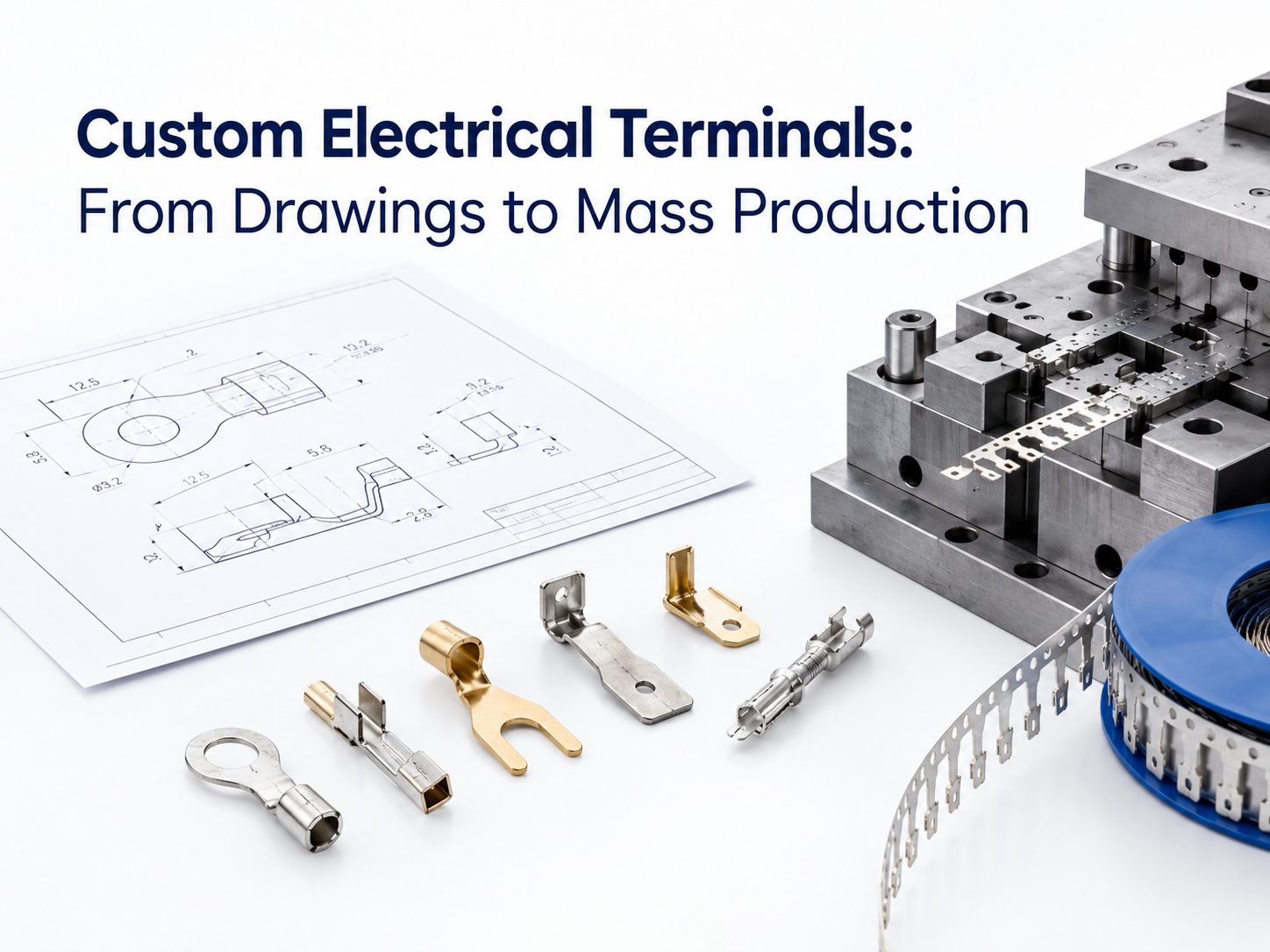
Custom electrical terminals are often needed when standard parts cannot meet a product’s dimensional, electrical, or mechanical requirements. For OEM manufacturers and electrical equipment producers, the challenge is not simply finding a terminal with the right shape. It is developing a part that fits the application, performs reliably, and can be manufactured consistently in large quantities.
The process usually begins with an engineering drawing, a sample, or a set of technical requirements. From there, the manufacturer evaluates the design, selects suitable materials, develops the necessary tooling, produces samples, and verifies the results before moving into mass production.
Understanding each stage helps buyers make better technical decisions, control development costs, and avoid unnecessary delays.
1. What Are Custom Electrical Terminals?
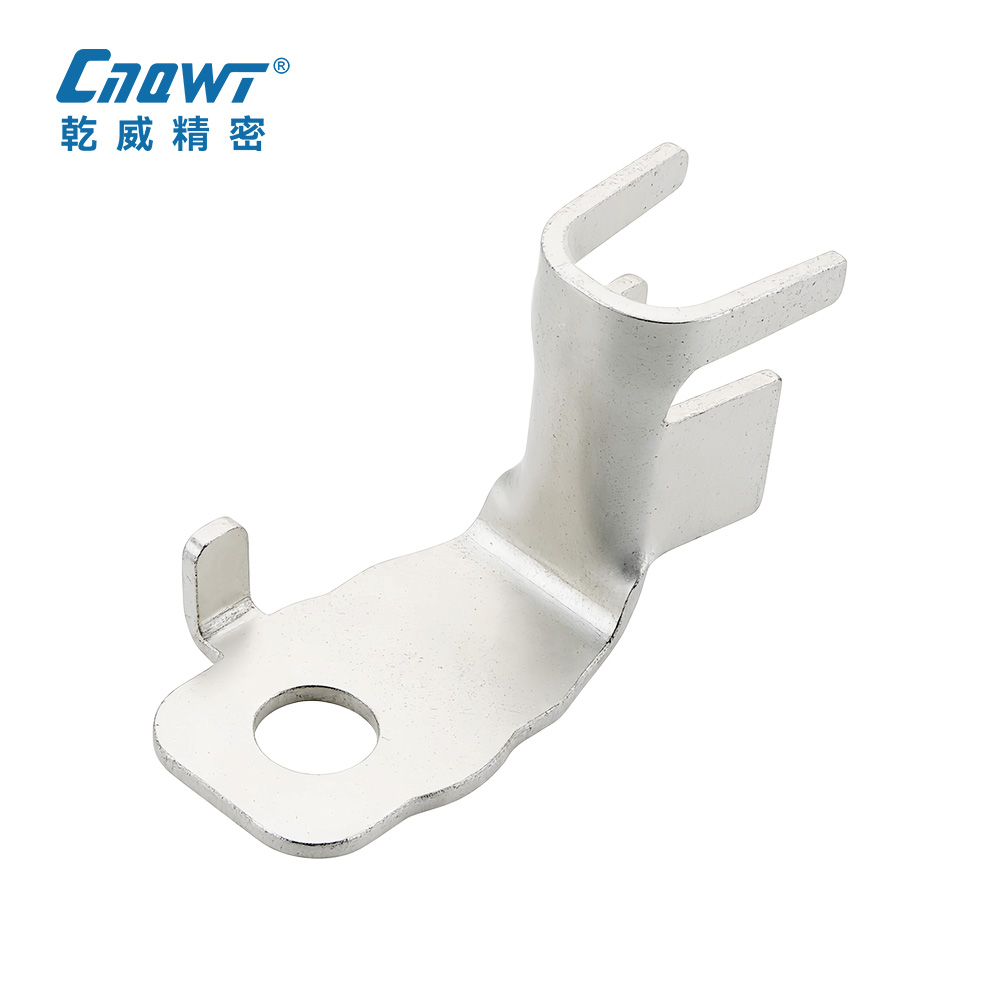
Custom electrical terminals are conductive metal components designed or modified to meet specific application requirements. Unlike standard terminals, which are available in predefined sizes and configurations, custom terminals can be developed around a customer’s product design, installation space, connection method, and performance specifications.
They are commonly used in electrical equipment, automotive wiring systems, industrial control products, power distribution equipment, and other applications that require reliable electrical connections.
Custom Terminals vs. Standard Electrical Terminals
Standard terminals are a practical choice when their dimensions, material, and performance meet the application requirements. They are generally easier to source and may require less development work.
Custom electrical terminals become relevant when a project requires:
- Non-standard dimensions or mounting-hole positions.
- A specific contact shape or connection geometry.
- Special bending angles or formed features.
- Particular material, thickness, or plating requirements.
- Compatibility with an existing assembly or automated production process.
- Consistent components for recurring OEM production.
Customization does not always mean designing a completely new part. In some cases, a small change to the dimensions, plating, or mounting configuration may be sufficient. In others, the design may require dedicated stamping tooling and a more extensive validation process.
Common Types of Custom Electrical Terminals
The appropriate terminal depends on the connection design and intended application. Common options include:
- Custom ring terminals: Used for bolted or stud-mounted electrical connections.
- Custom spade and fork terminals: Designed for screw or stud connections where convenient installation and removal are important.
- Custom flag terminals: Suitable for applications requiring a right-angle connection or a different wire exit direction.
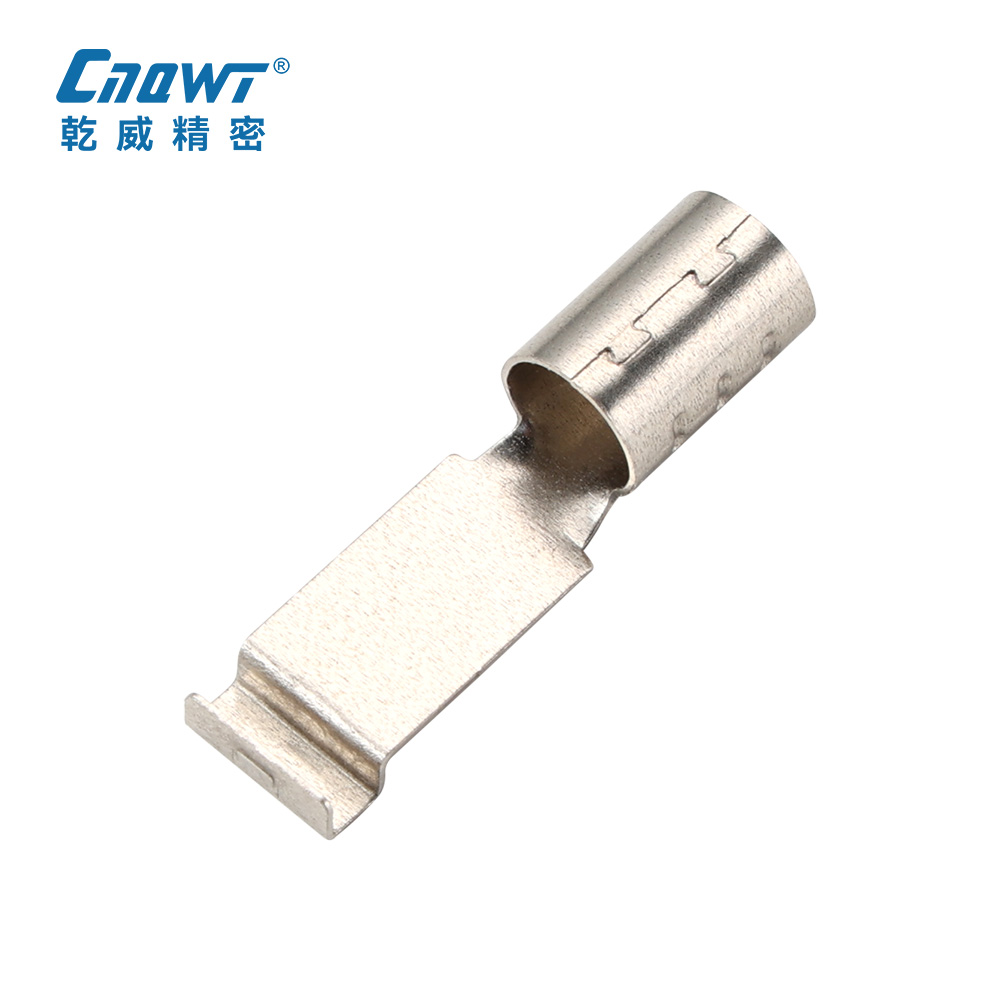
- Custom wire crimp terminals: Designed around the conductor size, crimping requirements, and mating interface.
- Custom stamped metal terminals: Produced through stamping and forming processes to achieve specific shapes and dimensions.
- Terminals on Reel: Supplied in continuous strips for compatible automated feeding, crimping, or assembly equipment.
The design, material, and manufacturing method should be selected according to the actual application rather than the terminal’s appearance alone.
2. When Do You Need Custom Electrical Terminals?
Not every application requires a custom part. Before starting development, buyers should identify which requirements cannot be met by an existing standard terminal.
When Standard Terminal Sizes Do Not Fit
A standard terminal may have the wrong overall length, mounting-hole diameter, contact width, or bending angle. These differences can prevent proper installation or cause interference with surrounding components.
Custom development allows the terminal geometry to match the available space and the assembly design. This is especially useful when a product has a compact internal structure or must fit an existing housing.
When Electrical or Mechanical Requirements Are Specific
Some applications have defined requirements for current carrying capacity, contact resistance, mechanical strength, or resistance to environmental conditions.
For example, a terminal used in a vibrating environment may need specific retention or mechanical-strength characteristics. A terminal exposed to moisture or corrosive conditions may require a suitable material and plating system.
These requirements should be clearly specified during the design stage. Current capacity, in particular, cannot be determined by terminal dimensions alone. Material conductivity, cross-sectional area, contact resistance, temperature rise, and the surrounding installation all influence performance.
When OEM Projects Require Repeatable Parts
OEM manufacturers often need components that remain consistent across multiple production batches. A terminal may fit during initial assembly but still cause problems if its dimensions, forming geometry, or contact characteristics vary during production.
A properly controlled custom manufacturing process helps align the drawing, tooling, inspection criteria, and production method. This is important for products that require repeat orders over an extended period.
3. Step 1: Preparing an Electrical Terminal Drawing
A complete drawing gives the manufacturer a clear starting point for technical review and quotation. The more clearly the requirements are defined, the easier it is to evaluate manufacturability and identify potential issues before tooling begins.
Essential Dimensions and Tolerances
An electrical terminal drawing should include the dimensions that determine fit, function, and assembly.
Depending on the design, these may include:
- Overall length and width.
- Material thickness.
- Mounting-hole diameter and spacing.
- Contact area dimensions.
- Bending angles and formed heights.
- Crimp-barrel dimensions.
- Critical dimensional tolerances.
Not every dimension needs the same tolerance. Tight tolerances should be assigned to features that directly affect function or assembly. Unnecessarily restrictive tolerances may increase tooling complexity, inspection requirements, and manufacturing costs.
Material and Plating Requirements
The drawing or technical specification should identify the required material grade, thickness, and surface finish whenever these have already been determined.
If the material or plating has not been finalized, buyers should explain the intended application and relevant operating conditions. The manufacturer can then evaluate suitable options.
Plating specifications should be as clear as possible. For example, the specification may need to define the plating type, required thickness, and any relevant appearance or corrosion-resistance criteria.
Electrical and Mechanical Specifications
Dimensions alone may not be enough to manufacture a functional terminal. Depending on the application, the technical package may also need to include:
- Rated current and operating temperature.
- Contact resistance requirements.
- Compatible conductor size and wire type.
- Crimping requirements and applicable tooling.
- Insertion, withdrawal, or retention force.
- Vibration, corrosion, or environmental test requirements.
- Applicable customer standards and acceptance criteria.
These requirements should be agreed upon before sample approval. Otherwise, a part may meet the drawing dimensions but fail to perform as expected in the final assembly.
What If You Only Have a Sample or Sketch?
A complete CAD drawing is helpful, but it is not always available during the early stages of product development.
Buyers can begin by providing a physical sample, a sketch, photographs with dimensions, or an existing part number. The manufacturer can review the available information and identify which measurements or specifications are still needed.
However, a sample should not automatically be treated as a complete technical specification. Important details such as material grade, plating thickness, internal geometry, and functional performance may require separate confirmation.
Before tooling or mass production begins, the design and acceptance requirements should be documented and approved by the relevant parties.
4. Step 2: Choosing the Right Material for Custom Terminals
Material selection affects electrical conductivity, strength, formability, corrosion behavior, and cost. The best option depends on how the terminal will be manufactured and how it will perform in service.
Common Materials for Stamped Electrical Terminals
Copper
Copper offers high electrical conductivity and is suitable for many applications where efficient current transfer is important. The exact copper grade should be selected according to conductivity, strength, forming requirements, and the intended operating conditions.
Brass
Brass provides a useful balance of formability, mechanical properties, and electrical performance. It can be suitable for various stamped terminal designs, depending on the requirements.
Phosphor Bronze
Phosphor bronze is often considered when spring behavior, mechanical strength, or resistance to deformation is important. Its suitability depends on the specific alloy, temper, geometry, and required performance.
Material selection should be based on the complete specification rather than a general ranking of materials. Two grades within the same material family may have different conductivity, strength, and forming characteristics.
How to Select the Right Material
When evaluating materials, consider four main factors.
First, determine the electrical requirements, including current, contact resistance, and allowable temperature rise. Second, assess the mechanical demands, such as bending, spring behavior, and retention. Third, consider the operating environment, including humidity, temperature, and possible exposure to corrosive substances. Finally, evaluate material availability, manufacturing yield, and total cost.
The manufacturer should review these factors alongside the terminal geometry to determine whether the proposed material is suitable for the intended process.
Selecting the Right Plating
Plating can improve the surface characteristics of a terminal and help meet application-specific requirements.
Tin plating is commonly used in electrical terminal applications where its surface properties and compatibility with the connection system are appropriate. Nickel plating may be considered for applications with particular requirements for wear resistance, corrosion behavior, or temperature exposure.
The correct choice depends on the mating materials, operating environment, electrical interface, and customer specifications. Plating thickness and process controls should be defined where required, and the finished part should be evaluated against the agreed acceptance criteria.
5. Step 3: Engineering Review and Tooling Development
Once the drawing and material requirements are available, the next stage is to determine how the terminal can be manufactured reliably and economically.
For stamped electrical terminals, this involves design review, process planning, and tooling development.
Design for Manufacturability (DFM)
Design for Manufacturability, or DFM, evaluates whether the proposed design is practical to produce using the intended manufacturing process.
During a DFM review, the manufacturer may examine:
- Whether the geometry is suitable for stamping and forming.
- Whether critical dimensions can be controlled consistently.
- Whether narrow features or complex bends create manufacturing risks.
- Whether the design may cause excessive burrs, deformation, or cracking.
- Whether any design changes could improve production stability without affecting function.
DFM should not be treated as permission to change the customer’s design without approval. Any proposed modification that affects dimensions, fit, function, or performance should be reviewed and approved before implementation.
Progressive Die and Stamping Tool Development
For suitable high-volume metal terminal designs, progressive stamping can combine multiple operations in a continuous production process. Depending on the part, these operations may include punching, cutting, bending, and forming.
Tooling design depends on the terminal geometry, material properties, required tolerances, expected production volume, and target output.
Before mass production, the tooling needs to be evaluated through trial runs. The manufacturer checks whether the formed parts meet the drawing and whether the process can maintain consistent quality.
Not every custom terminal requires a new progressive die. The appropriate tooling solution depends on the design, volume, production requirements, and feasibility of using existing tooling.
Why Tooling Accuracy Matters
Tooling has a direct influence on dimensional consistency and production efficiency. Poorly controlled tooling can lead to repeated dimensional deviations, forming defects, excessive burrs, and unstable production.
Accurate tooling, combined with appropriate process monitoring and maintenance, helps reduce variation and supports repeatable manufacturing.
Tooling cost should also be considered in relation to the expected production volume. A design intended for recurring mass production may justify a different tooling investment from one required only for a small batch.
6. Step 4: Prototype Samples and Design Validation
Sample production provides an opportunity to verify the design before committing to full-scale manufacturing. It also gives the customer and manufacturer a chance to identify issues that may not be apparent from a drawing alone.
Prototype and Trial Production
The first samples may be produced using prototype methods, trial tooling, or production-intent tooling, depending on the project.
The purpose is to evaluate the part against its technical requirements. The sample stage may include dimensional measurement, forming inspection, surface-quality checks, and preliminary functional testing.
For stamped terminals, attention should be paid to critical dimensions, bending angles, burrs, deformation, and the fit of mating or assembled components.
What Should Be Checked Before Approval?
The inspection plan should reflect the terminal’s intended use and the customer’s requirements. Typical checks include:
- Critical dimensions and tolerances.
- Material and plating conformity.
- Forming quality and surface condition.
- Crimping or assembly compatibility.
- Mechanical performance where specified.
- Electrical performance where specified.
A sample that looks correct may still fail during crimping, mating, or installation. Functional verification is therefore important whenever the terminal’s performance depends on how it interacts with other components.
Not every terminal requires every possible test. The final inspection and validation plan should be based on the product specification and application risk.
Sample Approval and Design Changes
If the sample does not meet requirements, the manufacturer and customer should identify the cause before proceeding. The issue may relate to the drawing, material selection, tooling, process settings, or inspection method.
After changes are made, the relevant dimensions or performance characteristics should be rechecked. Drawing revisions and approval records should also be controlled to prevent outdated specifications from entering production.
Mass production should begin only after the required sample approval and production conditions have been confirmed.
7. Step 5: Quality Control Before Mass Production
Quality should be managed throughout the manufacturing process, not only through final inspection. For custom electrical terminals, effective control begins with incoming materials and continues through stamping, forming, surface treatment, and final verification.
Incoming Material Inspection
Incoming inspection may include checking the material grade, thickness, surface condition, and supplier documentation.
Where required, the manufacturer should verify that the material and plating specifications match the approved requirements. Traceability records help identify the material batches used in production.
In-Process Inspection
During production, the manufacturer should monitor characteristics that influence the terminal’s fit and function.
Depending on the control plan, this may include critical dimensions, forming geometry, burr condition, visible defects, and process stability. Tool wear and equipment condition should also be monitored because they can affect consistency over time.
The frequency and method of inspection should reflect the product’s risk, production volume, and customer requirements.
Final Inspection and Functional Testing
Before shipment, the finished terminals should be checked against the agreed specifications. This may include dimensional inspection, appearance checks, and specified mechanical or electrical tests.
For example, contact resistance, retention force, or corrosion-related testing may be required for particular applications. These tests should be performed using appropriate methods and acceptance limits defined by the relevant specification.
A documented inspection process helps ensure that the manufacturer and customer have a shared understanding of product acceptance.
Documentation and Traceability
Depending on the project, quality documentation may include material certificates, inspection reports, sample approval records, batch identification, and relevant compliance documents.
Customers should communicate their documentation requirements early, particularly when the terminal is part of a regulated or tightly controlled OEM supply chain.
8. Step 6: Moving from Approved Samples to Mass Production
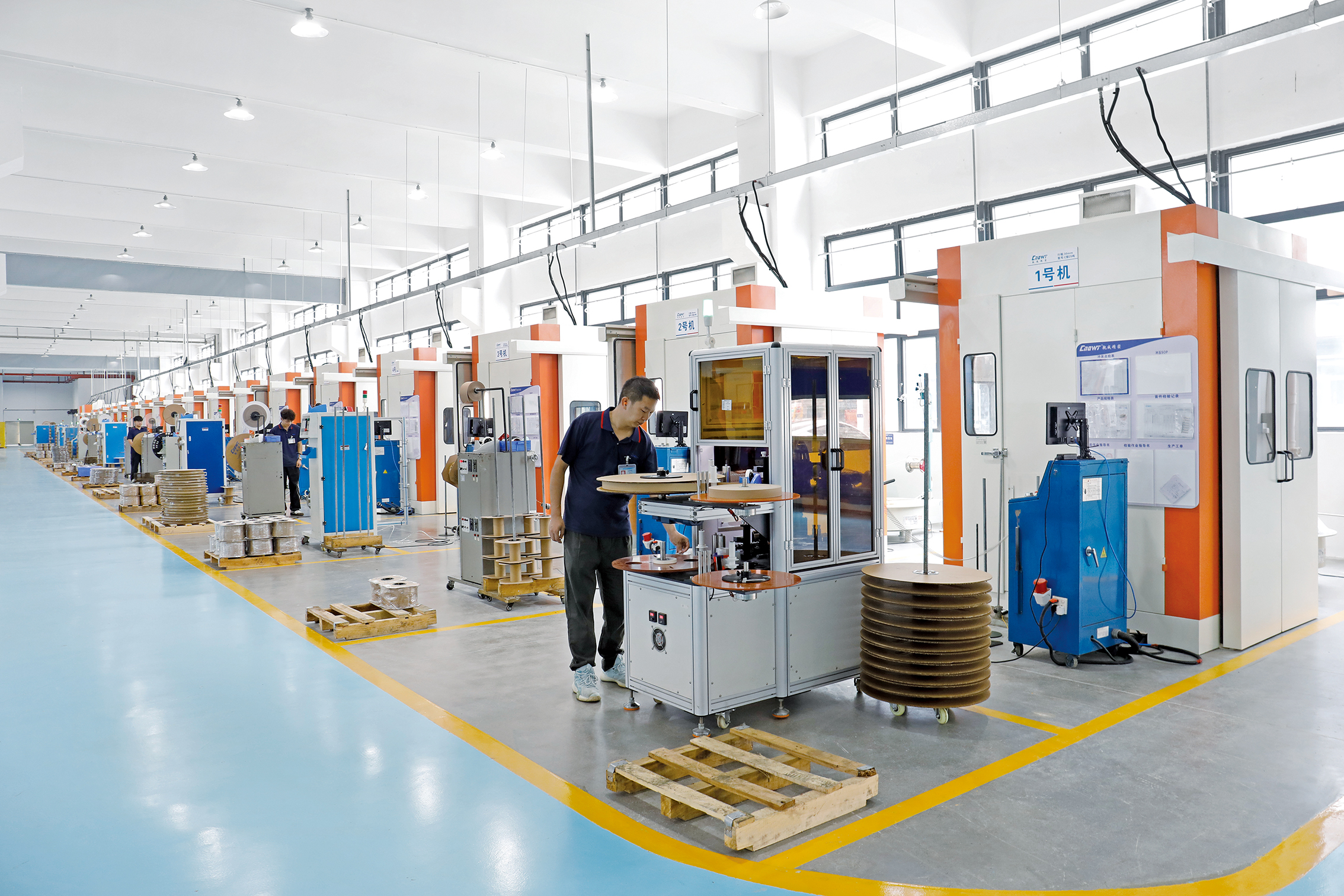
An approved sample is an important milestone, but it does not by itself guarantee stable mass production. The manufacturing process must be capable of reproducing the approved part consistently at the required volume.
Production Process Planning
Before production begins, the manufacturer should confirm the production route, tooling condition, inspection plan, packaging method, and delivery requirements.
For stamped terminals, this includes confirming the appropriate stamping process, production equipment, material supply, and tooling maintenance arrangements.
The production plan should also account for order quantity, delivery schedule, and any customer-specific quality requirements.
Scaling Production Without Losing Consistency
As output increases, the manufacturer must maintain control over the process rather than relying solely on final inspection.
Important considerations include:
- Monitoring critical dimensions and process variation.
- Maintaining tooling and replacing worn components when necessary.
- Tracking defects and investigating recurring issues.
- Maintaining consistent material and process requirements.
- Keeping production and inspection records.
- Managing drawing revisions and approved process changes.
These controls help reduce the risk of variation between the initial sample and subsequent production batches.
Packaging and Delivery Requirements
Packaging is part of the manufacturing specification because it affects handling, storage, and compatibility with downstream assembly.
Custom electrical terminals may be supplied in bulk, in trays, or on reels, depending on the design and customer requirements.
For Terminals on Reel, buyers should confirm strip dimensions, reel specifications, feeding direction, and compatibility with the intended automated equipment. Incorrect packaging or feeding orientation can create problems even when the terminals themselves meet the drawing.
Delivery planning should also cover labeling, batch identification, quantity, lead time, and shipping requirements.
9. What Affects the Cost and Lead Time of Custom Electrical Terminals?
The cost and lead time of a custom terminal depend on more than the price of the metal. Design complexity, tooling, validation, production quantity, and quality requirements all influence the final quotation.
Main Cost Factors
The main cost drivers typically include:
- Material type, grade, thickness, and consumption.
- Part geometry and dimensional tolerances.
- Tooling design, manufacturing, and maintenance.
- Surface treatment and plating specifications.
- Inspection and testing requirements.
- Order quantity and production frequency.
- Packaging and delivery requirements.
A relatively simple terminal may require limited tooling work, while a complex stamped part with tight tolerances or multiple forming operations may need more extensive development.
How Order Volume Affects Unit Cost
The unit cost of a custom terminal often changes with order volume.
Small orders may carry a higher unit cost because engineering work, tooling preparation, setup, and inspection activities are spread across fewer parts. Larger recurring orders may allow these costs to be distributed more efficiently.
However, higher volume does not automatically mean lower total cost. Material prices, scrap rates, process complexity, tooling maintenance, and quality requirements must also be considered.
When requesting a quotation, buyers should provide both the initial order quantity and an estimated annual demand, if available. This helps the manufacturer evaluate a suitable production and tooling strategy.
How to Reduce Development Time and Cost
A few practical steps can make the development process more efficient:
- Provide the latest drawing or the most complete available technical information.
- Identify critical dimensions and functional requirements clearly.
- Confirm material, plating, testing, and acceptance criteria early.
- Share expected order volumes and future demand.
- Consolidate design feedback and control drawing revisions.
- Avoid unapproved changes after sample validation.
Early communication is often more effective than trying to resolve technical disagreements after tooling has been completed.
10. How to Choose a Custom Electrical Terminal Manufacturer
Selecting a manufacturer requires evaluating its ability to support the entire development process, from technical review through repeat production.
Evaluate Engineering and Tooling Capabilities
Ask whether the manufacturer can review drawings, identify manufacturability concerns, develop appropriate tooling, and support sample validation.
For stamped terminals, in-house tooling capability can improve communication between design, tooling, and production. It may also make troubleshooting and engineering changes more straightforward, depending on the supplier’s actual processes.
Review Manufacturing and Quality Systems
A supplier should be able to explain how it controls materials, production processes, dimensional consistency, and final inspection.
Buyers should also confirm whether the manufacturer can provide the quality records, certifications, traceability, and testing required for their particular application.
Certifications should be checked against the actual product, facility, and scope involved. A company-level certification does not automatically mean that every product has a separate product certification.
Confirm OEM and Customization Experience
For OEM projects, the manufacturer should understand the importance of drawing control, sample approval, repeatability, and communication during design changes.
Before placing an order, clarify the tooling ownership arrangements, expected development milestones, quotation scope, production lead time, minimum order quantity, and quality acceptance criteria.
These details help both parties establish a realistic plan before production investment begins.
Why Work with Qianwei Precision?
Qianwei Precision has been involved in precision terminal and metal stamping manufacturing since 2012. Based in Dongguan, Guangdong, the company supports customers requiring electrical terminals and related customized metal components.
Its manufacturing capabilities include high-speed stamping, mold manufacturing, plastic injection molding, and cable assembly. The company also provides custom mold design and supports projects that require coordination between tooling development and production.
For customers developing custom electrical terminals, the process starts with understanding the drawing, application, material requirements, and intended production volume. These details help establish whether the design is suitable for the proposed manufacturing process and what needs to be confirmed before samples and mass production.
If you are developing a new terminal or looking for a supplier for an existing design, providing a drawing, sample, or technical specification is a practical first step toward evaluating manufacturing feasibility.
11. Frequently Asked Questions About Custom Electrical Terminals
Can I order custom electrical terminals from my own drawings?
Yes. A manufacturer can review your drawings, material requirements, dimensions, tolerances, and intended application to assess feasibility and prepare a quotation. Additional information may be needed before tooling or sample production begins.
What if I do not have a complete technical drawing?
You can start with a physical sample, sketch, photographs, or an existing component. The manufacturer can identify missing information and help clarify the required dimensions and specifications. A complete, approved specification should be established before mass production.
What materials are commonly used for custom electrical terminals?
Copper, brass, and phosphor bronze are common options for different stamped terminal designs. The appropriate material depends on conductivity, strength, formability, operating conditions, and cost.
Do custom electrical terminals require new stamping tooling?
Not always. The need for new tooling depends on the terminal geometry, production volume, existing tooling availability, and manufacturing requirements. A tooling review can determine the most suitable approach.
Can custom terminals be supplied on reels?
Yes, if the terminal design and strip configuration are suitable for reel packaging. Buyers should confirm reel dimensions, strip specifications, feeding direction, and compatibility with their automated processing equipment.
What is the minimum order quantity for custom electrical terminals?
There is no single minimum quantity that applies to every design. MOQ depends on tooling investment, material procurement, production setup, and the manufacturing process. Providing estimated annual demand helps the supplier recommend an appropriate production arrangement.
How do you ensure quality during mass production?
Quality control may include incoming material inspection, in-process dimensional checks, tooling and process monitoring, final inspection, and application-specific testing. The exact control plan should be agreed upon according to the product specification and customer requirements.
Can a manufacturer support both prototypes and mass production?
A suitable manufacturing partner should be able to explain how it manages the transition from initial samples to production tooling, process validation, and repeat manufacturing. Buyers should confirm the supplier’s actual capabilities and the approval requirements for their project.
Conclusion: From Drawings to Reliable Mass Production
Developing custom electrical terminals involves more than converting a drawing into a metal part. It requires coordinated decisions about design, materials, tooling, sample validation, quality control, and production planning.
The earlier these requirements are clarified, the easier it is to identify manufacturing risks, control development costs, and establish a repeatable production process.
For OEM manufacturers and electrical equipment producers, choosing a supplier with suitable engineering, tooling, and manufacturing capabilities can make the transition from prototype to mass production more predictable.
Looking for a manufacturer for your custom electrical terminals?
Contact Qianwei Precision with your drawings, samples, or technical requirements to discuss material options, tooling feasibility, sample development, and mass production.


One thought on “Custom Electrical Terminals: From Drawings to Mass Production”