

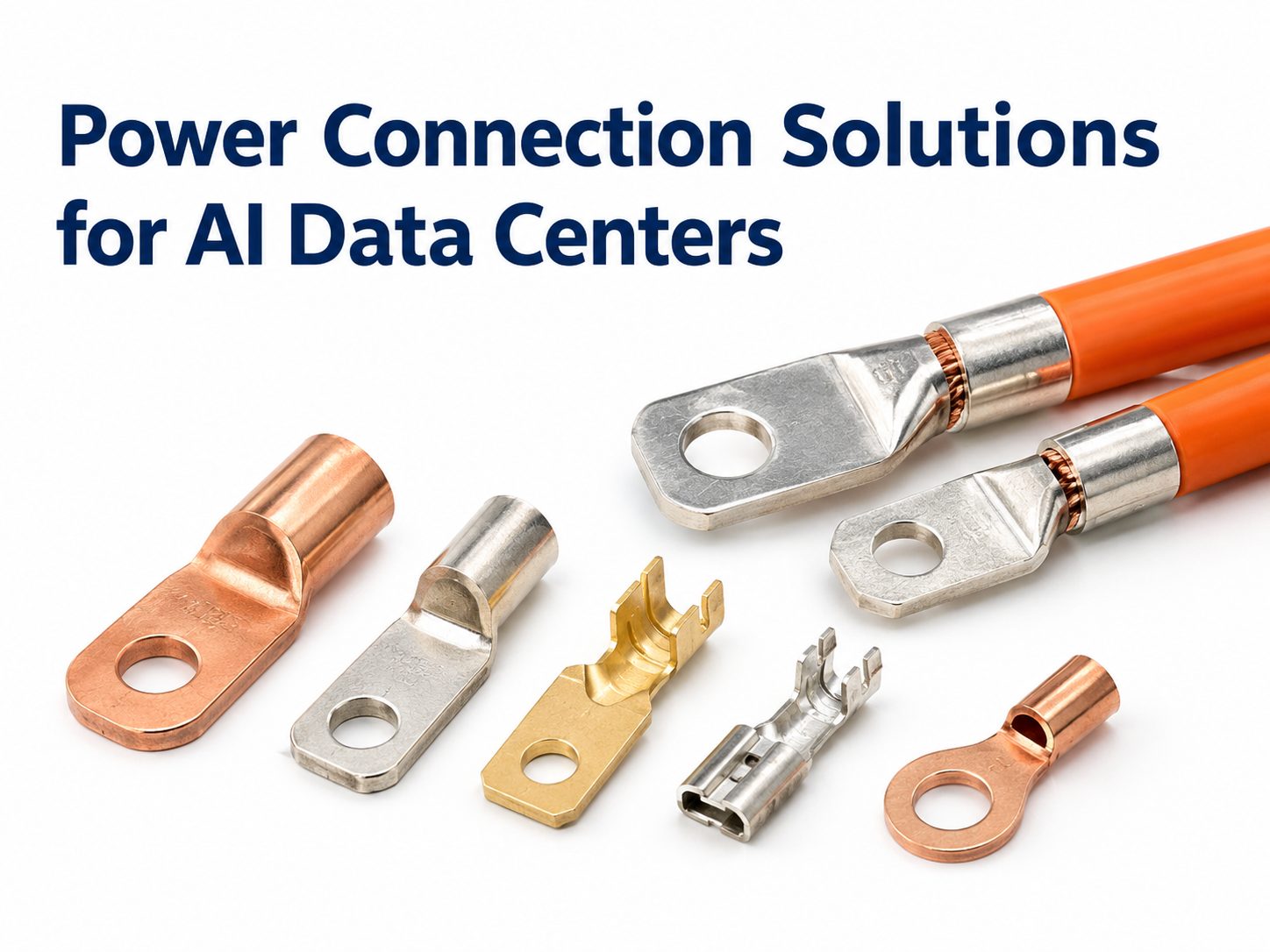
AI data centers are putting new demands on electrical power systems. Modern AI servers use large numbers of high-performance GPUs and processors, which means more power is concentrated in each rack and across the facility. As power density increases, every part of the electrical connection system needs to handle higher loads reliably.
For equipment manufacturers and electrical system designers, this creates a practical challenge: how do you make sure power connections remain stable under high current, heat, vibration, and continuous operation?
Electrical terminals are one part of that equation. A terminal may be a relatively small component, but its material, contact area, crimping quality, plating, and dimensional accuracy can affect the performance of the entire connection.
For AI data center applications, the right terminal is not simply a matter of choosing a component with a suitable current rating. The terminal needs to match the cable, connection structure, operating environment, and manufacturing requirements of the equipment.
This article looks at the main power connection challenges in AI data centers and explains what OEM buyers should consider when selecting high-current electrical terminals.
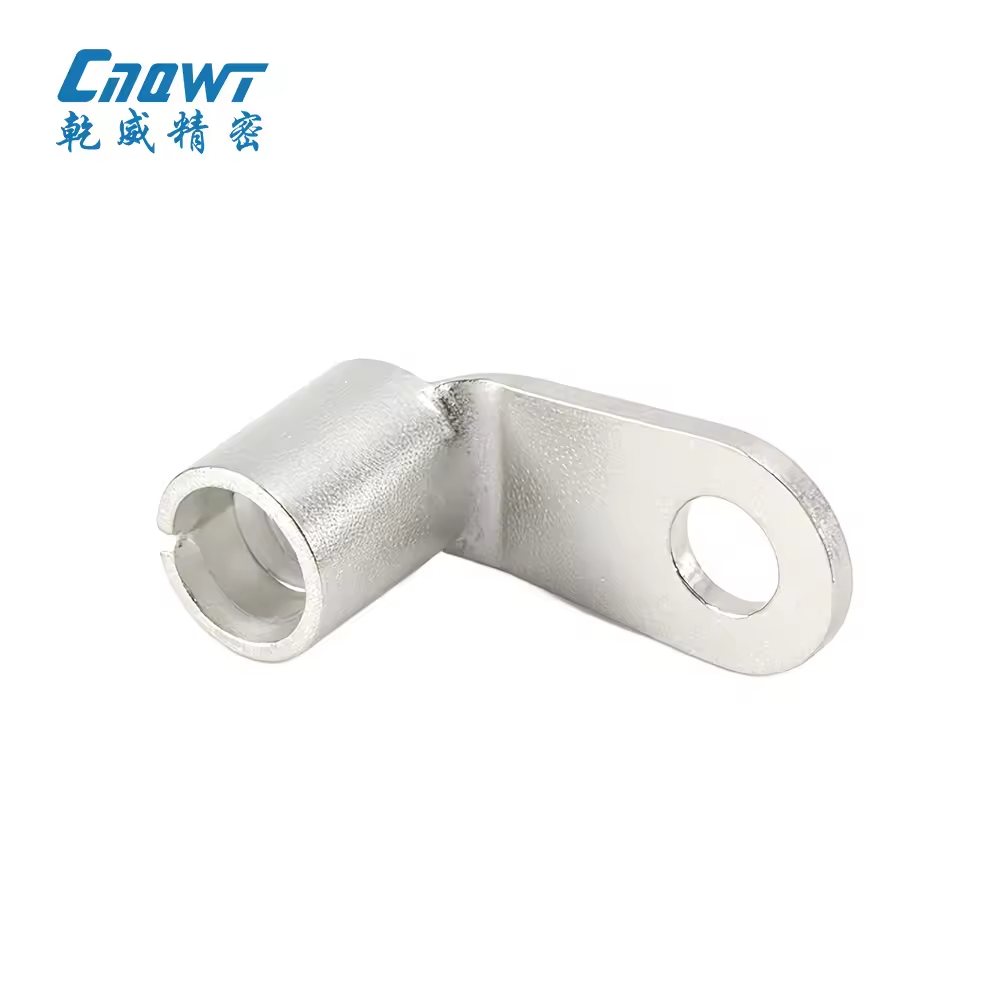
Why AI Data Centers Require More Reliable Power Connections
AI computing has changed the way power is distributed inside data centers.
Traditional data center equipment already requires dependable power, but AI servers can concentrate considerably more electrical load in a relatively small physical space. High-performance computing racks may contain multiple GPUs and other power-intensive components, creating higher demands on power distribution and thermal management.
That affects the electrical connections as well.
A connection operating at high current generates heat when electrical resistance is present at the contact point. If the connection is poorly designed, improperly crimped, or manufactured outside the required tolerances, resistance can increase. Over time, this may contribute to higher temperature rise, contact degradation, or connection failure.
This is why electrical terminals used in high-power equipment need to be treated as engineered components rather than simple pieces of stamped metal.
For OEMs, the important questions are practical:
- What current will the terminal carry?
- What cable size will be used?
- How much temperature rise is acceptable?
- What type of plating is required?
- How will the terminal be connected and secured?
- Can the supplier maintain consistent dimensions during mass production?
These questions should be answered before selecting the terminal.
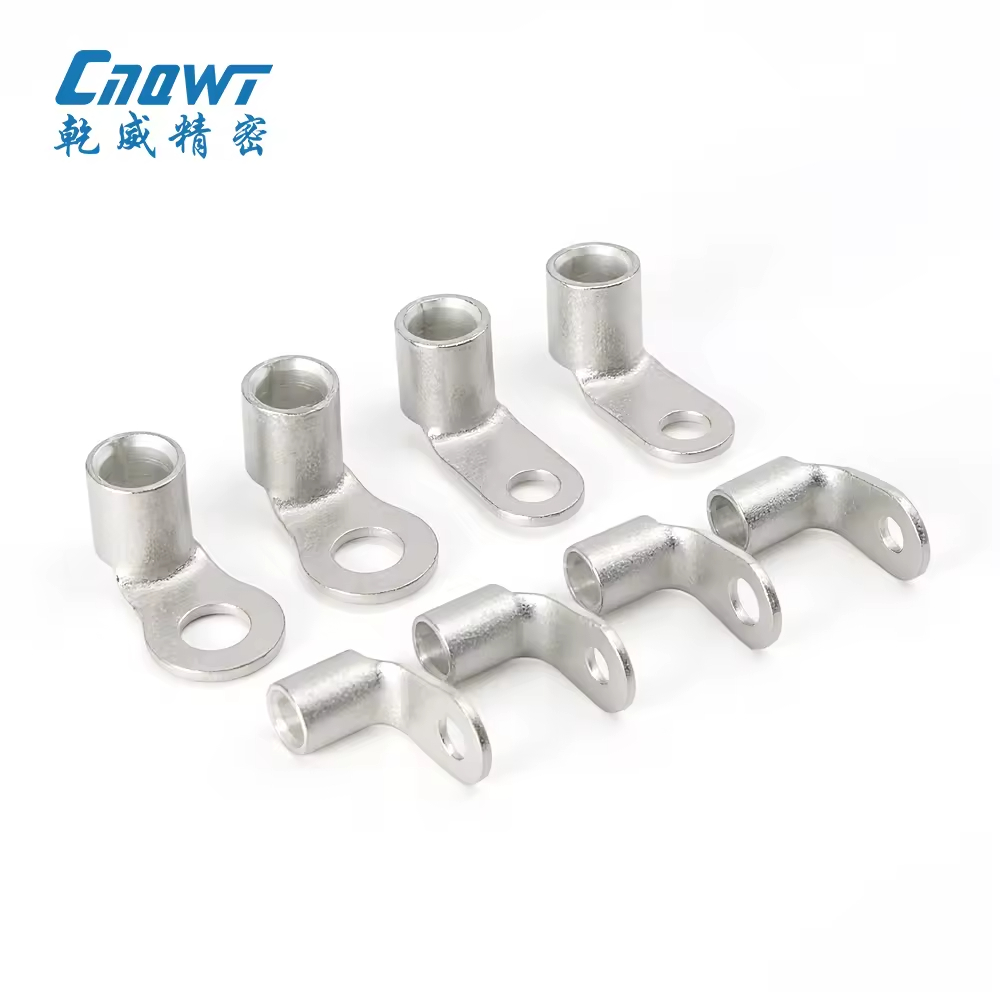
Key Power Connection Challenges in AI Data Centers
Higher Current Loads
The first consideration is current capacity.
A terminal must be able to carry the required current without excessive temperature rise. Current capacity depends on more than the terminal’s physical size. Material conductivity, cross-sectional area, contact design, connection quality, cable size, and surrounding thermal conditions all have an influence.
For high-current applications, copper and copper-based alloys are commonly considered because of their electrical conductivity and mechanical properties. The final material should be selected according to the specific application rather than simply choosing the material with the highest conductivity.
Heat Management
Heat is one of the main concerns in high-current electrical systems.
Even a small amount of electrical resistance can generate heat when current is high. The relationship is straightforward: power loss caused by resistance increases with the square of current.
This makes connection quality particularly important in high-current applications.
A terminal with poor contact, insufficient crimping, damaged plating, or inconsistent dimensions may create a localized high-resistance point. In a high-density data center environment, where many power connections operate continuously, these small losses can become an important reliability concern.
Terminal design, conductor size, contact area, crimping quality, and thermal conditions should therefore be considered together.
Limited Installation Space
AI computing equipment is often designed around high-density layouts. Engineers may have limited space for cables and electrical components while still needing to accommodate larger power loads.
This can create demand for terminals with specific dimensions, mounting configurations, cable entry directions, or connection structures.
A standard terminal may work for a general application but may not fit a particular power distribution design. This is one reason custom electrical terminals are often considered during equipment development.
Long-Term Reliability
Power connections in data center equipment are expected to operate for long periods.
Mechanical retention, contact stability, corrosion resistance, material consistency, and plating quality can all influence long-term performance.
For OEM buyers, it is therefore useful to evaluate not only the sample itself but also the manufacturer’s ability to reproduce the same terminal dimensions and performance across large production batches.
Where Electrical Terminals Are Used in AI Data Center Power Systems
Electrical terminals can be found in different parts of a data center’s electrical infrastructure and the equipment supporting it.
Power Distribution Systems
Power distribution cabinets and related electrical equipment require reliable connections between cables, conductive components, and electrical assemblies.
Depending on the equipment design, terminals may be used for cable connections, internal wiring, grounding applications, or other high-current electrical paths.
The exact terminal design depends on the equipment structure and electrical requirements.
Server and Rack Power Systems
AI servers and high-density racks require carefully designed power distribution systems.
At the equipment level, terminals may be used in power supply assemblies, cable harnesses, distribution modules, and other internal electrical connections.
In these applications, compact dimensions and stable electrical performance can be important because there may be limited room around the power components.
UPS and Backup Power Systems
Backup power is an important part of data center infrastructure.
UPS equipment and battery systems can involve substantial current levels, particularly on the DC side. Cable connections therefore need to be designed for the expected current, cable size, mechanical requirements, and operating environment.
High-current cable terminals and copper-based terminals may be considered for these applications, depending on the equipment design.
Cooling and Auxiliary Power Systems
Power demand in an AI data center is not limited to computing equipment.
Cooling systems, pumps, fans, HVAC equipment, and other auxiliary systems also require electrical connections. These systems may have different terminal requirements from server power equipment, so terminal selection should be based on the individual application.
How to Choose Electrical Terminals for AI Data Center Applications
Choosing a terminal should start with the electrical and mechanical requirements of the application.
Current Rating
Determine the expected continuous current first, then consider peak loads and the actual operating conditions.
A terminal should not be selected based only on a nominal current number from a catalog. Temperature, cable size, connection method, enclosure conditions, and installation environment can affect actual performance.
For OEM projects, it is better to provide the terminal manufacturer with the expected current, cable specification, duty cycle, and operating environment during the development stage.
Terminal Material
Material selection affects both electrical and mechanical performance.
Copper offers high electrical conductivity and is widely used for electrical applications. Brass can provide a useful balance of conductivity, strength, and manufacturability. Phosphor bronze is also used when specific mechanical and spring properties are required.
The best material depends on the terminal design and application.
For example, a terminal that needs high conductivity may have different material requirements from a terminal where spring force and mechanical stability are the primary concerns.
Plating and Corrosion Resistance
The surface finish is another important consideration.
Plating can help improve contact performance, corrosion resistance, and the durability of the terminal surface. Tin and nickel plating are commonly used in electrical terminal applications, although the appropriate finish depends on the operating environment and electrical requirements.
OEM buyers should discuss the required plating thickness, surface finish, mating conditions, and environmental exposure with the manufacturer rather than selecting plating based on appearance alone.
Terminal Structure and Contact Area
The shape of a terminal directly affects how it connects with the conductor or mating component.
Contact area, terminal thickness, crimp barrel design, retention structure, and connection geometry all need to work together.
For high-current applications, a stable connection with sufficient contact area is particularly important. Small dimensional changes can affect how a terminal fits or how consistently it performs after crimping.
This is where precision tooling and stamping become important.
Thermal Performance
Thermal performance should be considered during terminal selection, especially for high-current applications.
The terminal design should help maintain stable electrical contact while controlling temperature rise under the expected load.
Depending on the project, OEMs may need to evaluate contact resistance and temperature-rise performance through appropriate testing.
Wire and Cable Compatibility
A terminal must match the conductor it is designed to connect.
Important factors include:
- Conductor size
- Cable construction
- Insulation diameter
- Crimping method
- Crimp barrel dimensions
- Required retention force
A terminal that looks suitable on paper may not produce the required crimp if the cable and terminal dimensions do not match.
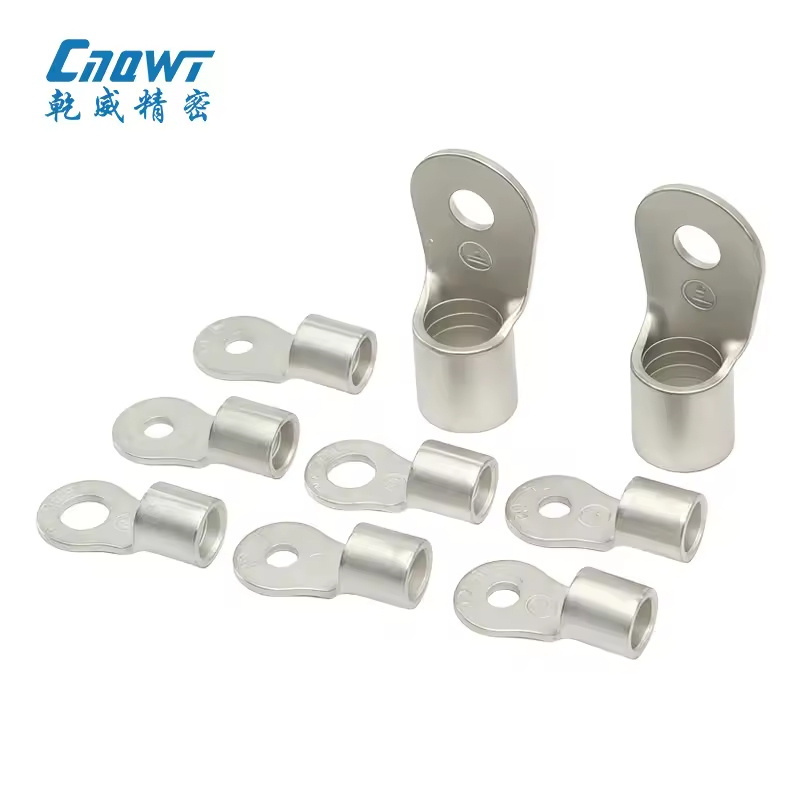
Why High-Current Terminal Design Matters in AI Power Systems
In high-current applications, terminal design and manufacturing accuracy are closely connected.
Consider a simple manufacturing chain:
Material → Tooling → Stamping → Plating → Crimping → Electrical Connection
A problem at any stage can affect the final component.
Precision stamping helps control critical dimensions such as terminal width, thickness, contact geometry, and crimping features. Tooling accuracy is especially important when a terminal contains multiple forming or bending features.
Consistent production also matters. An OEM may approve a sample during the development stage, but the real test comes when thousands or millions of terminals are produced.
This is why manufacturers need suitable tooling, process control, inspection procedures, and production equipment to maintain consistency from batch to batch.
Custom Electrical Terminals for AI Data Center Equipment
Not every power connection can be solved with an off-the-shelf terminal.
During equipment development, engineers may need a terminal with a specific cable size, mounting position, connection direction, material, plating, or dimensional tolerance.
When Standard Terminals Are Not Enough
Custom terminal development may be appropriate when a project requires:
- Non-standard dimensions
- Special cable sizes
- Customized mounting features
- Specific material requirements
- Different plating requirements
- Higher current capacity
- A particular crimping structure
- Integration with an existing electrical assembly
The earlier the terminal manufacturer is involved, the easier it is to review these requirements before tooling and mass production begin.
Custom Terminal Development Process
A practical development process can include:
Requirement → Design → Tooling → Stamping → Plating → Inspection → Mass Production
The manufacturer first reviews the customer’s drawing, sample, cable specification, and performance requirements. Tooling can then be developed based on the approved design.
After stamping and forming, the terminals may undergo plating and inspection before samples are evaluated.
Once the design is approved, the same tooling and controlled production process can be used for mass production.
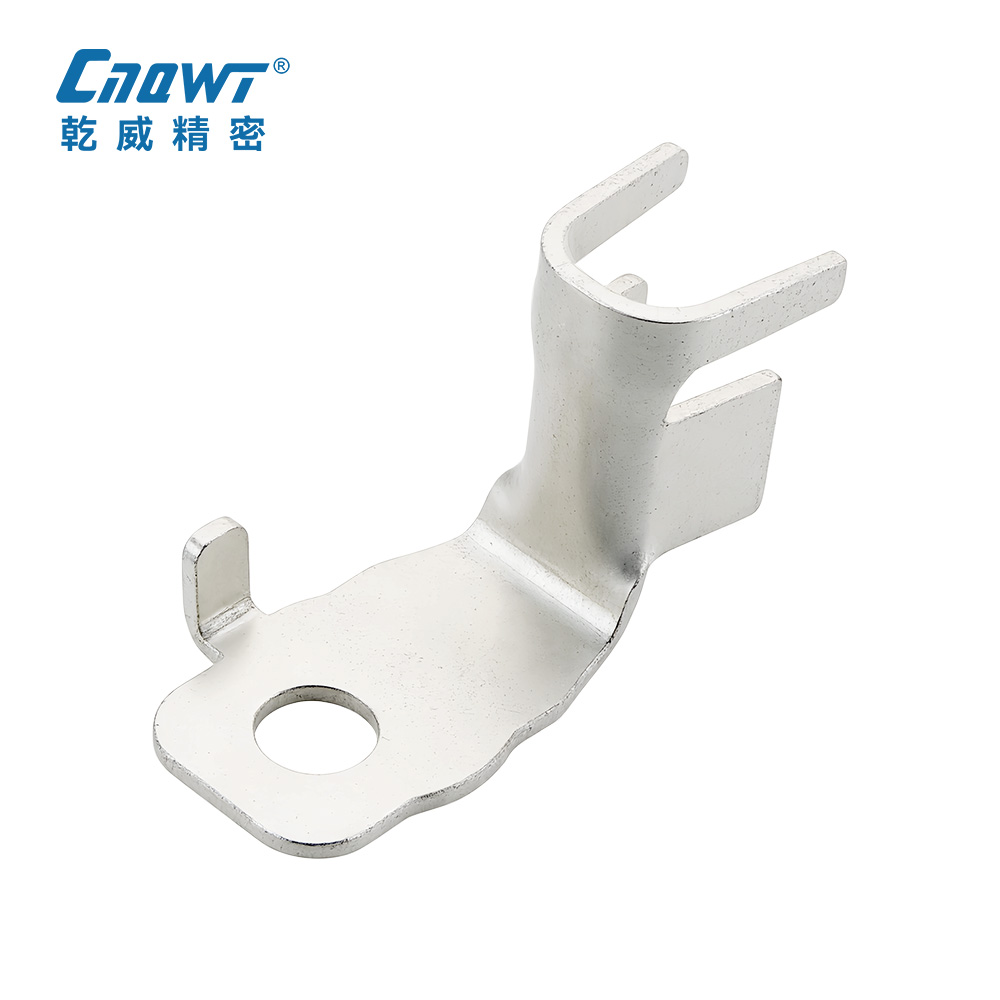
Quality Requirements for AI Data Center Power Connections
For high-power applications, quality control should cover more than visual inspection.
Depending on the terminal and application, manufacturers may need to control:
- Dimensional accuracy
- Material specifications
- Plating quality
- Contact resistance
- Crimping performance
- Retention force
- Temperature-rise performance
- Surface condition
- Batch consistency
The exact tests should be based on the product specification and end-use requirements.
For OEM buyers, it is also worth asking how the manufacturer controls raw materials, tooling, stamping processes, plating, and final inspection.
A good terminal supplier should be able to explain not only what the finished product looks like, but also how its production process keeps the product consistent.
Why Work with an Electrical Terminal Manufacturer?
For AI data center equipment and other high-power applications, working directly with an experienced electrical terminal manufacturer can simplify product development.
A capable manufacturer can support several stages of the project, including:
- Terminal design
- Material selection
- Custom tooling
- Precision stamping
- Plating
- Quality inspection
- Sample development
- Mass production
This can be particularly useful when the terminal is a custom part rather than a standard catalog item.
For OEM buyers, supplier evaluation should include manufacturing capability as well as product specifications. Questions about tooling, production capacity, quality control, material traceability, and long-term supply should be discussed before placing a large production order.
Qianwei Electrical Terminal Solutions for High-Power Applications
Qianwei Precision focuses on electrical terminal manufacturing and custom metal stamping for OEM applications.
The manufacturing process covers multiple stages, from tooling and precision stamping to plating, inspection, and mass production. The company works with materials including copper, brass, and phosphor bronze for different terminal applications.
For projects requiring custom electrical terminals, Qianwei can work from customer drawings, specifications, or application requirements to develop suitable tooling and production processes.
The same manufacturing approach can also be applied to high-current terminals and other electrical connection components where dimensional consistency and stable production are important.
If you are developing a power distribution system, high-power equipment, UPS system, or other electrical application, the terminal should be considered as part of the complete electrical connection rather than as an isolated component.
How to Evaluate a Power Connection Supplier
Before selecting a supplier, OEM buyers can ask a few practical questions:
Can the supplier manufacture custom electrical terminals?
Custom tooling and stamping capability can be important when the required terminal does not match a standard product.
Can the supplier control the entire production process?
Having tooling, stamping, plating, inspection, and production capabilities under controlled processes can help improve consistency.
Can the supplier work with the required materials?
Material selection should match the electrical and mechanical requirements of the application.
Can the supplier support testing and quality documentation?
Testing requirements should be discussed early, particularly for high-current applications.
Can the supplier maintain stable mass production?
A supplier should be able to reproduce approved samples consistently when production volumes increase.
These questions can help procurement teams distinguish between a company that simply supplies standard parts and a manufacturer that can participate in product development.
Conclusion
AI data centers are creating new challenges for power system design, particularly as computing equipment becomes more power-dense.
For electrical connections, higher current loads make material selection, contact resistance, thermal performance, mechanical stability, and manufacturing consistency increasingly important.
High-current electrical terminals are only one part of the complete power system, but they are an important connection point between cables and electrical equipment. Choosing the right terminal starts with understanding the actual application rather than simply selecting a component from a catalog.
For OEMs developing high-power equipment, custom terminal development can also provide more flexibility when standard products cannot meet the required dimensions or electrical specifications.
Qianwei Precision provides custom electrical terminal manufacturing, precision stamping, tooling, plating, inspection, and mass production support for OEM applications.
Looking for custom electrical terminals for high-power or AI data center applications? Contact Qianwei Precision to discuss your drawings, cable specifications, materials, plating requirements, and production needs.
FAQs
What types of electrical terminals are used in AI data centers?
The terminal type depends on the specific equipment and connection method. High-current cable terminals, stamped terminals, grounding terminals, and customized electrical terminals may be used in different power distribution and equipment applications.
Why do AI data centers require high-current terminals?
AI servers and related infrastructure can require higher power levels than many conventional computing systems. High-current terminals can be designed to handle the required electrical load while maintaining reliable mechanical and electrical connections.
How do you choose a high-current electrical terminal?
Start with the continuous and peak current, cable size, terminal material, connection method, operating temperature, plating, and required mechanical performance. The terminal should be evaluated as part of the complete electrical connection.
What materials are suitable for high-current terminals?
Copper is commonly considered because of its high electrical conductivity. Brass and phosphor bronze can also be used when a balance of electrical conductivity, mechanical strength, spring properties, and manufacturability is required.
How does contact resistance affect terminal performance?
Higher contact resistance can result in greater heat generation when current flows through the connection. Consistent contact geometry, proper crimping, suitable materials, and appropriate surface treatment can help maintain stable electrical performance.
Can electrical terminals be customized for AI power systems?
Yes. Custom terminals can be developed for specific cable sizes, dimensions, mounting structures, materials, plating requirements, and connection configurations.
What plating is suitable for high-current electrical terminals?
The appropriate plating depends on the terminal material, operating environment, contact requirements, and application. Tin and nickel are commonly used finishes, but the specific plating specification should be determined based on the project requirements.
How can terminal connections reduce heat generation?
Reducing unnecessary electrical resistance is one of the key considerations. Proper terminal design, sufficient contact area, correct material selection, accurate crimping, and consistent manufacturing can all contribute to a stable connection.
What should OEM buyers look for in an electrical terminal manufacturer?
OEM buyers should consider tooling capability, precision stamping, material control, plating, inspection, testing, customization capability, production capacity, and the supplier’s ability to maintain consistent quality during mass production.
Can Qianwei manufacture custom electrical terminals for high-power applications?
Qianwei Precision provides custom electrical terminal development and manufacturing support, including tooling, precision stamping, plating, inspection, and mass production. OEM customers can provide drawings or application requirements for evaluation.

