

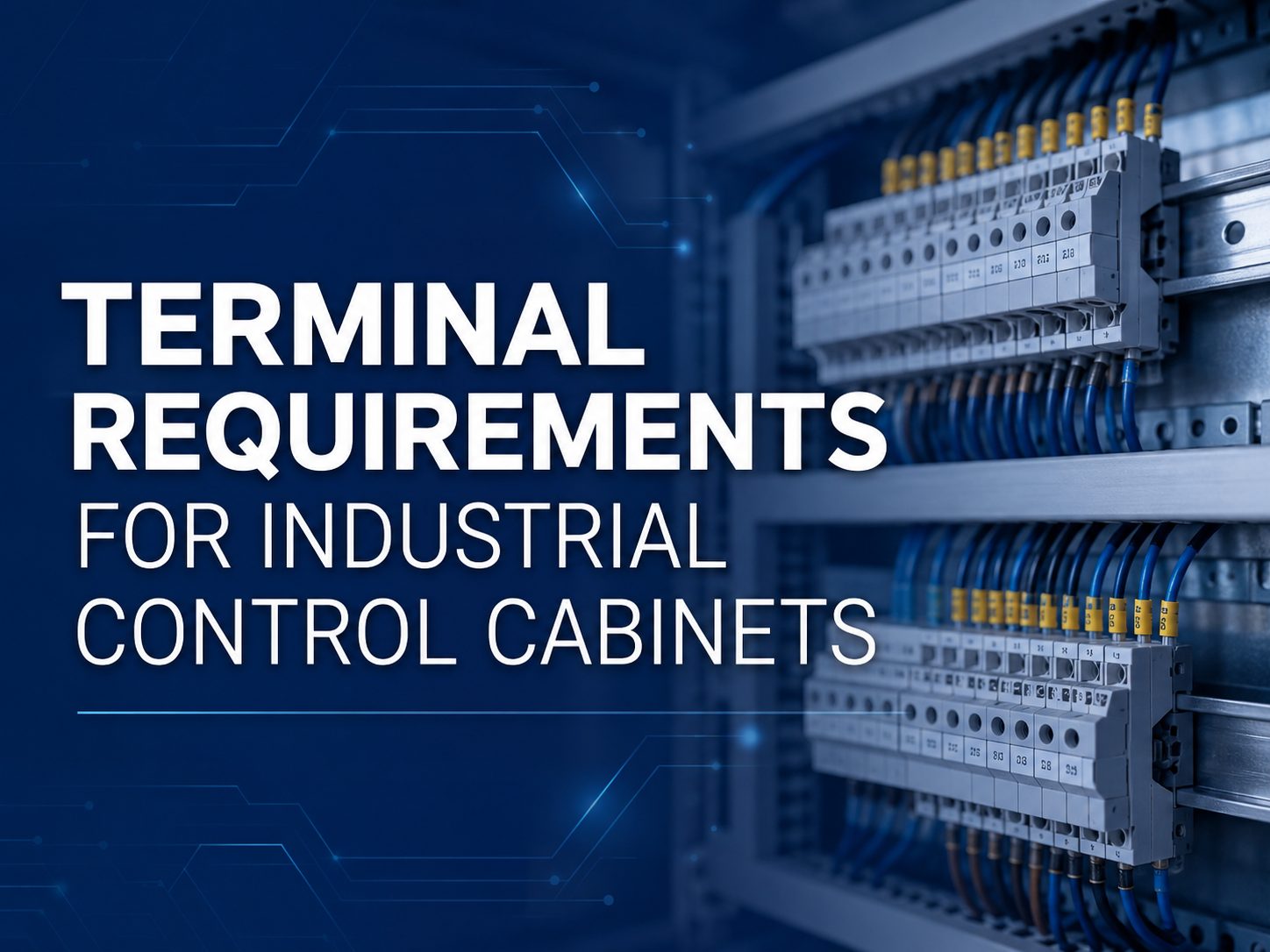
Industrial control cabinets are the backbone of modern automation systems. Whether controlling manufacturing equipment, power distribution, PLC systems, or industrial robots, every control cabinet depends on reliable electrical terminals to ensure safe and stable power and signal transmission.
Although electrical terminals are relatively small components, they have a direct impact on the safety, efficiency, and service life of an entire control system. Loose connections, excessive heat generation, corrosion, or poor conductivity can all lead to equipment failures, production downtime, and expensive maintenance costs.
For engineers, panel builders, and OEM manufacturers, understanding the key requirements for industrial control cabinet terminals is essential when selecting the right electrical connection solution.
This guide explains the critical performance requirements, material selection, certifications, and design considerations that help ensure long-term reliability in industrial control cabinets.
What Are Industrial Control Cabinet Terminals?
Industrial control cabinet terminals are conductive metal components that connect wires, cables, relays, switches, circuit breakers, PLC modules, sensors, and other electrical devices inside an electrical control panel.
Their primary functions include:
- Providing secure electrical connections
- Reducing contact resistance
- Preventing wire loosening
- Improving maintenance efficiency
- Supporting safe current transmission
They are widely used in:
- PLC Control Cabinets
- Motor Control Centers (MCC)
- Industrial Automation Systems
- Servo Control Cabinets
- Variable Frequency Drive (VFD) Panels
- Distribution Cabinets
- Power Control Panels
- Robotics Control Systems
Selecting the appropriate terminal ensures both electrical performance and long-term operational stability.
Why Terminal Selection Matters
Many electrical failures inside industrial cabinets originate from poor terminal selection rather than defective equipment.
Common issues include:
- Loose wire connections
- High contact resistance
- Excessive temperature rise
- Electrical arcing
- Oxidation
- Premature component failure
Choosing high-quality terminals significantly reduces these risks while improving equipment reliability and reducing maintenance costs.
Key Terminal Requirements for Industrial Control Cabinets
1. Current Carrying Capacity
Current rating is one of the most important selection factors.
The terminal must safely carry the operating current without excessive heat generation.
Typical industrial control cabinet ratings include:
| Application | Typical Current |
|---|---|
| PLC Signal Circuits | 1–5A |
| Relay Outputs | 5–10A |
| Control Wiring | 10–20A |
| Power Distribution | 20–100A+ |
Undersized terminals increase contact resistance, leading to overheating and reduced service life.
2. Voltage Rating
Voltage rating determines the insulation capability of the terminal.
Common ratings include:
- 300V
- 600V
- 1000V AC/DC
Higher voltage systems require greater creepage distances and stronger insulation performance to prevent electrical breakdown.
3. Low Contact Resistance
Every electrical connection creates resistance.
A high-quality terminal should provide:
- Stable contact pressure
- Large contact area
- Consistent conductivity
- Minimal voltage drop
Lower contact resistance means:
- Lower energy loss
- Reduced heat generation
- Improved electrical efficiency
4. Mechanical Strength
Industrial environments expose control cabinets to continuous vibration and mechanical stress.
A reliable terminal should withstand:
- Pull-out force
- Crimp strength
- Mechanical vibration
- Repeated maintenance operations
Precision stamping and proper material selection help maintain long-term mechanical stability.
5. Corrosion Resistance
Industrial control cabinets often operate in environments with:
- High humidity
- Dust
- Oil mist
- Chemical exposure
Surface treatments such as:
- Tin plating
- Nickel plating
- Silver plating
protect terminals from oxidation while maintaining excellent electrical conductivity.
Tin-plated brass terminals remain one of the most popular solutions for industrial automation applications.
6. High Temperature Performance
Electrical cabinets generate heat during continuous operation.
Industrial terminals should maintain reliable performance under temperatures ranging from -40°C to +105°C, with some applications requiring resistance up to 125°C.
Proper material selection prevents deformation, oxidation, and contact failure during long-term operation.
7. Material Selection
Different applications require different conductive materials.
| Material | Advantages | Typical Applications |
|---|---|---|
| Brass | Excellent conductivity and strength | General industrial terminals |
| Phosphor Bronze | High elasticity and fatigue resistance | Spring contacts |
| Copper | Maximum conductivity | High-current systems |
| Stainless Steel | Corrosion resistance | Special environments |
Brass remains one of the most commonly used materials because it offers an excellent balance of conductivity, strength, machinability, and cost.
Different Types of Industrial Control Cabinet Terminals
Selecting the appropriate terminal type depends on the installation method and electrical requirements.
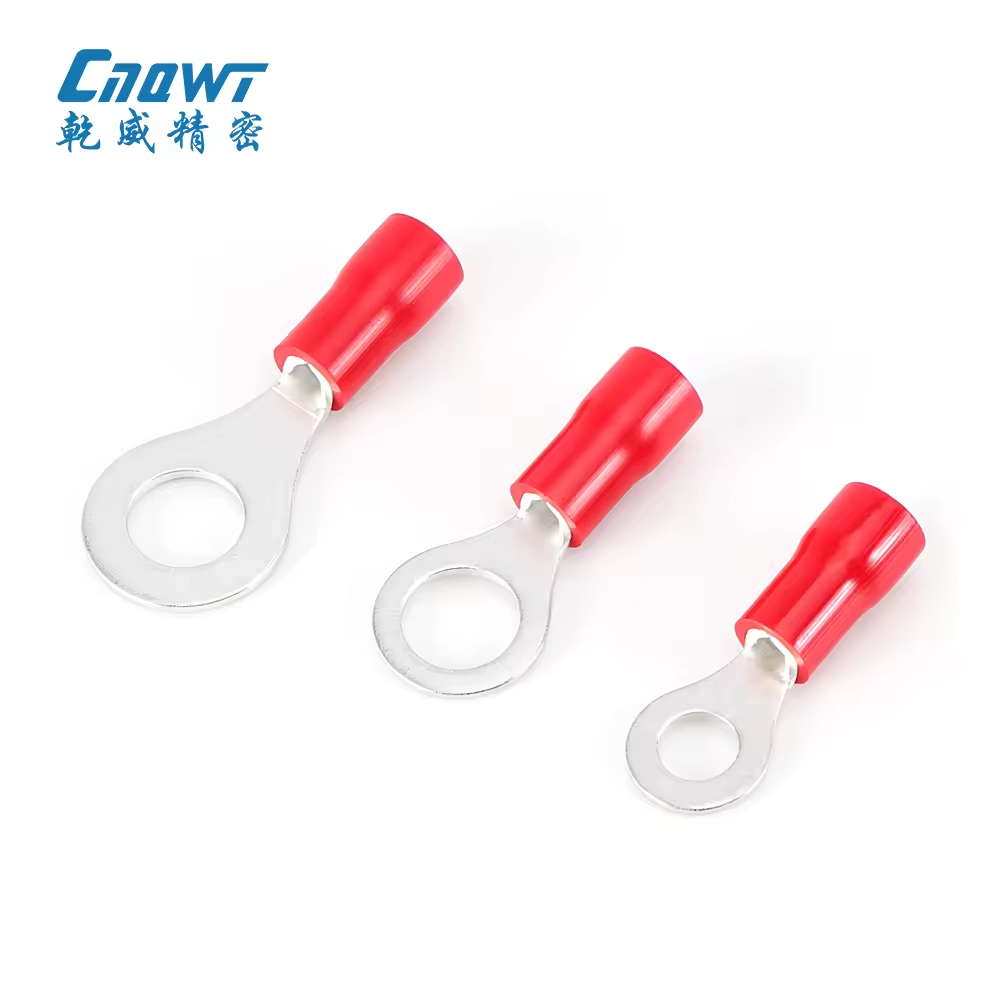
Ring Terminals
Ideal for screw-mounted connections requiring maximum vibration resistance.
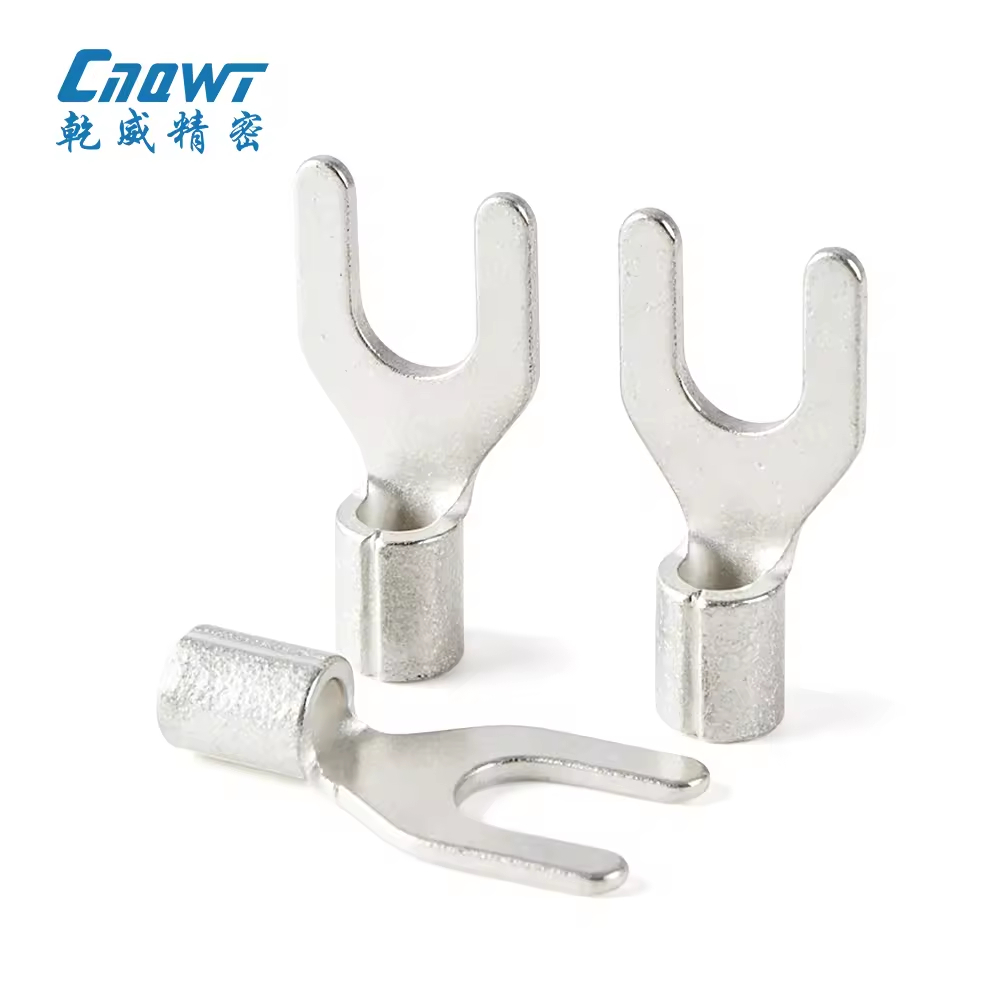
Fork Terminals
Allow quick installation without completely removing mounting screws.
Pin Terminals
Designed for insertion into terminal blocks and control devices.
Ferrules
Prevent wire strand damage while improving insertion quality.
Crimp Terminals
Provide permanent, vibration-resistant electrical connections.
Spring Clamp Terminals
Suitable for automation equipment requiring tool-free installation.
Push-in Terminals
Reduce assembly time while maintaining reliable electrical contact.

Industry Standards and Certifications
Industrial terminals should comply with recognized international standards, including:
- UL
- RoHS
- REACH
- ISO 9001
- IATF 16949 (for automotive-related applications)
Compliance ensures product safety, environmental responsibility, and manufacturing consistency.
Common Terminal Problems in Control Cabinets
Even high-quality control systems can experience failures if improper terminals are selected.
Common issues include:
Loose Crimp Connections
Cause intermittent electrical failures.
Incorrect Wire Size
Results in poor contact pressure.
Oxidized Contacts
Increase electrical resistance over time.
Improper Plating
Accelerates corrosion in humid environments.
Poor Material Selection
May reduce conductivity or mechanical strength.
Routine inspection and proper terminal selection significantly reduce these risks.
How to Choose the Right Terminal
Engineers should evaluate several factors before selecting a terminal:
- Operating current
- System voltage
- Wire size
- Installation method
- Environmental conditions
- Required certifications
- Contact material
- Surface treatment
- Production volume
- Customization requirements
A structured selection process improves both safety and long-term reliability.
Custom Terminal Solutions for Industrial Control Cabinets
Standard terminals do not always meet specialized industrial requirements.
Custom terminals can be designed with:
- Customized shapes
- Different material thicknesses
- Special hole sizes
- Tin, nickel, or silver plating
- Reel packaging for automated assembly
- OEM logo marking
Customized solutions help improve assembly efficiency while ensuring compatibility with specific control cabinet designs.
Why Choose Qianwei Precision?
Qianwei Precision specializes in custom electrical terminals for industrial automation, electrical equipment, and control cabinet applications.
Our capabilities include:
- Over 10 years of manufacturing experience
- Precision high-speed metal stamping
- Mold design and development
- Plastic injection molding
- Automated production lines
- Strict quality inspection
- OEM & ODM customization
- Fast sample development
We work closely with customers from design validation through mass production, delivering reliable terminal solutions for demanding industrial environments.
Conclusion
Industrial control cabinet terminals play a critical role in ensuring electrical safety, operational reliability, and long-term system performance. Selecting the right terminal requires careful consideration of current capacity, voltage rating, material selection, mechanical strength, corrosion resistance, and applicable certifications.
For OEM manufacturers and industrial equipment builders, partnering with an experienced electrical terminal manufacturer can significantly improve product quality while reducing maintenance costs and downtime.
At Qianwei Precision, we provide custom electrical terminal solutions tailored to industrial control cabinet applications, helping customers achieve reliable performance from prototype development to high-volume production.
FAQs
What terminals are commonly used in industrial control cabinets?
Ring terminals, ferrules, crimp terminals, spring clamp terminals, and push-in terminals are the most commonly used connection types.
Why is brass widely used for electrical terminals?
Brass provides excellent conductivity, good mechanical strength, corrosion resistance, and cost-effective manufacturing.
Does tin plating improve terminal performance?
Yes. Tin plating improves corrosion resistance, enhances solderability, and maintains stable electrical contact over long periods.
Can industrial terminals be customized?
Absolutely. Manufacturers can customize dimensions, materials, surface treatments, packaging, and terminal structures to meet specific application requirements.
What certifications should industrial terminals have?
Depending on the application, common certifications include UL, RoHS, REACH, ISO 9001, and IATF 16949.

