


Requesting a quotation for custom electrical terminals involves more than simply asking for a unit price. To provide an accurate and competitive quote, a manufacturer needs to understand your product design, material requirements, technical specifications, order quantity, and intended application.
Whether you need custom copper terminals, stamped metal terminals, automotive terminals, or terminals on reel, providing complete information at the beginning of the project can significantly reduce communication time and prevent unnecessary delays.
For OEM manufacturers, electrical engineers, and purchasing teams, knowing what to prepare before contacting a terminal manufacturer can make the quotation and product development process much more efficient.
In this guide, we explain the key information you should prepare when requesting a custom terminal quote and how to work with a manufacturer to move your project from initial drawings to mass production.
Why Providing Complete Information Matters When Requesting a Custom Terminal Quote
Custom terminal pricing depends on several technical and manufacturing factors. Two terminals with similar dimensions may have very different production costs because of differences in material, plating, tolerances, tooling requirements, and manufacturing processes.
Providing detailed information helps manufacturers:
- Evaluate whether the design is suitable for the intended manufacturing process.
- Select appropriate materials and surface treatments.
- Estimate tooling and production costs more accurately.
- Identify potential design or manufacturing issues early.
- Determine realistic sample and mass production lead times.
- Reduce repeated communication during the quotation process.
A complete quotation request also helps manufacturers understand your long-term purchasing requirements rather than focusing only on the initial sample order.
Here are eight important categories of information to prepare.
1. Technical Drawings and Product Dimensions
Technical drawings are usually the most important documents when requesting a custom terminal quote. They allow manufacturers to understand the product structure, dimensions, tolerances, and manufacturing requirements.
2D Engineering Drawings
A detailed 2D drawing should include:
- Overall length, width, and height.
- Material thickness.
- Hole diameter and center-to-center distance.
- Bending angles and forming dimensions.
- Critical dimensional tolerances.
- Contact areas and connection structures.
For stamped electrical terminals, material thickness and bending geometry are particularly important because they directly affect forming accuracy, dimensional consistency, and production feasibility.
If certain dimensions are critical to the terminal’s performance, clearly identify them on the drawing.
3D CAD Files
If available, provide a 3D CAD model in formats such as STEP, STP, or IGES.
A 3D model helps engineers better understand the product geometry, bending structures, and spatial relationships between different features. When used together with a 2D engineering drawing, it provides a more complete reference for design evaluation and tooling development.
What If You Don’t Have a Complete Drawing?
Not every customer has a finished engineering drawing, especially during the early stages of product development.
You can also provide:
- Physical samples of existing terminals.
- Clear product photographs from multiple angles.
- Approximate dimensions and material thickness.
- Reference product numbers.
- A description of the intended application.
An experienced manufacturer can use this information to conduct an initial feasibility assessment and discuss possible design solutions.
2. Material Requirements
Material selection is another important factor affecting custom terminal pricing and performance.
Different metals offer different levels of electrical conductivity, mechanical strength, flexibility, and corrosion resistance. The right choice depends on how the terminal will be used.
Common Materials Used in Electrical Terminals
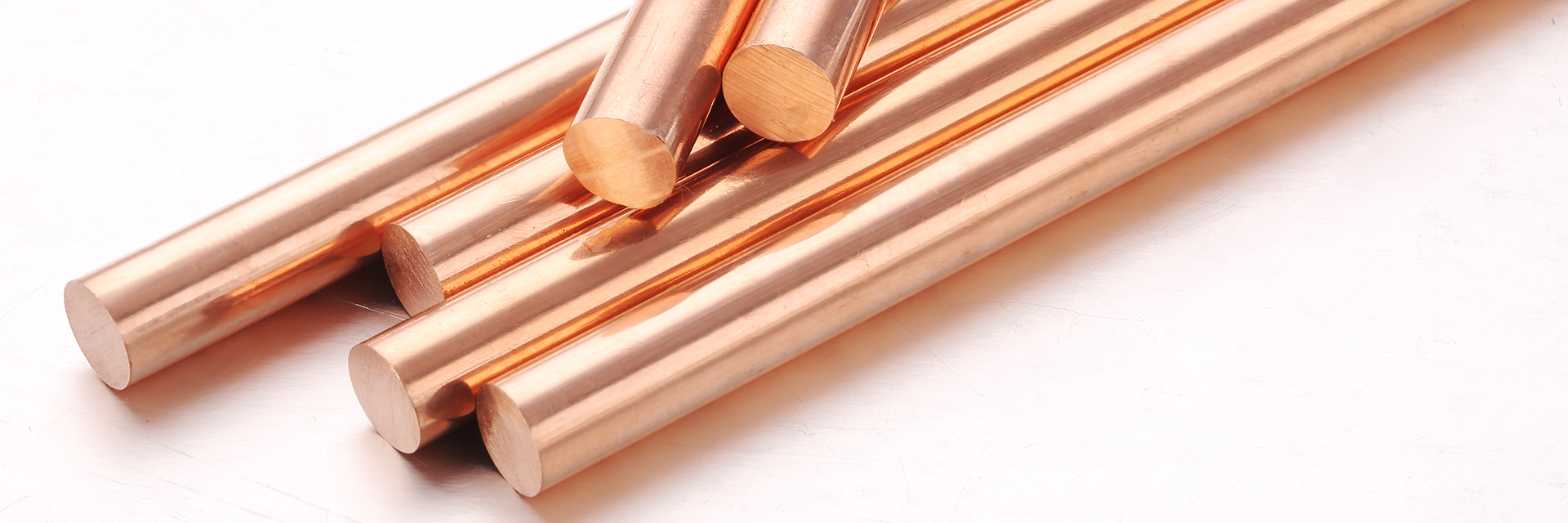
Copper
Copper offers excellent electrical conductivity and is commonly used in applications where efficient current transmission is essential, including high-current electrical connections and power distribution components.
Brass
Brass provides a good balance of strength, machinability, and electrical performance. It is widely used in general-purpose electrical terminals and stamped metal components.
Phosphor Bronze
Phosphor bronze offers good elasticity, fatigue resistance, and mechanical strength. It is particularly suitable for terminals requiring reliable contact pressure and repeated connection cycles.
Important Material Specifications
When requesting a quotation, try to specify:
- Material grade, such as C1100, C2600, C5191, or other required grades.
- Material thickness.
- Hardness or temper condition.
- Required electrical conductivity.
- Mechanical strength requirements.
If you are unsure which material is most suitable, provide the application’s operating conditions and performance requirements. The manufacturer can then recommend an appropriate material based on the design.
3. Surface Finish and Plating Requirements
Surface treatment plays an important role in terminal performance, particularly in electrical contact areas.
Different plating options provide different levels of conductivity, corrosion resistance, and surface protection. They can also have a significant impact on the final quotation.
Common Terminal Plating Options
Tin Plating
Tin plating provides good corrosion protection and is widely used in electrical terminals. It is also suitable for many soldering and electrical connection applications.
Nickel Plating
Nickel plating offers good hardness, wear resistance, and corrosion protection. It is often used as a protective barrier layer or as a functional surface finish.
Silver Plating
Silver provides excellent electrical conductivity and is used in applications requiring low contact resistance and reliable electrical performance.
Gold Plating
Gold plating offers excellent corrosion resistance and stable contact performance. It is generally used in specialized applications where high contact reliability is required.
What Plating Details Should You Specify?
To obtain an accurate quote, provide the following information whenever possible:
- Required plating type.
- Plating thickness.
- Bright or matte finish.
- Full plating or selective plating.
- Specific corrosion resistance requirements.
- Any customer-specific plating standards.
If you do not have a specific plating requirement, explain the working environment and electrical performance expectations so the manufacturer can recommend a suitable option.
4. Electrical and Mechanical Performance Requirements
A terminal may meet all dimensional requirements but still fail to perform properly if its electrical or mechanical characteristics are unsuitable for the application.
This is why performance specifications should be included in the quotation request whenever possible.
Electrical Requirements
Depending on the application, relevant electrical parameters may include:
- Rated current and voltage.
- Contact resistance.
- Electrical conductivity.
- Operating temperature range.
- Insulation requirements, where applicable.
For high-current terminals used in energy storage, EV charging, or industrial power systems, current-carrying capacity and temperature rise requirements deserve particular attention.
Mechanical Requirements
Mechanical specifications may include:
- Insertion and withdrawal force.
- Contact retention force.
- Pull-out strength.
- Terminal deformation resistance.
- Vibration resistance.
- Required connection cycle life.
For automotive terminals and wire harness applications, contact stability and mechanical retention are especially important.
Providing the applicable industry standards or customer specifications allows the manufacturer to evaluate the product against the correct performance criteria.
5. Order Quantity and Annual Demand
Order quantity is a major factor in custom terminal pricing.
The unit price of a custom terminal is influenced not only by raw material costs but also by tooling investment, production efficiency, setup time, and manufacturing volume.
Information to Include
When requesting a quote, provide:
- Prototype or sample quantity.
- Expected initial order quantity.
- Estimated monthly demand.
- Annual purchasing forecast.
- Expected order frequency.
For example, a project requiring 5,000 pieces initially may have different cost considerations from one requiring 500,000 pieces annually.
Why Does Quantity Matter?
Production volume affects several cost components:
- Raw material purchasing and utilization.
- Stamping production efficiency.
- Tooling investment and cost allocation.
- Production setup and changeover costs.
- Packaging and logistics expenses.
If you expect demand to increase after product approval, share your estimated annual requirements. This allows the manufacturer to evaluate a more suitable production and tooling solution.
6. Tooling and Manufacturing Requirements
Custom electrical terminals are frequently manufactured through precision metal stamping, bending, and forming processes.
For more complex designs, dedicated tooling may be required to achieve the specified dimensions and production consistency.
Progressive Die or Custom Tooling
Before requesting a quotation, consider whether:
- You already have existing tooling.
- The manufacturer needs to develop a new stamping die.
- Your product requires progressive stamping.
- The existing design can be optimized for manufacturing.
- Special forming or secondary operations are necessary.
Progressive stamping is widely used for producing high volumes of precision metal terminals. It allows multiple manufacturing operations to be completed through a continuous process, improving production efficiency and consistency.
However, the suitability of progressive stamping depends on the terminal structure, material, dimensions, and production volume.
Manufacturing Process Requirements
Depending on the product design, manufacturing may involve:
- Precision metal stamping.
- Bending and forming.
- Surface plating.
- Secondary machining.
- Plastic injection molding.
- Terminal strip processing.
For terminals supplied in continuous strips, packaging and feeding requirements should also be discussed. For example, terminals on reel are commonly used in automated terminal processing and wire harness production.
A manufacturer with in-house tooling capabilities can often provide better coordination between product design, die development, and mass production.
7. Samples, Reference Products, and Application Information
Sometimes technical drawings do not fully explain how a terminal functions in its actual application.
Providing reference samples and application details helps manufacturers better understand the intended connection structure and operating environment.
What Can You Provide?
If available, prepare:
- Physical terminal samples.
- Product photographs from multiple angles.
- Existing part numbers.
- Reference product specifications.
- Assembly drawings.
- Application descriptions.
A physical sample can be particularly useful when the product has complex forming structures or specific connection features.
Explain Where the Terminal Will Be Used
The intended application helps determine material selection, plating requirements, and performance expectations.
Common applications include:
- Automotive wiring harnesses.
- HVAC electrical systems.
- Industrial control panels.
- EV charging equipment.
- Battery energy storage systems.
- Household electrical appliances.
- Power distribution equipment.
For example, a terminal used in an automotive wiring harness may require specific retention force and vibration resistance, while a high-current power terminal may require greater attention to conductivity and temperature rise.
The more clearly you describe the application, the easier it is for the manufacturer to recommend a suitable solution.
8. Packaging, Delivery, and Certification Requirements
Technical specifications are not the only considerations when requesting a custom terminal quote. Packaging, delivery arrangements, and quality requirements should also be discussed before production begins.
Packaging Requirements
Specify how you want the terminals to be supplied:
- Terminals on reel.
- Loose terminals in bulk packaging.
- Custom trays or protective packaging.
- Specific reel dimensions or quantities.
- Customer-specific packaging labels.
For automated wire harness production, terminals on reel may be preferred because they support continuous feeding and improve production efficiency.
Delivery Requirements
Provide the following information:
- Shipping destination.
- Expected sample delivery date.
- Required mass production lead time.
- Preferred shipping method, if known.
- Expected delivery frequency.
This information helps the manufacturer evaluate production scheduling and logistics requirements.
Quality and Certification Requirements
If your company follows specific quality standards, communicate them at the quotation stage.
Relevant requirements may include:
- RoHS and REACH compliance.
- ISO quality management requirements.
- Material certificates.
- Dimensional inspection reports.
- Customer-specific testing and inspection standards.
For automotive-related projects, customers may also require suppliers to operate under IATF 16949 quality management requirements.
Clarifying these expectations early helps avoid quality and documentation issues later.
9. Custom Terminal Quotation Checklist
Before sending your inquiry, use the following checklist to make sure you have prepared the essential information.
| Information | What to Provide | Priority |
|---|---|---|
| Product Drawings | 2D engineering drawings or 3D CAD files | Essential |
| Material | Material grade and thickness | Essential |
| Dimensions | Critical dimensions and tolerances | Essential |
| Surface Finish | Plating type and thickness | Essential |
| Performance | Electrical and mechanical requirements | Recommended |
| Order Quantity | Initial order and annual demand | Essential |
| Samples | Physical samples or reference photos | Recommended |
| Application | Product usage and operating environment | Recommended |
| Packaging | Reel or bulk packaging requirements | Recommended |
| Delivery | Destination and expected schedule | Recommended |
| Quality Standards | Required certifications and inspection criteria | Recommended |
You do not need to have every detail finalized before contacting a manufacturer. However, providing drawings, material information, estimated quantities, and basic application requirements will make the initial quotation process much more efficient.
10. How Qianwei Precision Supports Your Custom Terminal Project
Choosing the right manufacturing partner is just as important as preparing the right quotation documents.
Established in 2012, Qianwei Precision specializes in electrical terminal manufacturing, precision metal stamping, and customized terminal solutions. We work with customers across automotive, industrial electrical, household appliance, and other electrical application sectors.
Our manufacturing capabilities support projects from initial drawing evaluation to tooling development, sample production, and mass manufacturing.
From Drawing Evaluation to Mass Production
1. Requirement Review
Our team reviews your engineering drawings, samples, and technical specifications to understand the project requirements.
2. Material Selection
We help evaluate suitable materials, including copper, brass, and phosphor bronze, based on the required electrical and mechanical properties.
3. Tooling Development
With in-house mold design and manufacturing capabilities, we develop precision stamping dies according to the product structure and production requirements.
4. Sample Production
Initial samples are produced for dimensional evaluation and functional verification before mass production.
5. Mass Production
Our high-speed stamping and manufacturing capabilities support stable production for customized electrical terminals and stamped metal components.
6. Quality Inspection
Products are inspected according to applicable dimensional, mechanical, appearance, and customer-specific requirements.
Why Work with Qianwei Precision?
- Established in 2012 with experience in precision terminal manufacturing.
- In-house mold design and manufacturing capabilities.
- More than 1,800 stamping and injection molds for production.
- High-speed stamping and plastic injection molding workshops.
- Custom electrical terminal and OEM manufacturing services.
- Quality management systems and product compliance support.
Whether you need terminals on reel, ring terminals, spade terminals, automotive terminals, or other customized stamped electrical components, our team can evaluate your requirements and discuss suitable manufacturing solutions.
FAQs About Custom Terminal Quotes
1. Can I Request a Custom Terminal Quote Without an Engineering Drawing?
Yes. You can initially provide physical samples, product photographs, approximate dimensions, or reference part numbers. The manufacturer can review the available information and advise whether additional drawings or measurements are required.
2. What File Formats Should I Send for a Custom Terminal Quotation?
Commonly accepted formats include PDF, DWG, DXF, STEP, and STP. A 2D drawing provides dimensional and tolerance information, while a 3D CAD model helps engineers understand the product structure.
3. Does the Material Affect the Price of Custom Electrical Terminals?
Yes. Material type, grade, thickness, hardness, and market price all influence manufacturing costs. Copper, brass, and phosphor bronze have different material costs and performance characteristics.
4. Is Custom Tooling Required for Every Terminal Project?
No. If existing tooling is compatible with your product design, it may be possible to use it. However, products with unique structures, dimensions, or forming requirements may need dedicated tooling.
5. Can I Request a Quotation for Both Samples and Mass Production?
Yes. Providing both sample quantities and estimated annual demand allows the manufacturer to evaluate development costs, tooling investment, and mass production pricing together.
6. How Can I Reduce the Cost of Custom Terminal Manufacturing?
Several factors can help optimize manufacturing costs:
- Simplify product structures where technically possible.
- Select materials according to actual performance requirements.
- Optimize material thickness and utilization.
- Evaluate suitable stamping and tooling processes.
- Provide realistic production forecasts.
- Avoid unnecessary dimensional tolerances and special requirements.
Discussing these factors with your manufacturer during the design stage can help reduce costs without compromising product performance.
Request a Custom Terminal Quote from Qianwei Precision
Preparing the right information is the first step toward a successful custom terminal project. Detailed drawings, material specifications, plating requirements, order quantities, and application information help manufacturers provide more accurate quotations and identify suitable production solutions.
At Qianwei Precision, we support customers with customized electrical terminal manufacturing, precision stamping, tooling development, and OEM production.
Have a custom terminal project in mind?
Send us your drawings, samples, or product requirements. Our team will review your specifications and help you evaluate the right materials, manufacturing processes, and production solutions.
Contact Qianwei Precision today to discuss your custom terminal requirements and request a quotation.

