


Pin terminals are small electrical components, but they are used in a wide range of wiring and connector applications. They provide a practical way to terminate a wire and establish a reliable connection with a connector, terminal block, or electrical component.
You can find pin terminals in automotive wiring harnesses, industrial control equipment, household appliances, electronic devices, and many other systems where space, connection reliability, and assembly efficiency matter.
But what exactly are pin terminals used for? How are they different from other terminals, and what should you consider when choosing one?
This guide covers the common uses of pin terminals, their advantages, installation methods, and the key factors to consider when sourcing them for a project.
What Is a Pin Terminal?
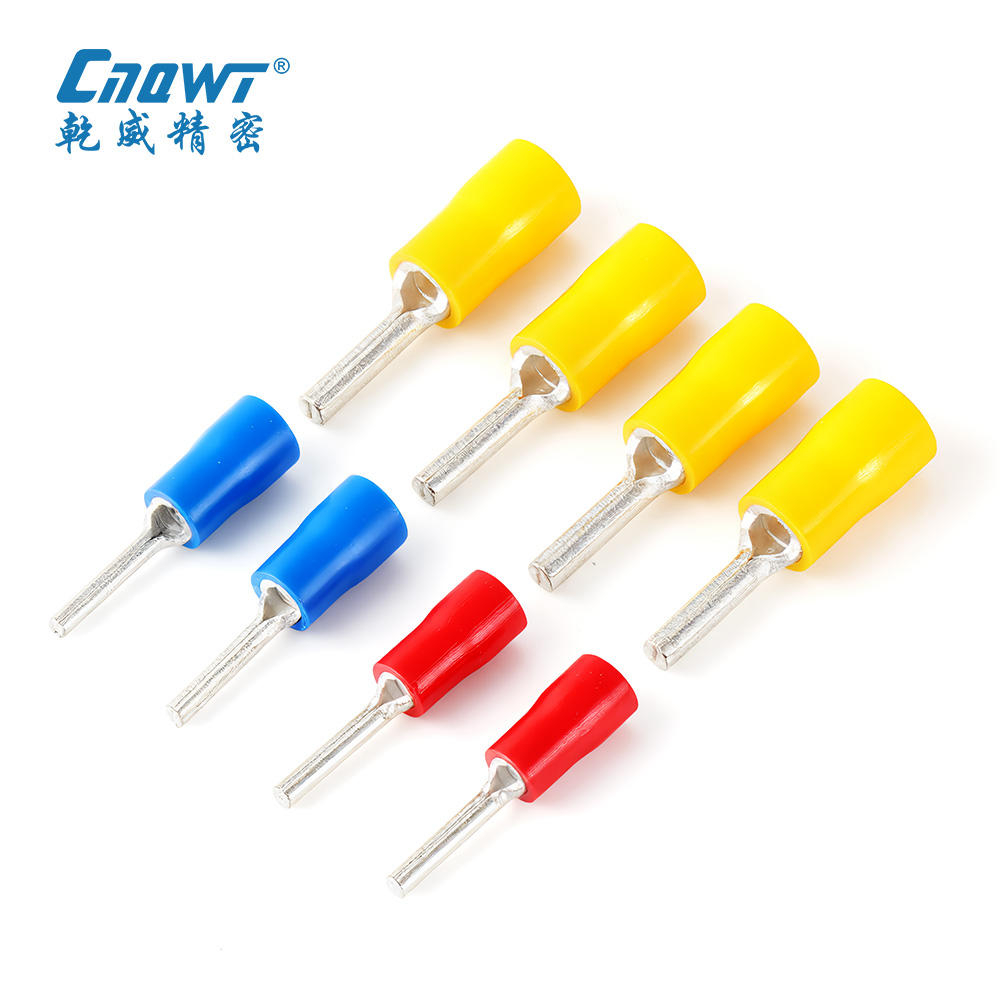
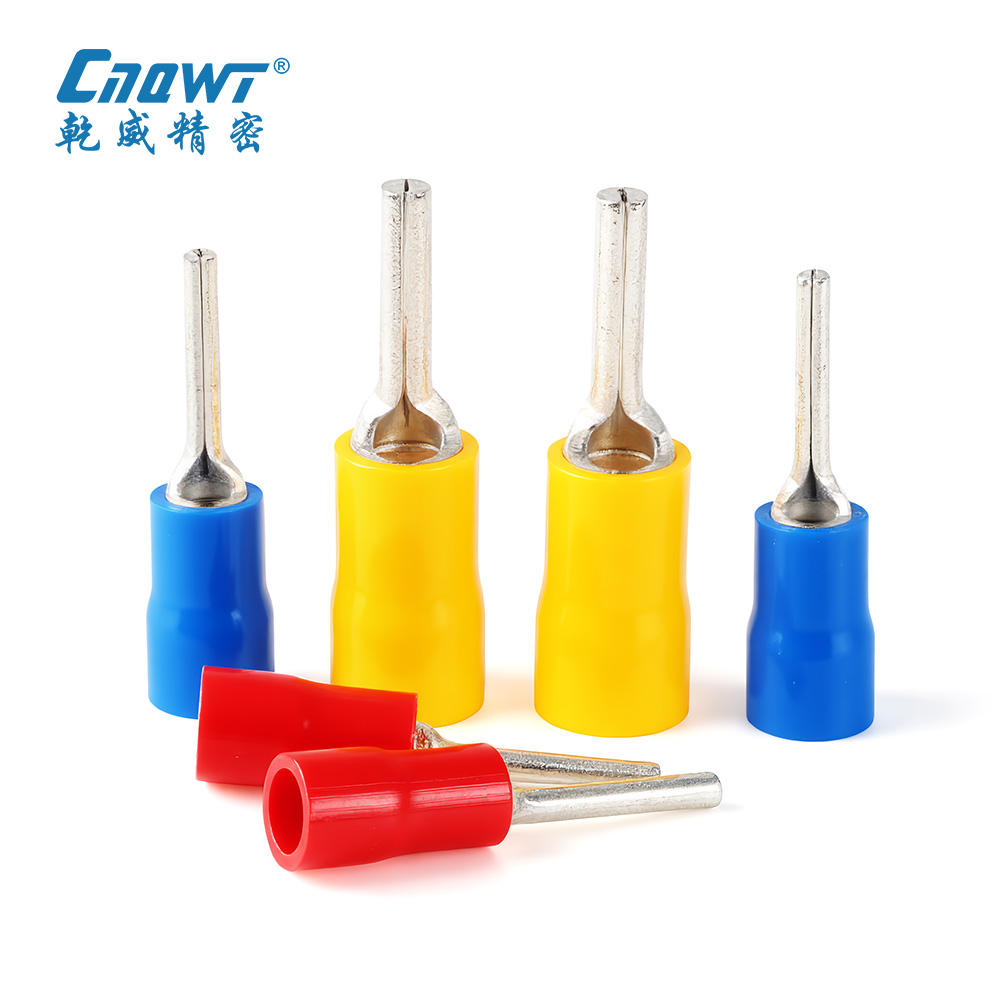
A pin terminal is a type of electrical terminal with a narrow, pin-shaped contact section. The other end usually contains a barrel or crimp area where the electrical wire is secured.
After the wire is stripped, the conductor is inserted into the terminal barrel and crimped. The pin section can then be inserted into a compatible connector housing, terminal block, or electrical component.
The basic connection is simple:
Wire → Crimp Barrel → Pin Contact → Connector or Electrical Component
This design makes pin terminals particularly useful when multiple wires need to be connected in a compact and organized arrangement.
How Does a Pin Terminal Work?
The terminal creates an electrical path between the wire and the mating contact. A properly formed crimp holds the conductor mechanically while maintaining a stable electrical connection.
For production applications, the quality of the crimp is especially important. An incorrectly crimped terminal can result in increased contact resistance, loose connections, or intermittent electrical faults.
Common Materials Used for Pin Terminals
Copper and copper alloys are widely used because they offer good electrical conductivity and mechanical performance.
Common materials include:
- Copper
- Brass
- Phosphor bronze
- Other copper alloys
The terminal may also receive surface plating. Tin plating is commonly used for general electrical applications because it provides good conductivity and corrosion resistance while remaining economical. Other plating systems may be selected when the application requires specific electrical, mechanical, or environmental performance.
Common Types of Pin Terminals
Pin terminals are available in different configurations depending on the application.
Common examples include:
- Open-barrel pin terminals
- Closed-barrel pin terminals
- Insulated pin terminals
- Non-insulated pin terminals
- Male pin terminals
- Female pin contacts
The correct design depends on the wire size, connector structure, current requirements, environment, and assembly method.
What Are Pin Terminals Used For?
Pin terminals are mainly used to create reliable wire-to-connector or wire-to-component connections.
Typical applications include:
- Automotive wiring harnesses
- Industrial control panels
- Electrical equipment
- Household appliances
- Electronic devices
- Wire harness assemblies
- Communication equipment
- Low-voltage control systems
Their compact shape makes them particularly useful when several contacts need to fit inside a relatively small connector housing.
Common Applications of Pin Terminals
Automotive Wiring Harnesses
Automotive wiring is one of the major application areas for pin terminals.
Modern vehicles contain large numbers of electrical circuits connecting sensors, control modules, lighting systems, motors, switches, and other components. These circuits often need compact terminals that can withstand vibration and temperature changes.
Pin terminals can be used in:
- ECU connections
- Sensor wiring
- Lighting systems
- Dashboard systems
- Motor and actuator connections
- Automotive wiring harnesses
- Body control systems
For automotive applications, terminal dimensions and crimp performance need to be consistent because a small variation can affect connector assembly or contact reliability.
Terminal material, plating, retention force, and environmental resistance also need to match the application.
Industrial Control Panels
Pin terminals are also used in industrial control cabinets and electrical control panels.
A control cabinet may contain PLCs, relays, switches, circuit protection devices, sensors, and numerous control wires. Keeping these connections organized is important for both manufacturing and maintenance.
Pin terminals can be used for connections between wires and:
- PLC systems
- Relay modules
- Terminal blocks
- Control components
- Industrial automation equipment
Their relatively compact design can be useful when wiring space is limited.
Electrical Equipment and Power Distribution
Pin terminals can be found in various electrical equipment where wires need to be connected to components or connector systems.
Examples include:
- Power supplies
- Electrical control equipment
- Distribution equipment
- Electrical machinery
- Low-voltage electrical systems
However, it is important not to treat every pin terminal as a high-current terminal. Standard pin terminals are generally designed for specific wire sizes and electrical ratings. High-current applications may require specially designed power terminals, cable lugs, or other connection systems.
The terminal should always be selected according to the actual current, wire size, temperature, and contact design.
Household Appliances
Household appliances contain more wiring than many people realize. Air conditioners, refrigerators, washing machines, microwave ovens, and other equipment all require numerous electrical connections.
Pin terminals may be used to connect internal wiring to:
- Control boards
- Motors
- Sensors
- Switches
- Heating elements
- Other electrical components
For appliance manufacturers, consistent terminal dimensions and stable crimping performance are important because products are normally manufactured in large quantities.
This is also an area where automated stamping and assembly can make a significant difference in production consistency.
Electronic Devices and PCB Connections
Smaller pin terminals are often used in electronic equipment where space is limited.
Applications may include:
- Electronic control modules
- PCB connector systems
- Signal wiring
- Small control devices
- Electronic equipment
The requirements here can be quite different from automotive or industrial power applications. A small electronic device may prioritize compact dimensions and precise contact geometry rather than high current capacity.
Wire Harness Manufacturing
Wire harness manufacturers use pin terminals to build organized, repeatable electrical connections.
A typical process may include:
- Cutting the wire
- Stripping the insulation
- Crimping the terminal
- Inspecting the crimp
- Inserting the terminal into a connector housing
- Testing the completed harness
Pin terminals are well suited to automated or semi-automated crimping equipment. For high-volume harness production, consistent terminal dimensions help reduce assembly problems and improve process stability.
Communication and Low-Voltage Electrical Systems
Pin terminals can also be used in communication equipment and low-voltage control systems where compact and reliable connections are required.
Typical applications include signal wiring, control modules, and equipment wiring.
For these applications, electrical performance is not always about carrying high current. Contact stability, dimensional accuracy, and compatibility with the mating connector can be equally important.
Why Are Pin Terminals Used?
There are several practical reasons manufacturers choose pin terminals.
Reliable Electrical Connection
A properly selected and crimped pin terminal provides a stable electrical connection between the conductor and mating contact.
The quality of the connection depends on several factors, including the terminal material, wire size, crimp geometry, plating, and manufacturing process.
Easy and Fast Wire Termination
Pin terminals are suitable for crimping, which makes them practical for both manual assembly and automated production.
Once the correct terminal and crimping tooling have been selected, large quantities of wires can be processed efficiently.
Compact Design
Space is often limited inside electrical equipment and connector housings. The narrow contact section of a pin terminal allows multiple contacts to be arranged in a relatively small space.
This is particularly useful in automotive connectors, electronic equipment, and compact control systems.
Consistent Connection Quality
In mass production, consistency matters as much as individual connection performance.
Precision stamping and controlled forming processes help manufacturers maintain stable dimensions from batch to batch. Proper quality control can also check dimensions, crimp performance, plating, and other characteristics.
Easy Integration With Connectors
Pin terminals can be designed to fit specific connector housings. Once assembled, the terminals can form part of a larger modular connector system.
This makes troubleshooting, assembly, and wiring management easier in many applications.
Pin Terminals vs. Other Types of Terminals
Pin terminals are not suitable for every type of electrical connection. Different terminal designs are intended for different connection methods.
| Terminal Type | Typical Application | Main Advantage |
|---|---|---|
| Pin Terminal | Connectors and wiring | Compact connection |
| Ring Terminal | Stud or screw connections | Secure fastening |
| Spade Terminal | Screw or stud connections | Easy installation |
| Butt Connector | Wire-to-wire connections | Simple wire joining |
| Blade Terminal | Electrical components | Quick connection |
| Ferrule | Terminal blocks | Prevents wire strands from spreading |
Pin Terminals vs. Ring Terminals
Ring terminals have a circular opening designed to fit over a stud or screw. They are commonly used where the wire needs to be mechanically fastened to a fixed connection point.
Pin terminals, on the other hand, are generally designed for insertion into a compatible contact or connector.
Pin Terminals vs. Spade Terminals
Spade or fork terminals are designed to fit around a screw or stud. Their open design allows relatively quick installation without completely removing the fastening screw.
Pin terminals are more commonly associated with connector-based applications.
Pin Terminals vs. Ferrules
Pin terminals and ferrules can look similar, but their purposes are different.
A ferrule is generally used to terminate stranded wire before it is inserted into a screw or spring-type terminal block. It helps keep the wire strands together.
A pin terminal normally has a defined contact section designed to mate with another electrical contact.
Choosing between them depends on the connection system rather than appearance alone.
How to Choose the Right Pin Terminal
Selecting the correct pin terminal starts with the application rather than the terminal itself.
Match the Wire Size
The terminal barrel must match the conductor size.
Wire size may be specified in AWG or mm². Using a terminal designed for a different wire size can result in an unreliable crimp.
Consider the Current Rating
Current capacity depends on more than the terminal shape.
Consider:
- Wire size
- Terminal material
- Contact resistance
- Temperature
- Crimp quality
- Connector design
- Operating conditions
Always use the manufacturer’s specified electrical ratings when available.
Choose the Right Terminal Material
Copper and copper alloys are common choices, but the best material depends on the required electrical and mechanical properties.
For some applications, higher mechanical strength or better environmental resistance may be more important than maximum conductivity.
Select the Appropriate Plating
Tin plating is widely used for general-purpose terminals. Other plating options may be considered for demanding applications.
The choice can affect:
- Corrosion resistance
- Contact performance
- Surface durability
- Environmental compatibility
Consider the Operating Environment
The terminal may need to operate under vibration, humidity, temperature changes, or exposure to chemicals.
Automotive and industrial applications often have more demanding environmental requirements than indoor consumer products.
Check Connector Compatibility
Before ordering a pin terminal, check the mating connector carefully.
Important dimensions may include:
- Pin diameter
- Contact length
- Terminal width
- Retention features
- Housing compatibility
- Wire range
Even a small dimensional difference can prevent the terminal from fitting correctly.
How Are Pin Terminals Installed?
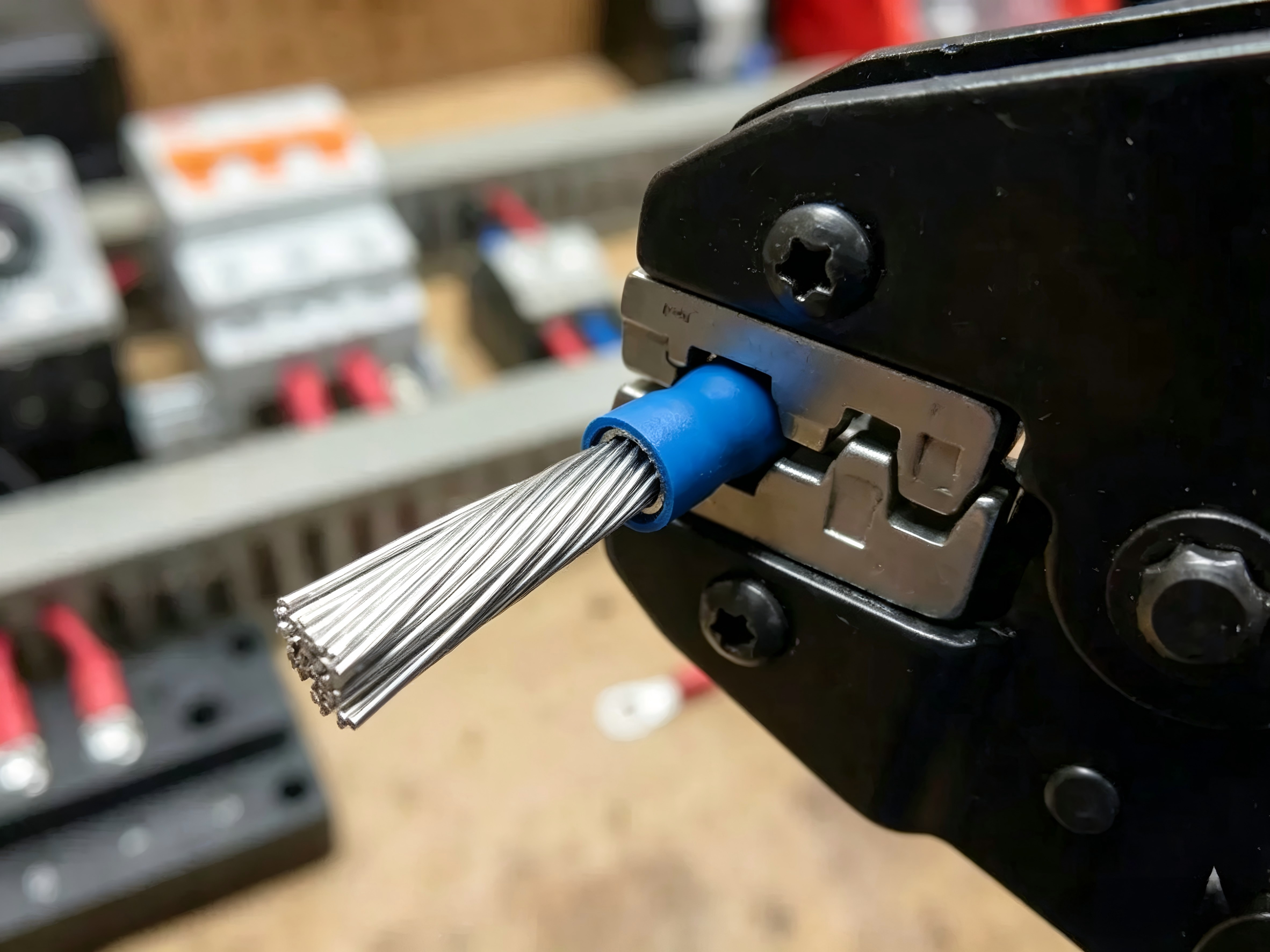
The basic installation process is straightforward, but the crimp itself requires proper tooling and process control.
Strip the Wire
Remove the required length of insulation without damaging the conductor strands.
Insert the Conductor
Insert the stripped conductor fully into the terminal barrel. The conductor should reach the appropriate position before crimping.
Crimp the Terminal
Use the correct crimping tool or applicator for the terminal design and wire size.
The goal is to create a mechanically secure connection without excessively deforming the terminal.
Inspect the Crimp
Check whether the conductor is properly positioned and whether the crimp is formed correctly.
For production applications, crimp height, pull force, cross-section analysis, and electrical testing may be used as part of quality control.
Insert the Terminal Into the Connector Housing
If the terminal is designed for a connector housing, insert it in the specified orientation until the locking mechanism engages.
Perform Electrical and Mechanical Testing
Depending on the application, testing may include continuity, contact resistance, insulation checks, and mechanical pull testing.
Common Problems When Using Pin Terminals
Even a good terminal can fail if it is incorrectly selected or processed.
Incorrect Wire Size
Using the wrong terminal for the conductor can produce a poor crimp and unstable electrical connection.
Poor Crimping
Under-crimping can leave the conductor loose. Over-crimping can damage the conductor or terminal.
Both can affect connection performance.
Loose Terminal Connection
A terminal that is not fully inserted or properly locked into the connector housing may create intermittent faults.
Wrong Plating or Material
The wrong material or surface treatment can increase corrosion risk or affect long-term contact performance.
Terminal Deformation
Improper handling, tooling, or excessive force can deform the contact section and make connector assembly difficult.
Incorrect Connector Matching
A terminal should always be matched with its intended housing and mating contact. Similar-looking terminals are not necessarily interchangeable.
Pin Terminal Manufacturing: What Quality Should You Look For?
For OEMs and wire harness manufacturers, terminal quality starts long before the crimping process.
A reliable pin terminal manufacturer should have control over the key manufacturing stages, including material preparation, precision stamping, forming, plating, inspection, and packaging.
At Qianwei Precision, terminal production can be supported by precision metal stamping, mold manufacturing, injection molding, plating, and assembly capabilities. This integrated approach helps maintain better control over terminal dimensions and production consistency.
Quality inspection should cover factors such as:
- Terminal dimensions
- Material specifications
- Plating thickness
- Burrs and deformation
- Crimp performance
- Contact performance
- Mechanical strength
For custom terminals, tooling capability is also important. A manufacturer that can develop and modify stamping molds in-house can generally respond more efficiently to changes in terminal geometry.
How to Select a Pin Terminal Manufacturer
Choosing a supplier based only on unit price can create problems later, especially for customized terminals.
Before placing an order, consider the following:
Manufacturing Capability
Check whether the supplier has its own stamping, tooling, plating, injection molding, or assembly capabilities where required.
Material and Plating Options
Make sure the manufacturer can provide the material and surface treatment required for your application.
Tooling and Customization
For OEM projects, ask about custom molds, samples, dimensional tolerances, and engineering support.
Quality Control
A suitable supplier should have clear inspection procedures and quality documentation.
Certifications
Depending on the industry, certifications and compliance requirements may include ISO 9001, IATF 16949, UL-related requirements, RoHS, REACH, or other customer-specific standards.
Production Capacity
A supplier may be able to make samples but struggle with volume production. Check whether its equipment and production capacity match your expected order volume.
OEM/ODM Support
For non-standard pin terminals, engineering support can be just as important as manufacturing capacity.
Sample and Prototype Support
Samples allow you to verify dimensions, crimping performance, connector compatibility, and electrical characteristics before moving to mass production.
Get Custom Pin Terminals for Your Application
The right pin terminal depends on much more than its basic shape. Wire size, current, connector compatibility, material, plating, operating environment, and manufacturing process all affect the final connection.
If you are looking for a custom pin terminal manufacturer, Qianwei Precision can support projects from terminal design and tooling to precision stamping, plating, injection molding, assembly, and quality inspection.
Whether you need standard pin terminals or a customized terminal for an automotive, appliance, industrial, or electronic application, our engineering team can work with your drawings, samples, and technical requirements.
Contact Qianwei Precision to discuss your pin terminal requirements, request samples, or develop a custom terminal solution for your application.
FAQs
What are pin terminals used for?
Pin terminals are mainly used to create electrical connections between wires and compatible connectors, terminal blocks, or electrical components. They are common in automotive wiring harnesses, industrial equipment, appliances, electronics, and control systems.
Where are pin terminals commonly used?
Common applications include automotive wiring, industrial control panels, household appliances, electronic equipment, communication systems, and wire harness assemblies.
What is the difference between a pin terminal and a ferrule?
A pin terminal normally has a contact section designed to mate with another electrical contact. A ferrule is generally used to consolidate stranded wire before inserting it into a terminal block or similar connection point.
Can pin terminals be used in automotive wiring?
Yes. Pin terminals are widely used in automotive wiring harnesses and connector systems. However, the terminal must meet the required wire size, electrical rating, mechanical requirements, temperature range, and connector specifications.
Are pin terminals suitable for high-current applications?
Some pin terminals are designed for higher current levels, but not all pin terminals are suitable for high-current applications. The terminal’s material, cross-sectional area, contact design, wire size, temperature, and manufacturer’s specifications should all be considered.
How do you crimp a pin terminal?
Strip the wire to the specified length, insert the conductor into the terminal barrel, and use the correct crimping tool or applicator. The completed crimp should then be inspected and tested according to the application’s requirements.
How do I choose the right size pin terminal?
Start with the wire size, then check the required current rating, terminal dimensions, connector compatibility, material, plating, and operating environment. For custom applications, confirm the specifications with the terminal manufacturer.
Can pin terminals be customized?
Yes. Pin terminals can be customized in terms of dimensions, material, plating, wire range, contact geometry, and other design requirements. Custom tooling may be required for non-standard designs.

