

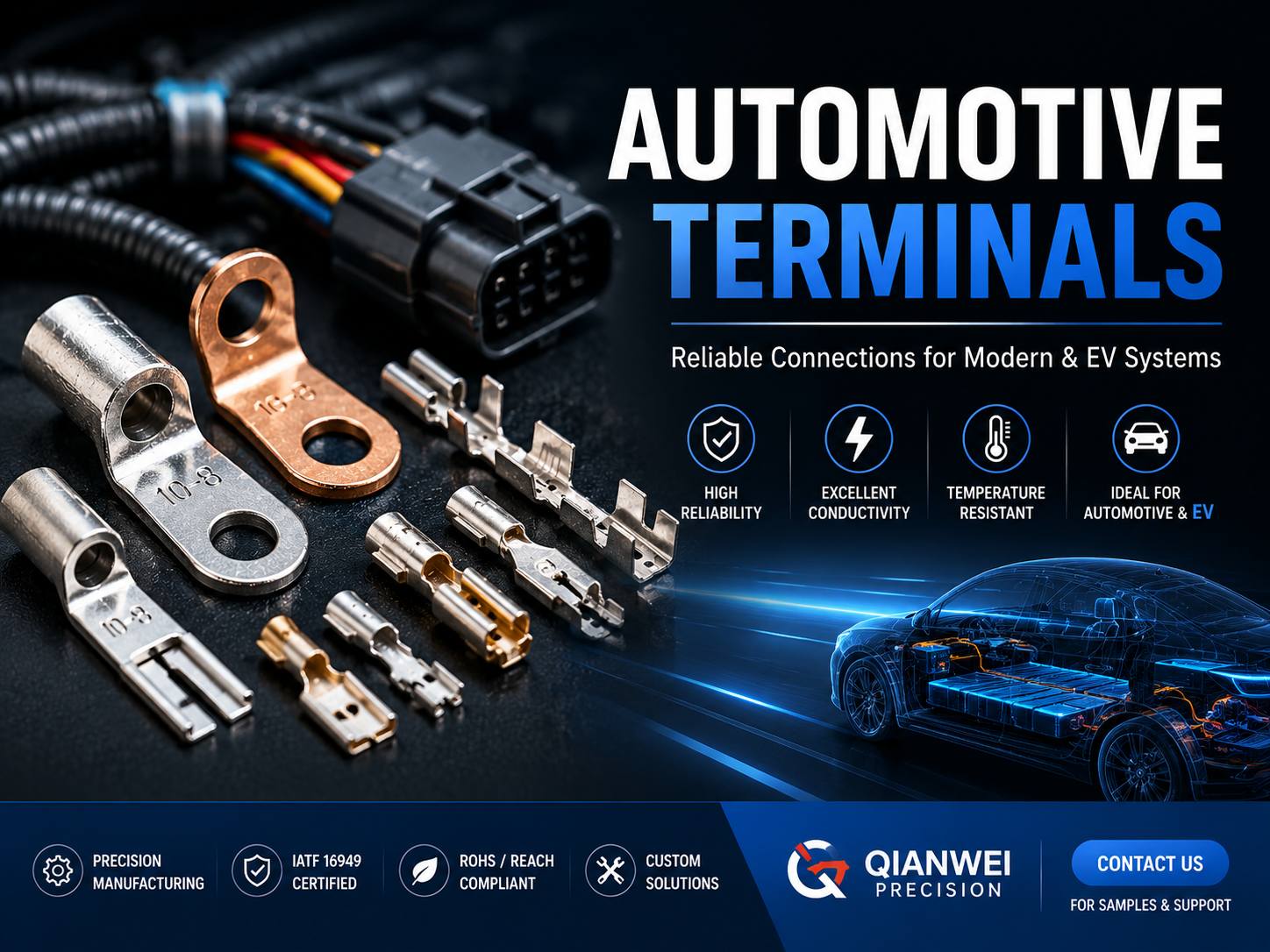
Introduction: Small Components, Critical Impact
Modern vehicles are no longer purely mechanical machines—they are complex electrical systems on wheels. From engine control units (ECUs) to advanced driver assistance systems (ADAS), and from infotainment modules to high-voltage EV batteries, reliable electrical connectivity is essential.
At the heart of these systems are automotive electrical terminals—small components that play a critical role in ensuring stable current flow, signal integrity, and overall system safety.
Yet, despite their importance, terminals are often overlooked during design or procurement. The result? Loose connections, overheating, corrosion, and eventual system failure.
This guide provides a comprehensive overview of automotive electrical terminals, helping engineers and buyers understand:
- Types and applications
- Materials and plating options
- Industry standards
- Selection strategies
- EV-specific requirements
.jpg)
What Are Automotive Electrical Terminals?
Automotive electrical terminals are conductive components used to connect wires to electrical systems, either directly or via connectors. They form the physical interface between conductors and devices, enabling reliable transmission of power and signals.
Key Functions
- Provide secure mechanical connection
- Ensure low-resistance electrical contact
- Enable modular wiring harness design
- Support easy installation and maintenance
To keep wiring harnesses neatly routed and protected from vibration, engineers typically pair terminals with reliable cable management solutions — sourcing from a trusted cable ties manufacturer ensures bundles stay secure throughout the vehicle’s lifespan.
Terminals vs Connectors
- Terminal: the conductive metal contact
- Connector: the housing that holds terminals
Together, they form complete connection systems used throughout vehicle wiring harnesses.
Types of Automotive Electrical Terminals
Selecting the right type of terminal depends on application, environment, and performance requirements.
Ring Terminals
Ring terminals feature a closed-loop design that fits over a stud or bolt.
Advantages:
- High vibration resistance
- Secure, permanent connection
- Excellent for high-current systems
Applications:
- Battery connections
- Grounding points
- Power distribution
Spade Terminals (Fork Terminals)
Spade terminals allow quick installation without fully removing the screw.
Advantages:
- Fast installation
- Easy maintenance
- Reusable
Limitations:
- Less secure under vibration
Applications:
- Low-vibration systems
- Serviceable components
Butt Connectors
Used to join two wires end-to-end.
Advantages:
- Simple wire extension
- Strong mechanical connection
Applications:
- Wiring repairs
- Harness extensions
Blade Terminals (Quick Disconnect)
Flat male/female terminals for plug-in connections.
Advantages:
- Fast connection/disconnection
- Widely standardized
Applications:
- Lighting systems
- Dashboard electronics
Pin Terminals
Precision terminals used inside connector housings.
Advantages:
- High signal integrity
- Compact design
Applications:
- ECUs
- Sensors
- Control modules
Cable Lugs
Heavy-duty terminals for high-current applications.
Advantages:
- Large contact area
- Excellent current capacity
Applications:
- Battery systems
- Starter motors
- EV power distribution
.jpg)
Materials Used in Automotive Terminals
Material selection directly affects conductivity, durability, and mechanical performance.
Copper
- Highest electrical conductivity
- Excellent performance for power applications
Used in:
- Cable lugs
- Battery terminals
Brass
- Good balance of conductivity and strength
- Cost-effective
Used in:
- General-purpose terminals
Phosphor Bronze
- High elasticity and fatigue resistance
Used in:
- Spring contacts
- Connector terminals
Surface Treatments & Plating Options
Plating enhances terminal performance, especially in harsh automotive environments.
Tin Plating
- Corrosion resistance
- Cost-effective
- Widely used in automotive systems
Nickel Plating
- High temperature resistance
- Strong durability
Silver Plating
- Superior conductivity
- Used in high-performance applications
Key Performance Requirements
Automotive terminals must meet strict performance standards.
Electrical Performance
- Low contact resistance
- Stable current flow
- Minimal voltage drop
Mechanical Strength
- Strong crimp retention
- Resistance to vibration
- High pull-out force
Environmental Resistance
- Temperature extremes (-40°C to 150°C+)
- Moisture and humidity
- Chemical exposure
Automotive Industry Standards & Certifications
Reliable terminals must comply with industry standards:
- IATF 16949 – Automotive quality management
- ISO 9001 – Quality systems
- RoHS – Environmental compliance
- REACH – Chemical safety
These certifications ensure consistency, traceability, and safety.
.jpg)
Applications in Automotive Systems
Battery Systems
- High current flow
- Safety-critical connections
Used in:
- ICE vehicles
- EV battery packs
Engine Compartment
- High temperature
- Constant vibration
Requires:
- Heat-resistant materials
- Secure connections
Lighting Systems
- Low voltage
- Stable signal transmission
Infotainment & Electronics
- Sensitive signal connections
- Compact terminal designs
EV Trend: How Electric Vehicles Are Changing Terminal Requirements
The rise of electric vehicles (EVs) is reshaping terminal design and performance expectations.
Higher Voltage & Current
EV systems operate at:
- 400V to 800V (or higher)
This demands:
- Improved insulation
- Higher current capacity
Thermal Management Challenges
High current generates heat, requiring:
- Better conductivity
- Stable contact interfaces
Increased Reliability Requirements
EV failures are costly and critical.
Terminals must ensure:
- Long lifespan
- Minimal maintenance
Lightweight Design
Automakers aim to reduce weight:
- Optimized materials
- Compact terminal designs
Conclusion on EV Impact
EVs are driving demand for higher-performance, more reliable, and more durable terminals.
Common Failure Modes in Automotive Terminals
Understanding failures helps prevent them.
Loose Connections
- Caused by poor crimping or vibration
Oxidation & Corrosion
- Common in untreated copper
Overheating
- Due to high resistance or poor contact
Crimping Defects
- Incorrect tools or process
How to Choose the Right Automotive Terminal
A structured selection approach is essential.
Step 1: Define Electrical Requirements
- Current load
- Voltage level
Step 2: Evaluate Environment
- Temperature
- Humidity
- Vibration
Step 3: Select Material & Plating
- Copper vs brass
- Tin vs nickel
Step 4: Consider Installation Method
- Crimp type
- Assembly process
Step 5: Balance Cost vs Reliability
- Initial cost
- Lifecycle performance
Crimping & Installation Best Practices
Even the best terminal fails with poor crimping.
Key Practices
- Use calibrated crimping tools
- Ensure correct crimp height
- Avoid over-crimping or under-crimping
Inspection Methods
- Pull-out force testing
- Visual inspection
- Cross-section analysis
.jpg)
Why Choose Qianwei Precision
Qianwei Precision delivers high-performance automotive terminals for global OEM and Tier suppliers.
Our Strengths:
- 1800+ production molds
- Advanced precision stamping technology
- Stable plating quality
- Strong customization capability
Product Range:
- Ring terminals
- Cable lugs
- Spade terminals
- Butt connectors
- TE-compatible terminals
Conclusion: Reliability Starts with the Right Terminal
Automotive electrical terminals may be small, but they are foundational to system performance.
As vehicles become more electrified and intelligent, the demand for high-quality, reliable, and durable terminals continues to grow—especially in the EV era.
Choosing the right terminal is not just a technical decision—it’s a critical factor in long-term system reliability and safety.
👉 Ready to Optimize Your Automotive Connections?
If you’re sourcing automotive terminals:
- Get expert engineering support
- Request free samples
- Customize solutions for your application
Contact Qianwei Precision today and ensure your connections meet the highest automotive standards.
FAQs
1. What are automotive electrical terminals?
Automotive electrical terminals are conductive components used to connect wires to electrical systems in vehicles. They ensure reliable transmission of power and signals throughout automotive wiring harnesses.
2. What types of terminals are used in cars?
Common automotive terminals include:
- Ring terminals
- Spade terminals
- Butt connectors
- Blade terminals
- Pin terminals
- Cable lugs
Each type is used for different electrical and mechanical requirements.
3. Why are automotive terminals important?
Automotive terminals are critical because they provide:
- Stable electrical connections
- Low contact resistance
- Secure mechanical retention
- Resistance to vibration and temperature changes
Poor terminals can cause overheating, signal failure, or electrical faults.
4. What material is best for automotive terminals?
Common materials include:
- Copper – highest conductivity
- Brass – balanced conductivity and strength
- Phosphor Bronze – excellent elasticity and fatigue resistance
Material choice depends on application requirements.
5. Why are automotive terminals plated?
Plating improves terminal performance by enhancing:
- Corrosion resistance
- Oxidation protection
- Temperature resistance
Common plating options:
- Tin plating
- Nickel plating
- Silver plating
6. What is the difference between ring and spade terminals in automotive applications?
- Ring terminals offer higher security and vibration resistance.
- Spade terminals allow faster installation and easier maintenance.
Ring terminals are generally preferred for critical automotive connections.
7. Are automotive terminals different for EVs?
Yes. EV terminals require:
- Higher voltage capability
- Higher current capacity
- Better thermal performance
- Enhanced insulation and reliability
EV systems place much stricter demands on terminals.
8. How do I choose the right automotive terminal?
Consider:
- Current and voltage requirements
- Operating environment
- Vibration level
- Installation method
- Material and plating
The right terminal improves reliability and reduces maintenance issues.
9. What causes automotive terminal failure?
Common causes include:
- Loose connections
- Poor crimping
- Corrosion
- Overheating
- Incorrect terminal selection
10. What certifications should automotive terminals have?
Reliable automotive terminals should comply with:
- IATF 16949
- ISO 9001
- RoHS
- REACH
These certifications indicate quality and compliance.


2 thoughts on “Automotive Electrical Terminals Overview”