

Introduction
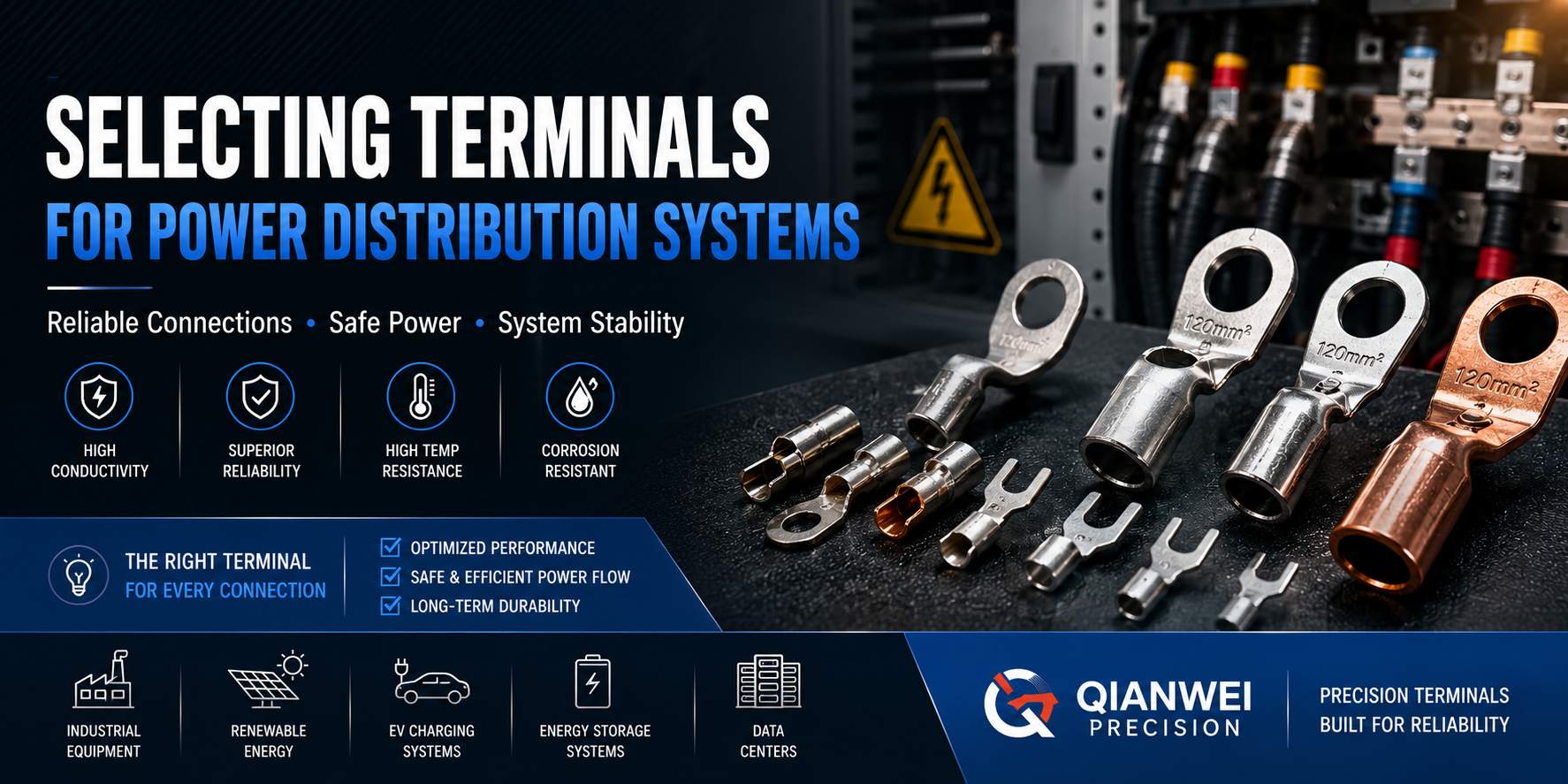
In power distribution systems, electrical terminals may appear to be small components, but they play a critical role in overall system safety and performance. Whether in industrial control panels, renewable energy systems, EV charging infrastructure, or battery storage applications, reliable electrical connections are essential for stable power transmission.
A poorly selected terminal can lead to:
- Excessive heat generation
- Voltage drop
- Power loss
- Equipment failure
- Fire hazards
As modern electrical systems continue to increase in power density and complexity, the importance of choosing the right terminal has become greater than ever.
For engineers, OEM manufacturers, and procurement teams, terminal selection is no longer just about finding a component that fits the wire—it is about ensuring:
- Long-term reliability
- Environmental durability
- Electrical efficiency
- Safety compliance
This guide explains how to select the right terminals for power distribution systems, covering terminal types, materials, current ratings, environmental considerations, and installation best practices.
What Are Power Distribution Terminals?
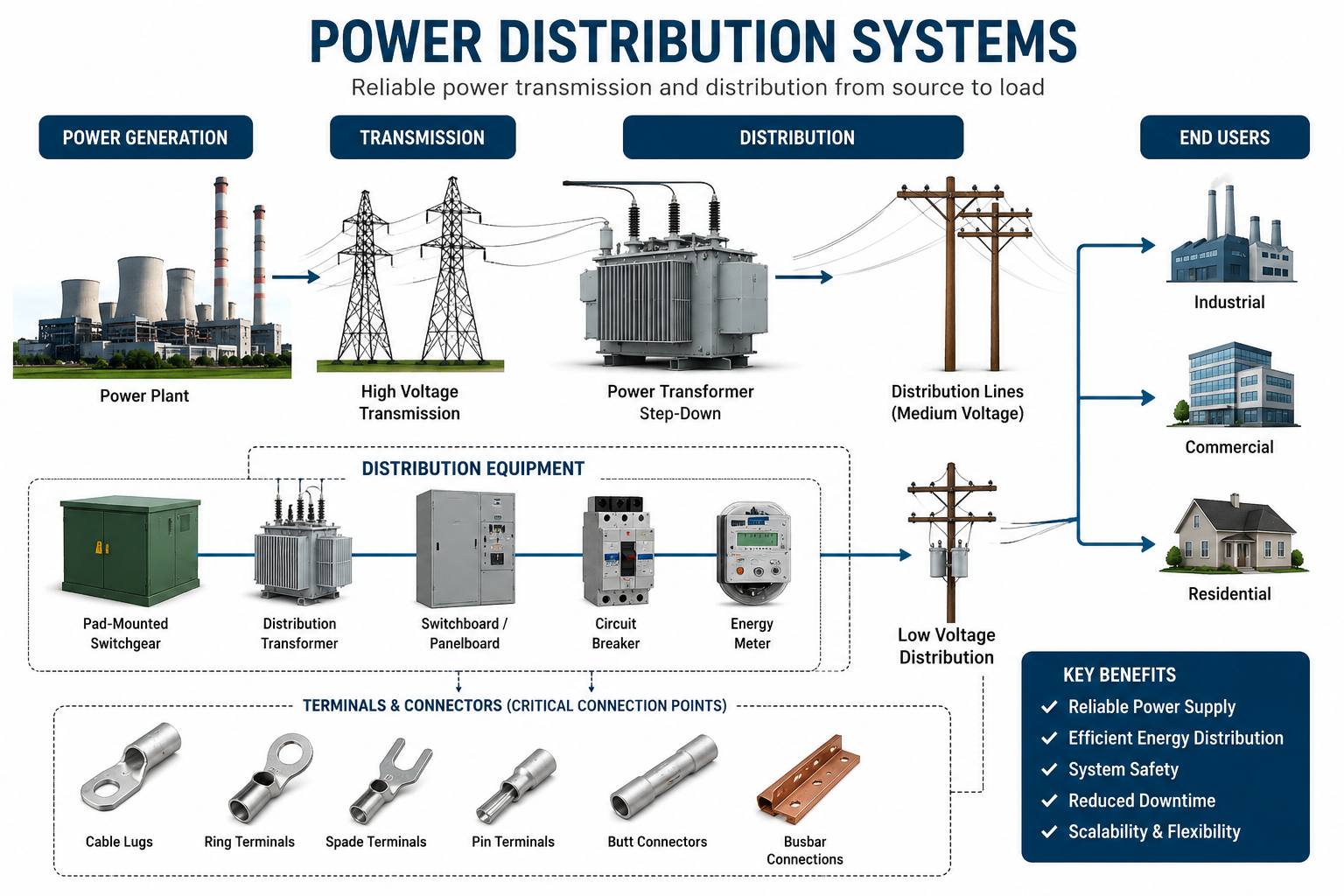
Power distribution terminals are conductive components used to connect electrical cables to:
- Busbars
- Circuit breakers
- Power supplies
- Switchgear
- Distribution panels
- Electrical equipment
Their primary function is to create a low-resistance electrical pathway capable of carrying current safely and efficiently.
In high-current systems, terminals must maintain:
- Stable conductivity
- Mechanical strength
- Heat resistance
- Corrosion protection
Even a small increase in contact resistance can significantly impact system efficiency and reliability.
Common Types of Terminals Used in Power Distribution
Different applications require different terminal designs.
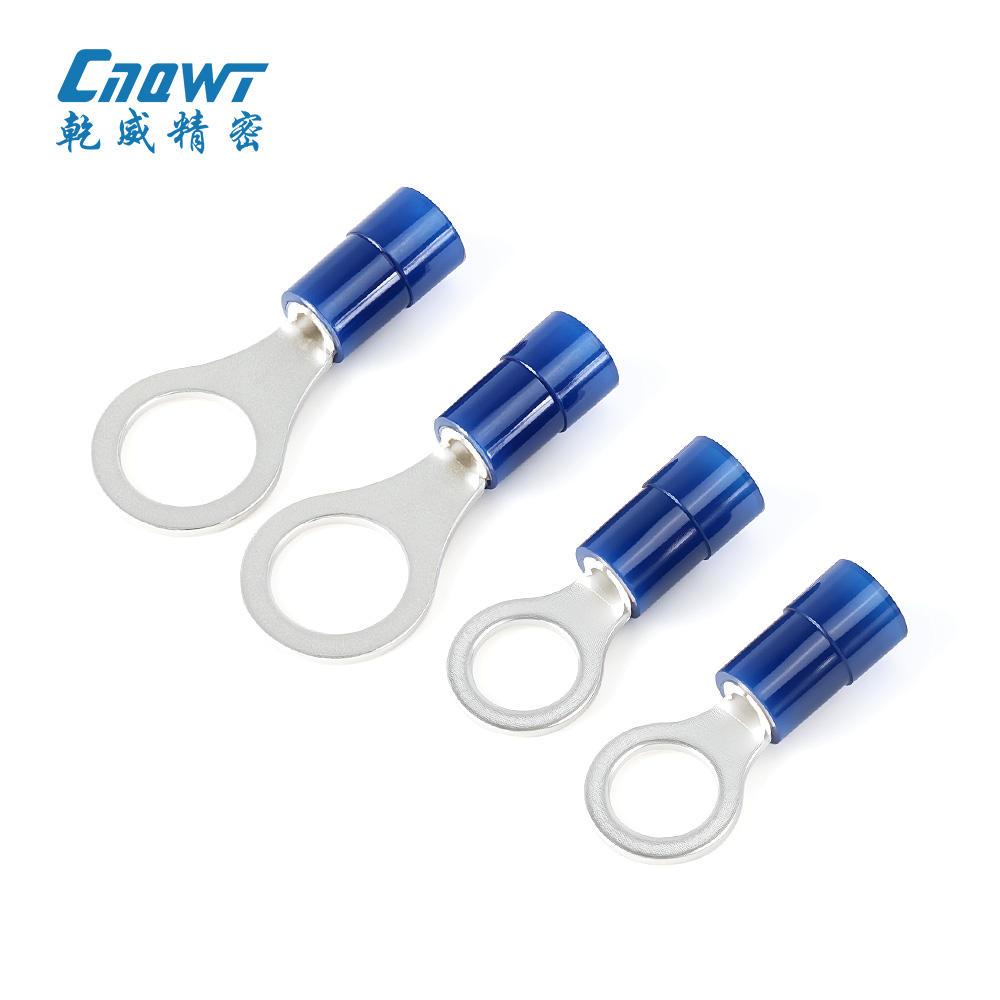
Ring Terminals
Ring terminals are one of the most widely used terminal types in power distribution systems.
Key Advantages
- Secure bolt-mounted connection
- Excellent vibration resistance
- High reliability under heavy current loads
Common Applications
- Distribution panels
- Grounding systems
- Industrial machinery
- Power supplies
Because the ring structure completely surrounds the stud or screw, the connection remains secure even under vibration or thermal cycling.
Cable Lugs
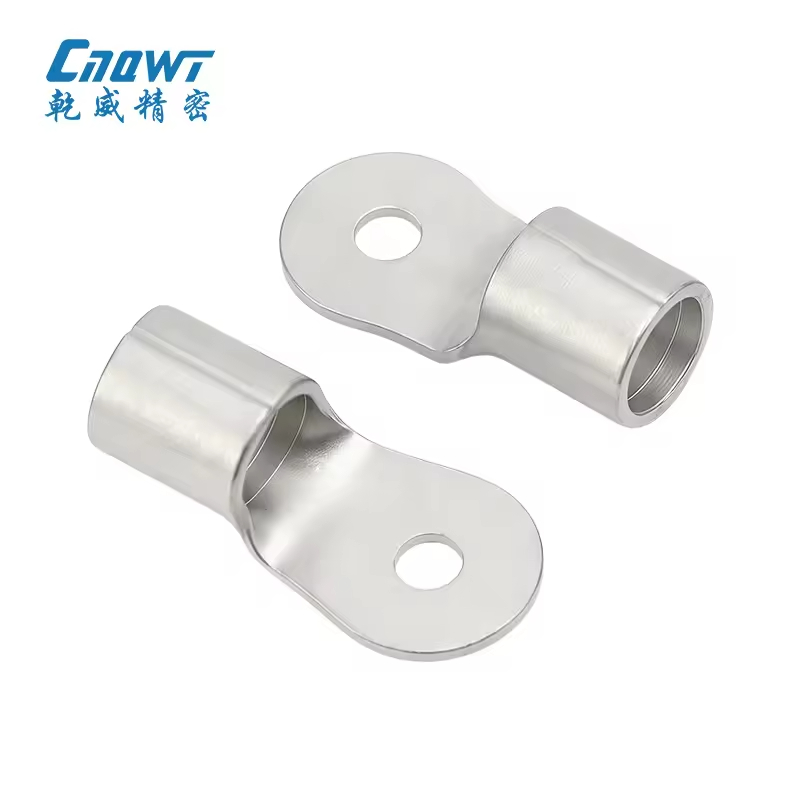
Cable lugs are designed for high-current and large-gauge cable applications.
Key Advantages
- Large contact surface area
- Excellent current carrying capability
- Strong mechanical connection
Common Applications
- Main power inputs
- Transformers
- Battery systems
- Renewable energy systems
Heavy-duty copper cable lugs are often preferred for industrial and energy applications where stable high-current transfer is critical.
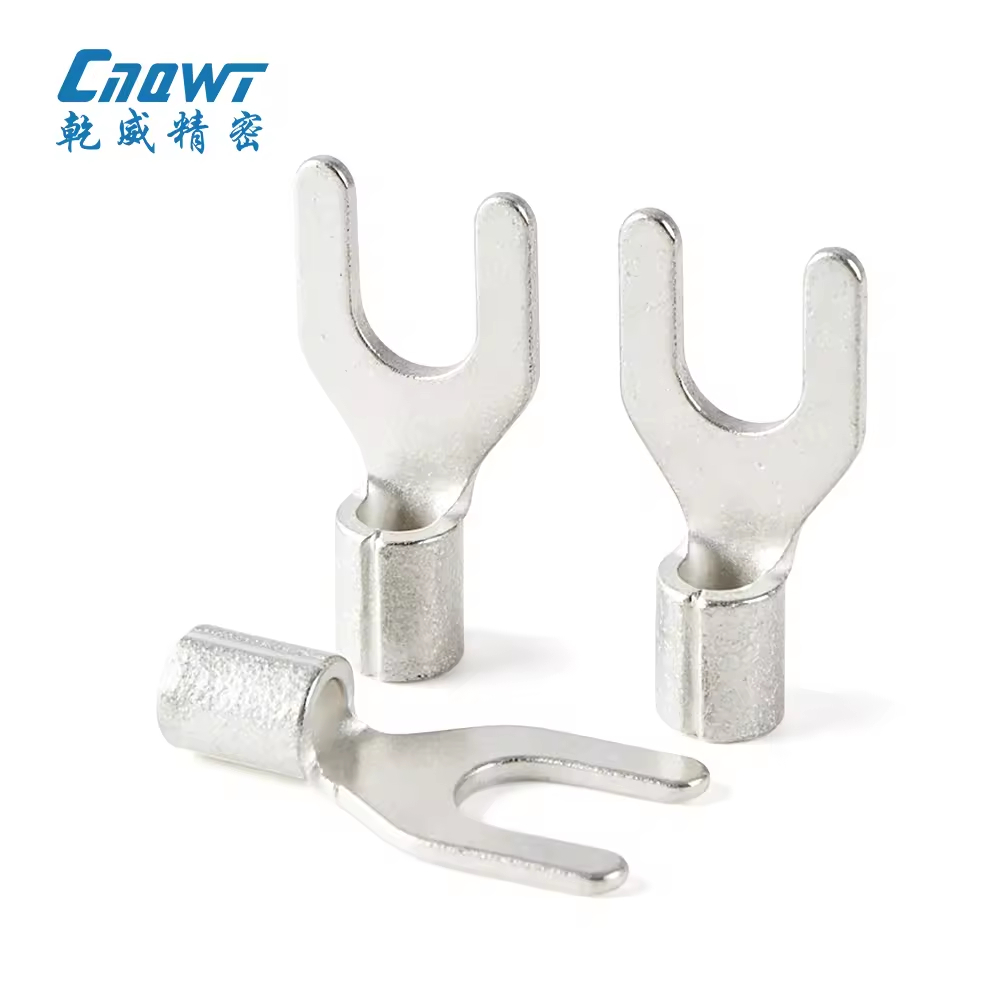
Spade Terminals
Spade terminals (fork terminals) provide faster installation and maintenance.
Advantages
- Easy installation/removal
- Reduced maintenance time
Limitations
- Less secure than ring terminals in vibration-heavy environments
Applications
- Low- to medium-current control systems
- Serviceable electrical assemblies
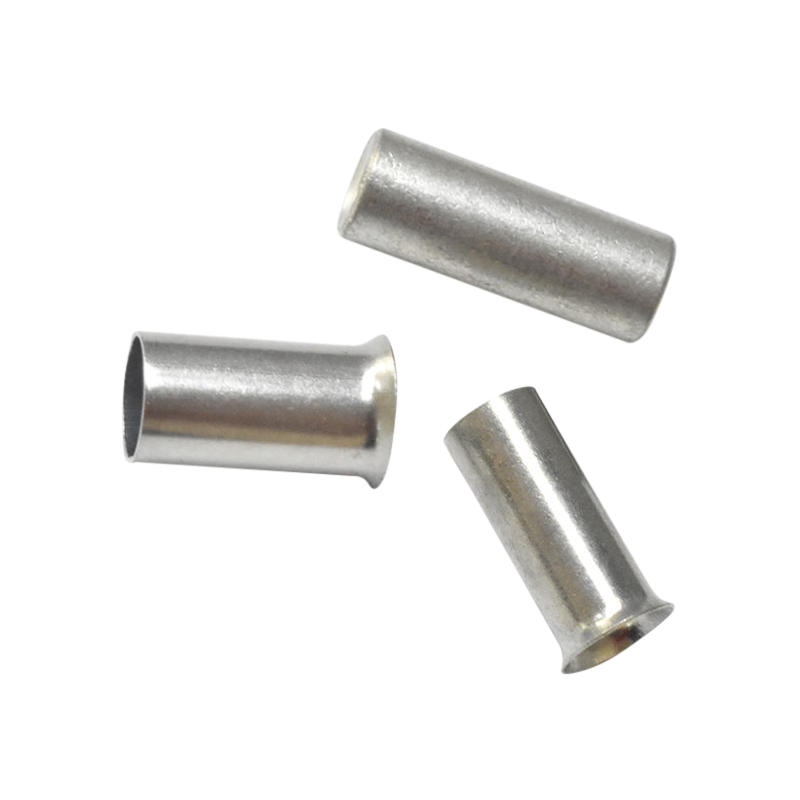
Butt Connectors
Butt connectors are used to join two wires together.
Applications
- Wire extensions
- Cable repairs
- Harness assembly
Reliable crimping is essential to ensure electrical continuity and mechanical retention.
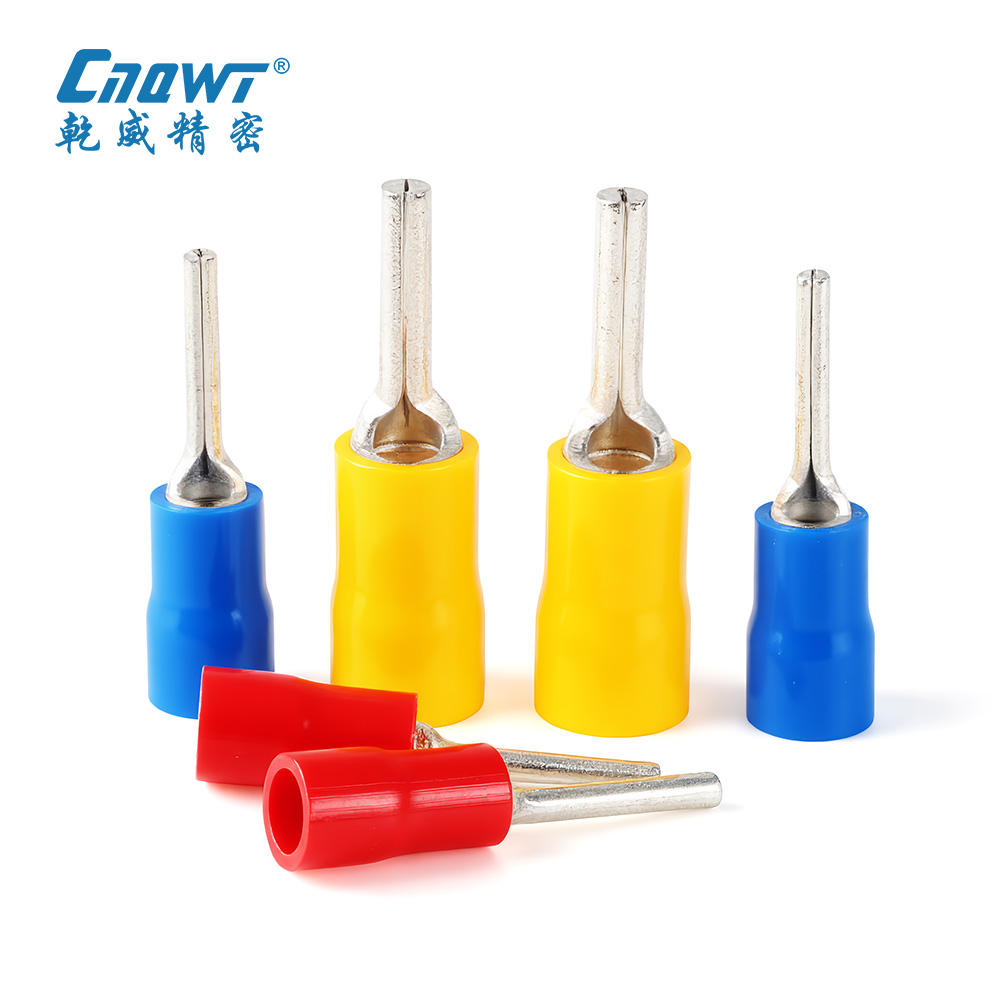
Pin Terminals
Pin terminals are commonly used in terminal blocks and compact control systems.
Advantages
- Precise insertion
- Organized wiring
Applications
- PLC systems
- Industrial automation
- Control cabinets
Key Factors When Selecting Terminals
Selecting the correct terminal requires evaluating multiple technical factors.
Current Carrying Capacity
Current rating is one of the most important considerations.
If a terminal is undersized:
- Heat builds up rapidly
- Resistance increases
- Connection failure becomes likely
Important Considerations
- Maximum operating current
- Peak load conditions
- Ambient temperature
As current increases, terminals require:
- Larger conductor area
- Better heat dissipation
- Stable contact pressure
Wire Size Compatibility
The terminal must match the cable size precisely.
Incorrect Matching Causes
- Weak crimping
- Loose connections
- Increased resistance
- Wire damage
Common Standards
- AWG sizes
- mm² conductor sizes
Proper wire-to-terminal matching ensures:
- Reliable crimp compression
- Stable conductivity
- Strong pull-out force
Operating Voltage
Voltage level affects insulation and spacing requirements.
Low Voltage Systems
Typically below 1000V.
High Voltage Systems
Require:
- Enhanced insulation
- Better creepage distance
- Improved safety design
This is especially important in:
- EV charging systems
- Energy storage systems
- Renewable energy applications
Environmental Conditions
Environmental exposure heavily impacts terminal lifespan.
Key Environmental Factors
- Humidity
- Corrosion
- Salt spray
- Dust
- Chemicals
- Outdoor weather exposure
For harsh environments, terminals should include:
- Tin plating
- Nickel plating
- Waterproof protection
Mechanical Strength
Power distribution systems often experience:
- Vibration
- Thermal expansion
- Mechanical stress
Terminals must maintain:
- Strong retention force
- Stable contact pressure
- Structural integrity over time
Materials Used in Power Distribution Terminals
Material selection directly affects conductivity and durability.
Copper
Copper is the most common material for high-performance terminals.
Advantages
- Excellent conductivity
- Low resistance
- High current capacity
Applications
- Cable lugs
- Battery terminals
- High-current systems
Brass
Brass offers a balance between conductivity and mechanical strength.
Advantages
- Good formability
- Cost-effective
- Durable structure
Applications
- General-purpose terminals
- Medium-current systems
Aluminum
Used primarily for lightweight power distribution applications.
Advantages
- Lightweight
- Lower material cost
Challenges
- Higher oxidation risk
- Lower conductivity than copper
Surface Treatment & Plating Options
Plating protects terminals from corrosion and oxidation.
Tin Plating
The most common terminal surface treatment.
Benefits
- Corrosion resistance
- Oxidation protection
- Cost-effective
Widely used in:
- Industrial systems
- Automotive applications
- Renewable energy systems
Nickel Plating
Suitable for high-temperature applications.
Advantages
- Heat resistance
- Strong durability
- Chemical resistance
Silver Plating
Used in premium high-conductivity applications.
Benefits
- Extremely low resistance
- Excellent conductivity
Applications
- High-performance power systems
- Specialized industrial equipment
High-Current Considerations
In high-current power distribution systems, terminal design becomes even more critical.
Heat Generation
Poor contact quality generates resistance, which creates heat.
This can cause:
- Insulation damage
- Voltage drop
- Fire hazards
Contact Surface Area
Larger contact areas reduce:
- Resistance
- Current concentration
- Thermal hotspots
Thermal Expansion
Current flow creates temperature changes.
Terminals must maintain:
- Stable mechanical pressure
- Consistent conductivity during expansion/contraction cycles
Indoor vs Outdoor Power Distribution
Indoor Applications
Indoor systems generally experience:
- Lower humidity
- Controlled temperature
Standard tin-plated terminals are often sufficient.
Outdoor Applications
Outdoor environments require:
- Enhanced corrosion resistance
- UV durability
- Waterproof protection
Common outdoor systems include:
- Solar installations
- EV charging stations
- Telecom infrastructure
Common Terminal Failures in Power Distribution Systems
Understanding common failures helps improve system reliability.
Loose Connections
Often caused by:
- Improper crimping
- Vibration
- Thermal cycling
Overheating
Results from:
- High resistance
- Undersized terminals
- Poor contact quality
Corrosion
Corrosion increases contact resistance and weakens conductivity.
Improper Crimping
Incorrect crimp height or tooling can lead to:
- Weak retention
- Electrical instability
Undersized Terminals
Using terminals below required current capacity creates excessive heat and premature failure.
How Proper Crimping Affects Reliability
Even the best terminal fails if crimping quality is poor.
Correct Crimping Ensures
- Stable electrical conductivity
- Strong mechanical retention
- Long-term reliability
Best Practices
- Use calibrated crimping tools
- Follow specified crimp height
- Inspect pull-out force
Quality Inspection Methods
- Cross-section analysis
- Pull testing
- Visual inspection
Standards & Certifications
Reliable terminals should comply with international standards.
Common Certifications
- UL
- RoHS
- REACH
- ISO 9001
- IATF 16949
These certifications help ensure:
- Product consistency
- Safety compliance
- Environmental responsibility
Applications of Power Distribution Terminals
Industrial Control Panels
Require organized and reliable electrical connections.
Renewable Energy Systems
Solar and wind systems require corrosion-resistant terminals capable of long-term outdoor performance.
EV Charging Systems
High-voltage charging infrastructure requires:
- High-current capability
- Heat resistance
- Long-term stability
Battery Energy Storage Systems (ESS)
Battery systems require terminals with:
- Excellent conductivity
- Low resistance
- High durability
Data Centers
Power distribution in data centers demands:
- Stable power transmission
- Minimal energy loss
- High connection reliability
Why Choose Qianwei Precision
Qianwei Precision specializes in high-reliability terminals for industrial and power distribution applications.
Our Advantages
- 1800+ production molds
- Precision stamping technology
- Stable plating quality
- Strong OEM/ODM capability
Product Range
- Ring terminals
- Cable lugs
- Spade terminals
- Butt connectors
- TE-compatible terminals
Conclusion
Power distribution system reliability depends heavily on connection quality. Choosing the right terminal improves:
- Electrical efficiency
- Safety
- System lifespan
- Maintenance performance
As power systems continue evolving toward higher currents and smarter infrastructure, high-quality terminals are becoming more important than ever.
Reliable connections begin with proper terminal selection.
👉 Need Reliable Power Distribution Terminals?
Qianwei Precision provides customized terminal solutions for industrial, energy, and electrical systems.
- Request free samples
- Get engineering support
- Customize your terminal solution
Contact Qianwei Precision today for high-performance electrical connection solutions.
FAQs
1. What terminals are commonly used in power distribution systems?
The most commonly used terminals include:
- Ring terminals
- Cable lugs
- Spade terminals
- Butt connectors
- Pin terminals
Ring terminals and cable lugs are especially popular for high-current power distribution applications.
2. How do I choose the right terminal size for power distribution?
Terminal size should match:
- Wire size (AWG/mm²)
- Current rating
- Voltage requirements
Using an undersized terminal can cause overheating and connection failure.
3. Why are copper terminals preferred in power distribution systems?
Copper terminals offer:
- Excellent electrical conductivity
- Low resistance
- High current carrying capability
This makes them ideal for industrial and high-power applications.
4. What is the advantage of tin-plated terminals?
Tin plating improves:
- Corrosion resistance
- Oxidation protection
- Long-term connection stability
Tin-plated terminals are commonly used in outdoor and high-humidity environments.
5. Can I use spade terminals in high-current applications?
Spade terminals are generally better suited for low- to medium-current applications. For high-current systems, ring terminals or cable lugs are usually recommended due to their stronger mechanical connection.
6. What causes terminals to overheat in power distribution systems?
Common causes include:
- Loose connections
- Improper crimping
- Undersized terminals
- Corrosion
- Excessive current load
Overheating increases resistance and may lead to system failure.
7. Why is proper crimping important for power distribution terminals?
Proper crimping ensures:
- Stable electrical conductivity
- Strong mechanical retention
- Reduced contact resistance
Poor crimping can result in overheating and unreliable connections.
8. What certifications should power distribution terminals have?
Reliable terminals should comply with:
- UL
- RoHS
- REACH
- ISO 9001
- IATF 16949
These certifications help ensure quality and safety.
9. Are different terminals required for indoor and outdoor power distribution?
Yes. Outdoor applications typically require:
- Tin-plated terminals
- Corrosion-resistant materials
- Waterproof protection
Indoor systems usually have lower environmental demands.
10. What is the best terminal type for high-current power distribution?
Cable lugs and heavy-duty ring terminals are generally the best options for high-current applications because they provide:
- Large contact area
- Low resistance
- Strong mechanical stability

