

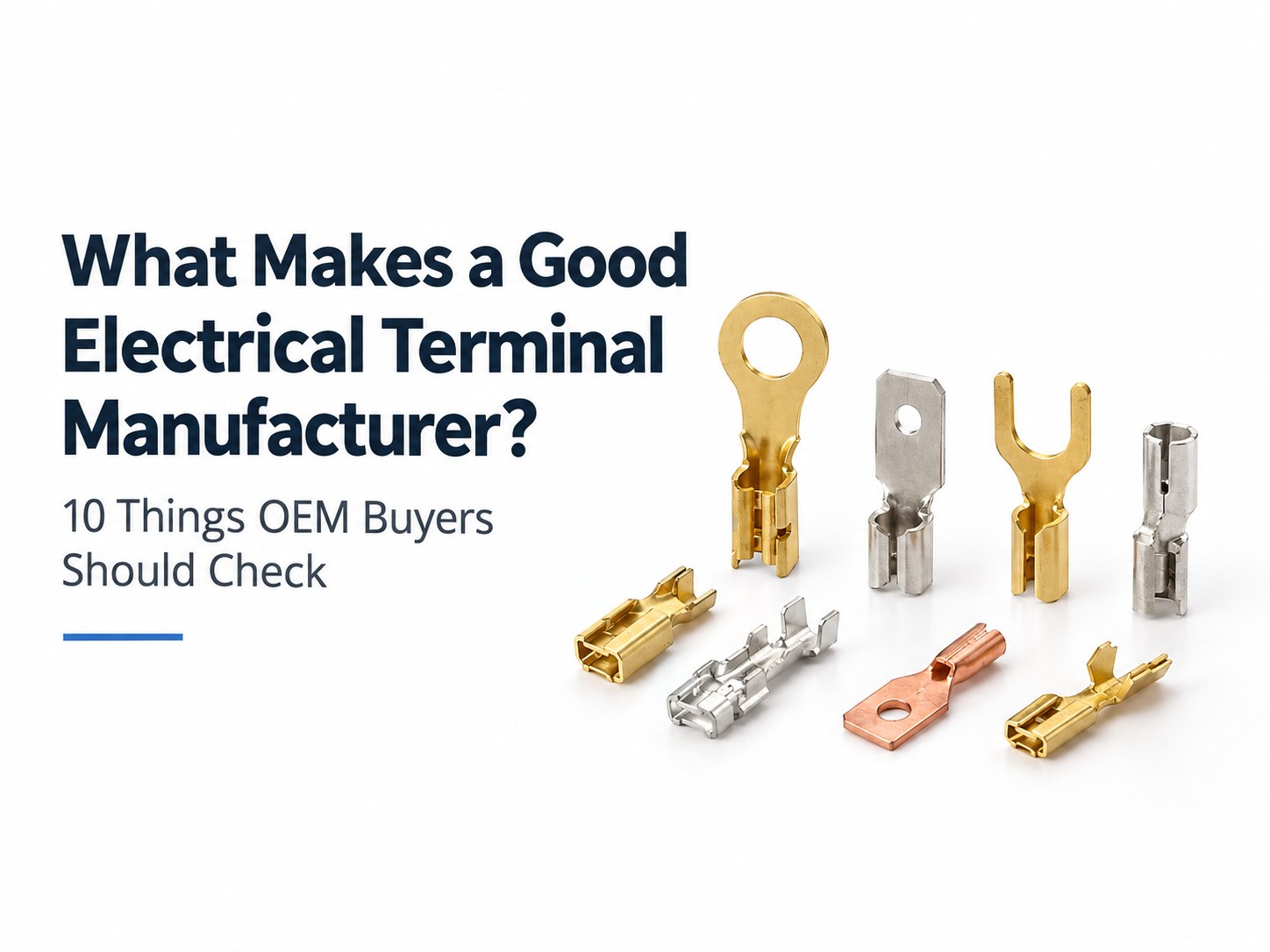
Choosing the right electrical terminal manufacturer can have a direct impact on product reliability, production efficiency, and long-term procurement costs. For OEM buyers, a terminal is not simply a small metal component. Its material, dimensions, plating, crimping performance, and manufacturing consistency can all affect the performance of the final product.
With many terminal suppliers offering similar-looking products, it can be difficult to determine which manufacturer is capable of supporting an OEM project from initial development through mass production.
A reliable electrical terminal manufacturer should offer more than competitive pricing. OEM buyers should evaluate manufacturing experience, material control, tooling capabilities, customization, quality management, certifications, production capacity, delivery reliability, and technical support.
Here are 10 important factors to check before choosing an electrical terminal manufacturer.
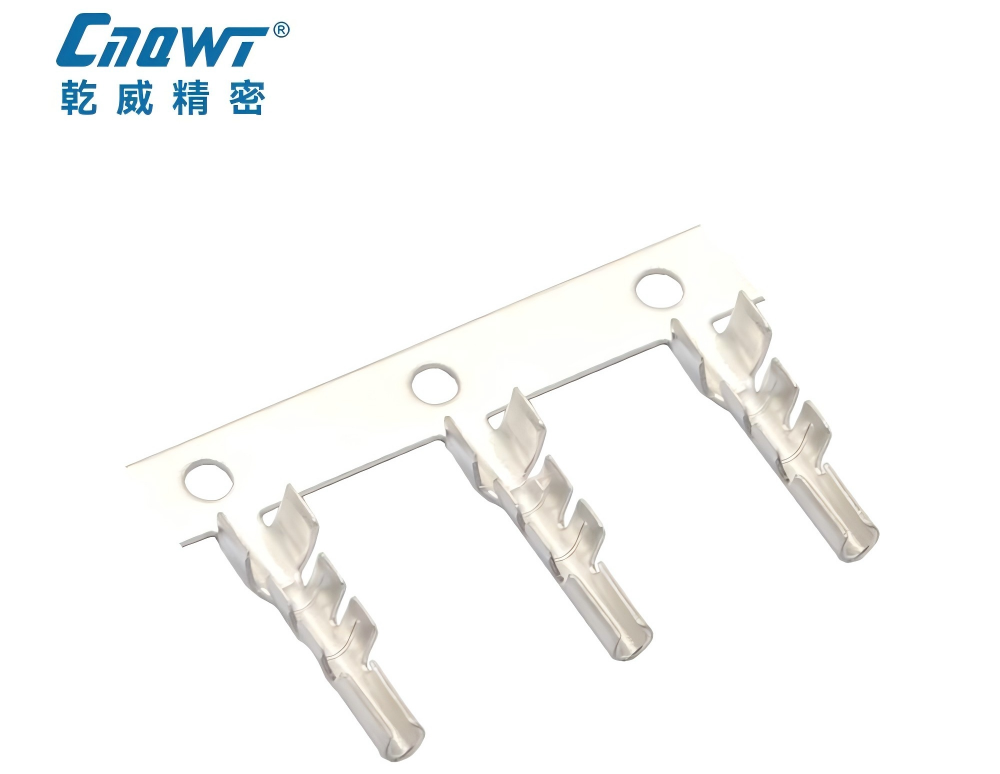
1. Experience in Electrical Terminal Manufacturing
The first thing OEM buyers should evaluate is whether a supplier has genuine experience in electrical terminal manufacturing.
There is a difference between a company that occasionally sells terminals and a manufacturer that has been producing terminals and related components for years. Experienced manufacturers are more likely to understand the practical requirements of stamping, forming, plating, crimping, and assembly.
Manufacturing experience is particularly important for customized terminals. A terminal may look simple, but small changes in material thickness, contact geometry, hole dimensions, or crimping structure can significantly affect its performance.
An experienced terminal manufacturer should be familiar with applications such as:
- Automotive wiring harnesses
- HVAC equipment
- Household appliances
- Industrial equipment
- Battery systems
- Energy storage systems
- Power distribution
- General electrical equipment
OEM buyers should ask how long the supplier has manufactured electrical terminals and whether it has experience with products similar to their application.
A manufacturer with relevant experience can often identify potential production problems earlier and provide more practical recommendations during product development.
2. Material Selection and Consistency
Material selection is another critical factor when evaluating a terminal manufacturer.
Electrical terminals need to provide the right combination of electrical conductivity, mechanical strength, forming performance, and corrosion resistance. The best material depends on the terminal design and its intended application.
Common materials used for electrical terminals include copper, brass, and phosphor bronze.
| Material | Typical Advantages | Common Applications |
|---|---|---|
| Copper | High electrical conductivity | Power and electrical terminals |
| Brass | Good conductivity and mechanical strength | General electrical terminals |
| Phosphor Bronze | Good spring properties and fatigue resistance | Contact and spring terminals |
However, simply specifying a material is not enough. OEM buyers should also consider material consistency between production batches.
Important questions include:
- What material grades are available?
- Where are the raw materials sourced?
- How is material thickness controlled?
- Can the manufacturer provide material specifications?
- How are incoming materials inspected?
Consistent raw materials help maintain stable dimensions and mechanical properties during mass production.
For OEM projects, the manufacturer should also be able to recommend a suitable material based on electrical load, mechanical requirements, forming conditions, and application environment.
3. Stamping and Tooling Capability
Precision stamping is one of the most important manufacturing processes for many electrical terminals.
The quality of the stamping die directly influences terminal dimensions, burrs, forming accuracy, and production consistency. Poor tooling can result in dimensional variation, deformation, excessive burrs, or unstable crimping performance.
This is why OEM buyers should not only ask whether a supplier can manufacture a terminal. They should also ask how the supplier develops and manages its tooling.
Important capabilities include:
- Precision mold and die design
- Progressive stamping
- In-house tooling development
- Tool maintenance
- Automated or high-speed stamping
- Dimensional control
- Production die management
In-house tooling capability can be particularly valuable for custom terminal projects. When the manufacturer controls both tooling and production, engineering changes can generally be communicated more efficiently between the design and manufacturing teams.
For an OEM buyer, this can reduce unnecessary communication between multiple suppliers and make the development process easier to manage.
4. Custom Terminal Design and Engineering Support
Many OEM projects require terminals that are different from standard catalog products.
A custom electrical terminal may require modifications to its:
- Overall dimensions
- Contact structure
- Mounting hole
- Material thickness
- Crimping section
- Plating
- Locking structure
- Forming geometry
A capable custom terminal manufacturer should be able to work from engineering drawings, samples, or detailed product requirements.
OEM buyers should ask:
Can the manufacturer produce terminals according to our drawings?
Can it develop the required tooling in-house?
Can it provide samples before mass production?
Can its engineering team suggest improvements to the design?
Good engineering support can help identify potential manufacturing issues before production begins.
For example, a design may meet the required dimensions but be difficult to stamp consistently. An experienced manufacturer can suggest modifications that improve manufacturability while maintaining the required function.
This type of engineering collaboration is especially valuable for OEM customers developing new products or replacing an existing terminal supplier.
5. Plating and Surface Treatment Options
Surface treatment has a significant influence on the performance and service life of electrical terminals.
Depending on the application, terminals may require different plating solutions to improve conductivity, corrosion resistance, contact performance, or solderability.
Common plating options include:
- Tin plating
- Nickel plating
- Nickel and tin plating
- Other application-specific surface treatments
OEM buyers should not only ask which plating options a supplier offers. They should also understand how plating thickness and consistency are controlled.
Important questions include:
- What plating process is used?
- What plating thickness can be achieved?
- How is plating thickness inspected?
- Is lead-free plating available?
- How is surface quality controlled?
For products sold in regulated markets, material and environmental requirements also need to be considered. Compliance with requirements such as RoHS and REACH may be important depending on the final product and market.
The appropriate plating specification should always be determined according to the terminal’s electrical, mechanical, environmental, and application requirements.
6. Quality Control and Testing
A reliable terminal manufacturer should have a clearly defined quality control process rather than relying only on final visual inspection.
For OEM production, quality should be controlled throughout the manufacturing process.
A typical process may include:
Incoming Material Inspection → Stamping → Plating → Assembly → Dimensional Inspection → Performance Testing → Final Inspection
Depending on the product, quality control may include:
- Dimensional inspection
- Material inspection
- Plating inspection
- Visual inspection
- Crimping performance testing
- Contact force testing
- Retention force testing
- Electrical performance testing
- Batch traceability
The exact tests should depend on the terminal design and application.
For example, a terminal used in an automotive wiring harness may require strict dimensional and retention-force control because variations can affect crimping and connection reliability.
OEM buyers should therefore ask a potential supplier:
What quality standards are used during production?
Which characteristics are inspected?
How are defective products controlled?
Can inspection data or reports be provided when required?
A low unit price is not necessarily economical if inconsistent terminal quality leads to assembly problems, production downtime, or field failures.
7. Certifications and Compliance
Certifications and compliance capabilities should also be included in the supplier evaluation process.
The exact requirements depend on the product, application, and target market. Common certifications and standards relevant to manufacturers may include:
- UL
- CQC
- RoHS
- REACH
- ISO 9001
- ISO 13485
- IATF 16949
However, OEM buyers should avoid choosing a supplier simply because it has a long list of certificates.
The more important question is whether the manufacturer’s quality system and product compliance match the requirements of the project.
For example, an automotive OEM project may place greater emphasis on automotive quality management, while a medical equipment project may have different quality and documentation requirements.
OEM buyers should confirm:
- Which certifications does the manufacturer currently hold?
- Which products or facilities do they apply to?
- Can the manufacturer provide relevant documentation?
- Can the supplier support the compliance requirements of the target market?
A professional electrical terminal manufacturer should be transparent about its certifications and their scope.
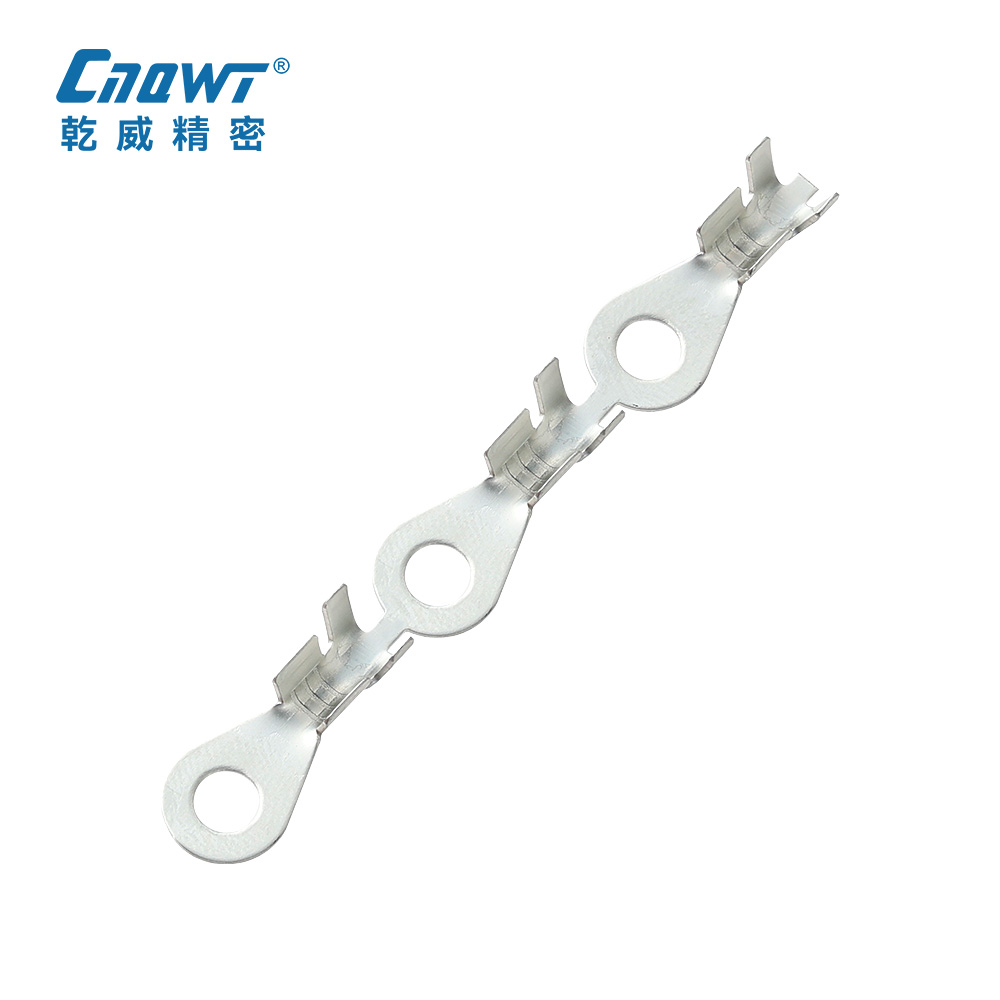
8. Production Capacity and Scalability
A supplier that can produce prototypes successfully may not necessarily be able to support stable mass production.
This is an important distinction for OEM buyers.
During the initial development stage, an OEM may only need a small quantity of samples. Once the product enters mass production, demand can increase significantly.
The manufacturer should therefore have sufficient production infrastructure to scale the project while maintaining consistent quality.
OEM buyers should evaluate:
- Stamping equipment
- Injection molding capabilities where applicable
- Production automation
- Tooling capacity
- Quality inspection equipment
- Production workforce
- Monthly production capacity
- Production scheduling
- Ability to handle increasing order volumes
One important question to ask is:
Can the manufacturer maintain the same quality when order volume increases?
A reliable terminal manufacturer should have a production system capable of supporting both development orders and long-term mass production.
Scalability is especially important for OEM customers whose products may experience significant changes in demand over their lifecycle.
9. Delivery Reliability and Supply Chain Stability
Quality and price are important, but delivery reliability can be equally important for OEM manufacturing.
A delay in electrical terminals can interrupt wiring harness production or even affect the assembly schedule of the final product.
Before selecting a terminal supplier, OEM buyers should understand the manufacturer’s approach to:
- Raw material procurement
- Production scheduling
- Tooling management
- Inventory management
- Quality inspection
- Production lead times
- Urgent orders
- Long-term supply planning
Supply chain stability also matters.
If a manufacturer depends heavily on external suppliers for tooling, plating, or other critical processes, it may have less control over production schedules.
A manufacturer with greater control over key manufacturing processes can provide OEM customers with better coordination throughout the project.
For long-term programs, buyers should look beyond the lead time quoted for the first order and consider whether the supplier can maintain stable delivery over multiple production cycles.
10. Communication, Documentation, and Long-Term Support
The final factor is often underestimated: communication.
OEM projects can involve drawings, samples, tooling modifications, quality reports, production schedules, packaging requirements, and engineering changes.
A manufacturer that communicates clearly can make the entire procurement process more efficient.
OEM buyers should consider whether the supplier can provide:
- Fast and accurate quotations
- Clear technical communication
- Product drawings and specifications
- Material information
- Samples
- Inspection reports
- Production updates
- Engineering support
- Corrective action when quality issues occur
- Long-term technical support
A good terminal manufacturer should not simply accept an order and manufacture the requested quantity.
For customized products, the supplier should be able to communicate with the OEM’s engineering and procurement teams throughout development and production.
The goal should be a long-term manufacturing relationship rather than a one-time transaction.
How to Compare Electrical Terminal Manufacturers
After reviewing the 10 factors above, OEM buyers can create a simple supplier evaluation system.
| Evaluation Factor | Questions to Ask |
|---|---|
| Manufacturing experience | How long have you manufactured electrical terminals? |
| Materials | What material grades can you provide? |
| Tooling | Is tooling developed and maintained in-house? |
| Customization | Can you manufacture from drawings or samples? |
| Plating | What plating options are available? |
| Quality | What tests are performed during production? |
| Certifications | Which certifications apply to your products? |
| Capacity | Can you support both samples and mass production? |
| Delivery | Can you maintain stable production lead times? |
| Technical support | Can your engineering team support product development? |
This approach helps buyers compare manufacturers based on overall capability rather than focusing only on the quoted unit price.
For an OEM project, the lowest initial quotation may not result in the lowest total cost if the supplier has poor quality control, unstable delivery, or limited engineering support.
Red Flags to Watch for When Choosing a Terminal Manufacturer
OEM buyers should also be aware of potential warning signs during supplier evaluation.
No clear manufacturing capability
If a supplier cannot clearly explain its stamping, tooling, plating, inspection, or production processes, buyers should investigate further.
Unclear material specifications
A professional manufacturer should be able to clearly identify the materials used for its terminals and explain the applicable specifications.
No tooling capability
For custom terminals, a supplier with limited tooling capability may have difficulty responding efficiently to design changes or new product development.
No samples before mass production
Samples are important for verifying dimensions, fit, crimping performance, and other requirements before committing to large production volumes.
Weak quality documentation
OEM customers should expect a reasonable level of transparency regarding inspection and quality control.
Extremely low pricing
Price should always be evaluated together with material, plating, tooling, tolerances, testing, packaging, and service requirements.
An unusually low quotation may indicate differences in specifications rather than genuine cost savings.
Poor communication
Slow responses, unclear technical answers, or repeated misunderstandings during the quotation stage can become larger problems after mass production begins.
Why OEM Buyers Should Work Directly With an Electrical Terminal Manufacturer
For customized and OEM projects, working directly with an electrical terminal manufacturer can provide several advantages.
The manufacturer can coordinate engineering, tooling, stamping, surface treatment, inspection, and production more efficiently.
This can help OEM buyers achieve:
- Better control over product specifications
- Faster technical communication
- Easier customization
- More efficient tooling development
- Consistent quality
- Better production scalability
- More direct control over manufacturing costs
At Qianwei Precision, electrical terminal manufacturing is supported by an integrated production process covering:
Design → Tooling → Stamping → Plating → Inspection → Mass Production
The company provides electrical terminal manufacturing and customized production support for OEM applications. Its manufacturing capabilities include precision stamping, tooling development, injection molding, and cable assembly.
For customers with custom terminal requirements, the project can start from engineering drawings, samples, or specific product requirements and progress through tooling development, sampling, testing, and mass production.
This integrated approach allows OEM buyers to work with one manufacturing partner across multiple stages of the project.
Conclusion
Choosing a good electrical terminal manufacturer requires more than comparing product prices.
OEM buyers should evaluate the complete manufacturing capability behind the product—from raw materials and tooling to stamping, plating, inspection, production capacity, and technical support.
The 10 key factors to consider are:
Manufacturing Experience → Material Control → Tooling → Customization → Plating → Quality Control → Certifications → Production Capacity → Delivery Reliability → Technical Support
A manufacturer that can consistently meet these requirements is more likely to become a reliable long-term partner for OEM projects.
If you are looking for a custom electrical terminal manufacturer for a new product or an existing OEM project, Qianwei Precision can evaluate your drawings, samples, or technical requirements and provide a suitable manufacturing solution.
Have a custom electrical terminal requirement? Contact Qianwei Precision to discuss your project and request a quotation.
FAQs
What should I look for in an electrical terminal manufacturer?
OEM buyers should evaluate manufacturing experience, material control, tooling capabilities, customization, plating, quality control, certifications, production capacity, delivery reliability, and technical support.
How do I choose a reliable terminal supplier?
Start by checking whether the supplier is a genuine manufacturer, then evaluate its production capabilities, quality system, certifications, sample process, production capacity, and experience with similar applications.
Can electrical terminal manufacturers produce custom terminals?
Yes. Many manufacturers can produce custom terminals based on engineering drawings, samples, or specific dimensional and performance requirements. Custom projects may involve customized tooling, materials, dimensions, plating, or crimping structures.
What materials are commonly used for electrical terminals?
Copper, brass, and phosphor bronze are commonly used. The appropriate material depends on requirements such as electrical conductivity, mechanical strength, spring properties, and the intended application.
What certifications should an electrical terminal manufacturer have?
The appropriate certifications depend on the application and target market. Common certifications and compliance requirements may include UL, CQC, RoHS, REACH, ISO 9001, ISO 13485, and IATF 16949.
What is the difference between a terminal manufacturer and a terminal supplier?
A terminal manufacturer produces the products directly and generally has greater control over tooling, production, quality, and customization. A supplier or trading company may source products from one or more manufacturers. For customized OEM projects, direct access to manufacturing capabilities can be particularly valuable.
Can a terminal manufacturer produce samples before mass production?
A professional manufacturer should generally be able to provide samples or prototypes for evaluation before mass production, depending on the project and tooling requirements.
How can I verify the quality of a terminal manufacturer?
OEM buyers can review certifications, inspect manufacturing facilities, request samples, review quality-control procedures, check material specifications, evaluate testing capabilities, and assess the supplier’s experience with similar products.

