

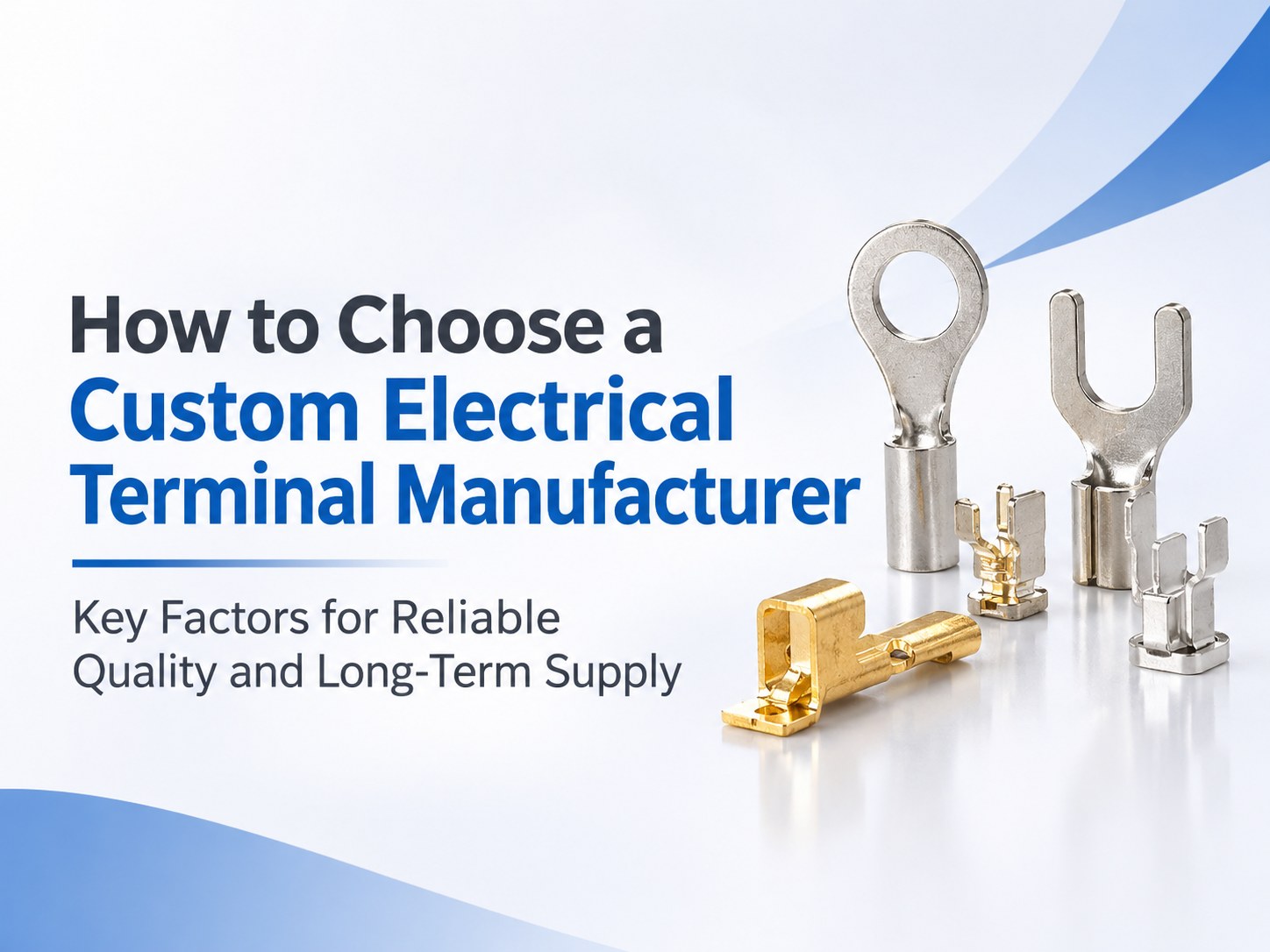
Choosing the right custom electrical terminal manufacturer is an important decision for companies that rely on reliable electrical connections in their products. Whether you manufacture automotive wiring harnesses, household appliances, industrial electrical equipment, or power distribution systems, the quality of electrical terminals directly affects product performance, safety, and long-term reliability.
Unlike standard terminals, custom electrical terminals are developed according to specific requirements, including dimensions, materials, connection structures, plating specifications, and application conditions. This means that selecting a manufacturer requires more than comparing product prices.
A reliable manufacturing partner should have strong engineering capabilities, precision manufacturing equipment, in-house tooling expertise, and a well-established quality management system.
In this guide, we explain the key factors to consider when choosing a custom electrical terminal manufacturer and how to identify a supplier capable of supporting your project from initial design to mass production.
1. Evaluate the Manufacturer’s Product and Industry Experience
The first step is to understand whether a manufacturer has practical experience producing the types of electrical terminals your project requires.
Different applications have different requirements for electrical conductivity, mechanical strength, dimensional accuracy, and connection reliability. A manufacturer experienced in general metal stamping may not necessarily have the technical expertise needed for precision electrical terminals.
Experience with Different Types of Electrical Terminals
Check whether the manufacturer has experience with products such as:
- Ring Terminals: Commonly used for secure screw or bolt connections in electrical systems.
- Spade Terminals: Designed for convenient connections in electrical equipment and wiring applications.
- Flag Terminals: Used in applications where a 90-degree connection is required.
- Terminals on Reel: Supplied in continuous strips for automated wire harness production and terminal crimping processes.
- Custom Stamped Electrical Terminals: Manufactured according to specific drawings, dimensions, and structural requirements.
- High-Current Terminals: Designed for applications requiring reliable electrical connections under higher current loads.
A manufacturer with experience across different terminal structures is more likely to understand the challenges involved in custom product development.
Industry Application Experience
It is also important to consider the industries the manufacturer serves.
Typical applications include:
- Automotive and wire harness manufacturing
- Household appliances and HVAC equipment
- Industrial electrical equipment
- New energy vehicles and EV charging systems
- Battery energy storage systems
- Power distribution and electrical control systems
Ask for relevant product examples or manufacturing experience related to your industry. This helps determine whether the supplier understands your application requirements rather than simply producing parts based on drawings.
2. Check Material Selection and Manufacturing Expertise
Material selection plays a critical role in the electrical and mechanical performance of custom terminals.
A qualified manufacturer should understand the properties of different conductive materials and recommend suitable options based on the terminal’s intended application.
Common Materials Used in Custom Electrical Terminals
The following materials are widely used in electrical terminal manufacturing.
| Material | Main Characteristics | Typical Applications |
|---|---|---|
| Copper | Excellent electrical conductivity | High-current electrical connections |
| Brass | Good conductivity, strength, and formability | General-purpose electrical terminals |
| Phosphor Bronze | Good elasticity, strength, and fatigue resistance | Spring contacts and contact terminals |
The appropriate material depends on factors such as current requirements, contact pressure, operating temperature, mechanical loading, and production cost.
For example, copper is often selected when electrical conductivity is a priority, while phosphor bronze can be suitable for applications requiring greater spring properties.
Surface Treatment and Plating Options
Surface treatment is another important consideration.
Common plating options include:
- Tin Plating: Provides corrosion resistance and good solderability.
- Nickel Plating: Offers wear resistance and protection against oxidation.
- Silver Plating: Can provide excellent electrical conductivity for specialized applications.
The plating thickness and process should be selected according to the operating environment, electrical requirements, and applicable industry standards.
When evaluating a manufacturer, ask whether it can control plating quality and provide relevant inspection or testing records.
Manufacturing Processes
A professional electrical terminal manufacturer should have suitable production processes, including:
- Precision metal stamping
- Progressive die stamping
- Injection molding
- Terminal strip processing
- Automated production and assembly
The ability to integrate multiple processes can improve production consistency and reduce coordination between different suppliers.
3. Assess Custom Tooling and Engineering Capabilities
Custom tooling is one of the most important factors when choosing an electrical terminal manufacturer.
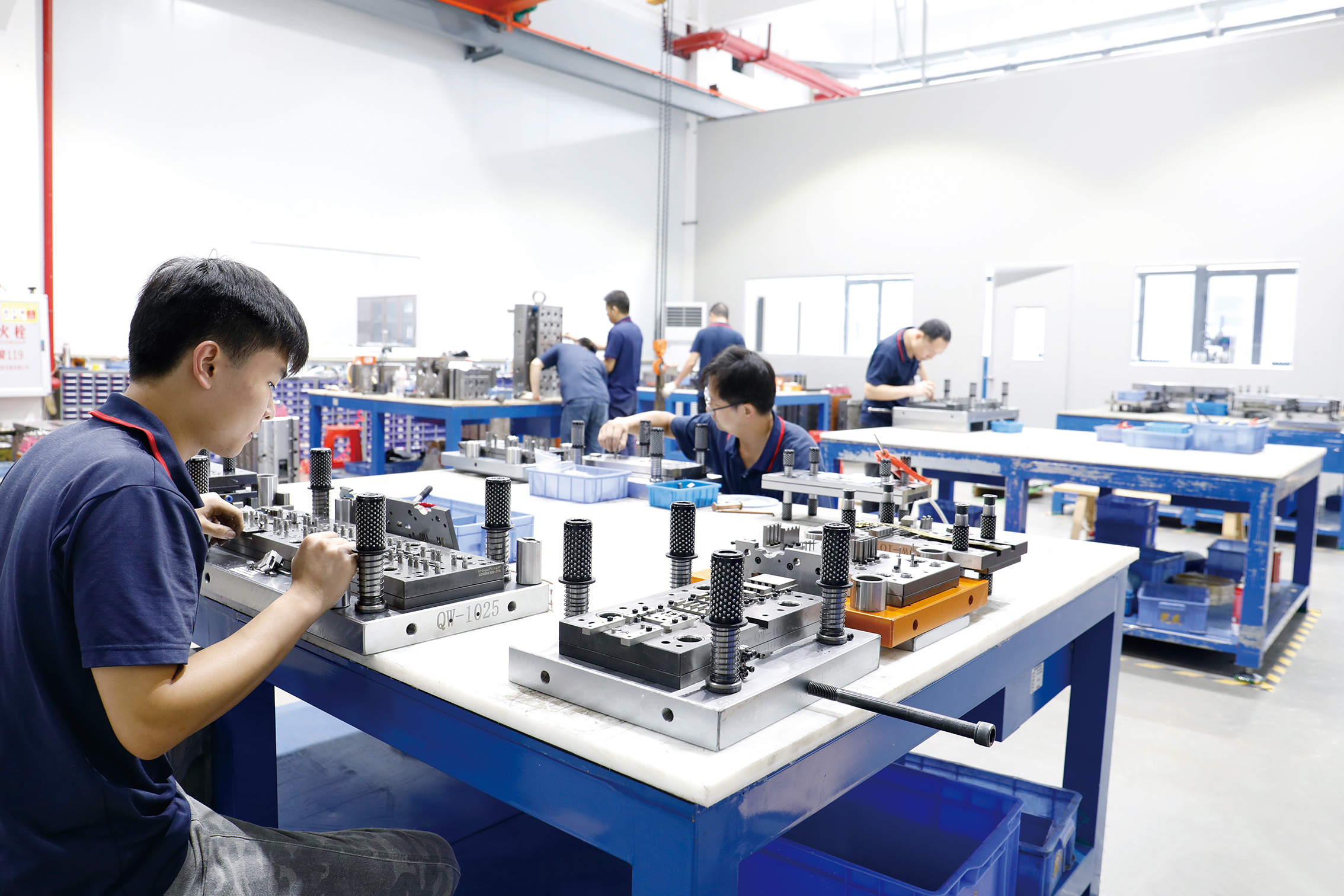
Unlike standard products, custom terminals often require dedicated molds and dies to achieve the required dimensions, geometry, and production efficiency.
Custom Tool and Die Development
A capable manufacturer should be able to develop tooling based on customer drawings, samples, or technical specifications.
Important capabilities include:
- Custom mold and die design
- Progressive stamping die development
- Precision mold manufacturing
- Tooling maintenance and modification
- Dimensional accuracy control
In-house tooling capabilities offer several advantages. Manufacturers can respond more quickly to design changes, maintain better control over tooling quality, and reduce development delays caused by external suppliers.
Engineering Support from Drawings to Production
A good manufacturing partner should provide engineering support throughout the development process.
This may include:
- Reviewing customer drawings and technical specifications.
- Evaluating material thickness and structural requirements.
- Recommending suitable stamping or forming processes.
- Identifying potential manufacturing challenges.
- Developing prototypes and evaluating samples.
- Optimizing the design for stable mass production.
Design for Manufacturability (DFM) is particularly important. An experienced engineering team can identify potential production problems before tooling begins, helping reduce unnecessary modifications and development costs.
Why In-House Tooling Matters
When tooling design and manufacturing are handled internally, companies can benefit from:
- Shorter tooling development cycles
- Better control over dimensional accuracy
- Faster engineering modifications
- More consistent production quality
- Improved long-term manufacturing efficiency
For projects involving complex terminal structures or large production volumes, these capabilities can make a significant difference.
4. Verify Production Capacity and Manufacturing Equipment
A manufacturer may be capable of producing excellent samples but still struggle to maintain consistent quality during mass production.
Therefore, it is important to evaluate both manufacturing equipment and actual production capacity.
Key Manufacturing Equipment
Depending on the product requirements, a qualified terminal manufacturer may operate:
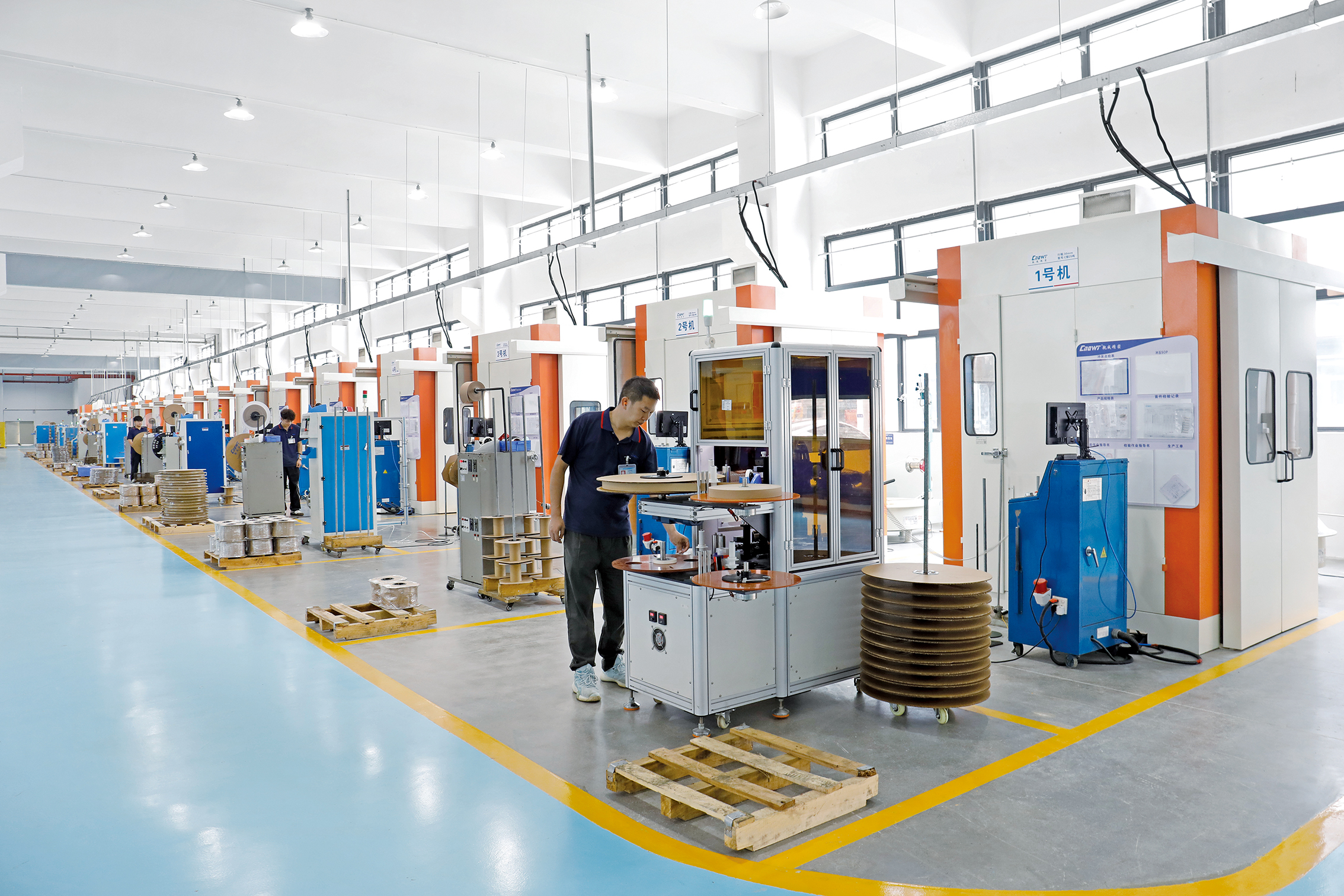
- High-speed stamping machines
- Precision injection molding machines
- Automated assembly equipment
- CNC mold processing equipment
- Terminal strip production equipment
These machines support different stages of the manufacturing process, from raw material processing to finished terminal production.
For example, high-speed stamping equipment is essential for producing large quantities of precision metal terminals, while injection molding equipment supports terminals that require plastic housings or insulation components.
Production Flexibility
A reliable supplier should be able to support different production requirements, including:
- Prototype development
- Small-batch trial production
- Medium-volume orders
- Large-scale mass production
- Customized packaging and reel specifications
This flexibility is particularly important for OEM customers whose order quantities may change as products move from development to commercial production.
Production Scalability and Delivery
Before placing an order, ask the manufacturer about its monthly production capacity, production scheduling, raw material availability, and standard lead times.
You should also understand how the supplier manages unexpected demand increases and urgent orders.
A stable production system helps reduce supply chain risks and supports long-term cooperation.
5. Examine Quality Control and Product Certifications
Quality consistency is essential in electrical terminal manufacturing. Even small dimensional deviations or plating defects can affect crimping performance, contact reliability, and product assembly.
A professional manufacturer should have clearly defined quality inspection procedures throughout production.
Key Quality Inspection Processes
Common inspection and testing procedures include:
- Incoming Material Inspection: Verifies material specifications, thickness, and quality before production.
- Dimensional Inspection: Checks critical dimensions against engineering drawings.
- Plating Thickness Testing: Confirms that the surface treatment meets specified requirements.
- Tensile and Retention Force Testing: Evaluates mechanical strength and connection stability where applicable.
- Electrical Performance Testing: Checks relevant electrical characteristics according to product requirements.
- Appearance Inspection: Identifies burrs, scratches, deformation, and other visible defects.
For automotive and other demanding applications, customers may also require process control documentation, traceability, and product validation records.
Quality Management Certifications
Certifications can help buyers evaluate a manufacturer’s quality management capabilities and compliance readiness.
Common certifications and requirements include:
| Certification / Standard | Main Purpose |
|---|---|
| ISO 9001 | Quality management system |
| IATF 16949 | Automotive quality management system |
| ISO 13485 | Quality management system for medical devices |
| UL | Product safety certification for applicable products |
| RoHS | Restriction of certain hazardous substances |
| REACH | Chemical substance compliance requirements |
| CQC | China Quality Certification for applicable products |
It is important to distinguish between management system certifications, product certifications, and regulatory compliance requirements. Not every terminal requires every certification.
Always confirm whether the manufacturer’s actual certification scope covers the relevant products and manufacturing location.
6. Compare Pricing, MOQ, and Long-Term Supply Reliability
Price is an important part of supplier selection, but the lowest quotation does not always represent the best purchasing decision.
For custom electrical terminals, the total project cost depends on several factors.
Factors That Affect Custom Terminal Pricing
The main cost components include:
- Raw material type and thickness
- Terminal dimensions and structural complexity
- Tooling and mold development costs
- Surface treatment and plating specifications
- Production quantity
- Inspection requirements
- Packaging and delivery specifications
For custom products, tooling investment may represent a significant initial cost. However, when production volumes increase, the tooling cost can be distributed across more units.
Understand the Total Cost of Ownership
When comparing quotations, consider more than the unit price.
Other important factors include:
- Tooling investment and maintenance costs
- Product defect and scrap rates
- Production efficiency
- Delivery reliability
- Transportation and packaging costs
- Long-term product consistency
A manufacturer with better process control may offer greater overall value even if its initial unit price is slightly higher.
Questions to Ask Before Placing an Order
Before confirming a supplier, clarify the following:
- What is the minimum order quantity (MOQ)?
- Is custom tooling required?
- Can the manufacturer provide samples before mass production?
- What is the expected tooling and production lead time?
- Can the supplier support future increases in order volume?
- What quality documentation is available with each shipment?
Clear communication at the quotation stage helps prevent misunderstandings during production.
7. Choose a Manufacturer That Supports Long-Term OEM Partnerships
For OEM customers, choosing a terminal manufacturer should be viewed as a long-term supply chain decision rather than a one-time purchasing activity.
A reliable partner should be able to support product development, engineering changes, production planning, quality improvement, and continuous supply.
What Makes a Good OEM Manufacturing Partner?
Look for a manufacturer that offers:
- Consistent product quality
- Responsive engineering communication
- Flexible customization capabilities
- Stable production capacity
- Reliable delivery schedules
- Technical documentation and product traceability
- Long-term tooling and production support
These capabilities become increasingly important when terminals are integrated into products manufactured over several years.
From Prototype Development to Mass Production
A well-organized custom terminal manufacturing process generally follows these stages:
- Requirement Review: The customer provides drawings, samples, or technical specifications.
- Engineering Evaluation: The manufacturer evaluates materials, dimensions, tooling, and manufacturing processes.
- Tooling Development: Custom molds or stamping dies are designed and manufactured.
- Sample Production: Initial samples are produced for dimensional and functional evaluation.
- Customer Approval: Samples are reviewed and approved before mass production.
- Mass Production: Approved products enter controlled manufacturing processes.
- Final Inspection and Delivery: Finished terminals are inspected, packaged, and delivered according to customer requirements.
Choosing a manufacturer that can manage this entire process helps reduce communication costs and improve project efficiency.
8. Why Choose Qianwei Precision for Custom Electrical Terminals?
Qianwei Precision is a professional electrical terminal manufacturer established in 2012, specializing in precision metal stamping, electrical terminal production, and customized manufacturing solutions.
Located in Dongguan, Guangdong, China, Qianwei provides OEM manufacturing support for customers in automotive, household appliances, industrial electrical equipment, and other electrical applications.
Integrated Manufacturing Capabilities
Qianwei operates multiple manufacturing processes, including:
- High-speed precision stamping
- Plastic injection molding
- Mold design and manufacturing
- Cable assembly
With an in-house mold processing center and more than 1,800 stamping and injection molds, Qianwei can support different product structures and customized production requirements.
Custom Engineering and Tooling Development
From customer drawings and samples to tooling development and mass production, Qianwei provides manufacturing support throughout the product development process.
The engineering team evaluates material selection, structural design, dimensional requirements, and production feasibility to help customers develop practical and cost-effective terminal solutions.
Material and Product Expertise
Qianwei works with copper, brass, and phosphor bronze to manufacture different types of electrical terminals.
Its main product categories include:
- Custom electrical terminals
- Automotive terminals
- Terminals on Reel
- Ring and spade terminals
- Custom stamped metal terminals
- High-current terminal solutions
- Flexible copper busbars
Products can be developed according to customer drawings, material requirements, plating specifications, and application conditions.
Quality Management and Production Reliability
Qianwei maintains quality management systems and relevant certifications, including ISO 9001, IATF 16949, and ISO 13485, supporting customers with different industry requirements.
With integrated manufacturing capabilities and established production processes, Qianwei focuses on delivering consistent product quality and reliable OEM manufacturing support.
If you are looking for a custom electrical terminal manufacturer, Qianwei Precision welcomes inquiries from OEM manufacturers, electrical equipment companies, and wire harness producers.
Share your product drawings, samples, or technical specifications with our team to discuss material options, tooling requirements, and manufacturing solutions.
Contact Qianwei Precision to discuss your custom electrical terminal project.
FAQs
1. What should I look for in a custom electrical terminal manufacturer?
Look for manufacturing experience, material expertise, in-house tooling capabilities, precision stamping equipment, quality control procedures, relevant certifications, and stable production capacity. A manufacturer that provides engineering support from design to mass production can offer greater long-term value.
2. What information should I provide when requesting a custom terminal quotation?
Ideally, provide 2D drawings, 3D models, or physical samples. You should also specify material type, material thickness, surface treatment, dimensions, electrical requirements, expected order quantity, and application environment. More detailed information helps the manufacturer evaluate feasibility and provide an accurate quotation.
3. Can manufacturers produce electrical terminals based on customer drawings?
Yes. Professional custom terminal manufacturers can develop products based on customer drawings, samples, or technical specifications. The process generally includes engineering evaluation, tooling development, sample production, testing, and customer approval before mass production.
4. What materials are commonly used for custom electrical terminals?
Copper, brass, and phosphor bronze are commonly used materials. Copper offers excellent electrical conductivity, brass provides a balance of conductivity and formability, and phosphor bronze offers good spring properties and mechanical strength. Material selection depends on the terminal’s application and performance requirements.
5. What is the difference between a terminal supplier and a terminal manufacturer?
A terminal supplier may distribute products manufactured by other companies, while a terminal manufacturer operates its own production facilities and manufacturing processes. Manufacturers with in-house stamping and tooling capabilities generally offer greater control over customization, production quality, and engineering changes.
6. How long does it take to develop a custom electrical terminal?
Development time depends on product complexity, tooling requirements, material availability, and customer approval procedures. Standard modifications may require less development time, while completely new terminal designs involving custom progressive dies may require a longer development cycle. The manufacturer should provide a project-specific schedule after reviewing the drawings and specifications.

