

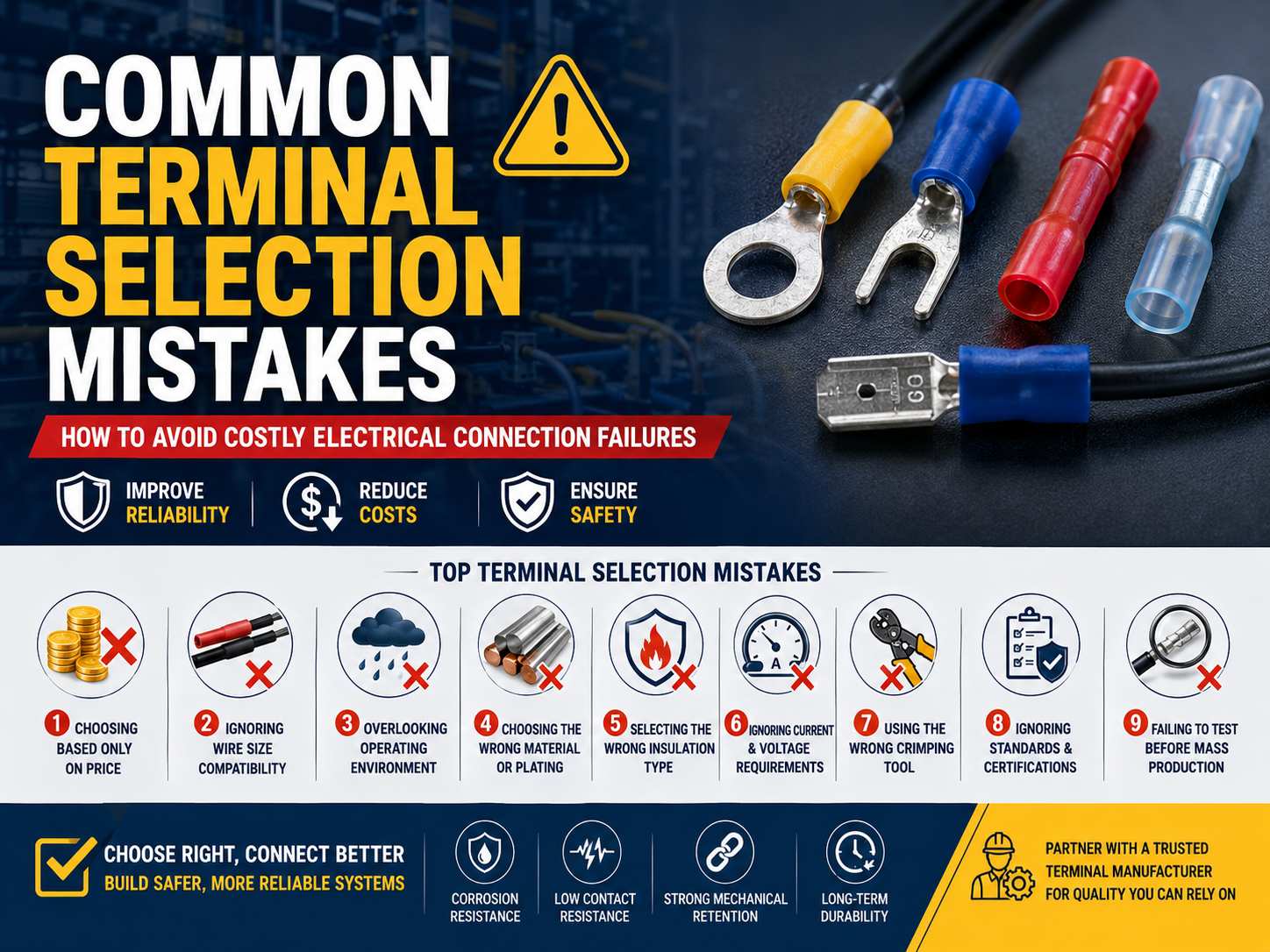
Electrical terminals are small components, but they play a critical role in the safety, stability, and efficiency of electrical systems. Whether used in automotive wiring harnesses, industrial control panels, consumer electronics, renewable energy systems, or marine equipment, the correct terminal selection directly affects conductivity, durability, and long-term operational reliability.
However, many electrical failures are not caused by complex engineering problems. Instead, they originate from basic terminal selection mistakes such as using the wrong material, choosing incorrect wire sizes, ignoring environmental conditions, or using improper crimping tools.
For OEM manufacturers, engineers, procurement teams, and distributors, understanding these common mistakes can help reduce maintenance costs, prevent field failures, and improve product reliability.
This article explores the most common terminal selection mistakes and explains how to avoid them through proper engineering evaluation and supplier collaboration.
Why Proper Terminal Selection Matters
Electrical terminals are responsible for creating secure electrical and mechanical connections between wires and devices. A poorly selected terminal can cause unstable conductivity, excessive heat generation, loose connections, corrosion, and even fire hazards.
A properly selected terminal should provide:
- Stable electrical conductivity
- Low contact resistance
- Strong mechanical retention
- Environmental durability
- Long-term reliability
Terminal selection also affects manufacturing efficiency, assembly quality, maintenance frequency, and lifecycle cost.
In many cases, the total cost of terminal failure far exceeds the initial component cost.
Mistake #1 – Choosing Terminals Based Only on Price
One of the most common procurement mistakes is selecting terminals purely based on unit price.
Low-cost terminals may initially appear attractive, especially in high-volume projects, but they often introduce hidden quality risks.
Problems Commonly Found in Cheap Terminals
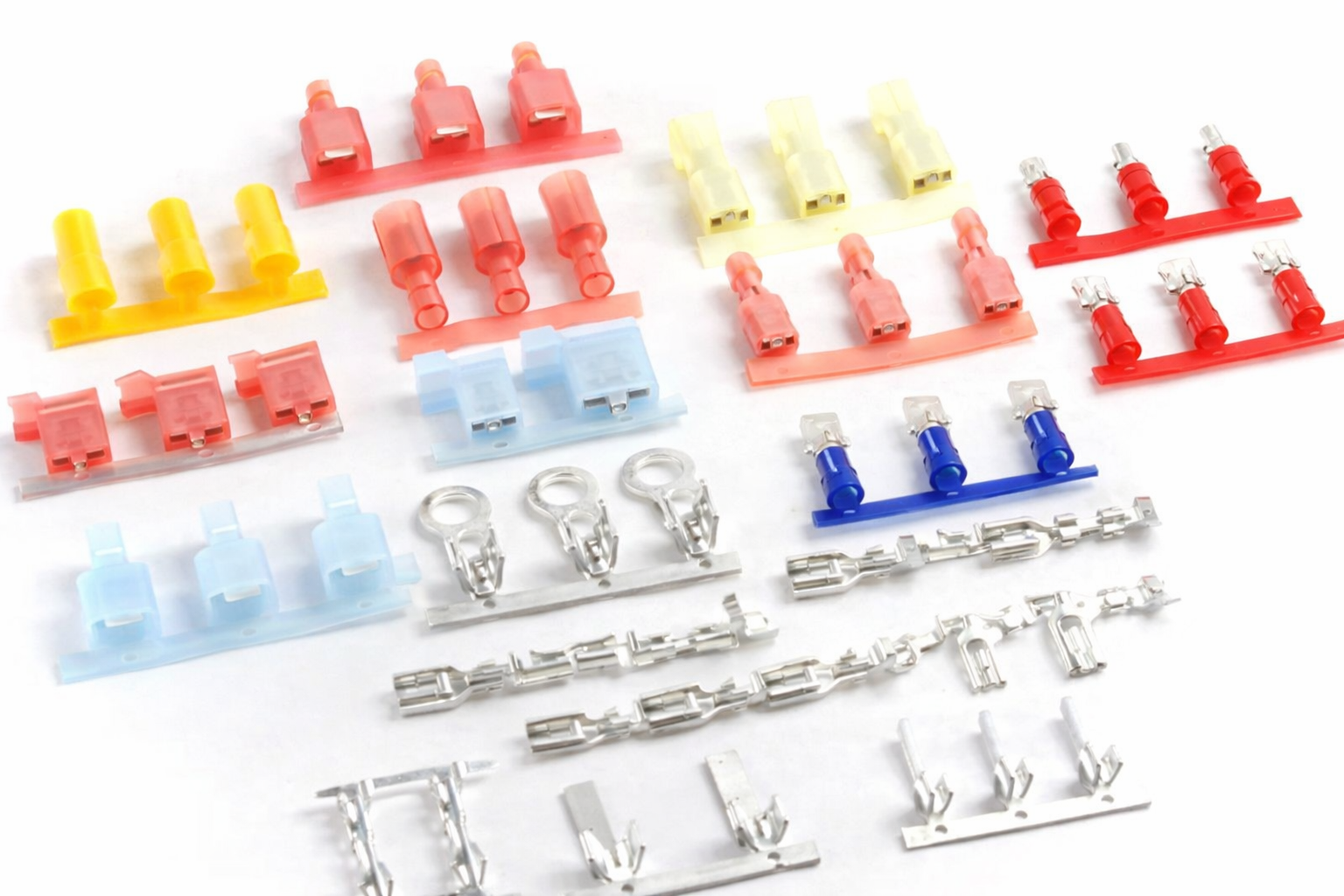
Lower-cost terminals may use:
- Inferior conductive materials
- Thin or inconsistent plating
- Weak crimp barrel structures
- Poor dimensional tolerances
- Low-quality insulation materials
These issues can lead to unstable electrical performance and reduced durability.
Hidden Costs of Low-Quality Terminals
Cheap terminals frequently create additional expenses through:
- Rework and assembly corrections
- Increased defect rates
- Product recalls
- Maintenance and replacement costs
- Warranty claims
- Production downtime
In critical systems, connection failure can damage entire assemblies and affect customer trust.
Evaluate Total Cost Instead of Unit Price
A more effective approach is evaluating the Total Cost of Ownership (TCO), including:
- Product lifespan
- Failure risk
- Maintenance cost
- Assembly efficiency
- Reliability performance
Higher-quality terminals often reduce long-term operational expenses.
Mistake #2 – Ignoring Wire Size Compatibility
Wire size compatibility is essential for proper crimping and electrical performance.
Each terminal is designed for a specific wire gauge range. Using incorrect wire sizes can compromise both mechanical strength and conductivity.
Problems Caused by Oversized Wires
When wires are too large for the terminal barrel:
- Crimp deformation becomes inconsistent
- Wire strands may be damaged
- Incomplete crimp compression occurs
- Mechanical retention decreases
This can create unstable electrical contact and overheating risks.
Problems Caused by Undersized Wires
When wires are too small:
- The wire may loosen inside the terminal
- Contact resistance increases
- Vibration resistance decreases
- Pull-out strength becomes insufficient
Loose wire connections are a major cause of intermittent electrical failure.
How to Properly Match Wire and Terminal Sizes
To avoid compatibility issues:
- Verify AWG or metric wire size
- Review manufacturer specifications
- Use recommended crimp tooling
- Perform pull-force testing
- Validate crimp quality during sampling
Proper wire-to-terminal matching significantly improves reliability.
Mistake #3 – Ignoring Operating Environment
Environmental conditions directly affect terminal lifespan and performance.
Many failures occur because terminals designed for indoor applications are used in harsh outdoor or industrial environments.
Environmental Factors That Affect Terminals
Common environmental risks include:
- Moisture
- Salt exposure
- Chemicals
- Temperature fluctuations
- UV exposure
- Dust contamination
- Continuous vibration
Ignoring these conditions can accelerate corrosion and insulation degradation.
Indoor vs Outdoor Terminal Selection
Indoor applications typically allow the use of standard insulated terminals.
Outdoor applications often require:
- Waterproof heat shrink terminals
- Corrosion-resistant plating
- UV-resistant insulation materials
- Enhanced sealing structures
Marine and automotive applications are especially demanding.
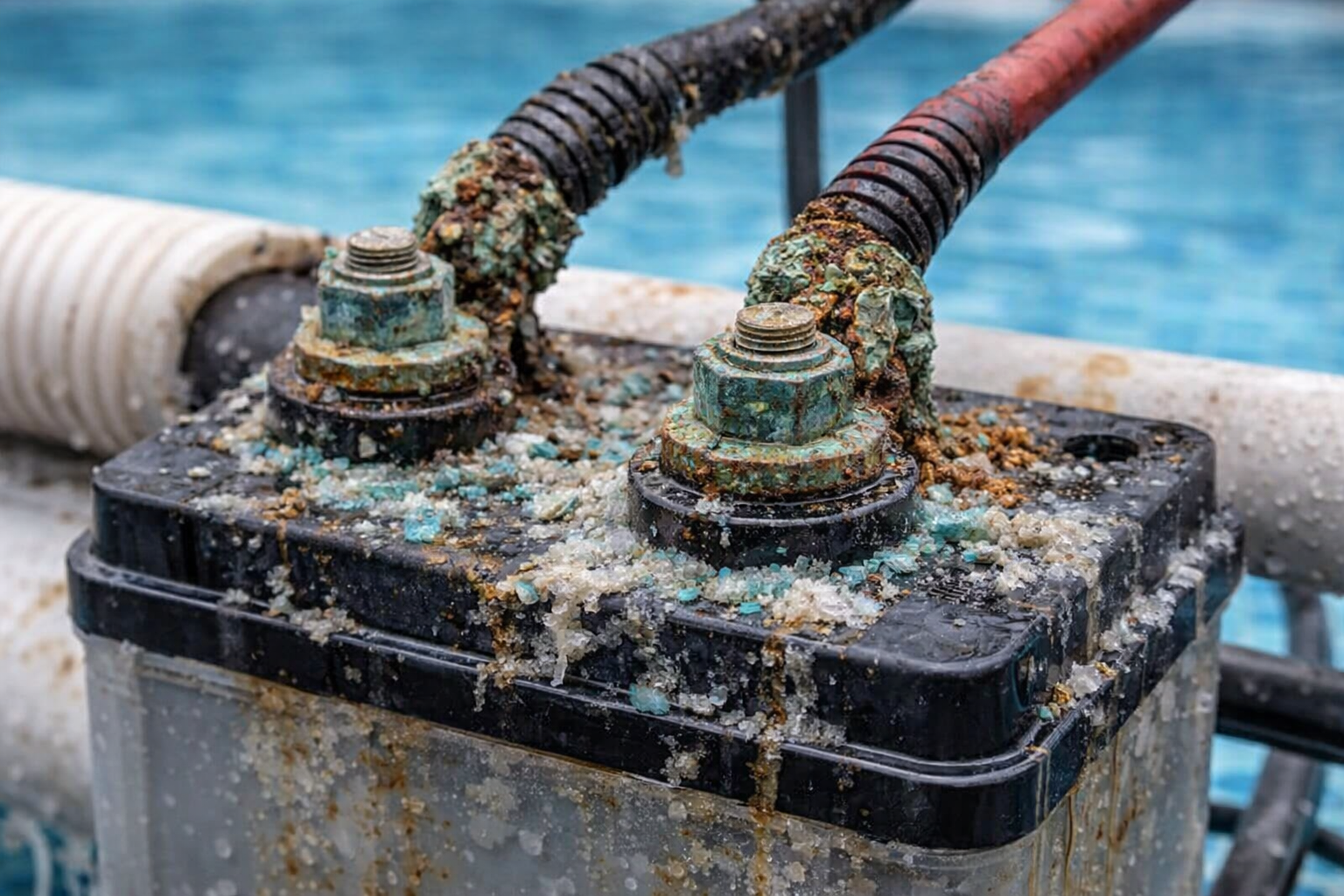
Moisture and Corrosion Risks
Water intrusion increases oxidation and contact resistance.
For outdoor systems, using waterproof terminals with proper sealing can significantly extend service life.
Heat shrink terminals with adhesive-lined tubing are commonly used for harsh environments.
Mistake #4 – Choosing the Wrong Terminal Material
Terminal material selection affects conductivity, elasticity, mechanical strength, and corrosion resistance.
Different applications require different material properties.
Common Terminal Materials
Copper provides excellent electrical conductivity but may have lower mechanical strength.
Brass offers balanced conductivity and structural durability.
Phosphor bronze provides improved elasticity and fatigue resistance.
Stainless steel supports high-strength applications but has lower conductivity.
Conductivity vs Mechanical Strength
Some applications prioritize conductivity, while others prioritize mechanical durability.
For example:
- High-current systems require excellent conductivity
- High-vibration systems require stronger mechanical retention
- Automotive connectors require balanced performance
Selecting the wrong material can reduce both electrical and mechanical reliability.
Mistake #5 – Ignoring Plating Requirements
Terminal plating is critical for corrosion resistance and contact reliability.
However, plating selection is often overlooked during procurement.
Why Plating Matters
Surface plating protects conductive materials from oxidation and environmental degradation.
It also improves:
- Contact stability
- Conductivity consistency
- Wear resistance
- Long-term reliability
Without proper plating, terminals may corrode rapidly under moisture or chemical exposure.
Common Plating Types
Tin plating is widely used because it offers good conductivity and cost efficiency.
Nickel plating improves wear resistance and temperature durability.
Gold plating provides superior signal reliability and oxidation resistance.
Silver plating offers excellent conductivity for high-current applications.
Problems Caused by Incorrect Plating
Improper plating selection may result in:
- Increased contact resistance
- Surface oxidation
- Signal instability
- Reduced mating durability
- Premature failure
Environmental conditions should always guide plating selection.
Mistake #6 – Selecting the Wrong Insulation Type
Insulation materials directly affect temperature resistance, flexibility, flame resistance, and environmental durability.
Different insulation types are suitable for different applications.
Common Insulation Materials
PVC insulation is cost-effective and widely used for general applications.
Nylon insulation provides better flexibility and higher temperature resistance.
Heat shrink insulation offers waterproof sealing and enhanced environmental protection.
Common Insulation Selection Errors
Typical mistakes include:
Using PVC in high-temperature environments.
Ignoring waterproof requirements.
Using non-flame-retardant materials.
Selecting insulation with insufficient chemical resistance.
Improper insulation selection can reduce both safety and product lifespan.
Mistake #7 – Ignoring Current and Voltage Requirements
Electrical load requirements must always match terminal specifications.
Underrated terminals can overheat and fail under excessive current.
Why Electrical Ratings Matter
As current increases, resistance-generated heat also increases.
If the terminal cannot handle the electrical load:
- Temperature rises rapidly
- Insulation may melt
- Contact surfaces degrade
- Fire hazards become possible
Electrical ratings should always include safety margins.
How to Verify Electrical Ratings
Buyers and engineers should review:
- Manufacturer datasheets
- Ampacity specifications
- Voltage ratings
- Testing reports
- Certification documentation
Applications involving continuous high current require especially careful evaluation.
Mistake #8 – Using the Wrong Crimping Tool
Even high-quality terminals can fail if improper crimping tools are used.
Crimp quality directly determines electrical and mechanical performance.
Common Crimping Problems
Over-crimping may damage wire strands and reduce conductivity.
Under-crimping creates loose connections and unstable resistance.
Improper tooling may deform the terminal barrel.
Inconsistent crimp force reduces reliability.
Importance of Proper Crimping Equipment
Reliable crimping systems include:
- Ratchet crimp tools
- Calibrated crimp dies
- Pneumatic crimp machines
- Automated crimping systems
Correct tooling ensures repeatable and stable crimp quality.
Mistake #9 – Ignoring Industry Standards and Certifications
Many buyers focus only on dimensions and pricing while ignoring compliance requirements.
However, certifications are critical for safety and market acceptance.
Important Standards for Electrical Terminals
Common standards include:
- UL safety requirements
- IEC electrical standards
- ISO quality systems
Automotive projects may also require additional industry-specific validation.
Risks of Non-Compliant Products
Using non-certified terminals can lead to:
- Market rejection
- Safety failures
- Product recalls
- Legal liability
- Customer complaints
Compliance verification should always be part of supplier evaluation.
Mistake #10 – Failing to Test Terminals Before Mass Production
Skipping validation testing is another major mistake.
Even if terminals appear acceptable during sampling, real operating conditions may reveal hidden weaknesses.
Recommended Testing Methods
Electrical testing may include:
- Contact resistance testing
- Insulation resistance testing
- Dielectric withstand testing
Mechanical testing may include:
- Pull-force testing
- Crimp cross-section analysis
- Insertion and extraction force evaluation
Environmental testing may include:
- Salt spray testing
- Temperature cycling
- Humidity testing
- Vibration testing
Validation testing significantly reduces field failure risk.
How to Choose the Right Electrical Terminal
A systematic selection process helps avoid most terminal-related failures.
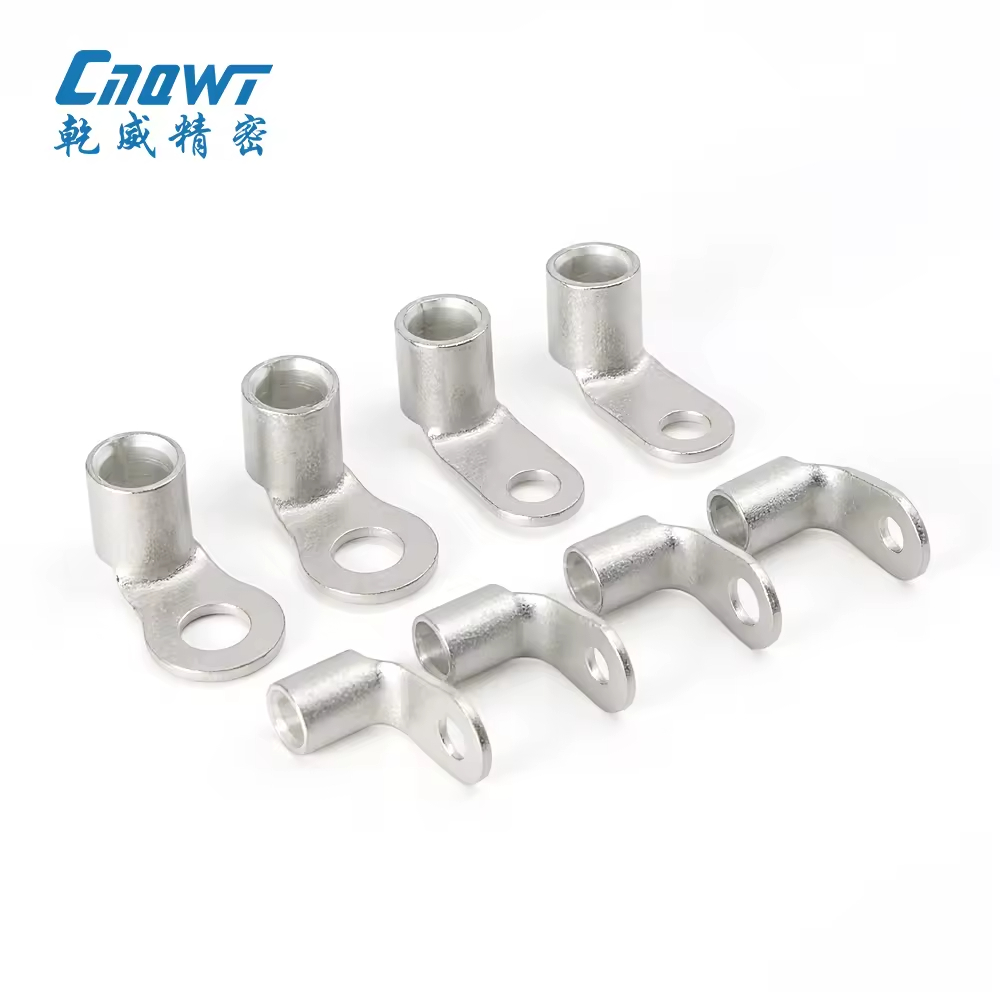
Step 1 – Define Application Requirements
Evaluate:
- Current and voltage
- Operating environment
- Mechanical stress
- Installation method
- Product lifespan expectations
Step 2 – Select Proper Materials and Plating
Choose materials and coatings suitable for the environment and electrical load.
Step 3 – Match Wire Size and Terminal Design
Verify compatibility between wire gauge, terminal barrel, and crimp tooling.
Step 4 – Verify Certifications and Testing
Review compliance documents and reliability testing reports.
Step 5 – Conduct Sample Validation
Perform real-world testing before approving mass production.
This step helps identify hidden risks early.
How Reliable Manufacturers Help Prevent Selection Mistakes
Experienced terminal manufacturers provide more than products—they provide engineering support and technical guidance.
Reliable suppliers can assist with:
- Application analysis
- Material recommendations
- Crimp optimization
- Custom design support
- Reliability testing
- Compliance verification
Working with experienced manufacturers reduces procurement and engineering risks.
Future Trends in Terminal Selection
As electrical systems evolve, terminal requirements continue increasing.
Key trends include:
Growing demand from EV and renewable energy industries.
Higher reliability expectations.
Automated crimping and smart manufacturing.
Eco-friendly materials and coatings.
Improved waterproof sealing technologies.
Future terminal selection will increasingly focus on long-term durability and environmental performance.
Conclusion
Most electrical terminal failures are not caused by complex technical issues. They result from preventable selection mistakes such as incorrect wire sizing, poor material choices, inadequate environmental protection, or improper crimping.
Choosing the correct terminal requires evaluating:
- Electrical load
- Environmental conditions
- Material properties
- Plating performance
- Insulation type
- Crimping methods
- Certification requirements
For engineers, OEM manufacturers, and procurement teams, a structured terminal selection process significantly improves safety, reliability, and long-term performance.
Partnering with an experienced terminal manufacturer like Qianwei Precision that provides engineering support, quality assurance, and application-specific expertise is one of the most effective ways to avoid costly connection failures.
FAQs
What is the most common terminal selection mistake?
One of the most common mistakes is choosing terminals based only on price instead of evaluating material quality, plating performance, environmental resistance, and long-term reliability. Low-cost terminals often lead to higher maintenance and failure costs.
Why is wire size compatibility important for terminals?
Wire size directly affects crimp quality, current capacity, and mechanical retention. Using oversized or undersized wires can cause loose connections, overheating, increased resistance, and premature failure.
What happens if the wrong terminal material is selected?
Incorrect material selection can reduce conductivity, weaken mechanical strength, and accelerate corrosion. Different applications require different materials such as copper, brass, phosphor bronze, or stainless steel.
Why is terminal plating important?
Plating improves corrosion resistance, conductivity stability, and contact reliability. Common plating options include tin, nickel, gold, and silver, each designed for different operating conditions and electrical requirements.
Are waterproof terminals necessary for outdoor applications?
Yes. Outdoor and high-moisture environments typically require waterproof heat shrink terminals or sealed connectors to prevent water intrusion, oxidation, and electrical failure.
What problems can occur if a terminal is underrated for current?
Underrated terminals may overheat under electrical load, leading to insulation melting, increased contact resistance, voltage instability, and potential fire hazards.
Can poor crimping cause electrical failure?
Absolutely. Poor crimping can create unstable electrical contact, high resistance, wire strand damage, and insufficient pull-out strength. Proper crimping tools and calibrated equipment are essential.
What is the difference between PVC, nylon, and heat shrink insulated terminals?
PVC terminals are cost-effective for general indoor applications. Nylon terminals offer better flexibility and temperature resistance. Heat shrink terminals provide waterproof sealing and superior environmental protection.
How do I choose terminals for automotive applications?
Automotive terminals should offer vibration resistance, corrosion protection, temperature durability, and stable conductivity. Heat shrink terminals and corrosion-resistant plating are commonly recommended.
Why is environmental evaluation important when selecting terminals?
Environmental factors such as moisture, salt exposure, chemicals, UV radiation, and temperature fluctuations significantly affect terminal lifespan and reliability. Terminal selection should always match operating conditions.
What testing methods are commonly used for terminal validation?
Common testing methods include:
- Contact resistance testing
- Pull-force testing
- Insulation resistance testing
- Salt spray corrosion testing
- Temperature cycling testing
- Vibration testing
These tests help verify long-term reliability.
What certifications should electrical terminals have?
Depending on the application and market, terminals may require compliance with standards from:
- UL
- IEC
- ISO
Automotive applications may also require additional industry-specific certifications.
How can manufacturers help prevent terminal selection mistakes?
Reliable manufacturers provide:
- Engineering support
- Material recommendations
- Crimping guidance
- Environmental analysis
- Testing services
- Quality assurance systems
Working with experienced suppliers reduces design and procurement risks.
Are heat shrink terminals better than standard insulated terminals?
Not always. Heat shrink terminals provide superior waterproofing and environmental protection, but standard insulated terminals are often more cost-effective for dry indoor applications. The best choice depends on the operating environment and reliability requirements.
How do I verify terminal quality before mass production?
Recommended steps include:
- Reviewing datasheets and certifications
- Requesting samples
- Conducting electrical and mechanical testing
- Evaluating crimp quality
- Performing environmental validation tests
Pre-production testing helps reduce field failure risks.

