


Flexible copper busbars are widely used in electrical systems where reliable current transmission, compact installation, and mechanical flexibility are important. From battery energy storage systems to electric vehicles and industrial power equipment, these components help connect electrical parts while accommodating installation tolerances, vibration, and limited space.
However, not every application requires the same busbar design. Current requirements, copper thickness, connection methods, insulation, and operating conditions all influence the final product. For OEM buyers, choosing a suitable custom flexible copper busbar involves more than selecting a conductor with the correct dimensions.
This guide explains how flexible copper busbars are designed, which materials are commonly used, how they are manufactured, and what to consider when selecting a manufacturing partner for your project.
1. What Is a Flexible Copper Busbar?
A flexible copper busbar is an electrical conductor designed to carry current between components while offering greater flexibility than a conventional rigid copper busbar. Depending on the application, it may be manufactured from laminated copper foils, braided copper strands, or other flexible copper structures.
Unlike rigid busbars, which maintain a fixed shape, flexible designs can accommodate certain positional variations, simplify installation, and help reduce mechanical stress at electrical connection points.
1.1 Common Types of Flexible Copper Busbars
Two common constructions are laminated and braided flexible copper busbars.
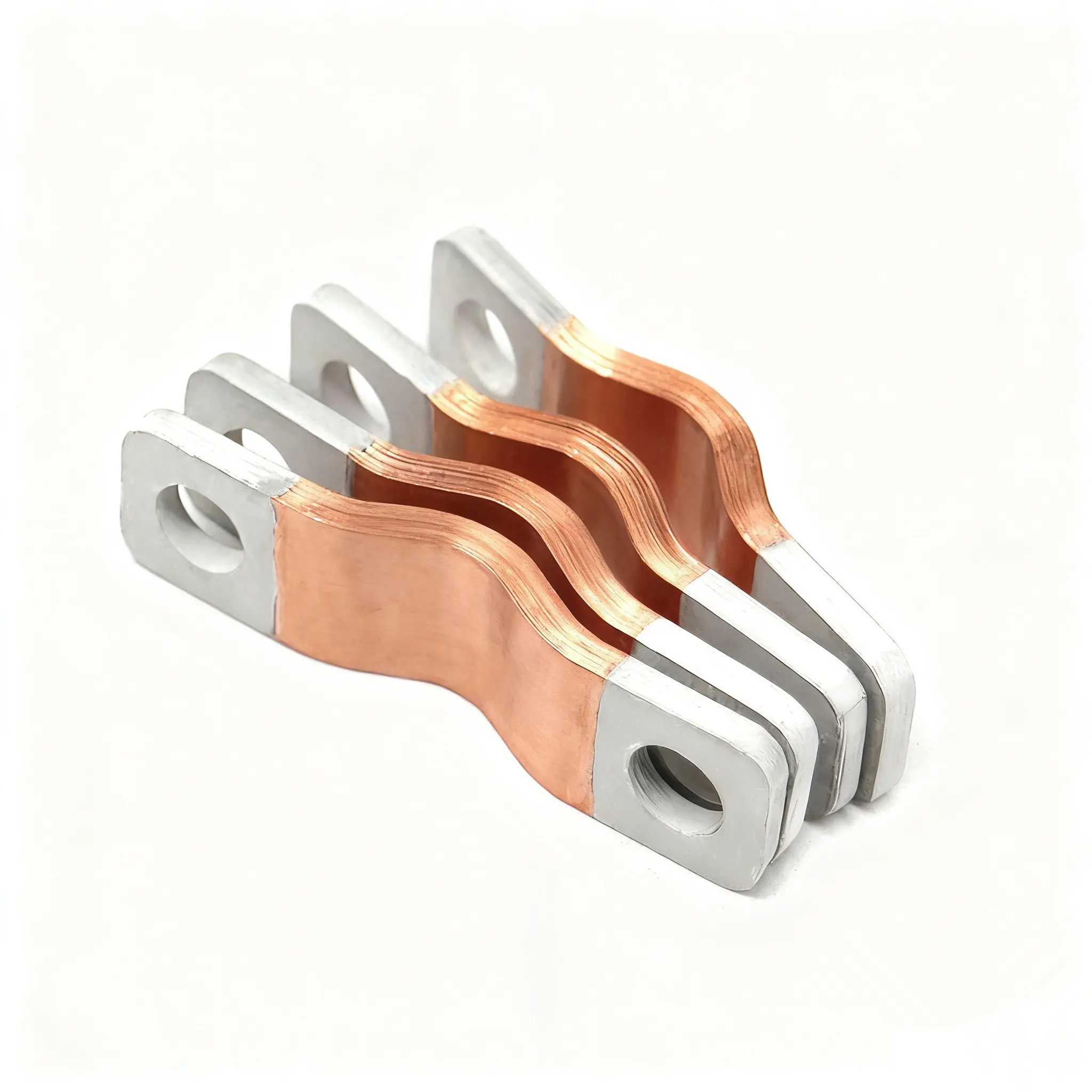
Laminated flexible copper busbars consist of multiple thin copper foils joined together, typically through a suitable welding process at the connection ends. The foil section remains flexible, while the consolidated ends provide electrical connection points.
Braided flexible copper busbars use woven or braided copper strands to create a flexible conductive structure. They are often suitable for applications requiring movement accommodation, vibration resistance, or flexible connections between electrical components.
The appropriate design depends on current demand, available installation space, mechanical movement, connection requirements, and manufacturing considerations.
1.2 How Do Flexible Copper Busbars Work?
Flexible copper busbars conduct electrical current between components such as battery modules, power distribution units, switchgear, and converters.
Copper offers high electrical conductivity, while the flexible construction helps accommodate assembly tolerances and relative movement. Depending on the design, insulation or protective coverings may also be added to meet electrical safety and environmental requirements.
It is important to remember that flexibility does not automatically guarantee better electrical performance. The conductor cross-section, connection quality, operating temperature, and installation conditions must all be considered.
1.3 Flexible Copper Busbar vs. Rigid Copper Busbar
Rigid copper busbars are suitable for fixed connections where structural stability and straightforward installation are priorities. Flexible copper busbars are more appropriate when components are difficult to align perfectly or when vibration and limited installation space are concerns.
A flexible busbar may simplify assembly and reduce stress caused by small positional differences. However, it can require additional design considerations for bending, support, insulation, and termination.
The best option is determined by the electrical and mechanical requirements of the complete system rather than flexibility alone.
2. Why Choose a Custom Flexible Copper Busbar?
Standard busbars may be suitable for common applications, but OEM equipment often has specific requirements that standard dimensions and configurations cannot fully satisfy.
2.1 Meet Application-Specific Electrical Requirements
Different electrical systems operate at different current levels, temperatures, and duty cycles. A custom busbar can be designed around the required conductor cross-section, connection interfaces, and operating conditions.
For example, battery systems and power conversion equipment may require carefully designed current paths to control voltage drop and temperature rise.
The final design should be verified against the expected continuous and peak currents, ambient temperature, cooling conditions, and applicable safety requirements.
2.2 Fit Limited Installation Spaces
Custom flexible copper busbars can be produced to specified lengths, widths, thicknesses, and connection configurations.
This is particularly useful when electrical components are arranged closely together or when the connection path includes changes in direction. Correctly positioned mounting holes and terminals can also simplify assembly and reduce the need for on-site modifications.
2.3 Accommodate Vibration and Mechanical Stress
Electrical connections in vehicles, industrial equipment, and battery systems may experience vibration or small amounts of relative movement.
A properly designed flexible connection can help accommodate these conditions and reduce stress transmitted to rigid connection points. However, the design must account for bend radius, support, movement amplitude, and fatigue risk. A flexible busbar should not be assumed suitable for unlimited repeated bending.
2.4 Support OEM Product Integration
OEM customers frequently require components that match their own drawings, equipment layouts, and assembly processes.
Custom manufacturing can accommodate specific hole positions, terminal shapes, insulation requirements, and interface dimensions. It can also support prototype development and subsequent mass production, helping maintain consistency as the equipment design moves toward commercial production.
3. Materials Used in Custom Flexible Copper Busbars
Material selection affects electrical conductivity, mechanical performance, corrosion resistance, and overall manufacturing cost.
3.1 Copper Grades and Electrical Conductivity
Copper is widely used for busbars because of its high electrical conductivity and established manufacturing processes.
Common electrical copper grades include C11000, also known as electrolytic tough pitch copper, and oxygen-free copper grades such as C10200. Availability and suitability depend on the required material standard, product construction, and application.
When selecting copper, buyers should consider:
- Electrical conductivity and resistivity.
- Material thickness and dimensional consistency.
- Mechanical properties and forming requirements.
- Operating temperature and environmental conditions.
- Material availability and cost.
Higher conductivity can be beneficial, but material selection should not be based on conductivity alone. The complete busbar design determines its electrical and mechanical performance.
3.2 Laminated Copper Foils
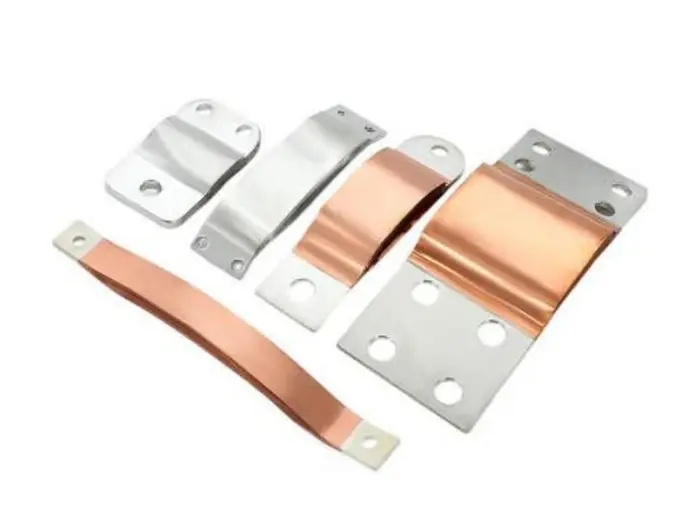
Laminated flexible busbars use multiple thin copper foils to create a flexible conductive section.
The foil thickness, number of layers, and overall dimensions influence the conductor’s cross-sectional area and flexibility. Thinner individual layers can make the assembly more adaptable to certain installation requirements, while the consolidated ends provide suitable connection interfaces.
The joining process is especially important. Poor bonding, excessive resistance, or inconsistent dimensions can affect electrical performance and product reliability.
3.3 Copper Braids and Alternative Constructions
Braided copper busbars offer a different balance of flexibility and mechanical characteristics.
Their woven structure can accommodate movement and vibration, making them useful for selected flexible electrical connections. Laminated designs may be preferable when a flatter profile, defined geometry, or particular connection arrangement is required.
Neither construction is universally better. Buyers should compare the movement requirements, available space, current demand, installation method, and expected service conditions before making a selection.
3.4 Surface Treatment and Plating
Copper surfaces may be supplied bare or finished with a suitable metallic coating, depending on the application.
Tin plating is commonly used to improve surface protection and help manage oxidation-related contact issues. Silver plating may be selected for certain applications where electrical contact performance is particularly important.
The choice should account for contact conditions, operating temperature, environmental exposure, compatibility with mating materials, and cost.
Surface treatment requirements should be specified clearly in the technical drawing or purchasing specification.
3.5 Insulation and Protective Coverings
Flexible copper busbars may require insulation to prevent accidental contact and support electrical safety.
Common options include PVC, silicone, heat-shrink tubing, and other application-specific insulating materials. The appropriate choice depends on voltage, temperature, flexibility, chemical exposure, and installation conditions.
Buyers should specify the required insulation coverage, thickness, temperature rating, and relevant electrical performance requirements. Creepage and clearance distances must also be considered where applicable.
4. Key Design Considerations for Custom Flexible Copper Busbars
A reliable busbar starts with a design that balances electrical performance, mechanical requirements, thermal behavior, and manufacturing feasibility.
4.1 Current Rating and Cross-Sectional Area
The conductor cross-sectional area is one of the primary factors affecting resistance and current-carrying capability.
A larger cross-section generally reduces electrical resistance and resistive heating for a given current. However, the final current rating also depends on conductor geometry, ambient temperature, cooling conditions, insulation, connection resistance, and allowable temperature rise.
Engineers should evaluate continuous current and peak current separately when designing the conductor.
For critical applications, electrical calculations should be supported by appropriate testing under representative operating conditions.
4.2 Dimensions and Connection Configuration
Custom busbars can be designed around the installation requirements of the target equipment.
Important dimensions include:
- Overall length, width, and thickness.
- Copper foil thickness and number of layers.
- Connection-end dimensions and hole positions.
- Required bend direction and bend radius.
- Insulation coverage and mounting clearances.
Accurate drawings help the manufacturer assess feasibility and reduce misunderstandings during production. Three-dimensional models can be especially useful when installation space is limited.
4.3 Thermal Management
Electrical resistance generates heat whenever current flows through a busbar. Excessive temperature rise can affect insulation, connection reliability, and service life.
Thermal performance depends on conductor dimensions, material properties, contact resistance, heat dissipation, and surrounding components.
Connection points deserve particular attention because poor contact or inconsistent joining can create localized heating. Appropriate design review and temperature-rise testing can help verify that the busbar performs as expected.
4.4 Mechanical Flexibility and Vibration
Flexibility should be matched to the actual movement expected in the equipment.
Designers need to consider the installation bend, the distance between fixed points, vibration exposure, and any repeated movement during operation. Sharp bends and concentrated stress near rigid joints should be avoided where possible.
A well-designed flexible busbar should accommodate the intended movement without placing excessive stress on the conductor or its connection points.
4.5 Electrical Insulation and Safety
Insulation requirements depend on system voltage, environmental conditions, installation layout, and applicable product standards.
Design reviews should consider insulation integrity, creepage and clearance distances where relevant, protection against accidental contact, and compatibility with nearby materials.
The final design must meet the requirements applicable to the end equipment and its intended market.
5. Custom Flexible Copper Busbar Manufacturing Process
Manufacturing methods vary according to the busbar construction, material, geometry, and performance requirements. A typical production process includes the following stages.
5.1 Requirement Review and Engineering Design
The process begins with a review of customer drawings, technical specifications, samples, or application requirements.
The manufacturer evaluates current demand, dimensions, connection interfaces, insulation, operating conditions, and production feasibility. Any unclear specifications should be resolved before production begins.
For OEM projects, an early design review can help identify dimensional conflicts, difficult manufacturing features, and opportunities to simplify assembly.
5.2 Copper Material Preparation
Once the material is confirmed, copper foils or braided conductors are prepared according to the required construction.
Material thickness, width, surface condition, and dimensional consistency should be checked against the approved specification. Material traceability may also be required for projects with specific quality documentation needs.
5.3 Layering, Forming, and Joining
For laminated designs, copper foils are aligned and assembled into the specified configuration. The connection ends are then consolidated using a suitable process, such as diffusion welding or another qualified joining method, depending on the design.
Braided designs follow a different preparation and termination process.
Joining quality is critical because the connection region must provide reliable electrical continuity and sufficient mechanical integrity. Process parameters should be controlled to achieve consistent results.
5.4 Punching, Drilling, and Terminal Processing
Mounting holes and connection features are manufactured according to the approved drawing.
Depending on the product, processing may involve punching, drilling, cutting, or forming. Dimensional inspection helps confirm that the busbar can be installed correctly and that its connection interfaces match the customer’s equipment.
5.5 Surface Finishing and Insulation
Where required, the busbar undergoes surface treatment, plating, or insulation application.
The manufacturing process should protect the designated contact areas and provide the specified insulation coverage. Inspection may include coating appearance, dimensional checks, and verification of insulation requirements.
5.6 Quality Inspection and Testing
Before shipment, the product should be checked against the agreed quality criteria.
Typical inspection and verification activities may include:
- Visual inspection for surface damage and manufacturing defects.
- Dimensional inspection of critical features.
- Electrical continuity and resistance testing.
- Verification of joining quality.
- Insulation resistance or dielectric testing where required.
- Temperature-rise testing for applicable designs.
- Packaging and product identification checks.
Not every product requires every test. The inspection plan should reflect the customer’s specifications, risk level, and applicable standards.
6. Common Applications of Custom Flexible Copper Busbars
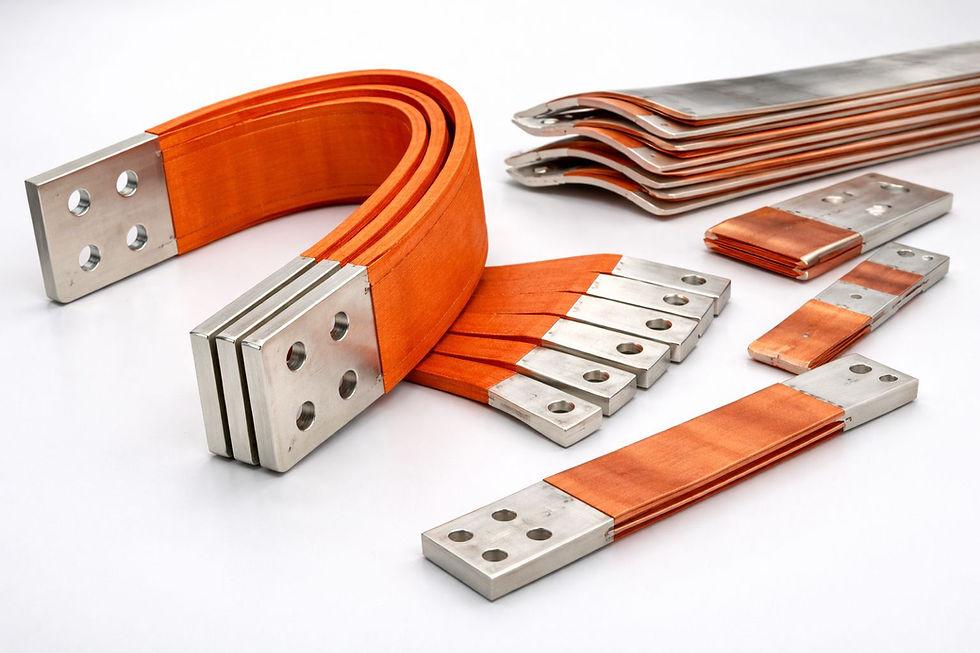
6.1 Battery Energy Storage Systems
Battery energy storage systems require electrical connections between battery modules and power conversion or distribution components.
Flexible copper busbars can help accommodate installation tolerances and support compact layouts. The design must account for current demand, temperature rise, insulation, and the mechanical conditions of the battery assembly.
6.2 Electric Vehicles and Battery Systems
Electric vehicles contain high-current electrical connections in battery packs and power distribution systems.
Depending on the application, flexible copper busbars can provide compact electrical paths between components while accommodating assembly requirements and selected vibration conditions.
Material, insulation, joining quality, and thermal performance must be evaluated against the vehicle manufacturer’s specifications.
6.3 Switchgear and Power Distribution Equipment
Switchgear and distribution equipment may require flexible connections between rigid conductors and electrical components.
A flexible busbar can help manage small positional differences and simplify installation. Its dimensions and connection design must remain compatible with the equipment’s electrical rating and available space.
6.4 Industrial Equipment and Power Electronics
Inverters, converters, transformers, and other industrial electrical equipment may use flexible copper busbars to connect power components.
Custom designs can support specific terminal interfaces and installation geometries, particularly where space is limited or mechanical vibration needs to be accommodated.
7. How to Choose a Reliable Flexible Copper Busbar Manufacturer
Selecting a manufacturer requires more than comparing unit prices. Buyers should evaluate engineering support, manufacturing processes, quality control, and the ability to maintain consistent production.
7.1 Engineering and Customization Capabilities
A suitable supplier should be able to review customer drawings, clarify technical requirements, and assess whether the proposed design can be manufactured reliably.
For projects with changing specifications, engineering communication and prototype support can help reduce development delays.
7.2 Material and Process Control
Ask how the manufacturer verifies incoming materials and controls critical production processes.
For flexible copper busbars, particular attention should be given to conductor dimensions, joining consistency, connection geometry, surface treatment, and insulation quality where applicable.
7.3 Quality Assurance and Testing
Review the supplier’s quality management system, inspection procedures, and ability to provide the documentation required for your project.
Relevant certifications should be verified for their scope and validity. Testing capabilities should match the actual electrical, mechanical, and insulation requirements of the product.
7.4 Production Capacity and Delivery Reliability
OEM buyers need consistent products across prototype, pilot, and mass-production stages.
Evaluate whether the manufacturer can maintain process repeatability, manage changes, meet agreed lead times, and provide reliable communication throughout production.
7.5 OEM Communication and Long-Term Support
A capable manufacturing partner should understand the customer’s application rather than simply manufacture a part from a drawing.
Clear technical communication helps resolve specification questions early, while documented changes and agreed inspection criteria support long-term supply consistency.
8. What Information Is Needed for a Custom Flexible Copper Busbar Quote?
Providing complete technical information helps manufacturers evaluate feasibility and prepare a more accurate quotation.
Before requesting a quote, prepare the following details where available:
- Application: Battery energy storage, EV battery systems, switchgear, or other electrical equipment.
- Electrical requirements: Operating voltage, continuous current, peak current, and allowable temperature rise.
- Material: Preferred copper grade or applicable material specification.
- Dimensions: Length, width, thickness, number of layers, and cross-sectional requirements.
- Connection details: Hole sizes, mounting positions, terminal interfaces, and joining requirements.
- Mechanical requirements: Bend configuration, available installation space, vibration exposure, and movement requirements.
- Surface finish: Bare copper, tin plating, silver plating, or another specified treatment.
- Insulation: Material, coverage, thickness, temperature rating, and relevant electrical requirements.
- Order quantity: Prototype quantity, initial production volume, and estimated annual demand.
- Technical files: 2D drawings, 3D models, product specifications, or physical samples.
If some parameters have not yet been finalized, share the application details and available drawings first. The manufacturer can then identify the information needed to move the project forward.
9. Conclusion: Finding the Right Custom Flexible Copper Busbar Solution
Custom flexible copper busbars provide practical solutions for electrical systems that require reliable current transmission, installation flexibility, and application-specific connection designs.
The right solution depends on several factors, including copper grade, conductor dimensions, construction type, joining method, insulation, and operating conditions. Manufacturing quality is equally important, particularly at connection points where electrical resistance and localized heating can affect performance.
For OEM buyers, working with a manufacturer that understands customization, dimensional control, and production consistency can simplify product development and support long-term supply requirements.
Qianwei Precision provides customized electrical component manufacturing services for industrial customers. If your project requires application-specific electrical components, you can visit Qianwei Precision to learn more about the company and discuss your requirements with the team.
FAQs
1. What is a custom flexible copper busbar used for?
A custom flexible copper busbar connects electrical components while accommodating installation tolerances, limited space, or specified vibration conditions. Common applications include battery energy storage systems, electric vehicles, switchgear, and industrial power equipment.
2. What is the difference between laminated and braided copper busbars?
Laminated busbars use stacked copper foils, usually joined at the connection ends. Braided busbars use woven copper strands. The appropriate design depends on the required flexibility, installation geometry, electrical performance, and mechanical conditions.
3. How do I choose the right copper busbar thickness?
Thickness should be determined alongside conductor width, current demand, allowable temperature rise, cooling conditions, and connection requirements. The final dimensions should be verified through appropriate engineering calculations and testing.
4. How is the current-carrying capacity of a flexible copper busbar determined?
Current-carrying capacity depends on conductor cross-sectional area, copper properties, ambient temperature, heat dissipation, connection resistance, and allowable operating temperature. A universal current rating cannot be assigned based on thickness alone.
5. Which copper material is best for flexible busbars?
Suitable copper grades depend on conductivity, mechanical properties, forming requirements, applicable material standards, and cost. The material should be selected according to the application and verified technical specifications.
6. Can flexible copper busbars be insulated?
Yes. Depending on the application, manufacturers can apply suitable insulating materials or protective coverings. The choice should account for operating voltage, temperature, mechanical flexibility, environmental exposure, and applicable safety requirements.
7. Are flexible copper busbars suitable for battery energy storage systems?
Yes. They can be used for connections between battery modules and other electrical components. The design must be appropriate for the required current, thermal conditions, insulation, installation geometry, and mechanical environment.
8. How are flexible copper busbars manufactured?
The process typically involves material preparation, cutting or forming, conductor assembly, joining, terminal processing, surface finishing, insulation where required, and final inspection. Exact processes vary with the construction and specifications.
9. Can a manufacturer produce flexible copper busbars from customer drawings?
Many custom manufacturers can evaluate 2D drawings, 3D models, samples, and technical specifications. Providing clear dimensions, electrical requirements, connection details, and insulation specifications helps determine manufacturing feasibility.
10. What information is needed to obtain a custom copper busbar quote?
Buyers should provide the application, electrical requirements, dimensions, material preferences, connection details, surface finish, insulation requirements, and estimated order quantity. Drawings or samples can further improve quotation accuracy.
Need a Custom Electrical Component for Your Project?
Share your application requirements, technical drawings, or product samples with Qianwei Precision. Our team can review your specifications and discuss suitable customization options for your project.
Visit qwterminals.com to learn more or contact us to discuss your requirements.

