

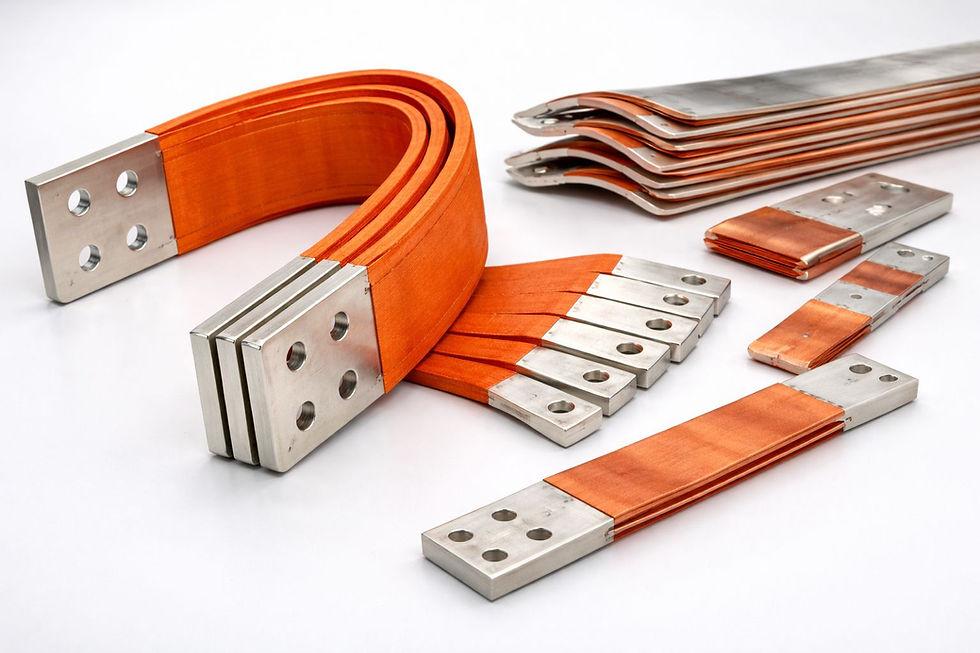
Choosing between a flexible copper busbar and a rigid copper busbar is not just a matter of product shape. The right choice depends on current requirements, installation space, vibration, temperature changes, and the way components are connected.
Both types are widely used in electrical power distribution, battery systems, industrial equipment, and other applications where reliable electrical connections are essential. However, they solve different engineering problems. A rigid copper busbar provides a stable, fixed electrical path, while a flexible copper busbar can accommodate certain movements and installation variations.
So, which option is better for your project?
In this guide, we compare flexible and rigid copper busbars, explain their advantages and limitations, and discuss how to select the right solution for your application.
What Is a Flexible Copper Busbar?
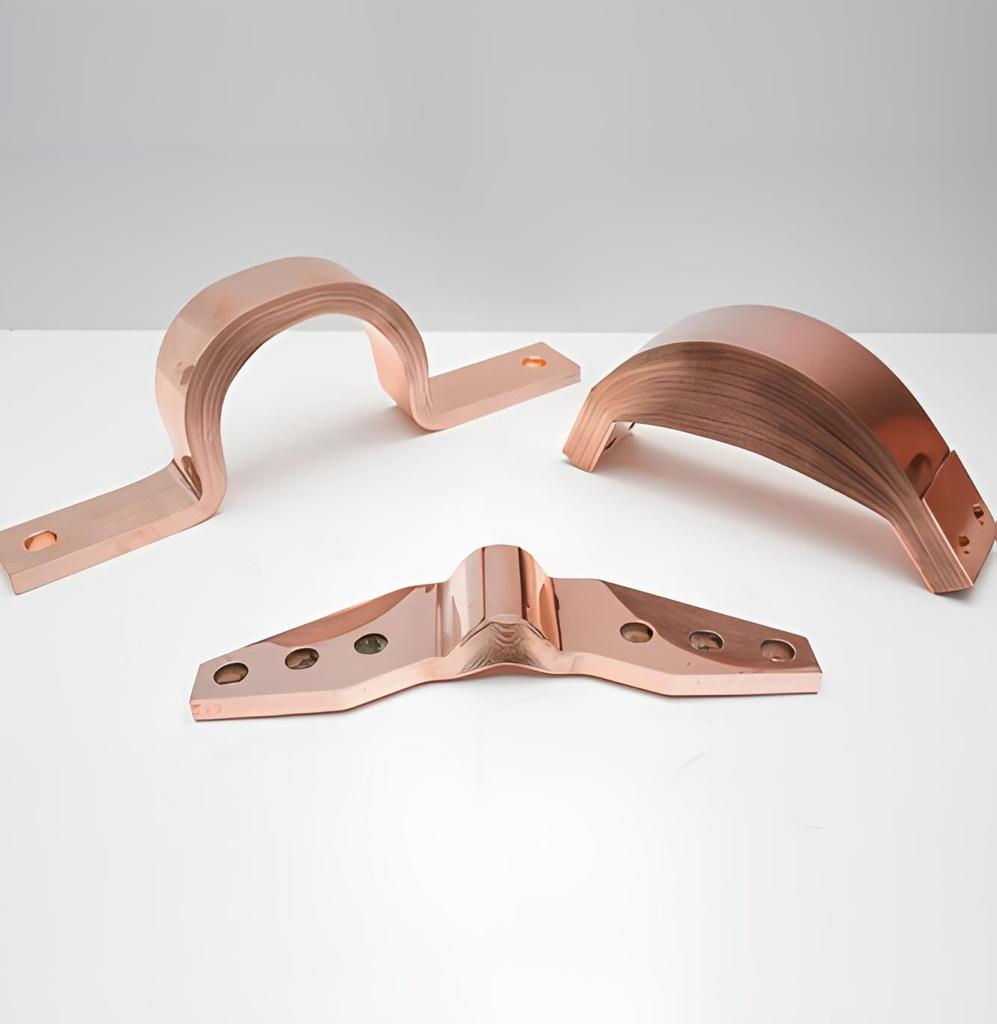
A flexible copper busbar is an electrical conductor designed to provide a degree of mechanical flexibility while carrying current between electrical components. Unlike a conventional solid copper bar, it can bend or accommodate limited movement, depending on its construction.
Flexible copper busbars are commonly used where equipment layouts are compact, connections must accommodate vibration, or two components may move slightly relative to each other.
Structure and Manufacturing Methods
Flexible copper busbars are available in several designs, including:
- Laminated copper busbars: Made from multiple thin copper foils joined at their ends or connection areas. The foil layers allow the connection to accommodate certain movements.
- Braided copper busbars: Made from woven copper strands that provide flexibility and are often used for bonding and electrical connections.
- Other flexible copper connectors: Designed for specific current ratings, installation requirements, and connection geometries.
These products are not interchangeable in every application. Their current-carrying capacity, mechanical performance, and service life depend on their construction and manufacturing quality.
Common manufacturing processes include copper foil preparation, cutting, stacking, end welding or other joining methods, drilling, and surface finishing. The specific process depends on the product design.
Key Characteristics of Flexible Copper Busbars
The main advantage of a flexible copper busbar is its ability to accommodate movement.
In practical applications, this can help with:
- Connecting components installed at different angles or positions.
- Accommodating limited vibration or relative movement.
- Reducing mechanical stress caused by installation tolerances.
- Simplifying connections in confined spaces.
- Managing certain movements caused by thermal expansion and contraction.
However, flexibility does not automatically mean better electrical performance. The conductor’s effective cross-sectional area, joint resistance, cooling conditions, and installation method remain important.
Common Applications
Flexible copper busbars are commonly considered for:
- Battery modules and battery energy storage systems (BESS).
- Electric vehicle battery packs and charging equipment.
- Transformers and power conversion equipment.
- Industrial power supplies and electrical cabinets.
- Connections between electrical components that experience vibration or movement.
The appropriate design depends on the actual operating environment and the electrical and mechanical requirements of the system.
What Is a Rigid Copper Busbar?
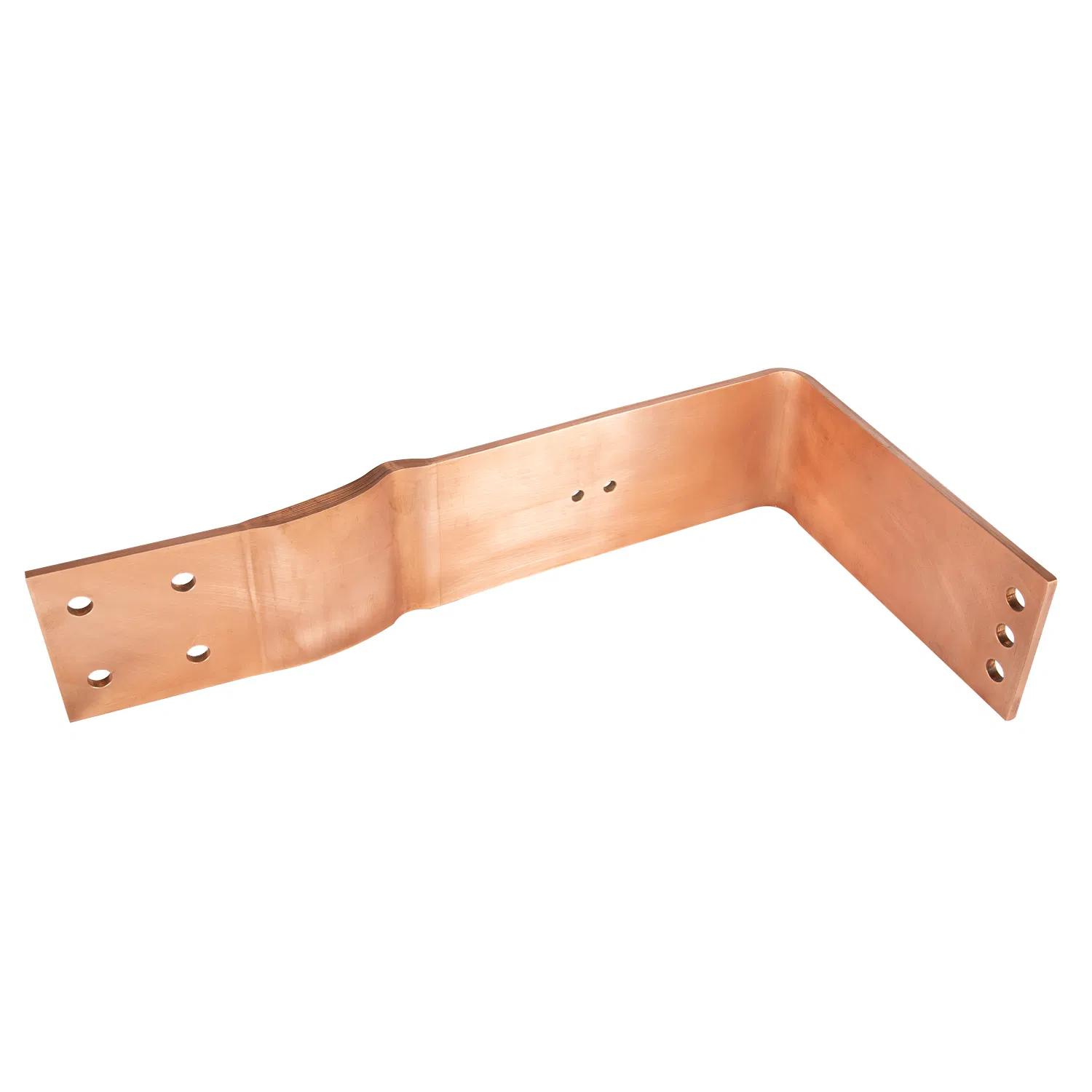
A rigid copper busbar is a solid copper conductor manufactured to maintain a defined shape. It is commonly produced from copper bars, strips, or plates and machined to fit a particular electrical system.
Rigid copper busbars are widely used in fixed power distribution systems because they provide a stable, predictable conductor geometry.
Structure and Manufacturing Methods
Rigid copper busbars are typically manufactured through processes such as:
- Cutting to the required length.
- Punching or drilling connection holes.
- Bending to match equipment layouts.
- Deburring and dimensional inspection.
- Applying suitable surface finishes when required.
Their dimensions and geometry can be customized according to electrical requirements, mounting positions, and equipment design.
Key Characteristics of Rigid Copper Busbars
Rigid copper busbars offer several practical advantages:
- They maintain a fixed shape during installation and operation.
- They are suitable for structured electrical distribution layouts.
- They can be designed for repeatable, standardized production.
- They provide stable mounting points when supported appropriately.
- They work well in systems where connected components remain in fixed positions.
Rigid busbars still require proper mechanical support. Vibration, thermal expansion, short-circuit forces, and installation errors can place stress on conductors and their connections.
Common Applications
Rigid copper busbars are commonly used in:
- Electrical distribution cabinets.
- Switchgear and power distribution systems.
- Industrial control panels.
- Fixed power supply assemblies.
- Transformer connections and other stationary electrical equipment.
For installations with predictable geometry and limited relative movement, a rigid copper busbar is often a straightforward solution.
Flexible Copper Busbar vs. Rigid Copper Busbar: Key Differences
Although both products conduct electricity, their mechanical characteristics make them suitable for different installation conditions.
| Comparison factor | Flexible copper busbar | Rigid copper busbar |
|---|---|---|
| Basic structure | Laminated copper foils, braided copper, or other flexible designs | Solid copper bar, strip, or plate |
| Flexibility | Accommodates bending or limited movement, depending on design | Maintains a fixed shape |
| Installation | Useful for confined spaces and connections with movement | Suitable for fixed, planned layouts |
| Vibration | Can accommodate certain vibration and relative movement | Requires appropriate supports and stress management |
| Current capacity | Depends on conductor design, joints, cooling, and installation | Depends on conductor design, joints, cooling, and installation |
| Mechanical stability | Requires suitable support and strain management | Provides a stable geometry when properly supported |
| Customization | Can be tailored to connection geometry and flexibility requirements | Can be cut, punched, and bent to match equipment layouts |
| Cost | Depends on construction, joining methods, and required flexibility | Depends on copper usage, machining, and installation requirements |
| Typical applications | Battery connections, moving interfaces, compact assemblies | Switchgear, distribution cabinets, and fixed electrical paths |
Electrical Conductivity and Current-Carrying Capacity
A common misconception is that one type of copper busbar always carries more current than the other. In reality, current-carrying capacity depends on several factors.
These include copper grade, effective cross-sectional area, conductor length, ambient temperature, cooling conditions, connection resistance, and the arrangement of the busbar within the equipment.
For a flexible copper busbar, the construction of the flexible section and its terminal joints also matters. For a rigid busbar, its dimensions, spacing, surface condition, and surrounding enclosure influence thermal performance.
Neither product should be selected based on dimensions alone. Engineers should evaluate the expected temperature rise under actual operating conditions and verify that the connection design meets the required electrical performance.
Where applicable, prototype testing or temperature-rise testing can help confirm that the selected design performs as expected.
Flexibility, Vibration, and Mechanical Stress
Mechanical conditions are often the deciding factor between flexible and rigid copper busbars.
When two connected components experience relative movement, a rigid conductor may transfer mechanical loads to its mounting points and joints. If these loads are not considered during design, they can contribute to fatigue, loosening, or connection damage.
A properly designed flexible copper busbar can accommodate a certain amount of movement and help reduce these stresses. This is particularly useful in equipment exposed to vibration or thermal cycling.
However, flexible connections also have limitations. Excessive bending, an unsuitable bend radius, repeated movement, or inadequate support can shorten service life.
The goal is not to make every connection flexible. It is to choose a conductor that matches the mechanical conditions of the application.
Advantages and Disadvantages of Flexible Copper Busbars
Flexible copper busbars are useful when a connection needs to accommodate movement or fit a complicated layout. However, their benefits depend on selecting the right construction.
Advantages
1. Better adaptability to installation space
Flexible designs can route around obstacles and connect components that are not perfectly aligned. This can simplify assembly in compact electrical equipment.
2. Accommodation of vibration and movement
When correctly designed, flexible connections can accommodate limited displacement and help reduce mechanical stress at connection points.
3. Greater design freedom
Their shape and end connections can be tailored to suit specific mounting positions, making them useful for customized electrical assemblies.
4. Potentially simpler installation
In certain applications, a flexible connection can reduce the need for complex rigid bends or additional transition components.
Disadvantages
1. More complex manufacturing in some designs
Laminated structures, specialized end joining, and additional processing can increase manufacturing costs.
2. Specific installation requirements
Bend radius, orientation, mounting, and support must be considered to prevent damage or excessive mechanical stress.
3. Performance varies by construction
A laminated copper busbar and a braided copper connector may behave differently under the same operating conditions.
4. Requires appropriate mechanical protection
The flexible section and its joints must be protected against unsuitable bending, abrasion, contamination, and other environmental risks.
Advantages and Disadvantages of Rigid Copper Busbars
Rigid copper busbars are often the preferred option when electrical components remain in fixed positions and the conductor path can be planned in advance.
Advantages
1. Stable geometry
A rigid busbar maintains its designed shape, making it suitable for organized electrical distribution layouts.
2. Straightforward standardized production
Where dimensions and mounting positions are consistent, rigid copper busbars can be manufactured and installed repeatedly.
3. Efficient use in fixed installations
For simple conductor paths, rigid designs can offer a practical balance of manufacturing cost, installation efficiency, and structural stability.
4. Predictable mounting arrangements
Rigid busbars can be designed with defined holes, bends, and supports to suit the equipment layout.
Disadvantages
1. Limited accommodation of movement
A rigid conductor is not designed to absorb significant relative displacement between connected components.
2. Complex layouts may require additional processing
Multiple bends, special shapes, or difficult access conditions can increase fabrication and installation complexity.
3. Mechanical stress requires attention
Thermal expansion, vibration, and short-circuit forces can affect the conductor, supports, and joints.
4. Changes to equipment layouts can be costly
If mounting positions change after manufacturing, the busbar may need to be redesigned or replaced.
Flexible vs. Rigid Copper Busbar: Which Is Better for Your Application?
The best choice depends on where the busbar will be installed and how the connected components behave during operation.
Battery Energy Storage Systems (BESS)
Battery energy storage systems may contain both flexible and rigid copper busbars.
Flexible copper connections can be suitable between battery modules or other components where movement, installation tolerances, or compact layouts must be accommodated. The design must also account for current requirements, temperature rise, insulation, and mechanical protection.
Rigid copper busbars are commonly suitable for fixed distribution paths, busbar supports, and connections where the component positions remain stable.
In larger energy storage systems, using both types in different locations can provide a practical solution.
Electric Vehicles and EV Charging Systems
Electric vehicles and charging equipment impose demanding space and operating requirements.
Flexible copper busbars may be considered for battery connections and other interfaces that need to accommodate limited movement or simplify assembly. Rigid copper busbars can be appropriate for fixed distribution sections and stable power connections.
For these applications, engineers should also evaluate vibration, thermal cycling, packaging constraints, insulation clearances, and connection reliability.
The final selection should follow the equipment’s electrical and mechanical specifications rather than relying on flexibility alone.
Switchgear and Power Distribution Cabinets
Rigid copper busbars are often a good fit for switchgear and distribution cabinets because the conductor paths and mounting points can be planned in advance.
They provide stable geometry for fixed distribution layouts and can be manufactured with the required holes and bends.
Flexible connections may be useful between equipment sections or at interfaces where alignment, vibration, or movement needs to be accommodated.
When designing these systems, engineers should consider electrical clearances, support spacing, short-circuit forces, and temperature rise.
Transformers and Industrial Electrical Equipment
Transformers and industrial equipment can experience vibration and temperature changes during operation.
Flexible copper connectors may be useful where these conditions could place mechanical stress on rigid connections. Rigid copper busbars remain suitable for fixed conductor paths and stable mounting arrangements.
The key is to evaluate the movement expected at each connection. A flexible connection should be designed for the actual displacement and operating conditions, not simply added as a precaution.
How to Choose the Right Copper Busbar
Before requesting a quotation, consider the following six factors. They help turn a general product preference into a practical engineering specification.
1. Determine Current Rating and Temperature Rise
Start with the required operating current and the maximum acceptable temperature rise.
The necessary conductor dimensions depend on the copper material, installation environment, cooling conditions, duty cycle, and connection design.
If the busbar operates inside an enclosed cabinet or near other heat-producing components, its thermal environment deserves particular attention.
2. Evaluate Installation Space
Check the available space, connection points, mounting positions, and access for assembly.
A flexible copper busbar may simplify a connection in a confined space. A rigid copper busbar may be more appropriate when a clear, fixed route is available.
For flexible designs, confirm the required bend radius and clearance.
3. Consider Vibration and Thermal Expansion
Determine whether connected components move during normal operation, transportation, or maintenance.
Applications involving vibration or thermal cycling may benefit from a properly designed flexible connection. However, the amount and frequency of movement must remain within the product’s mechanical limits.
4. Select the Right Copper Material and Surface Finish
Copper grade and surface treatment should match the electrical, mechanical, and environmental requirements.
Material selection may involve conductivity, mechanical strength, corrosion exposure, and compatibility with the mating contact.
Surface finishes should be selected according to the connection design and service environment. The appropriate choice depends on the full assembly, not just the busbar in isolation.
5. Check Connection Design and Contact Resistance
Connection quality is just as important as the conductor itself.
Consider the contact area, hole dimensions, joining method, fastening requirements, surface condition, and expected mechanical loads.
Poor contact or unsuitable joint design can increase resistance and localized heating, even when the copper conductor is adequately sized.
6. Compare Total Cost, Not Just Unit Price
The lowest purchase price does not always result in the lowest overall cost.
Evaluate material usage, fabrication complexity, assembly time, additional components, inspection requirements, and potential maintenance needs.
A customized flexible copper busbar may simplify installation in one application, while a standard rigid design may be more economical in another.
The right decision balances electrical performance, mechanical reliability, manufacturing feasibility, and total installed cost.
Why Choose a Custom Copper Busbar Manufacturer?
Standard products may not always fit the electrical and mechanical requirements of a particular project. Custom manufacturing can help address differences in dimensions, mounting positions, connection geometry, and installation space.
When evaluating a copper busbar manufacturer, consider the following factors.
Custom Dimensions and Design Requirements
A qualified manufacturing partner should be able to review technical drawings, dimensions, connection positions, and application requirements to determine whether the proposed design is manufacturable.
Depending on the supplier’s capabilities, customization may include conductor dimensions, hole positions, formed shapes, end connections, and surface finishes.
Material and Manufacturing Quality
Material consistency, dimensional accuracy, joining quality, and inspection procedures all influence product reliability.
For flexible copper busbars, particular attention should be paid to the flexible section, end joints, and mechanical requirements. For rigid busbars, dimensional accuracy, hole positions, edge quality, and forming consistency are important.
Buyers should also confirm the supplier’s inspection process and its ability to meet project-specific quality requirements.
What Information Should You Provide When Requesting a Quote?
To help a manufacturer assess your requirements, prepare the following information where available:
- Product drawings or physical samples.
- Required dimensions and tolerances.
- Operating current and temperature conditions.
- Installation environment and expected vibration.
- Required copper material and surface finish.
- Connection method and mounting details.
- Prototype requirements, annual demand, and order quantity.
- Relevant testing, quality, or compliance requirements.
Providing these details at the beginning can reduce unnecessary clarification and help the supplier evaluate the product more accurately.
For customized electrical components and precision metal parts, you can visit Qianwei Precision to learn more about the company’s products and manufacturing capabilities. For a copper busbar project, confirm the required product type and manufacturing scope with the supplier before proceeding.
Conclusion
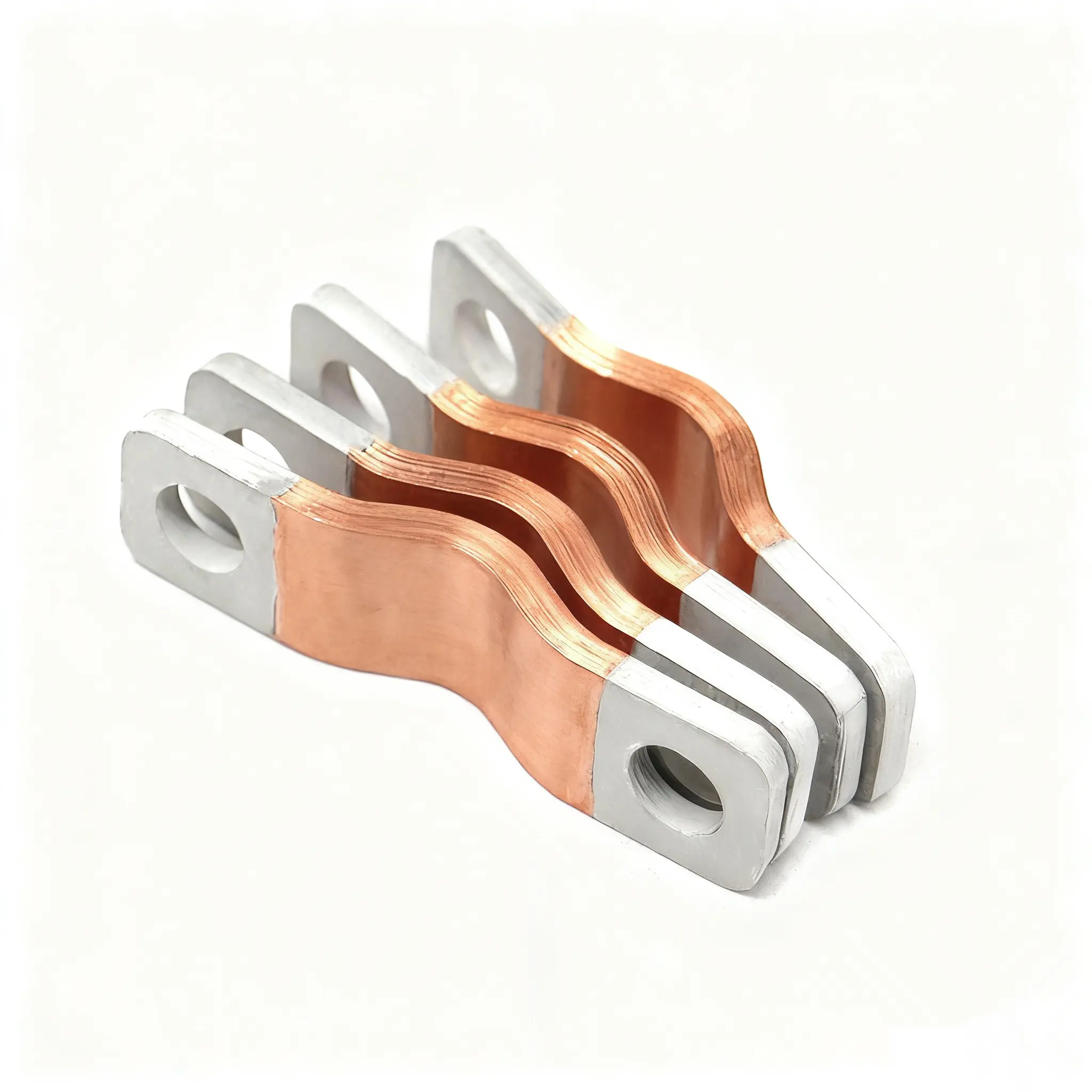
Flexible and rigid copper busbars serve different purposes in electrical systems. Flexible copper busbars are useful when a connection needs to accommodate movement, vibration, or a challenging installation layout. Rigid copper busbars are well suited to fixed electrical paths that require stable geometry and structured mounting.
The right choice depends on current requirements, temperature rise, mechanical conditions, installation space, connection design, and total cost. In some applications, combining both types provides the most practical solution.
Before selecting a product, define your operating conditions and confirm that the proposed design meets the relevant electrical and mechanical requirements.
Looking for a customized electrical connection solution? Contact a suitable manufacturer with your drawings, specifications, and application details to discuss product feasibility and request a quotation.
FAQs
1. What Is the Main Difference Between Flexible and Rigid Copper Busbars?
The main difference is their mechanical construction. Flexible copper busbars are designed to accommodate a certain amount of bending or relative movement, while rigid copper busbars maintain a fixed shape. Both can provide effective electrical conduction when properly designed, sized, and installed.
2. Does a Flexible Copper Busbar Carry More Current Than a Rigid Copper Busbar?
Not necessarily. Current-carrying capacity depends on conductor dimensions, copper properties, joint resistance, ambient temperature, cooling conditions, and installation geometry. The performance of each design should be evaluated under the intended operating conditions, including its expected temperature rise.
3. Is a Flexible Copper Busbar Better for High-Vibration Applications?
A flexible copper busbar can be useful in high-vibration applications because it may accommodate relative movement and reduce mechanical stress at the connection. However, its suitability depends on the construction, mounting method, vibration frequency, displacement, and required service life.
4. Are Flexible Copper Busbars More Expensive?
They can be more expensive when the design requires specialized copper foil construction, end welding, or additional processing. However, the total cost also depends on installation complexity, additional components, and production volume. A flexible design may reduce assembly effort in some applications.
5. Can Flexible and Rigid Copper Busbars Be Used in the Same System?
Yes. Many electrical systems can use rigid copper busbars for fixed distribution paths and flexible copper connections at interfaces that experience movement or require easier installation. Each section should be selected according to its electrical, thermal, and mechanical requirements.
6. Which Copper Busbar Is Better for Battery Energy Storage Systems?
Neither type is universally better. Flexible copper busbars may suit connections between components where movement or installation tolerances must be accommodated. Rigid copper busbars may suit fixed distribution paths. The final choice depends on current, temperature rise, mechanical conditions, available space, and the battery system’s design requirements.
7. What Information Is Needed to Order Custom Copper Busbars?
Useful information includes technical drawings, dimensions, operating current, temperature conditions, copper material, surface finish, connection details, and order quantity. If the application involves vibration or movement, provide the relevant mechanical requirements as well.
8. How Do I Find a Reliable Flexible Copper Busbar Manufacturer?
Evaluate the manufacturer’s relevant production experience, material control, dimensional inspection, joining processes, customization capabilities, and quality documentation. Ask how the supplier verifies electrical and mechanical performance and whether it can meet your project’s technical specifications and delivery requirements.

