

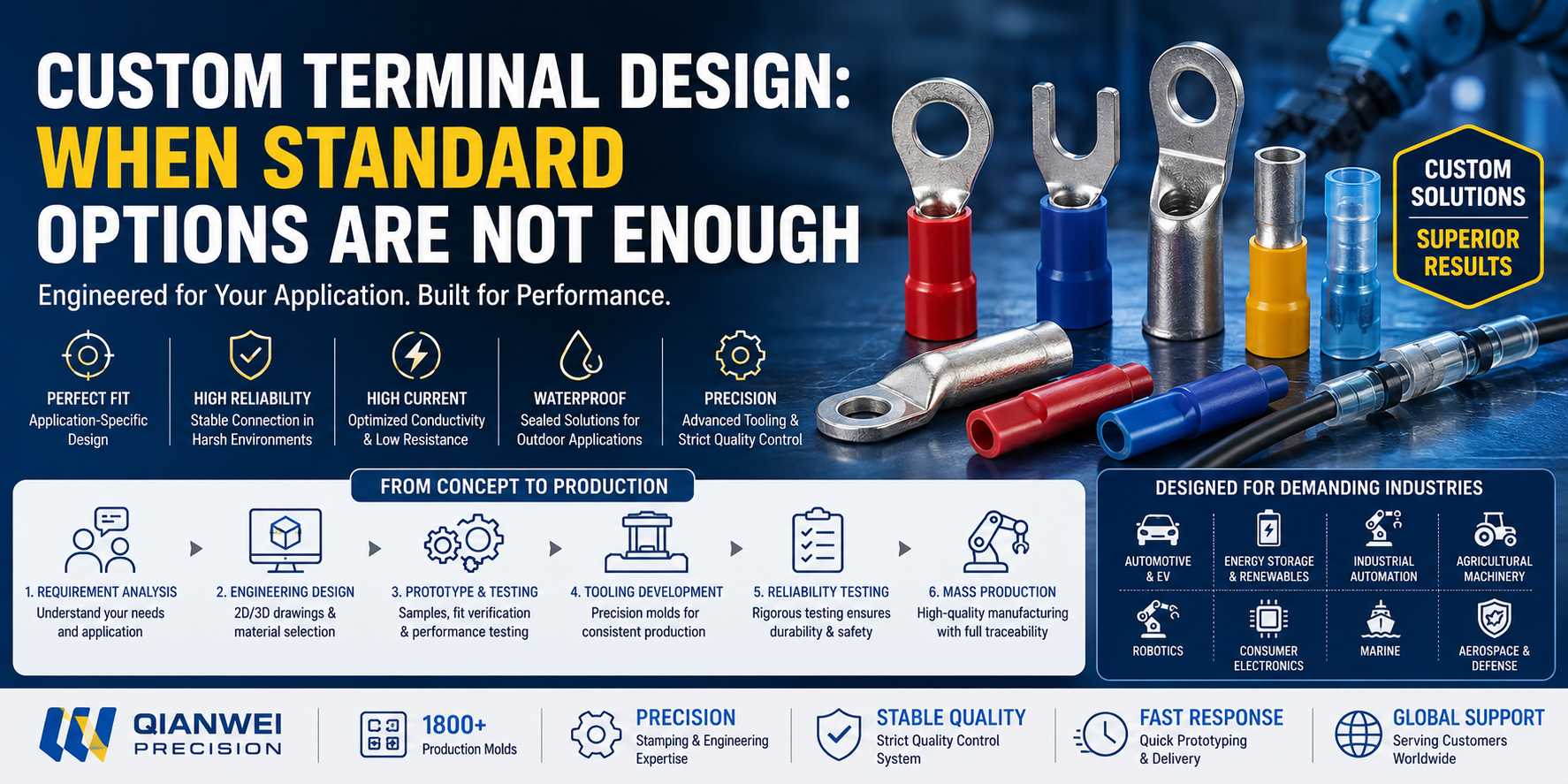
Electrical terminals are essential components in nearly every electrical and electronic system. From automotive wiring harnesses and industrial automation equipment to renewable energy systems and consumer electronics, terminals provide the critical connection points that enable stable electrical transmission.
For many standard applications, off-the-shelf terminals are sufficient. However, as industries continue evolving toward:
- Higher power density
- Compact product design
- Intelligent automation
- Electrification
- Harsh operating environments
standard terminals are increasingly unable to meet complex engineering requirements.
Modern applications often demand:
- Higher current capacity
- Better vibration resistance
- Custom installation structures
- Waterproof performance
- Specialized wire compatibility
- Space-saving designs
In these situations, custom terminal design becomes essential.
Custom electrical terminals are engineered specifically for the customer’s application, allowing manufacturers to optimize electrical performance, mechanical strength, assembly efficiency, and long-term reliability.
This article explains when custom terminal solutions are necessary, how the development process works, and why more industries are moving toward customized terminal designs.
What Is a Custom Electrical Terminal?
A custom electrical terminal is a specially designed connector manufactured according to unique customer requirements rather than standard catalog specifications.
Custom terminals may involve modifications such as:
- Special dimensions
- Unique crimp structures
- Customized hole sizes
- Non-standard materials
- Special surface plating
- Waterproof sealing structures
- High-current optimization
Unlike standard terminals designed for general-purpose use, custom terminals are optimized for specific operating conditions and product structures.
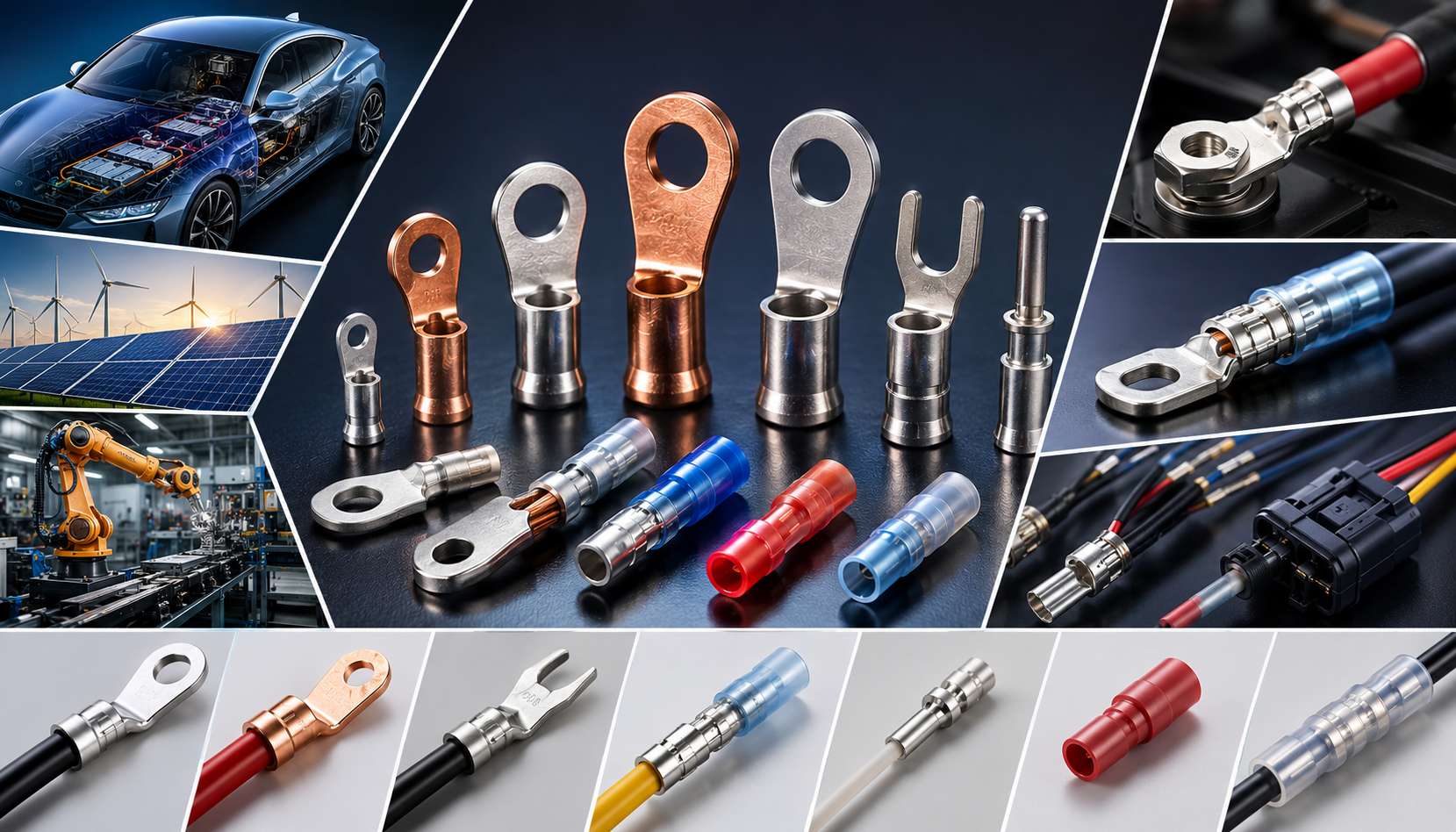
Difference Between Standard and Custom Terminals
| Feature | Standard Terminal | Custom Terminal |
|---|---|---|
| Size Options | Limited | Flexible |
| Application Fit | General Purpose | Application-Specific |
| Structure Design | Fixed | Customized |
| Performance Optimization | Basic | Advanced |
| Initial Cost | Lower | Higher Tooling Cost |
| Reliability Optimization | Standard | High Reliability |
Although custom terminals may require additional development cost initially, they often reduce long-term system failures and improve overall product performance.
Why Standard Terminals Are Sometimes Not Enough
Many modern applications have requirements that exceed the capabilities of standard terminals.
Space Constraints in Compact Systems
Miniaturization is one of the biggest trends in modern electronics and electrical equipment.
Compact Electronics
Consumer electronics increasingly require:
- Smaller components
- High-density layouts
- Reduced installation space
Standard terminals may simply be too large for these applications.
High-Density Wiring Harnesses
Automotive and industrial wiring harnesses are becoming more compact and complex.
Custom terminals can help:
- Optimize space usage
- Reduce harness size
- Improve routing efficiency
High Current Requirements
Electrification trends are driving the need for higher current-carrying capacity.
EV Systems
Electric vehicles require terminals capable of handling:
- High current loads
- Continuous thermal stress
- Fast charging systems
Standard terminals may overheat under these demanding conditions.
Battery Connections
Battery cable connections often require:
- Thick conductors
- Low resistance
- Strong mechanical retention
Custom cable lugs are commonly developed for these applications.
Power Distribution Systems
Industrial power systems may require terminals with:
- Larger contact areas
- Optimized conductivity
- Specialized crimp structures
Harsh Environment Applications
Outdoor and industrial systems often operate under severe environmental conditions.
Outdoor Equipment
Outdoor applications require protection against:
- Moisture
- Corrosion
- UV exposure
- Temperature fluctuation
High Vibration Environments
Construction machinery, robotics, and agricultural equipment generate continuous vibration.
Custom terminals may include:
- Reinforced crimp structures
- Anti-loosening designs
- Enhanced mechanical stability
Corrosive Environments
Marine and chemical applications require specialized corrosion-resistant materials and plating.
Special Wire Specifications
Modern wire designs are becoming increasingly specialized.
Thick Insulation Cables
Some industrial cables have thicker insulation walls that standard terminals cannot properly accommodate.
High-Temperature Wires
Heat-resistant cables used in automotive and industrial systems may require custom crimp barrel designs.
Flexible Conductors
Fine-stranded flexible conductors often require optimized crimp geometry for reliable compression.
Unique Mechanical Structures
Many customers require terminals with special physical structures.
Examples include:
- Custom hole diameters
- Multi-wire crimp barrels
- Special mounting angles
- Narrow installation shapes
- Extended palm structures
Standard catalog terminals rarely satisfy these specialized requirements.
Industries That Commonly Need Custom Terminals
Custom terminal solutions are widely used across many industries.
Automotive & EV Industry
The automotive industry is one of the largest users of custom terminals.
Applications include:
- Battery systems
- Wiring harnesses
- ECU connections
- Charging systems
- Power distribution modules
Electric vehicles especially require:
- High-current terminals
- Heat-resistant structures
- Compact high-density designs
Renewable Energy Systems
Solar and energy storage systems often require:
- Outdoor durability
- Waterproof structures
- Corrosion resistance
- Long operational lifespan
Custom cable lugs and waterproof terminals are common in these applications.
Industrial Automation
Industrial machinery demands:
- Reliable conductivity
- Continuous operation stability
- Vibration resistance
Custom terminals improve reliability in automated production environments.
Robotics Industry
Robotics systems require:
- Compact wiring
- Lightweight structures
- Flexible cable compatibility
- Stable signal transmission
Customized terminal designs help optimize robotic wiring systems.
Consumer Electronics
Compact electronics increasingly require ultra-small and highly customized connection solutions.
Custom terminals improve:
- Internal space efficiency
- Automated assembly compatibility
- Product miniaturization
Agricultural Machinery
Agricultural equipment operates in:
- Mud
- Rain
- Dust
- Severe vibration conditions
Custom terminals help improve long-term reliability under harsh operating environments.
Common Types of Custom Terminal Designs
Custom Ring Terminals
Ring terminals are widely customized for:
- Special hole diameters
- High-current systems
- Vibration-resistant applications
Custom ring terminals are commonly used in:
- Automotive systems
- Power distribution
- Industrial machinery
Custom Cable Lugs
Cable lugs are frequently customized for:
- Large cable sizes
- Flexible palm structures
- Specialized mounting requirements
High-current battery systems often require custom cable lug designs.
Custom Spade Terminals
Custom spade terminals are useful for:
- Quick assembly systems
- Narrow installation spaces
- Service-friendly equipment
Custom Butt Connectors
Custom butt connectors may include:
- Waterproof sealing
- Heat shrink structures
- Heavy-duty crimp barrels
These are widely used in outdoor electrical systems.
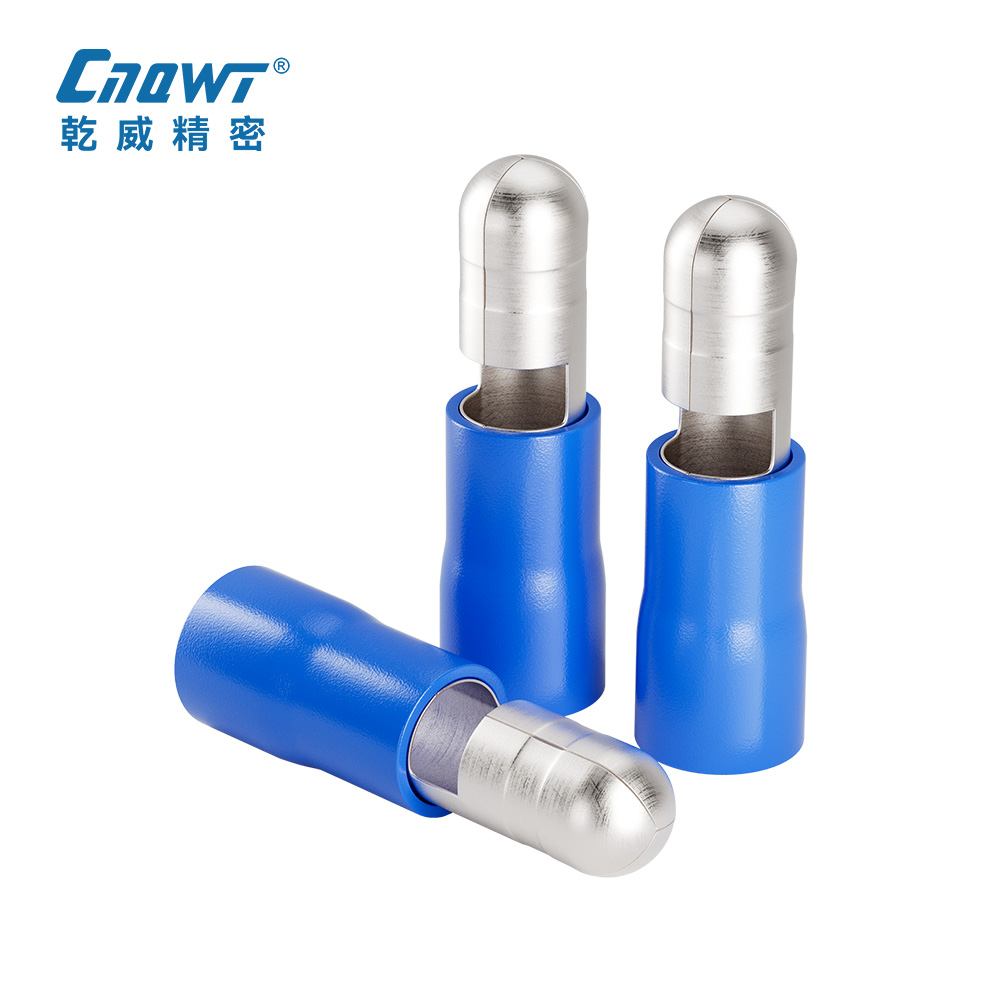
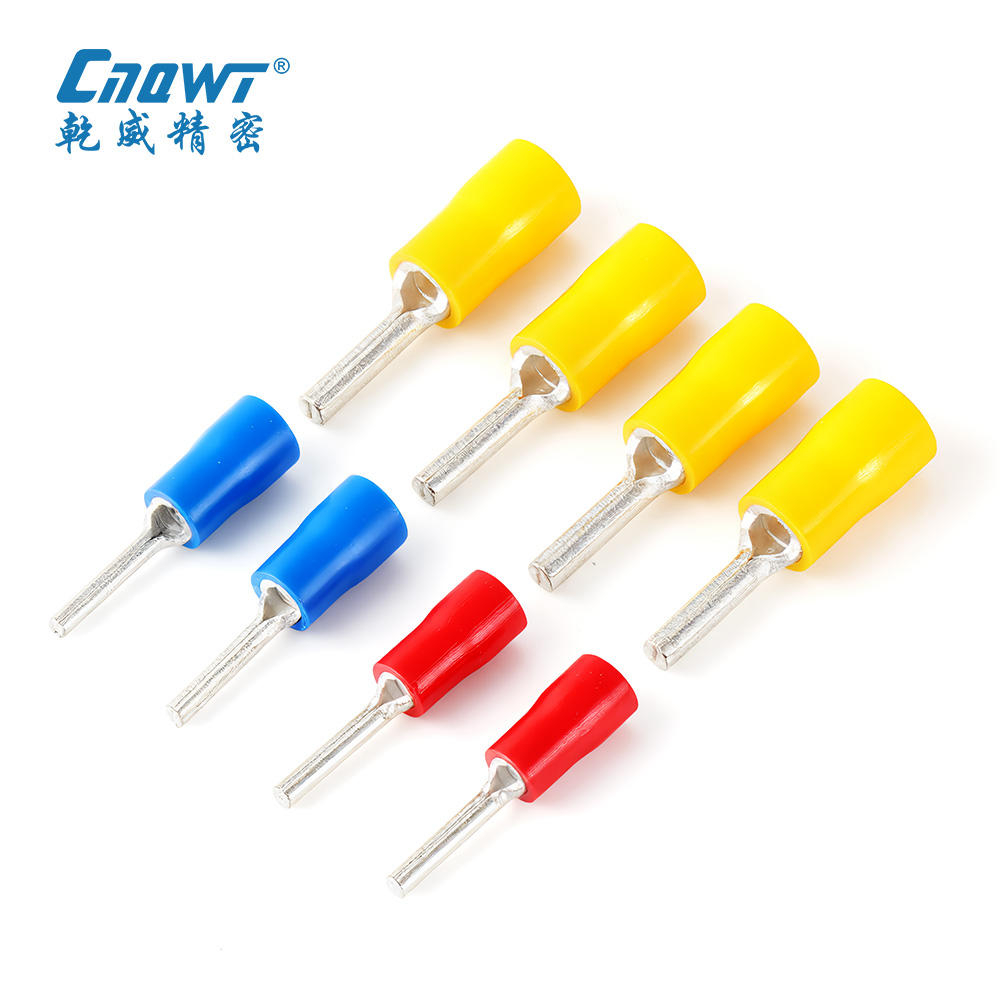
Custom Pin Terminals
Pin terminals are commonly customized for:
- Compact electronic systems
- Connector assemblies
- PCB applications
Key Factors in Custom Terminal Design
Successful custom terminal development requires balancing multiple engineering factors.
Electrical Performance
Current Rating
The terminal must safely carry the required current without excessive heat generation.
Voltage Requirements
Voltage level affects:
- Insulation design
- Creepage distance
- Material selection
Conductivity Optimization
Low resistance is critical for:
- Energy efficiency
- Heat reduction
- Stable performance
Mechanical Strength
Pull-Out Force
The crimp connection must resist wire pull-out during operation.
Crimp Stability
Reliable crimp geometry improves:
- Mechanical durability
- Electrical stability
Vibration Resistance
Custom reinforcement structures help prevent loosening in vibration-heavy environments.
Material Selection
Material selection directly affects terminal performance.
Copper
Provides:
- Excellent conductivity
- Low resistance
- Good thermal performance
Brass
Offers:
- Higher mechanical strength
- Better wear resistance
Phosphor Bronze
Suitable for:
- Spring applications
- Fatigue resistance
- Elastic contact systems
Surface Plating Options
Plating improves corrosion resistance and conductivity stability.
Tin Plating
Tin plating provides:
- Corrosion resistance
- Stable conductivity
- Better solderability
- Cost efficiency
It is one of the most commonly used plating solutions.
Nickel Plating
Suitable for:
- High-temperature environments
- Chemical resistance
Silver Plating
Used in:
- High-performance electrical systems
- Low-resistance applications
Environmental Resistance
Custom terminals are often designed for severe environments.
Corrosion Resistance
Outdoor systems require strong anti-corrosion protection.
Waterproof Protection
Heat shrink structures and sealed designs improve moisture resistance.
Temperature Resistance
Materials and insulation must withstand operating temperatures safely.
How Custom Terminal Development Works
The development process typically includes several stages.
Step 1: Requirement Analysis
Engineers evaluate:
- Current requirements
- Voltage levels
- Wire specifications
- Installation space
- Environmental conditions
Step 2: Engineering Design
The design process may include:
- 2D drawings
- 3D modeling
- Material analysis
- Structure optimization
Step 3: Prototype Development
Prototype samples are produced for:
- Fit verification
- Crimp evaluation
- Electrical testing
Step 4: Mold Development
Custom terminals typically require precision progressive stamping dies.
Tooling quality directly affects:
- Product consistency
- Burr control
- Dimensional accuracy
Step 5: Reliability Testing
Testing may include:
- Salt spray testing
- Pull force testing
- Temperature cycling
- Vibration testing
These tests help verify long-term durability.
Step 6: Mass Production
After validation, automated production begins with:
- Strict quality control
- Consistent process monitoring
- Final inspection procedures
Advantages of Custom Electrical Terminals
Custom terminals provide several major benefits.
Better Electrical Performance
Optimized conductivity and lower resistance.
Improved Space Utilization
Compact designs improve assembly efficiency.
Higher Reliability
Customized structures improve long-term durability.
Reduced Assembly Time
Application-specific designs simplify installation.
Lower Long-Term Failure Rate
Improved compatibility reduces maintenance and downtime.
Challenges in Custom Terminal Manufacturing
Custom manufacturing also involves challenges.
Higher Initial Tooling Cost
Precision mold development requires investment.
Longer Development Cycle
Engineering and testing require additional time.
Precision Manufacturing Requirements
Tight tolerances demand advanced production capability.
Strict Quality Control
Consistency is critical in large-scale production.
Why Precision Tooling Matters
Precision tooling is essential for stable terminal quality.
Progressive Stamping Dies
High-speed progressive dies improve production efficiency.
Mold Accuracy
Precise tooling ensures dimensional consistency.
Burr Control
Low burr levels improve safety and crimp quality.
Custom Terminals for High-Vibration Applications
Custom terminals are especially important in vibration-heavy environments such as:
- Automotive systems
- Robotics
- Industrial machinery
- Agricultural equipment
Enhanced structures improve:
- Connection stability
- Mechanical retention
- Long-term durability
Waterproof Custom Terminal Solutions
Outdoor systems often require:
- Heat shrink structures
- Sealed connectors
- Waterproof cable lugs
These solutions improve resistance to:
- Moisture
- Corrosion
- Environmental contamination
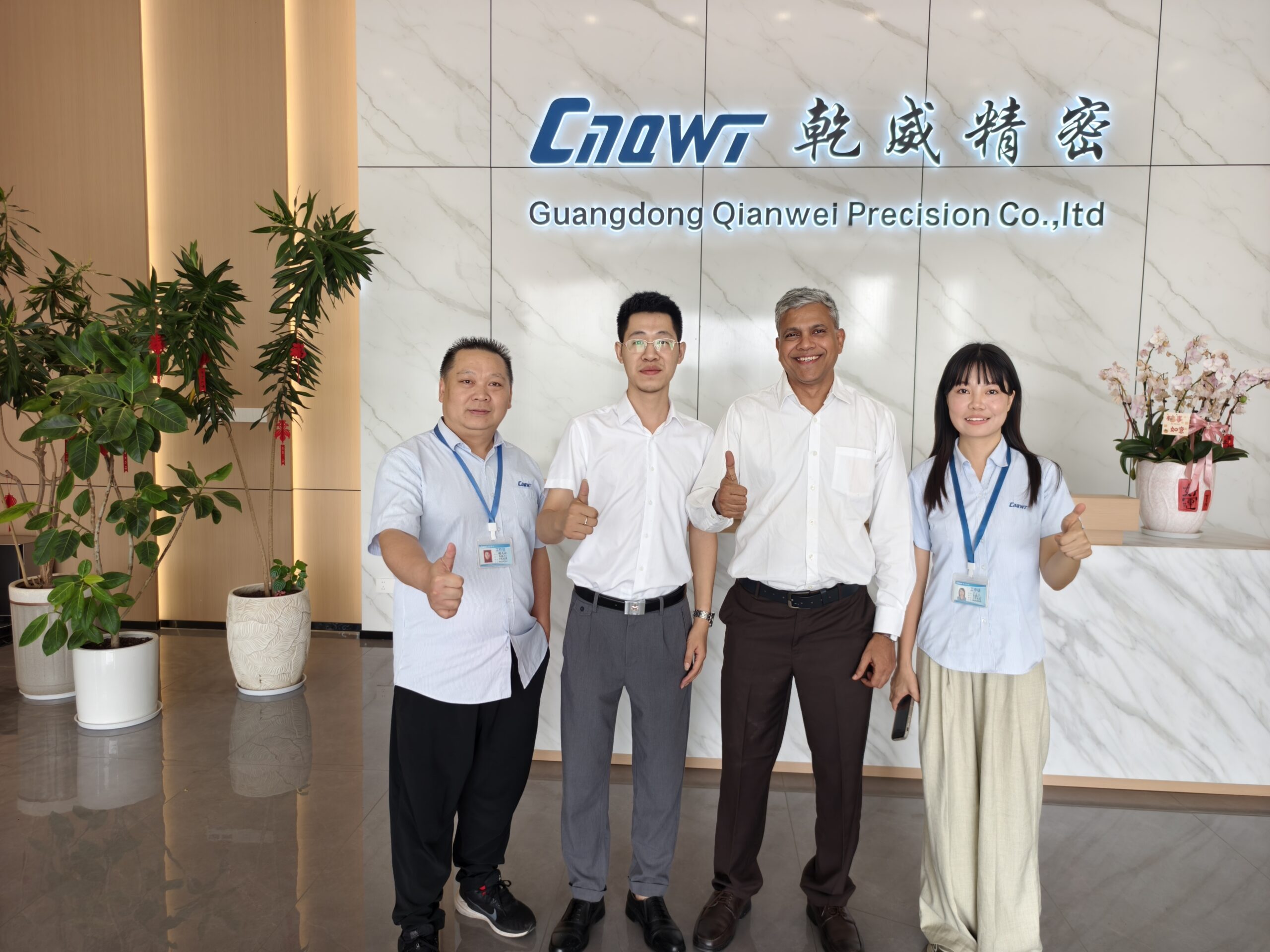
Why Choose Qianwei Precision
Qianwei Precision specializes in high-quality custom electrical terminal manufacturing.
Our Advantages
- 1800+ production molds
- Precision stamping expertise
- Stable tin plating processes
- Strict quality control systems
- Fast prototype development
- OEM & ODM support
Product Range
We manufacture:
- Ring terminals
- Cable lugs
- Spade terminals
- Butt connectors
- Pin terminals
Our products are widely used in:
- Automotive systems
- Renewable energy equipment
- Industrial automation
- Consumer electronics
- Outdoor power systems
Conclusion
As electrical systems continue becoming more powerful, compact, and complex, standard terminals are no longer sufficient for many applications.
Custom terminal design allows manufacturers to optimize:
- Electrical performance
- Mechanical strength
- Space utilization
- Environmental durability
- Long-term reliability
Industries such as EV, renewable energy, robotics, industrial automation, and outdoor equipment increasingly rely on customized terminal solutions to meet demanding performance requirements.
Reliable electrical systems start with properly engineered connection solutions.
Looking for Custom Terminal Solutions?
Qianwei Precision provides professional custom terminal design and manufacturing services for demanding industrial applications.
- Request free samples
- Get engineering support
- Customize your terminal solution
Contact Qianwei Precision today for high-reliability electrical terminal solutions.
FAQs
What is a custom electrical terminal?
A custom electrical terminal is a specially designed connector manufactured according to specific customer requirements rather than standard catalog specifications.
Custom terminals may include:
- Special dimensions
- Unique crimp structures
- Custom hole sizes
- Specialized materials
- Waterproof designs
- High-current configurations
They are optimized for specific applications and operating environments.
When should I use custom terminals instead of standard ones?
Custom terminals are recommended when standard products cannot meet requirements related to:
- Space limitations
- High current loads
- Harsh environments
- Special wire sizes
- Vibration resistance
- Waterproof performance
- Unique installation structures
They are commonly used in automotive, industrial, renewable energy, and robotics applications.
Are custom terminals more expensive than standard terminals?
Custom terminals usually involve higher initial costs because they require:
- Engineering design
- Mold development
- Prototype testing
However, they often reduce:
- Assembly problems
- System failures
- Maintenance costs
- Long-term reliability issues
For large-volume projects, custom terminals can provide better overall cost efficiency.
How long does custom terminal development take?
Development time depends on design complexity and testing requirements.
Typical development stages include:
- Requirement analysis
- Engineering design
- Prototype production
- Mold manufacturing
- Reliability testing
Simple projects may take a few weeks, while more complex applications may require several months.
What materials are commonly used for custom terminals?
Common materials include:
- Copper
- Tin-plated copper
- Brass
- Phosphor bronze
Material selection depends on:
- Conductivity requirements
- Mechanical strength
- Corrosion resistance
- Environmental conditions
Can custom terminals improve vibration resistance?
Yes. Custom terminal designs can significantly improve vibration durability through:
- Reinforced crimp structures
- Secure mounting designs
- Optimized contact geometry
This is especially important in:
- Automotive systems
- Industrial machinery
- Agricultural equipment
- Robotics applications
Why is tin plating important for custom terminals?
Tin plating helps improve:
- Corrosion resistance
- Conductivity stability
- Solderability
- Long-term durability
Tin-plated custom terminals are widely used in outdoor and industrial environments because they resist oxidation and moisture exposure.
What industries commonly use custom terminals?
Custom terminals are widely used in:
- Automotive & EV systems
- Renewable energy equipment
- Industrial automation
- Robotics
- Consumer electronics
- Agricultural machinery
- Power distribution systems
These industries often require specialized electrical connection solutions.
Can custom terminals be waterproof?
Yes. Waterproof custom terminals may include:
- Heat shrink insulation
- Sealed connector structures
- Adhesive-lined protection
- Waterproof cable lug designs
These solutions help prevent:
- Moisture intrusion
- Corrosion
- Electrical failure
What information is needed for terminal customization?
Manufacturers typically require:
- Wire size
- Current rating
- Voltage requirements
- Installation space
- Environmental conditions
- Application drawings or samples
Additional details such as vibration requirements, waterproof ratings, and plating preferences may also be important.
Can custom terminals support automated assembly?
Yes. Many custom terminals are specifically designed for:
- Automated crimping
- High-speed production
- Robotic assembly systems
Optimized terminal geometry improves manufacturing efficiency and consistency.
Why is precision tooling important in custom terminal manufacturing?
Precision tooling ensures:
- Accurate dimensions
- Stable crimp quality
- Low burr levels
- Consistent mass production
High-quality progressive stamping dies are essential for reliable custom terminal manufacturing.

