

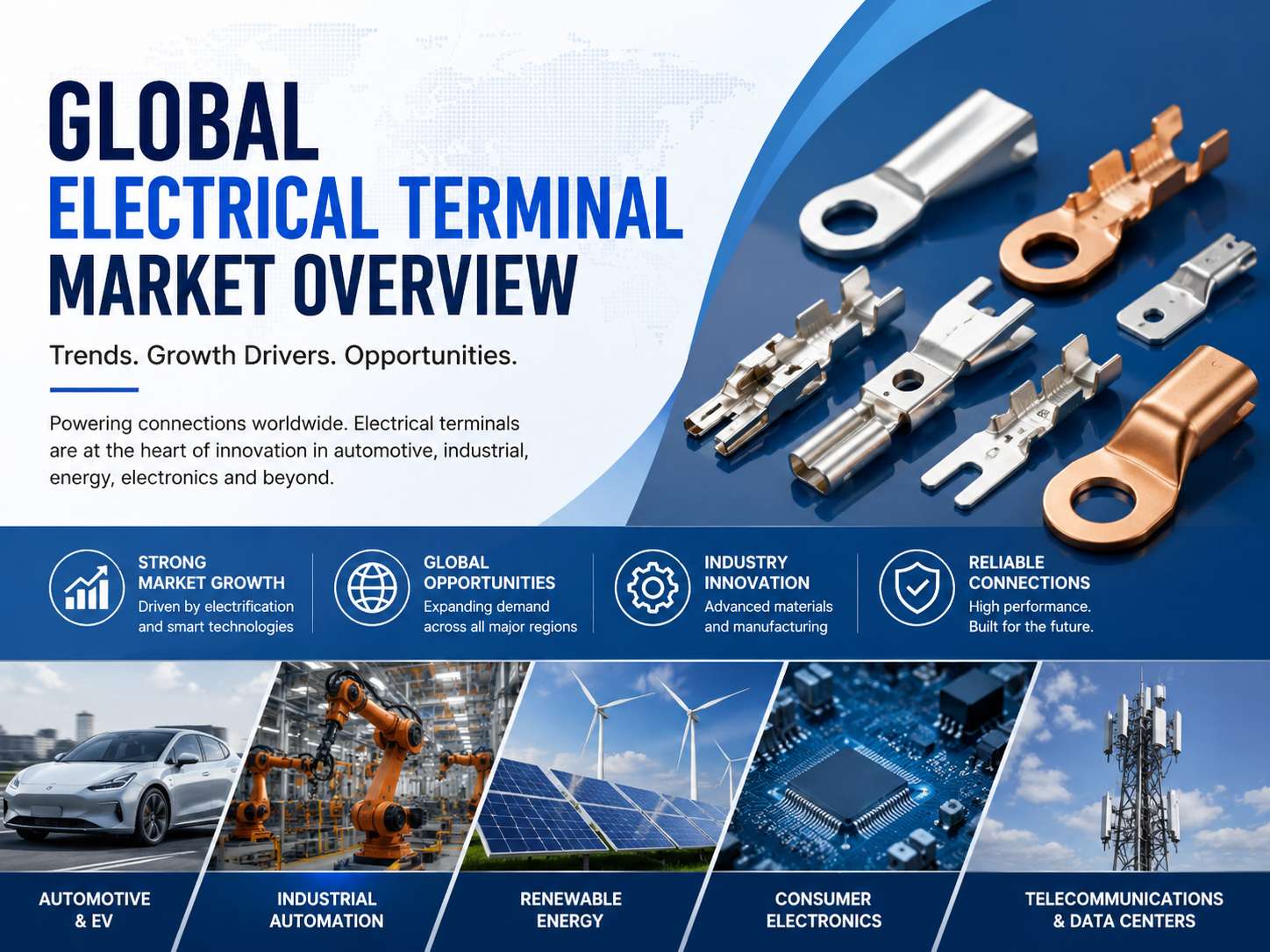
The electrical terminal industry serves as a fundamental component of modern electrical and electronic systems. Whether in automotive wiring harnesses, industrial automation equipment, renewable energy installations, consumer electronics, or telecommunications infrastructure, electrical terminals provide the reliable connections necessary for transmitting power and signals.
As global electrification accelerates, demand for high-performance electrical terminals continues to grow. The rise of electric vehicles (EVs), renewable energy systems, smart manufacturing, and advanced electronic devices has transformed electrical terminals from simple connection components into critical elements of system reliability and efficiency.
For manufacturers, suppliers, and procurement professionals, understanding the global electrical terminal market is essential for identifying growth opportunities and adapting to emerging industry trends.
This article explores the current state of the global electrical terminal market, key growth drivers, regional developments, technological innovations, and future outlook.
What Are Electrical Terminals?
Electrical terminals are conductive components designed to create secure electrical connections between wires, cables, circuits, and devices.
Their primary functions include:
- Power transmission
- Signal transfer
- Electrical grounding
- Circuit connectivity
- Equipment integration
By ensuring stable electrical contact, terminals help reduce resistance, minimize energy loss, and improve overall system reliability.
Common Types of Electrical Terminals
The market includes numerous terminal types designed for specific applications:
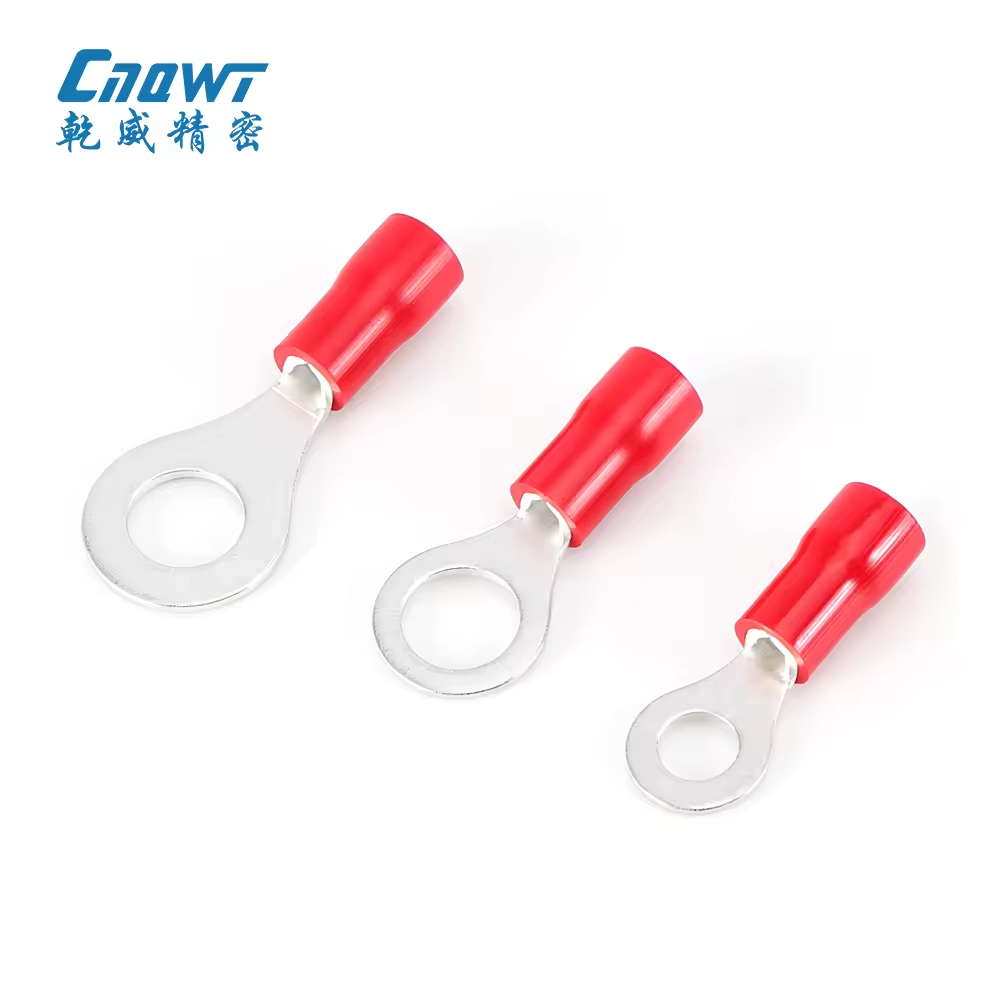
Ring Terminals
Provide secure bolt-mounted connections and are widely used in automotive, industrial, and power distribution systems.
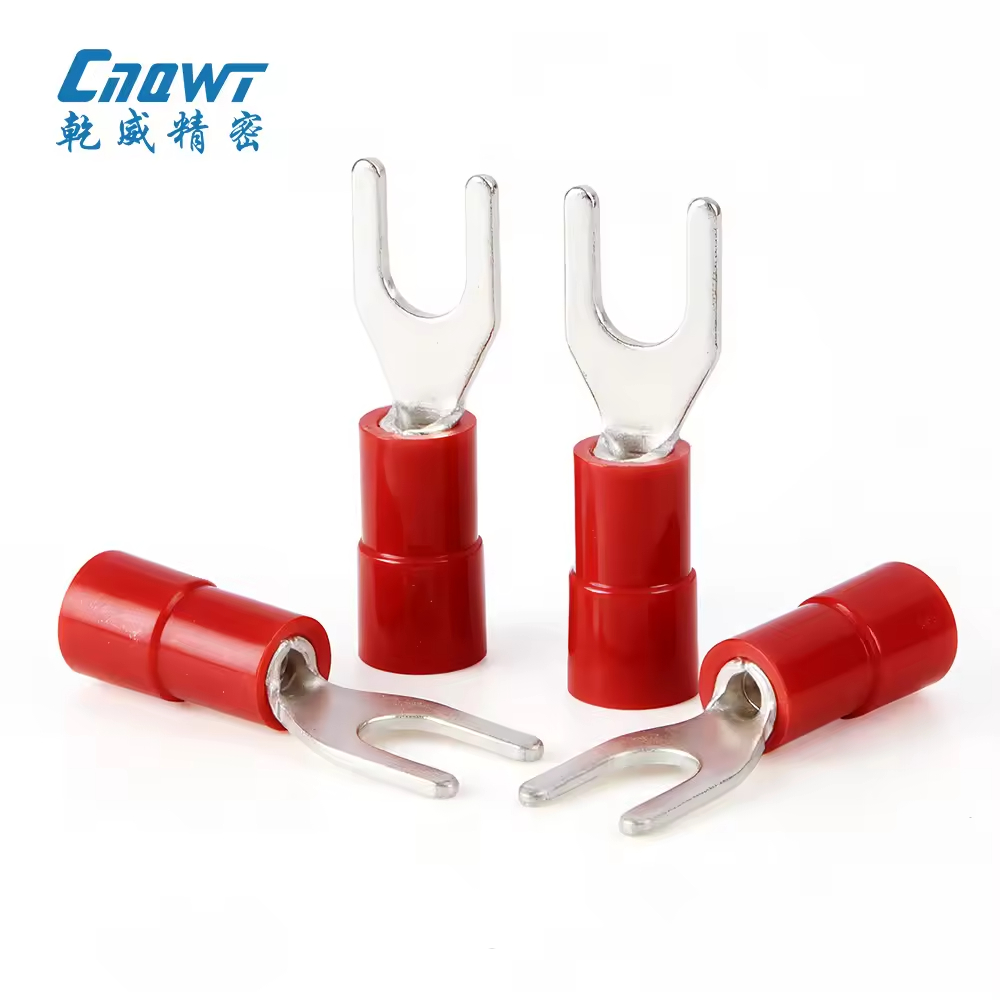
Spade Terminals
Allow quick installation and removal without completely removing mounting hardware.
Pin Terminals
Commonly used in terminal blocks and control systems.
Butt Connectors
Used to join two wires together in a straight-line connection.

PCB Terminals
Enable wire-to-board connections in electronic devices.
Battery Terminals
Designed for high-current applications such as automotive batteries and energy storage systems.
.jpg)
Custom Terminals
Engineered for specialized requirements involving unique electrical, mechanical, or environmental conditions.
Global Electrical Terminal Market Growth
The electrical terminal market has experienced consistent growth over the past decade.
Several macroeconomic and technological trends continue driving expansion:
- Electrification of transportation
- Industrial automation
- Renewable energy investments
- Expansion of communication infrastructure
- Smart manufacturing initiatives
- Increasing demand for electronic devices
As industries become more interconnected and energy-efficient, the need for reliable electrical connections grows accordingly.
Why the Market Is Expanding
Electrical terminals may appear to be simple components, but virtually every electrical system depends on them.
A single electric vehicle can contain hundreds of terminals.
A solar power installation may require thousands.
A modern manufacturing facility can utilize tens of thousands of terminal connections throughout its electrical infrastructure.
As these industries expand globally, terminal demand naturally follows.
Electric Vehicles Are Reshaping the Market
The transition from internal combustion engines to electric vehicles is one of the strongest growth drivers in the electrical terminal industry.
Battery Systems
Electric vehicles require complex battery packs containing numerous high-current connections.
These applications demand:
- Low resistance
- High conductivity
- Excellent thermal performance
- Long-term reliability
Manufacturers increasingly utilize:
- Electrolytic copper terminals
- Tin-plated terminals
- Silver-plated terminals
- High-voltage connector terminals
Charging Infrastructure
Global EV adoption has created demand for charging stations and supporting electrical infrastructure.
Charging systems require terminals capable of handling:
- High currents
- Frequent usage cycles
- Outdoor environmental exposure
Vehicle Electrification
Even conventional vehicles are becoming more electrically complex.
Advanced driver-assistance systems, infotainment systems, and onboard electronics continue increasing terminal consumption per vehicle.
Renewable Energy Is Creating New Opportunities
Renewable energy projects represent another major source of market growth.
Solar Energy Systems
Solar installations require terminals for:
- PV modules
- Combiner boxes
- Inverters
- Battery storage systems
Outdoor operation creates additional requirements:
- Corrosion resistance
- UV resistance
- Temperature stability
Wind Energy
Wind turbines operate under extreme environmental conditions.
Terminals used in these systems must withstand:
- Vibration
- Temperature fluctuations
- Humidity
- Long maintenance intervals
Energy Storage Systems (ESS)
As renewable energy adoption increases, energy storage systems become increasingly important.
ESS applications require:
- High-current terminals
- Battery connectors
- Busbar connections
- Power distribution components
Industrial Automation Continues to Drive Demand
Industry 4.0 and smart manufacturing initiatives are transforming production facilities worldwide.
Modern factories depend on:
- PLC systems
- Robotics
- Sensors
- Control cabinets
- Industrial communication networks
Each of these systems requires reliable terminal connections.
Growth of Smart Factories
Automated production lines require terminals capable of supporting:
- Continuous operation
- High reliability
- Fast installation
- Easy maintenance
Industrial customers increasingly prioritize durability and long service life over simple cost considerations.
Consumer Electronics Remain a Major Market Segment
Although terminals used in consumer electronics are often smaller, production volumes are enormous.
Applications include:
- Smartphones
- Laptops
- Home appliances
- Wearable devices
- Smart home products
Miniaturization Trend
Manufacturers face growing pressure to reduce component size while maintaining electrical performance.
As devices become smaller and more powerful, terminal manufacturers must develop:
- Precision stamping capabilities
- Micro-terminal designs
- High-density connection solutions
Telecommunications and Data Centers
The expansion of cloud computing and digital infrastructure continues increasing demand for electrical terminals.
Data Centers
Data centers require terminals for:
- Power distribution
- Server systems
- Backup batteries
- Cooling equipment
These applications demand:
- High reliability
- Efficient power transmission
- Minimal downtime
Telecommunications Infrastructure
5G deployment and network expansion further contribute to market growth.
Base stations, network equipment, and communication systems all rely on secure electrical connections.
Market Segmentation by Material
Material selection significantly influences terminal performance.
Copper Terminals
Copper remains the dominant material for high-performance electrical terminals.
Advantages include:
- Excellent conductivity
- Low resistance
- High current-carrying capacity
Applications:
- EV systems
- Battery terminals
- Power distribution
Brass Terminals
Brass offers a balance between performance and cost.
Advantages:
- Good strength
- Easy manufacturing
- Competitive pricing
Commonly used in general industrial applications.
Phosphor Bronze
Widely used in spring contacts and connector systems.
Benefits:
- Excellent elasticity
- Fatigue resistance
- Stable contact pressure
Stainless Steel
Primarily selected when corrosion resistance is critical.
Surface Treatment Trends
Plating technology plays a crucial role in terminal performance.
Tin-Plated Terminals
Tin plating remains the most widely used solution.
Benefits:
- Corrosion protection
- Improved solderability
- Cost effectiveness
Nickel-Plated Terminals
Suitable for:
- High-temperature environments
- Wear-resistant applications
Silver-Plated Terminals
Often selected for:
- High-current applications
- Power systems
- Renewable energy equipment
Gold-Plated Terminals
Used primarily in:
- Precision electronics
- Signal transmission
- High-reliability connectors

Regional Market Analysis
Asia-Pacific
Asia-Pacific remains the world’s largest electrical terminal manufacturing region.
Key advantages include:
- Strong supply chains
- Manufacturing expertise
- Competitive costs
- Large domestic markets
China
China continues to dominate global terminal production.
The country’s strengths include:
- Precision stamping capabilities
- Large-scale manufacturing
- Integrated supply chains
- Export infrastructure
China remains a major supplier of OEM and ODM terminal solutions.
Southeast Asia
Countries such as Vietnam and Thailand are attracting increasing manufacturing investment.
Growth drivers include:
- Supply chain diversification
- Labor availability
- Expanding industrial sectors
India
India is becoming an important growth market due to:
- Infrastructure development
- Automotive expansion
- Government manufacturing initiatives
North America
North American demand is supported by:
- EV manufacturing
- Industrial automation
- Renewable energy investments
- Data center growth
Localization and supply chain resilience have become major priorities.
Europe
Europe’s market is heavily influenced by:
- Sustainability goals
- EV adoption
- Industrial modernization
Automotive innovation continues driving terminal demand throughout the region.
Technological Trends Shaping the Industry
High-Current Terminal Development
Growing EV and energy storage markets require terminals capable of carrying significantly higher currents.
Manufacturers are investing in:
- Advanced copper alloys
- Improved contact designs
- Enhanced thermal management
Precision Stamping Technology
Modern terminals increasingly require:
- Tight tolerances
- Complex geometries
- Consistent production quality
Precision stamping technology enables large-scale production while maintaining accuracy.
Automated Manufacturing
Automation improves:
- Efficiency
- Quality consistency
- Production speed
Smart factories are becoming increasingly common among leading terminal manufacturers.
Customization
Standard products are no longer sufficient for many industries.
Demand for custom terminals continues increasing in:
- Automotive
- Medical devices
- Renewable energy
- Aerospace
- Industrial automation
Challenges Facing the Electrical Terminal Industry
Despite strong growth opportunities, the market faces several challenges.
Raw Material Price Volatility
Copper prices significantly affect manufacturing costs.
Price fluctuations can impact:
- Profit margins
- Project budgets
- Procurement strategies
Increasing Quality Requirements
Industries such as automotive and medical devices require strict compliance with quality standards.
Manufacturers must invest in:
- Testing equipment
- Process control
- Traceability systems
Environmental Regulations
Compliance requirements continue expanding.
Key standards include:
- RoHS
- REACH
- Industry-specific certifications
Global Competition
Manufacturers face increasing pressure to balance:
- Cost
- Quality
- Delivery speed
- Innovation
Opportunities for Custom Terminal Manufacturers
The strongest growth opportunities increasingly lie in customized solutions.
Many industries require terminals that meet unique specifications involving:
- Current capacity
- Size constraints
- Environmental resistance
- Mechanical performance
OEM and ODM Demand
Companies increasingly seek suppliers capable of providing:
- Engineering support
- Tool development
- Prototyping
- Mass production
Manufacturers offering complete solutions gain a competitive advantage.
Engineering Collaboration
Modern customers expect more than manufacturing services.
Successful suppliers often provide:
- Design optimization
- DFM analysis
- Cost reduction recommendations
- Reliability improvements
Future Outlook
The long-term outlook for the global electrical terminal market remains highly positive.
Several trends are expected to drive continued growth:
Electrification
The global shift toward electrification will increase demand for advanced connection systems.
Renewable Energy Expansion
Solar, wind, and energy storage projects will continue requiring large volumes of high-performance terminals.
Smart Manufacturing
Industrial automation will further increase the need for reliable electrical connectivity.
Customized Solutions
As products become more specialized, demand for custom terminal manufacturing will continue growing.
Sustainability
Manufacturers that adopt environmentally responsible production methods will gain competitive advantages.
Why Choose Qianwei Precision?
As global demand for reliable electrical connections grows, selecting the right manufacturing partner becomes increasingly important.
Qianwei Precision provides:
- OEM terminal manufacturing
- ODM terminal solutions
- Precision stamping
- Injection molding
- Mold development
- Electroplating services
- Reliability testing
Our capabilities include:
- Salt spray testing
- Vibration testing
- Thermal cycling testing
- Dimensional inspection
- Pull-out force testing
With extensive experience serving automotive, industrial, renewable energy, and electronics customers, Qianwei supports projects from concept development through mass production.
Conclusion
The global electrical terminal market is entering a period of sustained growth driven by electrification, renewable energy, industrial automation, and advanced electronics.
Electric vehicles, energy storage systems, telecommunications infrastructure, and smart factories are creating unprecedented demand for reliable, high-performance terminal solutions.
Manufacturers that combine engineering expertise, quality control, customization capabilities, and advanced manufacturing technologies will be best positioned to capitalize on future opportunities.
As industries continue evolving, electrical terminals will remain a critical component connecting the world’s increasingly electrified future.
FAQs
1. What is the global electrical terminal market?
The global electrical terminal market refers to the industry involved in the design, manufacturing, and distribution of electrical terminals used to connect wires, cables, circuits, and electrical equipment. These components are widely used in automotive, industrial, renewable energy, telecommunications, and consumer electronics applications.
2. What factors are driving the growth of the electrical terminal market?
Several key factors are fueling market growth, including:
- Expansion of electric vehicle (EV) production
- Growth of renewable energy projects
- Industrial automation and Industry 4.0 adoption
- Increasing demand for consumer electronics
- Development of telecommunications and data center infrastructure
- Rising demand for customized terminal solutions
3. Which industries use electrical terminals the most?
Electrical terminals are commonly used in:
- Automotive and EV manufacturing
- Industrial automation
- Renewable energy systems
- Consumer electronics
- Telecommunications
- Medical devices
- Aerospace and defense
- Power distribution equipment
4. Why is the electric vehicle industry important to the terminal market?
Electric vehicles require significantly more electrical connections than conventional vehicles. Battery packs, charging systems, power distribution units, and high-voltage connectors all rely on high-performance electrical terminals, making EVs one of the fastest-growing market segments.
5. Which region dominates the global electrical terminal market?
Asia-Pacific is currently the largest market and manufacturing hub for electrical terminals. China, in particular, plays a leading role due to its mature supply chain, large-scale production capacity, and strong automotive and electronics industries.
6. What materials are commonly used to manufacture electrical terminals?
Common terminal materials include:
- Electrolytic Copper (C1100/T2)
- Brass
- Phosphor Bronze
- Stainless Steel
- Copper Alloys
The choice of material depends on conductivity requirements, mechanical strength, corrosion resistance, and application environment.
7. Why is copper widely used in electrical terminals?
Copper offers:
- Excellent electrical conductivity
- Low contact resistance
- High current-carrying capacity
- Good formability
Because of these properties, copper is often the preferred material for high-current and power transmission applications.
8. What surface plating options are available for electrical terminals?
The most common plating options include:
- Tin Plating
- Nickel Plating
- Silver Plating
- Gold Plating
Each plating type provides different benefits related to conductivity, corrosion resistance, solderability, and wear resistance.
9. How does renewable energy impact terminal demand?
Solar, wind, and energy storage systems require large numbers of electrical connections. As global renewable energy investments increase, demand for durable and corrosion-resistant terminals continues to grow.
10. What are custom electrical terminals?
Custom electrical terminals are specially designed components manufactured according to specific customer requirements, such as:
- Unique dimensions
- Higher current ratings
- Special materials
- Custom plating
- Industry-specific performance standards
They are commonly used in automotive, medical, industrial, and renewable energy applications.
11. What challenges does the electrical terminal industry face?
Major industry challenges include:
- Copper price fluctuations
- Supply chain disruptions
- Increasing quality requirements
- Environmental regulations
- Global competition
- Demand for shorter lead times
Manufacturers must continuously improve efficiency and innovation to remain competitive.
12. How is automation influencing terminal manufacturing?
Automation improves:
- Production efficiency
- Product consistency
- Precision
- Quality control
- Cost management
Modern terminal manufacturers increasingly use automated stamping, inspection, plating, and assembly systems to meet growing market demands.
13. What role does quality testing play in terminal manufacturing?
Reliability testing helps ensure long-term performance and safety. Common tests include:
- Salt spray testing
- Vibration testing
- Thermal cycling testing
- Pull-out force testing
- Electrical resistance testing
- Dimensional inspection
These tests verify that terminals can withstand real-world operating conditions.
14. What future trends will shape the electrical terminal market?
Key trends include:
- Continued EV adoption
- Expansion of energy storage systems
- Growth of smart factories
- Miniaturization of electronic devices
- Increased demand for high-current terminals
- Greater customization requirements
- Sustainable manufacturing practices
These developments are expected to create significant opportunities for terminal manufacturers worldwide.
15. How can businesses choose a reliable electrical terminal manufacturer?
When evaluating a supplier, consider:
- Manufacturing experience
- OEM and ODM capabilities
- Tooling development expertise
- Quality certifications
- Testing capabilities
- Production capacity
- Engineering support
- Global export experience
A reliable manufacturer should be able to support projects from design and prototyping through mass production.

