

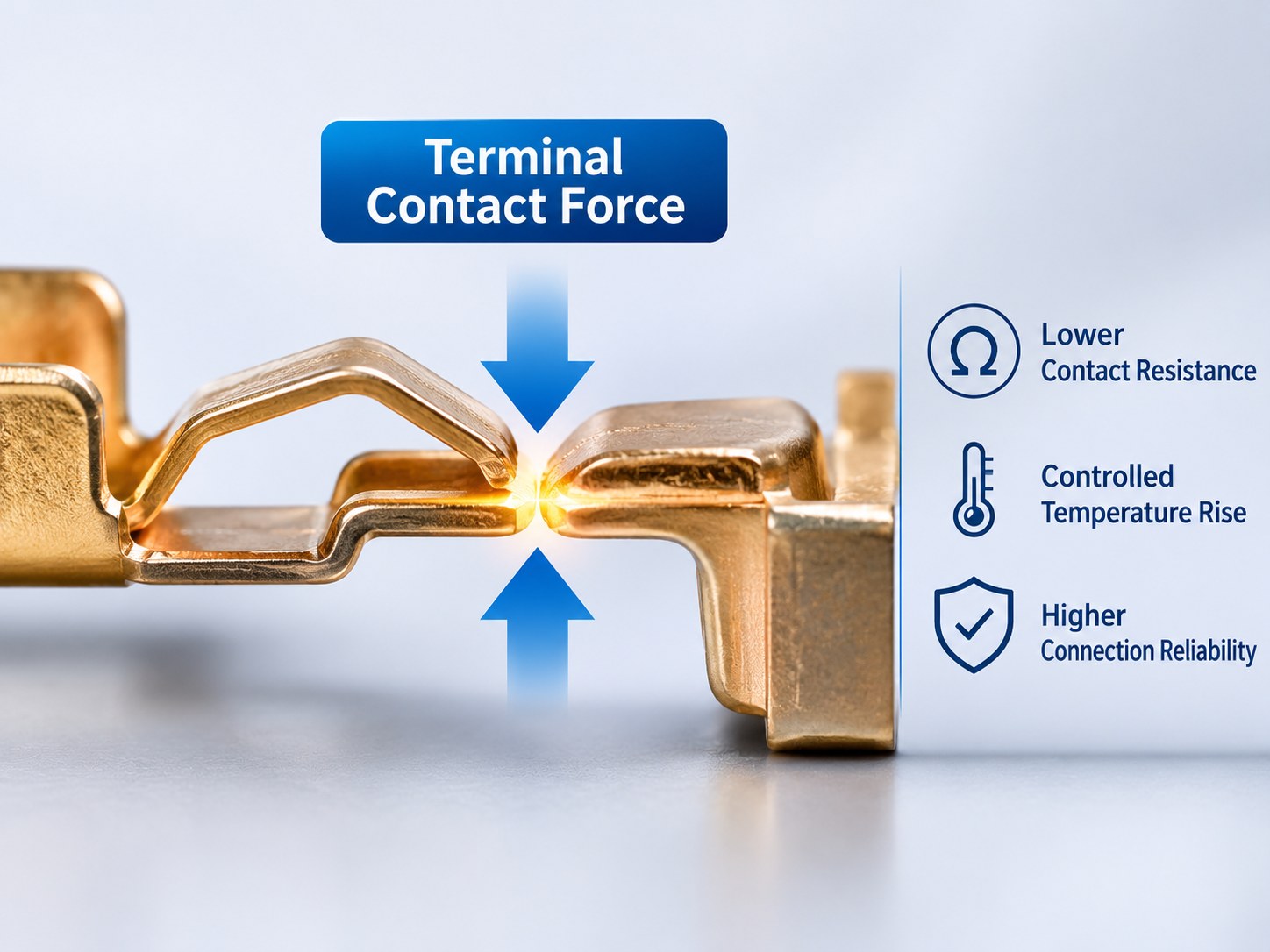
In electrical connections, reliable performance depends on more than just the quality of the conductive material. The force between two mating contact surfaces also plays an important role in determining how efficiently and consistently electrical current flows through a connection.
Terminal contact force directly influences contact resistance, temperature rise, mechanical stability, and long-term connection reliability. If the contact force is too low, electrical resistance may increase and lead to unstable connections. If it is too high, excessive insertion force, contact wear, and permanent deformation may occur.
For electrical engineers, terminal manufacturers, and procurement professionals, understanding contact force is essential when selecting or designing electrical terminals for automotive, industrial, HVAC, and energy applications.
This article explains how terminal contact force affects electrical performance, what factors influence it, and how manufacturers can maintain consistent contact quality during production.
1. What Is Terminal Contact Force?
Terminal contact force refers to the force exerted between two mating conductive surfaces when an electrical terminal is connected to its corresponding contact.
In many electrical terminals, this force is generated by the elastic deformation of a spring contact, contact beam, or other compliant structural element. When two terminals are mated, the contact structure deflects slightly and creates a normal force that keeps the conductive surfaces pressed together.
This force helps maintain stable electrical contact even when the connection experiences vibration, mechanical movement, or temperature changes.
Contact Force vs. Contact Pressure
Although closely related, contact force and contact pressure are not the same.
- Contact force is the total normal force acting between mating contact surfaces.
- Contact pressure refers to the force distributed over the actual contact area.
Contact pressure depends on both the applied force and the effective contact area. Since real metal surfaces contain microscopic irregularities, the actual electrical contact area is usually much smaller than the apparent surface area.
This is why contact force plays an important role in establishing reliable electrical connections.
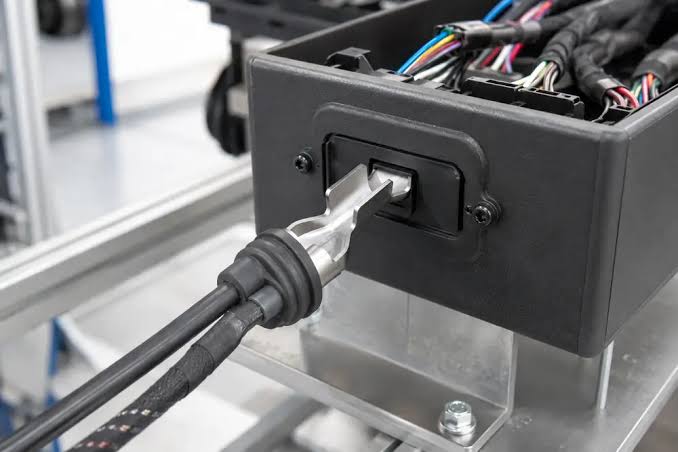
2. How Contact Force Affects Electrical Performance
The contact force of an electrical terminal influences several important electrical and mechanical characteristics.
2.1 Contact Force and Electrical Contact Resistance
Contact resistance is one of the most important indicators of electrical connection quality.
Even when two metal surfaces appear to be fully connected, current actually flows through numerous microscopic contact points. Increasing contact force can deform surface irregularities and increase the number and size of these conductive contact points.
Under suitable conditions, this reduces electrical contact resistance.
When contact force is insufficient, the actual contact area may become smaller, resulting in higher resistance and less stable current transmission.
However, contact resistance is also affected by material properties, surface oxidation, plating quality, contamination, and contact geometry. Increasing force alone cannot solve every contact resistance problem.
2.2 Contact Force and Temperature Rise
Electrical connections generate heat as current passes through contact resistance.
According to Joule’s law:
P = I²R
Where:
- P = Power dissipated as heat
- I = Electrical current
- R = Electrical resistance
When contact resistance increases, more heat may be generated at the connection interface under the same current.
Insufficient contact force can therefore contribute to excessive local temperature rise, particularly in applications involving continuous current or high electrical loads.
Excessive heat may accelerate oxidation, affect plating performance, and degrade nearby insulation materials.
Maintaining appropriate contact force helps reduce unnecessary resistance and supports better thermal performance.
2.3 Contact Force and Current-Carrying Capacity
The current-carrying capacity of an electrical terminal depends on several factors, including conductor cross-sectional area, material conductivity, contact resistance, terminal geometry, and heat dissipation.
Contact force contributes to this performance by helping maintain a stable electrical interface.
In high-current applications, such as EV battery systems, energy storage equipment, and industrial power distribution, poor contact conditions can create localized heating and reduce connection reliability.
However, higher contact force does not automatically increase the rated current capacity of a terminal. The complete electrical and thermal design must be evaluated under the intended operating conditions.
2.4 Contact Force and Connection Stability
Electrical terminals are often exposed to vibration, repeated mating cycles, mechanical movement, and temperature fluctuations.
Adequate contact force helps maintain physical contact between mating components under these conditions.
If the force is too low, small movements may cause intermittent contact, fretting wear, or unstable electrical performance.
Over time, these issues can lead to increased contact resistance and premature connection failure.
For automotive and industrial applications, consistent contact force is therefore an important factor in long-term electrical reliability.
3. What Happens When Terminal Contact Force Is Too Low or Too High?
A properly designed electrical terminal needs an appropriate contact force range. Both insufficient and excessive force can negatively affect performance.
Problems Caused by Insufficient Contact Force
When contact force is too low, several problems may occur:
- Higher contact resistance: Reduced effective contact points can increase electrical resistance.
- Excessive temperature rise: Higher resistance may generate additional heat under electrical load.
- Intermittent connections: Vibration or mechanical movement may temporarily interrupt electrical contact.
- Fretting corrosion: Repeated microscopic movement can damage contact surfaces and generate wear debris.
- Reduced service life: Unstable contact conditions may accelerate electrical and mechanical degradation.
These problems are particularly important in automotive wiring harnesses, industrial control equipment, and other applications requiring continuous electrical connectivity.
Problems Caused by Excessive Contact Force
Excessive contact force can also create performance issues:
- Increased insertion and withdrawal forces
- Accelerated wear of mating contact surfaces
- Permanent deformation of spring contact structures
- Increased mechanical stress on terminals and housings
- Reduced mating cycle durability
For spring-type terminals, repeated loading beyond the appropriate elastic range may cause permanent deformation and reduce the contact force over time.
The goal is not to maximize contact force, but to achieve a suitable balance between electrical performance, mechanical durability, and mating requirements.
4. Key Factors That Influence Terminal Contact Force
Terminal contact force is determined by several design and manufacturing factors. Controlling these variables is essential for achieving consistent product performance.
4.1 Terminal Material and Mechanical Properties
Material selection directly affects the spring behavior and electrical performance of a terminal.
Common materials include copper, brass, and phosphor bronze. Different copper alloys offer different combinations of electrical conductivity, strength, hardness, and elasticity.
Important material properties include:
- Electrical conductivity
- Yield strength
- Elastic modulus
- Hardness
- Stress relaxation resistance
For spring contact applications, material selection must consider both electrical conductivity and the ability to maintain elastic force during long-term operation.
4.2 Terminal Design and Contact Geometry
The geometry of a terminal determines how its contact structure deforms during mating.
Important design parameters include:
- Contact beam length and thickness
- Bending angle
- Spring geometry
- Contact area
- Deflection distance
- Dimensional tolerances
Small dimensional variations can affect the deformation behavior of a spring contact and result in different contact force values.
For this reason, terminal design should consider electrical requirements, mating dimensions, and mechanical performance together.
4.3 Precision Stamping and Forming Accuracy
Manufacturing accuracy has a direct influence on the consistency of terminal contact force.
During precision stamping and forming, variations in die clearance, forming angles, material thickness, and spring-back can affect the final dimensions of a terminal.
Progressive die stamping is commonly used for high-volume terminal production because it supports consistent forming operations and dimensional repeatability when properly designed and controlled.
Accurate tooling design and process control help manufacturers maintain stable contact structures across production batches.
4.4 Surface Plating and Contact Interface
Surface plating affects the electrical and environmental performance of terminal contact surfaces.
Common plating systems include tin plating, nickel underplating, and other finishes selected according to the application.
Plating quality can influence:
- Surface oxidation resistance
- Electrical contact resistance
- Wear resistance
- Corrosion protection
- Long-term contact stability
Even when contact force is properly controlled, poor surface conditions may still result in unstable electrical performance.
Material selection, plating specifications, and contact design should therefore be evaluated as part of the same engineering process.
5. How to Measure and Test Terminal Contact Force
Testing is necessary to verify whether an electrical terminal meets its mechanical and electrical performance requirements.
5.1 Contact Force Testing
Contact force can be measured using a suitable force measurement system with a controlled fixture.
For spring contacts, the test typically evaluates the force generated at a specified deflection or mating position.
A force-displacement curve can provide additional information about the spring behavior, including:
- Initial contact force
- Force at the specified working displacement
- Spring stiffness
- Elastic recovery
- Potential permanent deformation
The test method and measurement position should be clearly defined to ensure repeatable results.
5.2 Insertion and Withdrawal Force Testing
Insertion and withdrawal force testing evaluates the mechanical forces required to connect and disconnect mating terminals.
These measurements are useful for assessing mating performance and mechanical consistency.
It is important to distinguish between different force measurements:
- Contact force measures the normal force at the contact interface.
- Insertion force measures the force required to mate the components.
- Withdrawal force measures the force required to separate them.
- Retention force evaluates the resistance of a terminal to being pulled out of its housing or mounting position.
These values are related but should not be treated as interchangeable.
5.3 Contact Resistance Testing
Contact resistance is commonly measured using a four-wire Kelvin measurement method.
This approach helps minimize the influence of lead and connection resistance, allowing more accurate evaluation of low-resistance electrical contacts.
Testing may include initial resistance measurements and evaluations after mechanical or environmental conditioning.
5.4 Temperature Rise Testing
Temperature rise testing evaluates how an electrical terminal performs under a specified current load.
The test typically involves applying the required current and monitoring the temperature at designated measurement points until thermal conditions stabilize.
This helps verify whether the terminal meets the thermal performance requirements of its intended application.
6. How to Optimize Contact Force in Terminal Design and Manufacturing
Achieving reliable contact force requires coordination between product design, material selection, tooling development, and production quality control.
The following practices can help improve terminal performance.
1. Select suitable copper alloys
Choose materials according to the required conductivity, mechanical strength, and spring characteristics.
2. Optimize contact spring geometry
Adjust contact beam dimensions, bending angles, and working displacement to achieve the required force range.
3. Maintain precision stamping accuracy
Use well-designed stamping dies and controlled forming processes to reduce dimensional variation.
4. Control material and forming conditions
Pay attention to material thickness, mechanical properties, spring-back, and applicable heat treatment processes.
5. Verify contact force through testing
Establish clear test positions, acceptance criteria, and inspection procedures based on the product specification.
6. Monitor mass production consistency
Use appropriate dimensional and mechanical inspections to identify process variation before it affects product quality.
By controlling these factors, terminal manufacturers can improve product consistency and reduce the risk of electrical connection failures.
7. Applications Where Terminal Contact Force Is Critical
Contact force is important across many industries, particularly where electrical connections must remain stable under demanding operating conditions.
Automotive Electrical Terminals
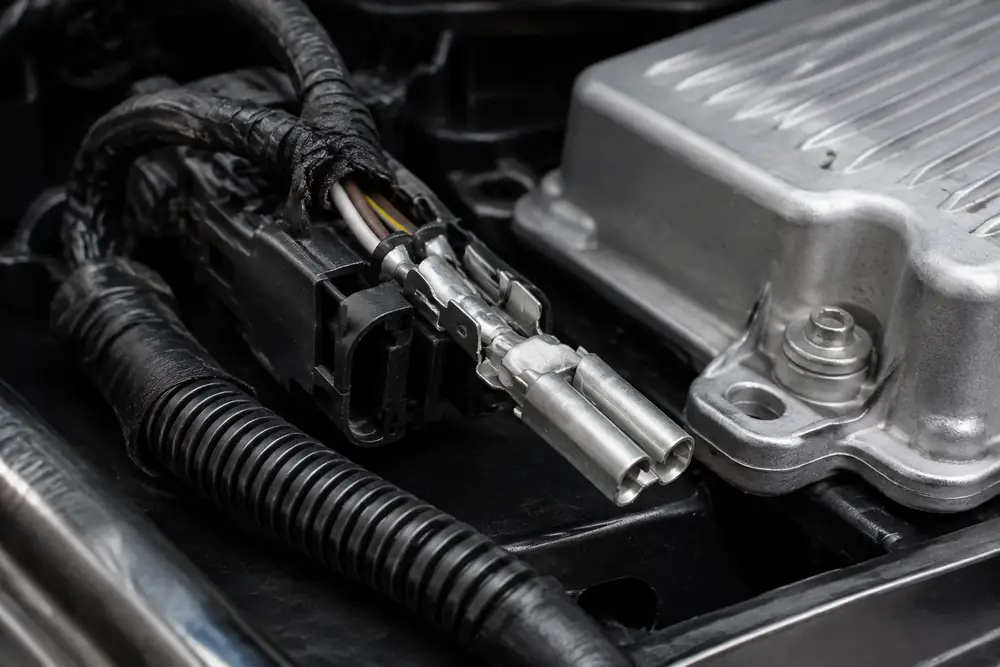
Automotive terminals operate under vibration, temperature fluctuations, and repeated electrical loading. Appropriate contact force helps maintain stable connections in wiring harnesses, electronic control systems, and vehicle electrical assemblies.
Industrial Electrical Equipment
Industrial control panels, machinery, and power distribution systems require reliable electrical connections. Consistent contact performance helps reduce the risk of overheating and unexpected electrical interruptions.
EV and Energy Storage Systems
Electric vehicles and battery energy storage systems often involve high-current electrical connections. Contact resistance and thermal performance are particularly important in these applications.
Proper terminal design and contact force control help support stable current transmission and long-term connection reliability.
HVAC and Household Appliances
Electrical terminals used in air conditioners, refrigerators, and other household appliances may experience continuous operation and temperature changes.
Reliable contact performance helps maintain electrical stability throughout the product’s service life.
8. How Qianwei Precision Ensures Consistent Terminal Contact Performance
At Qianwei Precision, we understand that reliable electrical terminals require more than accurate dimensions. Material properties, contact structure, stamping accuracy, and surface treatment all contribute to the final performance of a terminal.
With experience in precision terminal manufacturing and metal stamping, Qianwei provides customized electrical terminal solutions for customers across automotive, industrial electrical, household appliance, and other application sectors.
Our manufacturing capabilities include:
- Material Selection: Copper, brass, and phosphor bronze options for different electrical and mechanical requirements.
- Custom Terminal Design: Customized terminal structures and dimensions based on customer drawings and application specifications.
- Precision Stamping: High-speed stamping and precision tooling processes to support dimensional consistency.
- Surface Treatment: Controlled plating processes to meet specified electrical and corrosion-resistance requirements.
- Quality Control: Inspection and testing based on project-specific dimensional, mechanical, and electrical requirements.
- Mass Production: In-house tooling development and manufacturing capabilities to support customized terminal production.
Whether you need standard electrical terminals or custom stamped metal terminals, our team can work with your engineering and procurement departments to evaluate material options, structural requirements, and production feasibility.
Looking for a reliable custom electrical terminal manufacturer?
Contact Qianwei Precision to discuss your drawings, technical specifications, and project requirements.
Visit Qianwei Precision to learn more about our electrical terminal manufacturing capabilities.
9. Frequently Asked Questions
1. What is a good contact force for electrical terminals?
There is no universal contact force value for all electrical terminals. The appropriate range depends on terminal geometry, material properties, mating design, operating conditions, and application requirements. Manufacturers should establish specifications through engineering evaluation and testing.
2. Does higher contact force always mean lower contact resistance?
No. Increasing contact force can improve the effective contact area and reduce contact resistance under suitable conditions. However, surface plating, oxidation, contamination, and contact geometry also influence resistance. Excessive force may introduce mechanical problems.
3. How does contact force affect terminal temperature rise?
Insufficient contact force may increase contact resistance. Under electrical load, higher resistance can generate additional heat according to Joule’s law. Maintaining appropriate contact force helps support stable electrical and thermal performance.
4. What causes terminal contact force to decrease over time?
Contact force may decrease due to stress relaxation, permanent deformation, material fatigue, elevated operating temperatures, or repeated mating cycles. Proper material selection and spring design help reduce these risks.
5. How is electrical terminal contact force measured?
Contact force is typically measured using a force testing instrument and a suitable fixture. The test evaluates the force at a defined displacement or mating position. Consistent test conditions are essential for meaningful results.
6. Can terminal contact force be customized for different applications?
Yes. Contact force can be influenced by material selection, spring geometry, terminal dimensions, and forming processes. Custom terminal manufacturers can adjust these parameters according to customer drawings, mating requirements, and application conditions.
Conclusion
Terminal contact force is an important factor in electrical connection performance. It affects contact resistance, temperature rise, mechanical stability, and long-term reliability.
Achieving reliable performance requires a balanced approach to material selection, contact geometry, precision stamping, surface plating, and quality testing.
For engineers and procurement professionals, evaluating contact force during terminal design and supplier selection can help reduce connection failures and improve product reliability.
Qianwei Precision provides customized electrical terminal manufacturing solutions supported by precision stamping, tooling development, and production quality control. Contact our team to discuss your next terminal project.

