

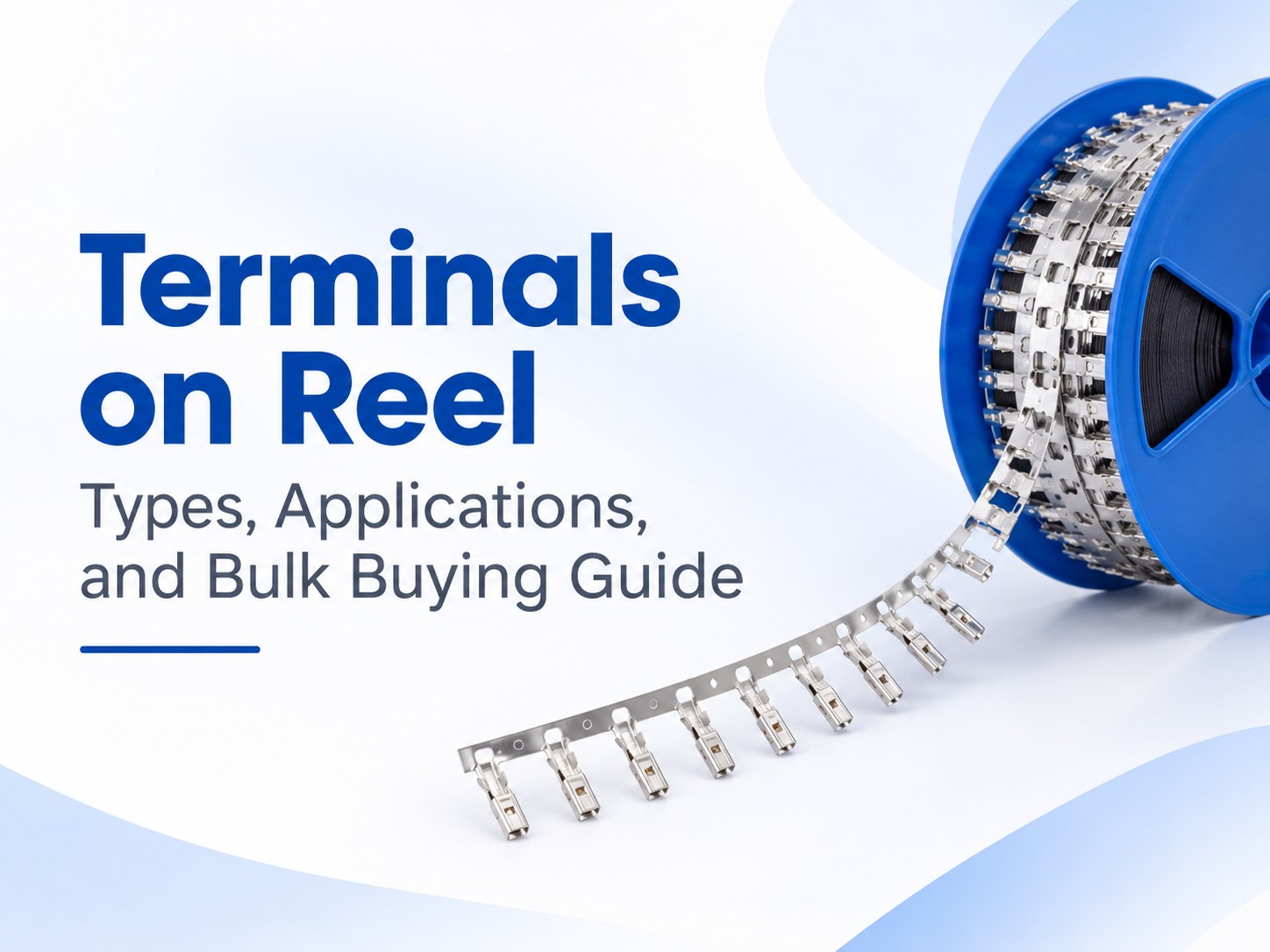
In modern electrical manufacturing, production efficiency and consistent connection quality are essential. For manufacturers handling large volumes of wire harnesses and electrical assemblies, terminals on reel provide a practical solution for continuous feeding and automated crimping.
Unlike loose terminals that require individual handling, terminals on reel are supplied in connected metal strips wound onto reels. This packaging format allows terminals to be fed continuously into automatic crimping machines, helping manufacturers improve production efficiency and maintain consistent assembly quality.
From automotive wire harnesses to home appliances and industrial electrical equipment, terminals on reel are widely used in applications that require reliable electrical connections and high-volume production.
This guide explains the common types of terminals on reel, their applications, manufacturing processes, and the key factors buyers should consider when purchasing in bulk.
1. What Are Terminals on Reel?
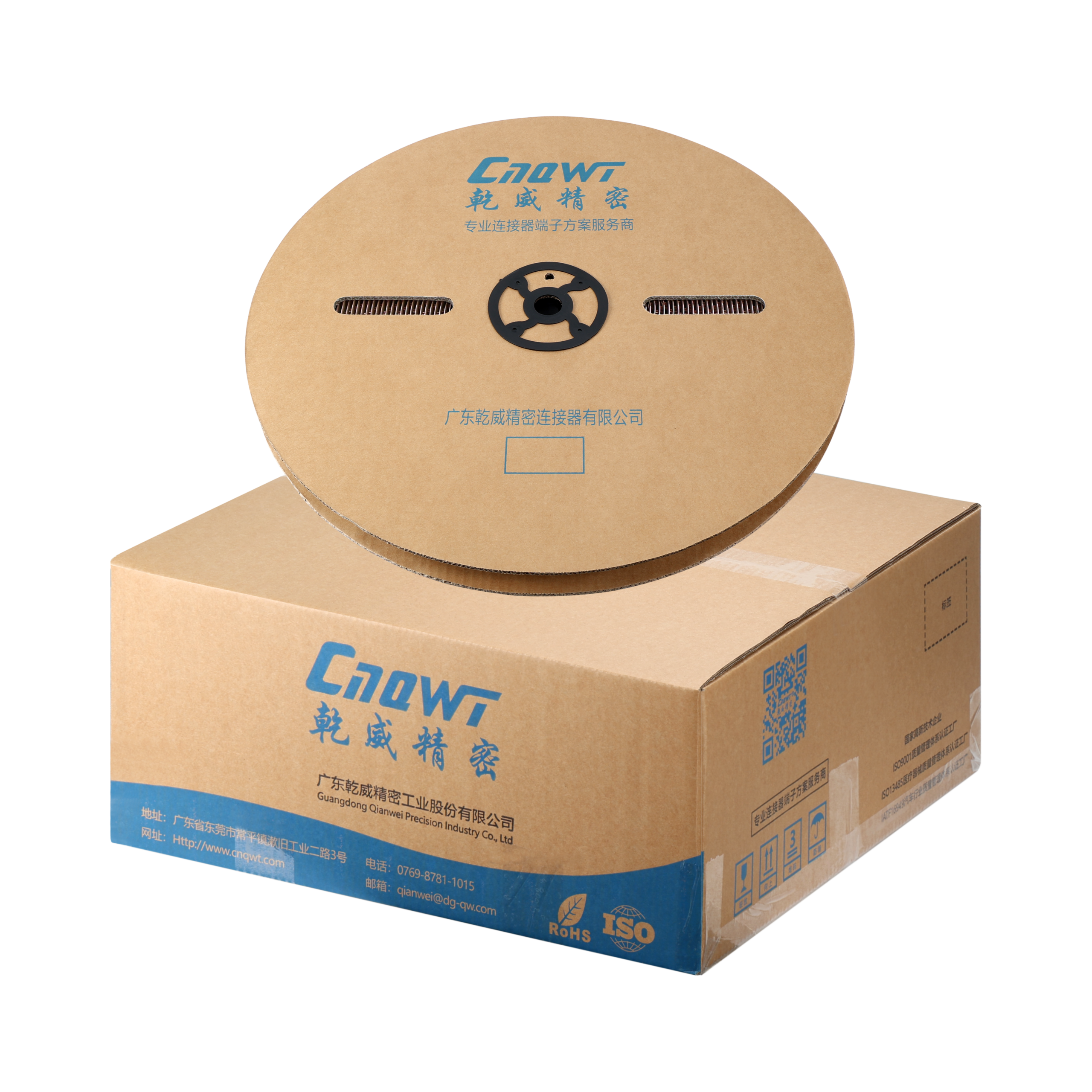
Terminals on reel are electrical terminals manufactured in continuous metal strips and wound onto reels for convenient storage, transportation, and automated processing.
During manufacturing, individual terminals are formed through precision metal stamping. They remain connected through a carrier strip or designated connecting points, allowing the entire strip to move continuously through automated feeding equipment.
This design makes terminals on reel particularly suitable for automatic wire crimping machines and high-volume electrical assembly operations.
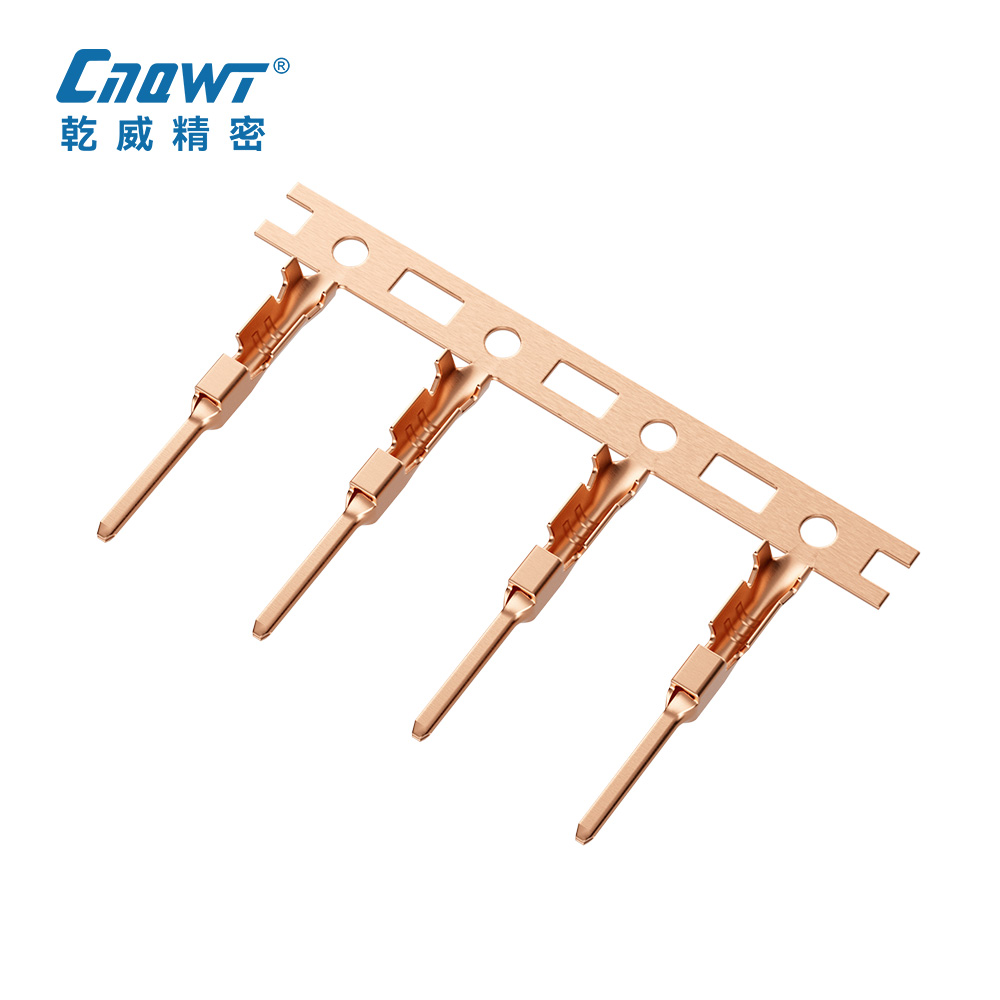
Terminals on Reel vs. Loose Terminals
The main difference is the packaging and feeding method.
Loose terminals are supplied as individual pieces and are generally suitable for manual assembly or applications with relatively small production volumes.
Terminals on reel are arranged in continuous strips, allowing automatic equipment to feed and process them one by one without repeated manual loading.
For manufacturers operating automated production lines, reel packaging can significantly improve material handling efficiency and production consistency.
2. Common Types of Terminals on Reel
Terminals on reel are available in different shapes and configurations depending on their electrical connection requirements and application environments.
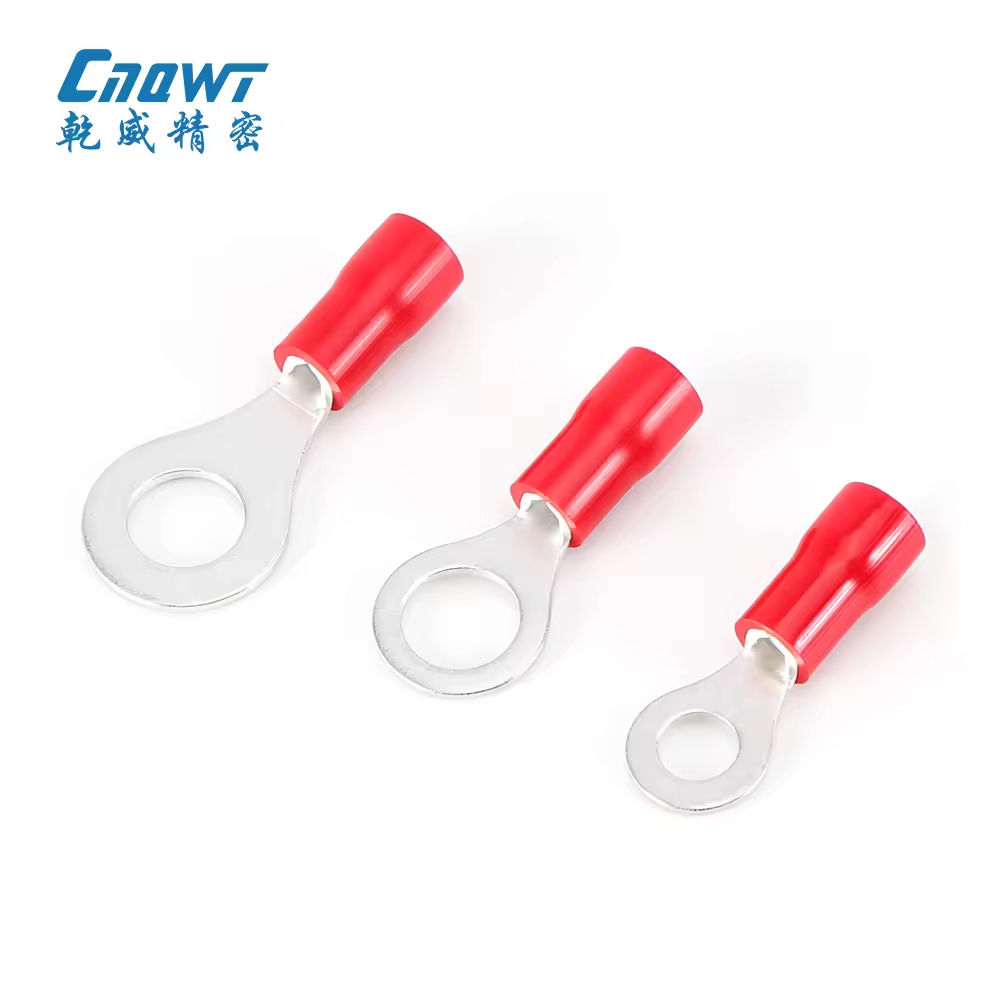
2.1 Ring Terminals on Reel
Ring terminals feature a circular connection opening designed for secure attachment using screws, bolts, or threaded studs.
They are commonly used in automotive electrical systems, battery connections, grounding applications, and industrial power distribution equipment.
When supplied on reel, ring terminals can be processed continuously through compatible automatic crimping equipment, making them suitable for repetitive assembly operations.
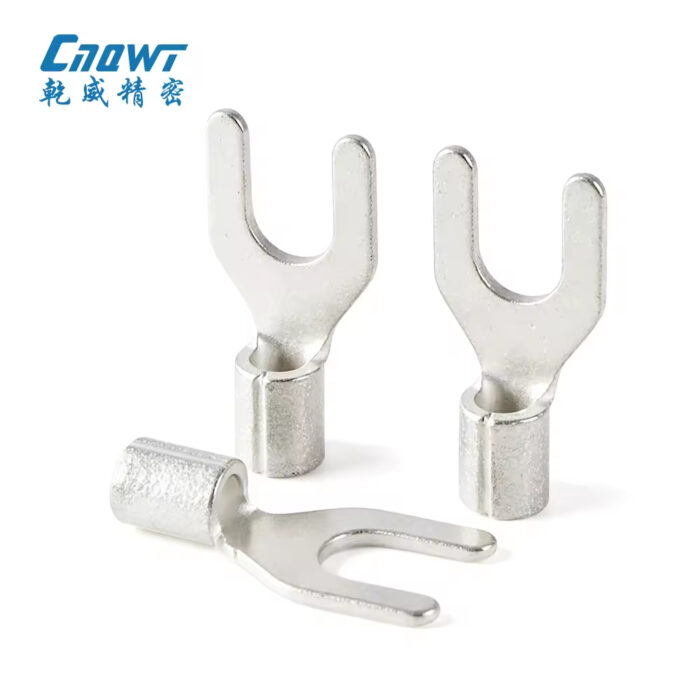
2.2 Spade and Fork Terminals on Reel
Spade terminals, also known as fork terminals, feature an open-ended connection design that allows installation without completely removing the fastening screw.
They are widely used in electrical appliances, control panels, HVAC equipment, and industrial wiring systems.
Their convenient installation structure makes them a practical option for applications requiring regular maintenance or component replacement.
2.3 Flag Terminals on Reel
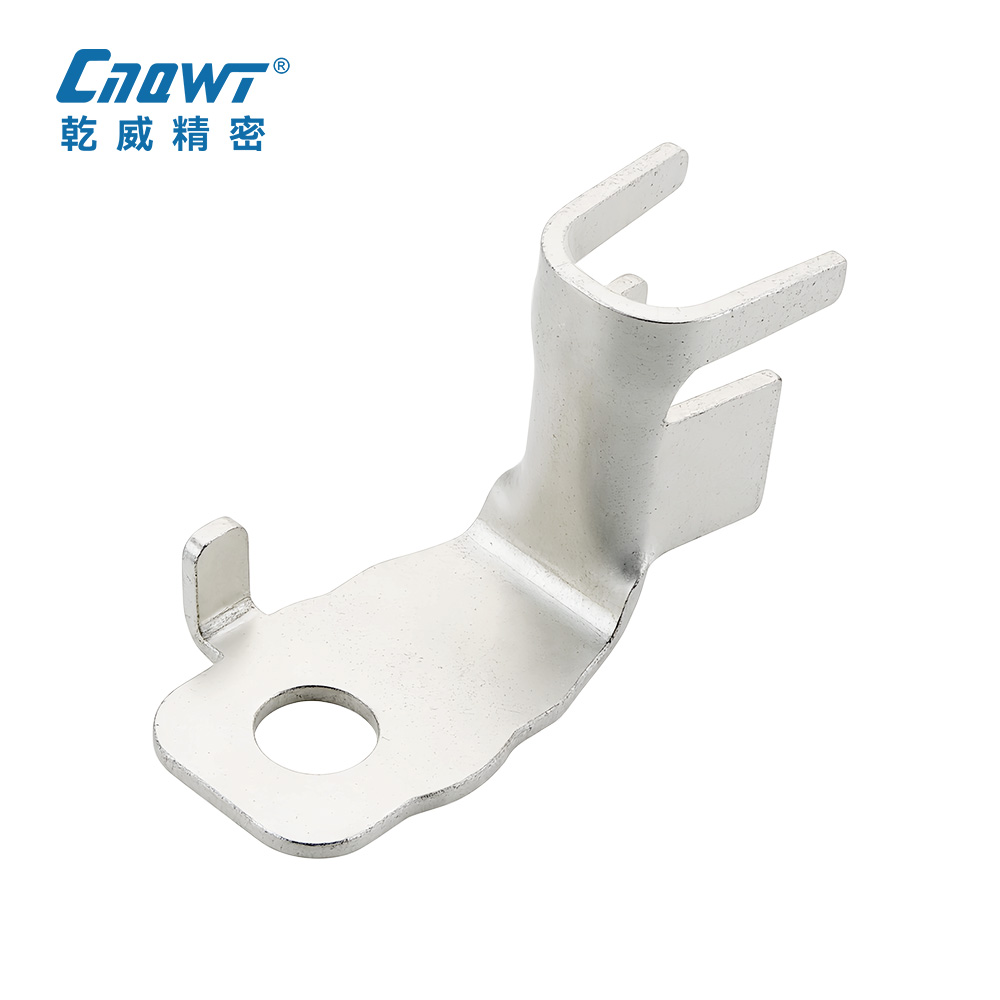
Flag terminals feature a 90-degree connection design that allows wires to connect at an angle.
This configuration is particularly useful in compact electrical assemblies where installation space is limited or where wire routing requires a specific direction.
Common applications include automotive wiring, household appliances, and electrical control systems.
2.4 Custom Stamped Terminals on Reel
Not all electrical applications can use standard terminal designs.
Custom stamped terminals on reel are developed according to specific customer drawings, electrical requirements, and assembly conditions.
Depending on the application, manufacturers can customize terminal dimensions, material thickness, contact structures, plating finishes, and strip configurations.
Custom terminals are commonly used in OEM projects where standard products cannot fully meet the required mechanical or electrical specifications.
3. Key Applications of Terminals on Reel
Terminals on reel are widely used in industries where electrical connections must be manufactured efficiently and consistently.
3.1 Automotive Wire Harness Manufacturing
Automotive wire harness production involves a large number of electrical connections across different vehicle systems.
Terminals on reel support automated crimping processes used in wiring harness assembly, helping manufacturers improve production speed and maintain consistent terminal positioning.
Typical applications include:
- Automotive wiring harnesses
- Battery and power distribution connections
- Electrical control systems
- Vehicle lighting systems
- Automotive sensor wiring
For automotive applications, material selection, plating quality, dimensional accuracy, and crimping performance are important considerations.
3.2 Home Appliances and HVAC Systems
Electrical terminals are essential components in household appliances and HVAC equipment.
Air conditioners, refrigerators, washing machines, and other appliances require reliable internal wiring connections to ensure stable operation.
Terminals on reel allow appliance manufacturers to streamline repetitive wiring operations and improve assembly efficiency.
3.3 Industrial Electrical Equipment
Industrial electrical systems often involve large numbers of wire connections within control panels, electrical cabinets, and machinery.
Terminals on reel can support automated assembly processes, reducing manual handling and helping manufacturers maintain consistent production quality.
Typical applications include:
- Industrial control panels
- Electrical distribution equipment
- Automation machinery
- Motor control systems
- Industrial wiring assemblies
3.4 New Energy and EV Applications
The growth of electric vehicles and renewable energy systems has increased demand for reliable electrical connection components.
Depending on their design and electrical ratings, terminals on reel can be used in supporting wiring assemblies for EV charging equipment, battery-related systems, and power control applications.
For these applications, buyers should carefully evaluate current requirements, contact resistance, material properties, and applicable safety standards.
4. Why Choose Terminals on Reel for Automated Production?
For manufacturers producing electrical assemblies in large quantities, reel packaging offers several practical advantages.
Higher Production Efficiency
Continuous feeding reduces the need for operators to manually load individual terminals. This helps streamline production and supports higher-volume manufacturing.
Consistent Crimping Quality
A properly designed terminal strip maintains consistent terminal positioning and feeding pitch, supporting repeatable crimping operations.
Reduced Manual Handling
Reel packaging simplifies material handling and reduces repetitive loading tasks, allowing production teams to focus on other manufacturing operations.
Better Compatibility with Automation
Terminals on reel are designed for compatible automatic feeding and crimping equipment. Correct strip dimensions and feeding configurations help ensure smooth machine operation.
Improved Production Management
Reel-based packaging makes it easier to organize materials, manage production batches, and control inventory during manufacturing.
However, the actual benefits depend on terminal design, reel specifications, machine compatibility, and production conditions.
5. Materials and Manufacturing Processes
The quality of terminals on reel depends on material selection, stamping accuracy, surface treatment, and manufacturing control.
5.1 Common Materials
Different materials offer different mechanical and electrical properties.
- Copper: Offers excellent electrical conductivity and is suitable for applications requiring efficient current transmission.
- Brass: Provides a balance of electrical conductivity, strength, and formability, making it suitable for various electrical terminal designs.
- Phosphor Bronze: Offers good elasticity, fatigue resistance, and mechanical strength, making it useful for terminals requiring reliable contact performance.
The appropriate material should be selected according to the terminal structure, operating environment, and electrical requirements.
5.2 Precision Metal Stamping
Precision stamping is a key manufacturing process for terminals on reel.
Progressive die stamping allows multiple forming operations to be completed continuously as metal strips pass through a stamping die.
Typical operations include:
- Blanking and punching
- Bending and forming
- Contact structure shaping
- Carrier strip connection
- Final dimensional control
Accurate tooling design is essential for maintaining terminal dimensions, strip pitch, and consistent feeding performance.
5.3 Surface Plating Options
Surface plating helps improve corrosion resistance, solderability, and electrical contact performance, depending on the application.
Common plating options include:
- Tin plating
- Nickel plating
- Customized surface finishes
Plating selection should consider the operating environment, electrical requirements, contact conditions, and applicable industry specifications.
5.4 Quality Control
Reliable terminals on reel require quality control throughout the manufacturing process.
Important inspection items include:
- Terminal dimensional inspection
- Material thickness verification
- Burr height and stamping quality
- Plating thickness testing
- Contact and retention force testing
- Strip pitch and feeding consistency
- Crimping performance verification
These inspections help identify potential manufacturing issues before products enter mass production.
6. How to Choose the Right Terminals on Reel
Selecting the right terminals involves more than comparing product appearance or unit prices. Buyers should evaluate both terminal specifications and compatibility with their production equipment.
6.1 Confirm Terminal Dimensions and Specifications
Before requesting a quotation, prepare the following information whenever possible:
- Terminal drawings or reference samples
- Material type and thickness
- Terminal width and overall dimensions
- Contact structure and connection requirements
- Required plating finish
- Electrical and mechanical specifications
Accurate technical information helps manufacturers evaluate product feasibility and recommend suitable production solutions.
6.2 Check Reel Specifications and Feeding Compatibility
Reel specifications are particularly important for automated production.
Buyers should confirm:
- Reel diameter and packaging dimensions
- Strip pitch and terminal spacing
- Feed direction
- Carrier strip configuration
- Terminal orientation
- Compatibility with automatic crimping equipment
Not every terminal reel is compatible with every crimping machine. Buyers should confirm equipment requirements before placing bulk orders.
6.3 Evaluate Electrical and Mechanical Requirements
Depending on the application, important performance parameters may include:
- Rated current and voltage
- Contact resistance
- Contact retention force
- Crimping pull-off force
- Operating temperature
- Corrosion resistance
These parameters should be defined according to the actual application rather than relying on general product descriptions.
7. Bulk Purchasing Guide: What Buyers Should Consider
Purchasing terminals on reel in bulk requires careful evaluation of product specifications, manufacturing capabilities, production capacity, and long-term supply reliability.
7.1 Confirm Product Specifications Before Ordering
The first step is to establish clear technical requirements.
Provide the manufacturer with product drawings, material specifications, plating requirements, and intended applications.
If you are replacing an existing terminal, supplying a physical sample can also help the manufacturer evaluate dimensions and structural details.
7.2 Evaluate the Manufacturer’s Production Capabilities
A reliable manufacturer should have the equipment and technical expertise required to produce terminals consistently.
Important factors include:
- In-house mold design and manufacturing
- Precision progressive stamping capabilities
- Automated production equipment
- Surface treatment management
- Quality inspection systems
- Experience with customized terminal projects
Manufacturers with integrated tooling and production capabilities can generally provide better control over product development and manufacturing coordination.
7.3 Check MOQ and Production Lead Time
Minimum order quantities vary depending on terminal design, tooling requirements, materials, and production processes.
Before placing an order, confirm:
- Minimum order quantity (MOQ)
- Tooling development lead time
- Sample production lead time
- Mass production lead time
- Monthly production capacity
- Packaging and delivery arrangements
For customized terminals, tooling investment and initial sampling requirements should also be discussed in advance.
7.4 Request Samples Before Bulk Production
Sample evaluation is an important step before mass production.
Buyers should verify:
- Dimensional accuracy
- Material and plating specifications
- Terminal feeding performance
- Compatibility with crimping machines
- Crimping quality and mechanical performance
Where possible, conduct sample crimping tests using the actual production equipment. This helps identify compatibility issues before committing to large quantities.
7.5 Compare Total Purchasing Costs
The lowest unit price does not always represent the lowest total purchasing cost.
Buyers should consider:
- Unit price
- Tooling and development costs
- Packaging requirements
- Shipping expenses
- Product rejection rates
- Production efficiency
- Long-term supply stability
A manufacturer offering consistent quality and reliable delivery can help reduce production interruptions and unnecessary purchasing costs.
8. Custom Terminals on Reel: From Design to Mass Production
For OEM manufacturers and companies with specific electrical connection requirements, customized terminals on reel provide greater flexibility than standard products.
A professional terminal manufacturer should be able to support the entire development process.
Step 1: Technical Requirement Review
The manufacturer reviews customer drawings, samples, material requirements, and application conditions.
Step 2: Tooling Design and Development
Progressive stamping dies are designed according to the terminal structure, dimensions, and production requirements.
Step 3: Prototype and Sample Production
Initial samples are produced for dimensional inspection and functional evaluation.
Step 4: Testing and Validation
Samples are checked for dimensional accuracy, mechanical performance, plating quality, and compatibility with the customer’s crimping equipment.
Step 5: Mass Production
After sample approval, the manufacturer proceeds with controlled production using precision stamping equipment.
Step 6: Inspection and Reel Packaging
Finished terminals are inspected and packaged according to the agreed reel specifications before shipment.
Working with a manufacturer that controls tooling development and production internally can simplify communication and improve coordination throughout the project.
9. Why Choose Qianwei Precision for Terminals on Reel?
Qianwei Precision specializes in electrical terminal manufacturing, precision metal stamping, and customized terminal solutions for industrial customers.
Established in 2012, the company operates a manufacturing facility in Dongguan, Guangdong, China, providing integrated support from tooling development to mass production.
Our capabilities include:
- In-House Tooling Development: Mold design and manufacturing supported by an automated mold processing center.
- Extensive Tooling Experience: More than 1,800 stamping and injection molds supporting different product requirements.
- Multiple Material Options: Copper, brass, and phosphor bronze for different electrical and mechanical applications.
- Precision Stamping: Manufacturing capabilities for customized stamped electrical terminals and continuous terminal strips.
- Customized Production: Support for customer drawings, samples, dimensions, and specific application requirements.
- Quality Management: Established quality management systems and product inspection processes.
Whether you need standard terminals on reel or customized stamped terminals for a specific wire harness project, Qianwei Precision can work with your engineering and purchasing teams to evaluate the requirements and develop a suitable manufacturing solution.
Looking for a Reliable Terminals on Reel Manufacturer?
Contact Qianwei Precision to discuss your product specifications, request samples, and receive a quotation for your bulk purchasing requirements.
Send us your drawings or samples to get started.
10. FAQs
1. What are terminals on reel used for?
Terminals on reel are primarily used in automated electrical assembly and wire crimping processes. They are commonly found in automotive wire harnesses, home appliances, HVAC systems, and industrial electrical equipment.
2. What is the difference between loose terminals and terminals on reel?
Loose terminals are supplied as individual pieces and are generally suitable for manual assembly. Terminals on reel are connected in continuous strips and packaged on reels for automatic feeding and high-volume crimping operations.
3. Are terminals on reel suitable for automatic crimping machines?
Yes. Terminals on reel are designed for compatible automatic feeding and crimping equipment. However, reel dimensions, strip pitch, terminal orientation, and feeding direction must match the machine specifications.
4. What types of terminals are available on reel?
Common options include ring terminals, spade terminals, fork terminals, flag terminals, and customized stamped electrical terminals. Availability depends on the manufacturer’s tooling and production capabilities.
5. Can terminals on reel be customized?
Yes. Manufacturers can customize terminal dimensions, material thickness, plating finishes, strip configurations, and other structural details according to customer drawings or samples.
6. What materials are commonly used for terminals on reel?
Common materials include copper, brass, and phosphor bronze. The final selection depends on electrical conductivity, mechanical strength, forming requirements, and the intended operating environment.
7. What is the typical MOQ for bulk terminals on reel?
MOQ varies depending on product design, tooling requirements, material specifications, and production arrangements. Customized products may require an initial tooling investment and sample approval before mass production.
8. How do I choose the right reel specifications for my crimping machine?
Check the machine manufacturer’s requirements for reel diameter, strip pitch, feed direction, terminal orientation, and carrier strip design. Providing your machine model or technical specifications to the terminal manufacturer can help confirm compatibility.

