

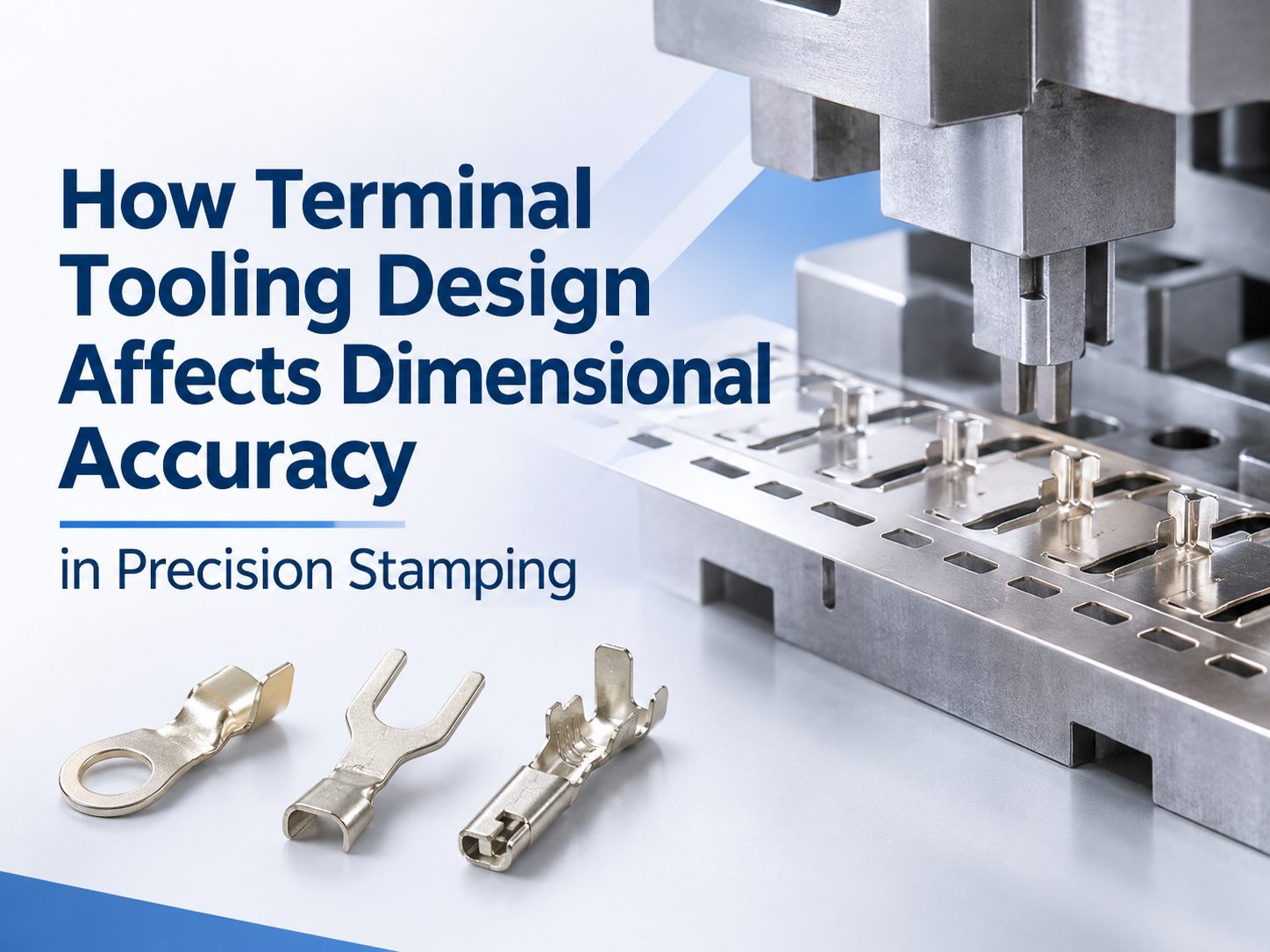
Introduction: Why Dimensional Accuracy Starts with Tooling Design
In electrical terminal manufacturing, dimensional accuracy directly affects product fit, assembly efficiency, and electrical connection reliability. Even a small dimensional deviation can cause problems such as poor mating compatibility, unstable contact pressure, difficult insertion, or inconsistent performance during automated assembly.
While material selection and stamping equipment are important, terminal tooling design is one of the most influential factors in achieving consistent dimensions. The tooling determines how metal strips are positioned, cut, bent, and formed throughout the stamping process.
For manufacturers producing high volumes of electrical terminals, a well-designed stamping die does more than shape the product. It establishes the dimensional foundation for repeatable production.
Understanding how terminal tooling design affects dimensional accuracy helps OEM buyers and engineering teams evaluate manufacturing capabilities, reduce development risks, and achieve more reliable production results.
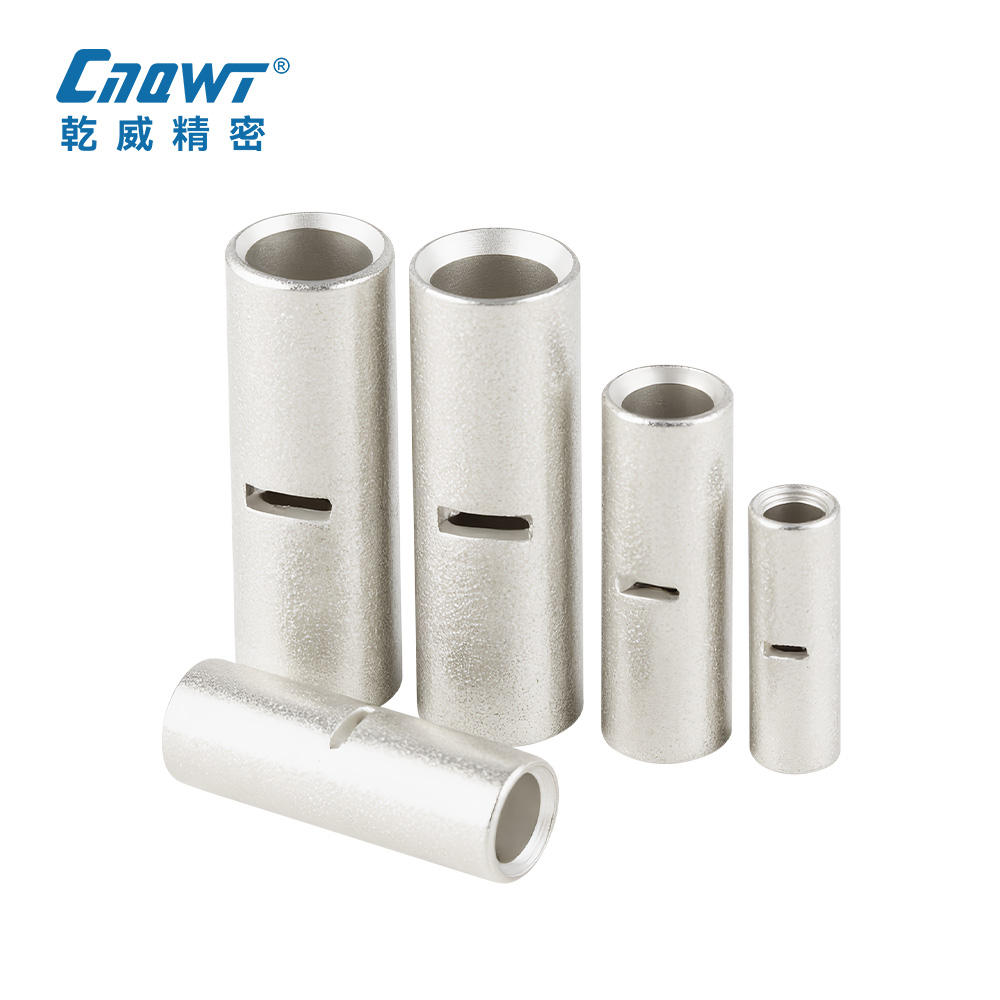
1. Understanding Dimensional Accuracy in Terminal Manufacturing
Dimensional accuracy refers to how closely a manufactured terminal matches the dimensions and tolerances specified in its engineering drawing.
Electrical terminals often contain several functional features that must remain within defined dimensional limits. These features influence how the terminal connects with wires, mating components, housings, and other electrical parts.
1.1 Critical Dimensions of Electrical Terminals
Different terminal designs have different dimensional requirements. However, several features are commonly important in precision terminal stamping:
- Terminal width and thickness: Determine the physical profile and compatibility with mating components.
- Hole diameter and position: Important for ring terminals, mounting terminals, and other fastening applications.
- Contact area dimensions: Affect the fit and engagement between electrical components.
- Bending angle and forming height: Influence terminal geometry and assembly positioning.
- Terminal pitch: Particularly important for terminals on reel and automated feeding applications.
- Locking and retention features: Help ensure that terminals remain securely positioned inside connector housings.
For example, a ring terminal with an incorrectly positioned mounting hole may not fit the intended bolt or mounting point. Similarly, a spade terminal with an inconsistent contact width may create assembly difficulties or an unreliable mating connection.
This is why critical dimensions should be identified during the initial tooling design stage rather than addressed only during final inspection.
1.2 Dimensional Tolerances and Their Impact on Performance
A dimensional tolerance defines the acceptable variation from a specified nominal dimension.
In terminal manufacturing, not every dimension requires the same tolerance. Functional features such as contact areas, locking structures, and mounting holes may require tighter control than non-critical external features.
Excessively loose tolerances can lead to assembly problems, while unnecessarily tight tolerances may increase tooling complexity and manufacturing costs.
The goal is to establish practical tolerances based on product function, material properties, production processes, and customer requirements.
A professional terminal manufacturer should review critical dimensions before tooling development to ensure that the proposed manufacturing process can consistently achieve the required specifications.
2. Key Terminal Tooling Design Factors That Affect Dimensional Accuracy
Terminal tooling design involves several interconnected engineering decisions. Each one can influence the final dimensions of the stamped product.
2.1 Die Structure and Station Layout
Progressive die stamping is widely used for manufacturing electrical terminals in high volumes. A progressive die performs multiple operations as the metal strip moves through a series of stations.
Typical operations include:
- Blanking
- Piercing
- Notching
- Bending
- Forming
- Cut-off
The arrangement of these stations affects material stability and dimensional consistency.
If the operation sequence is not properly designed, excessive deformation may occur during forming. This can affect the position of holes, terminal profiles, and other critical features.
A well-designed die structure distributes operations logically and minimizes unnecessary material movement. It also considers how the metal strip behaves throughout the stamping sequence.
Proper station layout helps maintain repeatability, particularly when producing complex terminals with multiple bends or precision locking features.
2.2 Punch and Die Clearance
Punch and die clearance is the gap between the punch and the corresponding die opening during a cutting operation.
This clearance is an important factor in controlling cutting quality, burr formation, and dimensional consistency.
If the clearance is too large, the cutting process may produce excessive burrs, distorted edges, or inconsistent profiles. If it is too small, cutting forces may increase, accelerating tool wear and potentially damaging the tooling.
The appropriate clearance depends on several factors:
- Material type
- Material thickness
- Material hardness
- Cutting geometry
- Required edge quality
Copper, brass, and phosphor bronze have different mechanical properties. Therefore, tooling clearance should be selected according to the actual material being processed rather than applying one setting to every terminal design.
Correct clearance helps maintain stable cutting conditions and reduces dimensional variation during continuous production.
2.3 Material Positioning and Strip Feeding Accuracy
Accurate material positioning is essential for maintaining the dimensions and spacing of stamped terminals.
In progressive die stamping, the metal strip must advance by a controlled distance at every production cycle. Any feeding deviation can affect hole positions, terminal pitch, and the relationship between different product features.
Several tooling elements help maintain accurate positioning:
- Pilot pins for locating the metal strip.
- Guide plates for controlling strip movement.
- Feeding systems for maintaining consistent pitch.
- Proper strip layout for minimizing movement and deformation.
Pilot positioning is particularly important because it helps correct minor feeding deviations before subsequent stamping operations take place.
For terminals on reel, consistent strip feeding is especially valuable. Variations in terminal spacing or carrier-strip geometry can interfere with automatic feeding and downstream assembly equipment.
2.4 Bending and Forming Tool Design
Many electrical terminals require bending and forming operations to achieve their final geometry.
However, metal does not always retain the exact shape imposed by the tooling. After the forming force is released, the material may partially return toward its original shape. This behavior is known as springback.
Springback can affect:
- Bending angles
- Forming heights
- Contact geometry
- Terminal alignment
- Final product dimensions
The amount of springback depends on material properties, thickness, bending radius, and forming conditions.
To compensate for springback, tooling designers may adjust the forming angle, modify the bending radius, or introduce additional forming operations.
For precision terminals, these adjustments should be evaluated through engineering analysis and trial stamping.
Proper forming tool design helps ensure that the finished terminal maintains its intended geometry after the material is released from the die.
2.5 Tooling Material and Surface Treatment
The materials used to manufacture stamping dies also influence long-term dimensional accuracy.
Punches and die inserts are exposed to repeated mechanical forces, friction, and wear. If the tooling material does not provide sufficient hardness and wear resistance, cutting edges and forming surfaces may gradually deteriorate.
This can result in:
- Changes in cutting dimensions
- Increased burr height
- Inconsistent bending angles
- Surface damage
- Reduced production stability
Selecting suitable tool steel and applying appropriate heat treatment or surface treatment can improve tooling durability.
The choice of tooling material should consider production volume, terminal material, stamping speed, and the complexity of the die structure.
Durable tooling helps maintain dimensional consistency over extended production runs.
3. How Tooling Wear and Production Conditions Affect Accuracy
Even a well-designed stamping die cannot maintain dimensional accuracy indefinitely without proper maintenance and process control.
Production conditions and gradual tooling deterioration can influence the dimensions of finished terminals.
3.1 Tool Wear and Dimensional Drift
During continuous stamping, punches, die inserts, and forming components experience repeated contact with metal materials.
Over time, cutting edges may become dull, forming surfaces may wear, and clearance conditions may change.
These changes can gradually affect product dimensions.
For example, worn cutting edges may increase burr formation, while deteriorated forming surfaces can cause variations in bending angles or terminal profiles.
This gradual change is sometimes referred to as dimensional drift.
To minimize its impact, manufacturers should establish regular tooling inspection and maintenance schedules.
Typical maintenance activities include:
- Checking punch and die wear.
- Inspecting cutting edges and forming surfaces.
- Measuring critical tooling dimensions.
- Cleaning and lubricating moving components.
- Replacing worn inserts when necessary.
Preventive maintenance is more effective than waiting until dimensional problems become visible in finished products.
3.2 Stamping Speed and Production Stability
High-speed stamping improves manufacturing efficiency, but it also increases the demands placed on tooling and production equipment.
At higher operating speeds, vibration, feeding synchronization, and material movement become increasingly important.
If the tooling structure or feeding system is not sufficiently stable, dimensional variation may occur.
A reliable production process requires coordination between:
- Die design
- Stamping press performance
- Feeding equipment
- Material characteristics
- Operating parameters
The appropriate stamping speed should be determined by the tooling structure, material, product geometry, and quality requirements.
Higher speed alone does not guarantee better productivity. Stable production with consistent dimensions is ultimately more valuable than output volume achieved at the expense of product quality.
3.3 Material Thickness and Mechanical Properties
Material characteristics have a direct influence on terminal dimensions and forming behavior.
Common materials used in electrical terminal manufacturing include copper, brass, and phosphor bronze.
Each material has different properties, including tensile strength, hardness, ductility, and springback behavior.
Material thickness variation can also affect cutting clearance, bending results, and final product dimensions.
For example, a forming process designed for one material thickness may produce different bending results if the incoming material thickness changes.
Therefore, tooling design should be based on the specified material grade and thickness.
Stable incoming material quality is equally important for maintaining dimensional consistency during mass production.
4. Methods for Improving Dimensional Accuracy in Terminal Tooling
Achieving precise terminal dimensions requires a combination of engineering design, accurate tooling manufacturing, and effective production inspection.
4.1 Precision Tooling Design and Engineering Review
Before manufacturing a stamping die, engineers should review the product drawing and identify all critical dimensions.
This includes evaluating:
- Material specifications
- Product geometry
- Critical tolerance requirements
- Bending and forming characteristics
- Stamping operation sequence
- Production volume
Three-dimensional tooling design allows engineers to evaluate die structures and identify potential interference or forming issues before physical tooling is produced.
For complex terminals, reviewing the forming sequence and potential deformation areas can help reduce trial-and-error adjustments.
Early engineering evaluation also helps identify whether certain dimensions require additional process control or specialized tooling structures.
4.2 Precision Machining and Tool Assembly
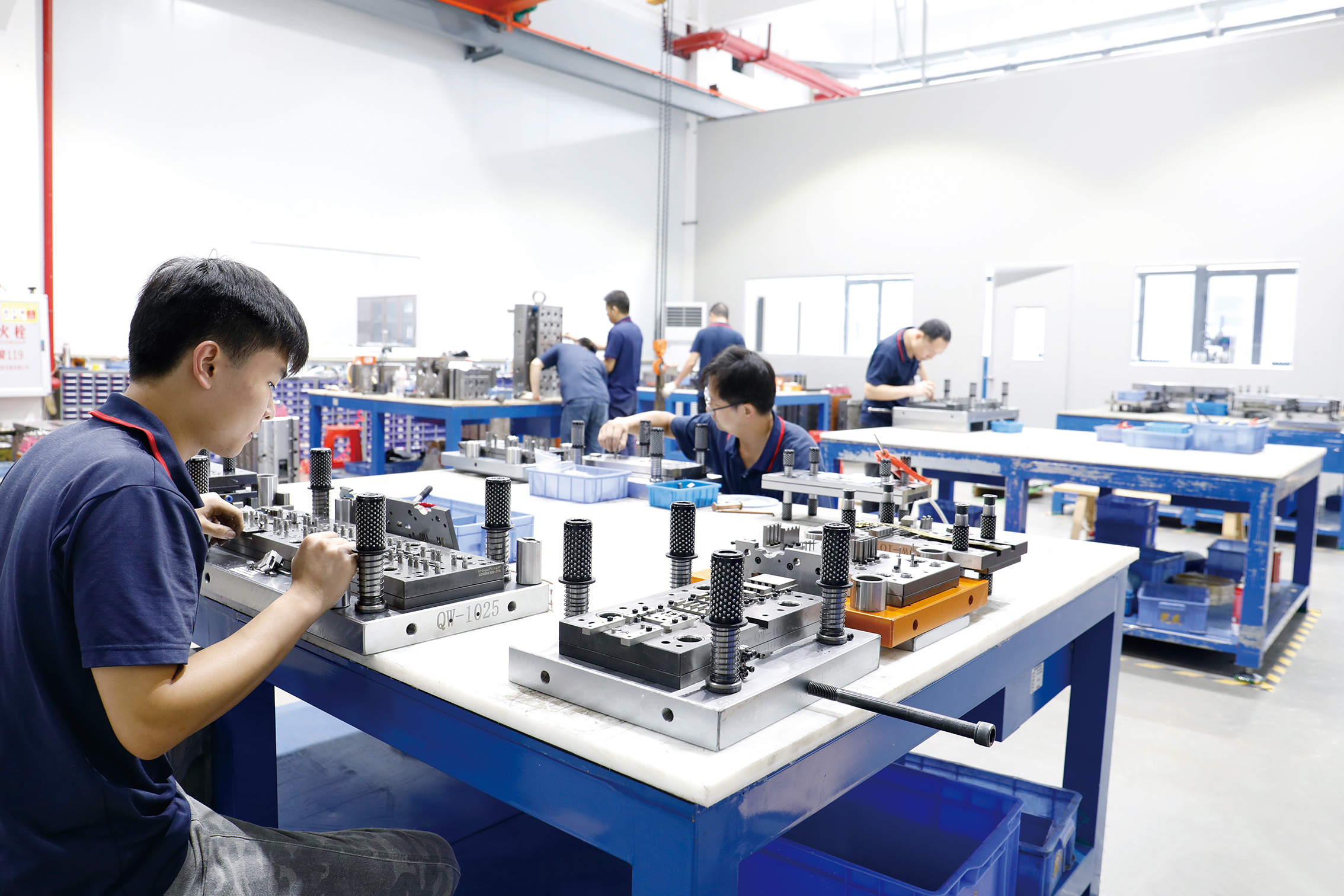
The accuracy of the finished terminal depends partly on the manufacturing accuracy of the stamping die itself.
Precision machining is necessary to produce punches, die inserts, guide components, and other tooling elements according to their engineering specifications.
During tool assembly, alignment between punches and die openings must be carefully controlled.
Poor alignment can result in uneven clearance, excessive wear, and inconsistent cutting quality.
A controlled tooling manufacturing and assembly process provides a more stable foundation for precision stamping.
4.3 In-Process Inspection and Measurement
Dimensional inspection should not be limited to the final production stage.
A comprehensive quality control process includes inspection at several stages:
First Article Inspection (FAI)
The first stamped samples are measured against the approved engineering drawing to verify critical dimensions before mass production begins.
In-Process Inspection
Selected dimensions are monitored during production to identify variations before they become widespread.
Final Inspection
Finished terminals are inspected according to the applicable product specifications and customer requirements.
Depending on the terminal design, measurement methods may include digital calipers, micrometers, optical measuring systems, and specialized inspection fixtures.
Statistical Process Control (SPC) may also be applied to monitor process variation and evaluate production stability where appropriate.
4.4 Regular Tooling Maintenance and Calibration
Regular tooling maintenance helps preserve the original performance of a stamping die.
Inspection intervals should be determined according to production volume, material characteristics, tooling structure, and actual wear conditions.
A maintenance program may include:
- Routine inspection of punches and dies.
- Cleaning and lubrication.
- Checking alignment and clearance.
- Replacing worn tooling components.
- Verifying tooling dimensions after maintenance.
By maintaining tooling in good condition, manufacturers can reduce unexpected production interruptions and improve long-term dimensional consistency.
5. The Role of Progressive Die Stamping in Consistent Terminal Dimensions
Progressive die stamping is particularly suitable for producing electrical terminals that require consistent dimensions and high-volume output.
Unlike processes that require separate manual operations, progressive stamping performs multiple operations within one integrated die system.
5.1 Multiple Operations in a Single Progressive Die
A progressive die typically includes several stations arranged along a continuous metal strip.
As the strip advances, each station performs a specific operation until the finished terminal is produced.
Depending on the product structure, these operations may include piercing, blanking, notching, bending, and forming.
Because the material remains connected to the carrier strip during processing, its position can be controlled throughout the sequence.
This helps maintain the relationship between different product features and supports repeatable manufacturing.
5.2 Advantages of Progressive Die Stamping for Terminals
For electrical terminal production, progressive die stamping offers several advantages:
Consistent Production Positioning
Integrated strip feeding and positioning systems help maintain repeatable operation between stations.
High Production Efficiency
Multiple stamping operations can be completed in one continuous production process.
Reduced Manual Handling
Automated production reduces the need for repeated manual repositioning, helping minimize handling-related variation.
Suitable for High-Volume Manufacturing
Once the tooling is properly developed and validated, progressive stamping can support stable production of large terminal quantities.
However, these advantages depend on proper die design, equipment condition, material quality, and ongoing process control.
5.3 Applications in Different Terminal Types
Progressive die stamping is commonly used for various stamped electrical terminal products.
These include:
- Ring Terminals: Require accurate hole dimensions, mounting positions, and barrel geometry.
- Spade Terminals: Depend on consistent contact widths and terminal profiles.
- Flag Terminals: Require controlled forming angles and dimensional stability.
- Terminals on Reel: Need consistent terminal pitch and carrier-strip dimensions for automated processing.
- Custom Electrical Terminals: Require tooling tailored to specific engineering drawings and application requirements.
Each terminal design presents different tooling challenges. Therefore, tooling structures and inspection methods should be selected according to the product’s functional requirements.
6. How Qianwei Precision Controls Terminal Dimensional Accuracy
At Qianwei Precision, tooling design and manufacturing are important parts of our electrical terminal production capabilities.
Established in 2012, Qianwei Precision specializes in precision electrical terminals, custom stamped metal components, and related wire harness terminal products.
Our manufacturing operations integrate mold design, tooling production, precision stamping, and quality inspection to support both customized development and mass production.
6.1 In-House Mold Design and Manufacturing
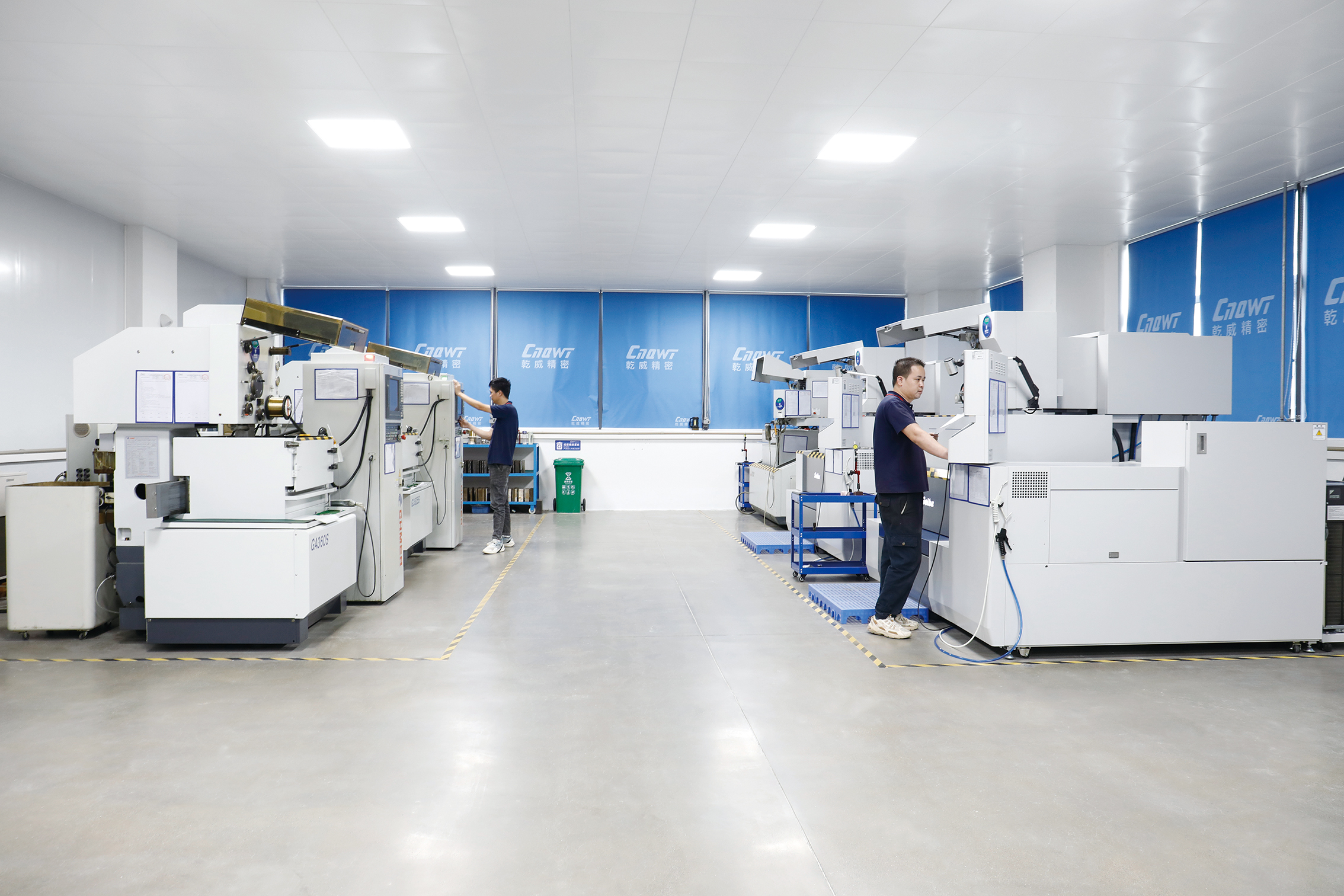
Having in-house mold design and manufacturing capabilities allows us to manage tooling development more closely.
Our engineering team can evaluate customer drawings, review product structures, and develop tooling solutions based on specific terminal requirements.
With an automated mold processing center and more than 1,800 stamping and injection molds, we have established tooling resources to support different product structures and manufacturing needs.
This integrated approach helps improve communication between tooling development and production teams, making it easier to address design adjustments and manufacturing challenges.
6.2 Precision Stamping and Manufacturing Capabilities
Qianwei Precision operates high-speed stamping production lines and supports the manufacturing of electrical terminals using materials such as copper, brass, and phosphor bronze.
Our product range includes:
- Ring terminals
- Spade terminals
- Flag terminals
- Terminals on Reel
- Custom stamped electrical terminals
- Copper electrical components
For customized projects, tooling and production processes are developed according to customer drawings, material specifications, dimensional requirements, and application conditions.
Our goal is to provide manufacturing solutions that balance dimensional requirements, production efficiency, and long-term product consistency.
6.3 Quality Inspection and Process Control
Dimensional control is an important part of our manufacturing and quality management processes.
From initial sample verification to ongoing production inspection, product dimensions should be evaluated against the applicable engineering specifications.
Qianwei Precision maintains an integrated quality management system supported by relevant certifications, including ISO 9001, IATF 16949, and ISO 13485.
For projects with specific technical requirements, inspection methods and quality documentation can be discussed during the engineering and quotation stages.
7. What Buyers Should Consider When Selecting a Terminal Manufacturer
When sourcing precision electrical terminals, buyers should evaluate more than the quoted unit price.
A manufacturer’s tooling capabilities can significantly influence product quality, development efficiency, and long-term supply stability.
Here are several important questions to consider.
1. Does the manufacturer have in-house tooling capabilities?
In-house tooling design and manufacturing can improve communication between engineering and production teams and provide better control over tooling development.
2. Can the manufacturer work directly from technical drawings?
A qualified supplier should be able to review product drawings, identify critical dimensions, and evaluate manufacturing feasibility.
3. How are critical dimensions controlled?
Ask about first article inspection, in-process measurement, final inspection, and the equipment used for dimensional verification.
4. Can the tooling be customized?
Different terminal designs require different tooling structures. Custom tooling capabilities are particularly important for OEM projects and non-standard terminal requirements.
5. Does the supplier support both sample development and mass production?
A manufacturer should be able to manage the transition from initial tooling development and sample validation to repeatable production.
6. How is tooling maintained over time?
Regular maintenance and inspection help reduce dimensional drift and maintain consistent production quality.
Selecting a terminal manufacturer with strong tooling engineering and process control capabilities can help reduce quality risks throughout the product lifecycle.
FAQs
Q1: Why is tooling design important in terminal manufacturing?
Tooling design determines how metal materials are positioned, cut, bent, and formed during stamping. Proper tooling design helps achieve accurate dimensions, consistent product geometry, and stable mass production.
Q2: What factors affect dimensional accuracy in metal stamping?
Major factors include die structure, punch and die clearance, material positioning, strip feeding accuracy, bending compensation, tooling wear, material thickness, and stamping equipment stability.
Q3: How does punch and die clearance affect terminal dimensions?
Punch and die clearance influences cutting quality, burr formation, and edge geometry. Incorrect clearance can lead to dimensional variation, excessive burrs, and accelerated tooling wear.
Q4: What is the typical dimensional tolerance for stamped electrical terminals?
There is no single tolerance standard applicable to all electrical terminals. Acceptable tolerances depend on product geometry, material type, thickness, functional requirements, and manufacturing processes. Critical dimensions should be clearly specified in the engineering drawing.
Q5: How can manufacturers maintain dimensional consistency during mass production?
Manufacturers can improve consistency through precision tooling design, stable material feeding, regular die maintenance, first article inspection, in-process measurement, and effective production process control.
Q6: Can custom terminal tooling improve product accuracy and production efficiency?
Yes. Custom tooling can be designed around the specific geometry, material, and functional requirements of a terminal. When properly developed and maintained, it can improve manufacturing repeatability, reduce unnecessary operations, and support efficient mass production.
Conclusion: Better Tooling Design Leads to More Consistent Terminals
Dimensional accuracy in electrical terminal manufacturing is not determined by stamping equipment alone. It is the result of coordinated engineering decisions involving die structure, cutting clearance, material positioning, forming design, tooling materials, and production control.
A well-designed stamping die provides the foundation for accurate and repeatable terminal production. Combined with precision machining, regular maintenance, and effective inspection, it helps manufacturers maintain consistent product dimensions throughout mass production.
At Qianwei Precision, we combine in-house tooling capabilities with precision stamping and customized electrical terminal manufacturing to support different OEM requirements.
Whether you need standard terminals, terminals on reel, or custom stamped electrical components, our team can work with your engineering drawings and specifications to evaluate suitable manufacturing solutions.
Looking for a reliable manufacturer for custom electrical terminals? Contact Qianwei Precision to discuss your drawings, tooling requirements, and production needs.

