

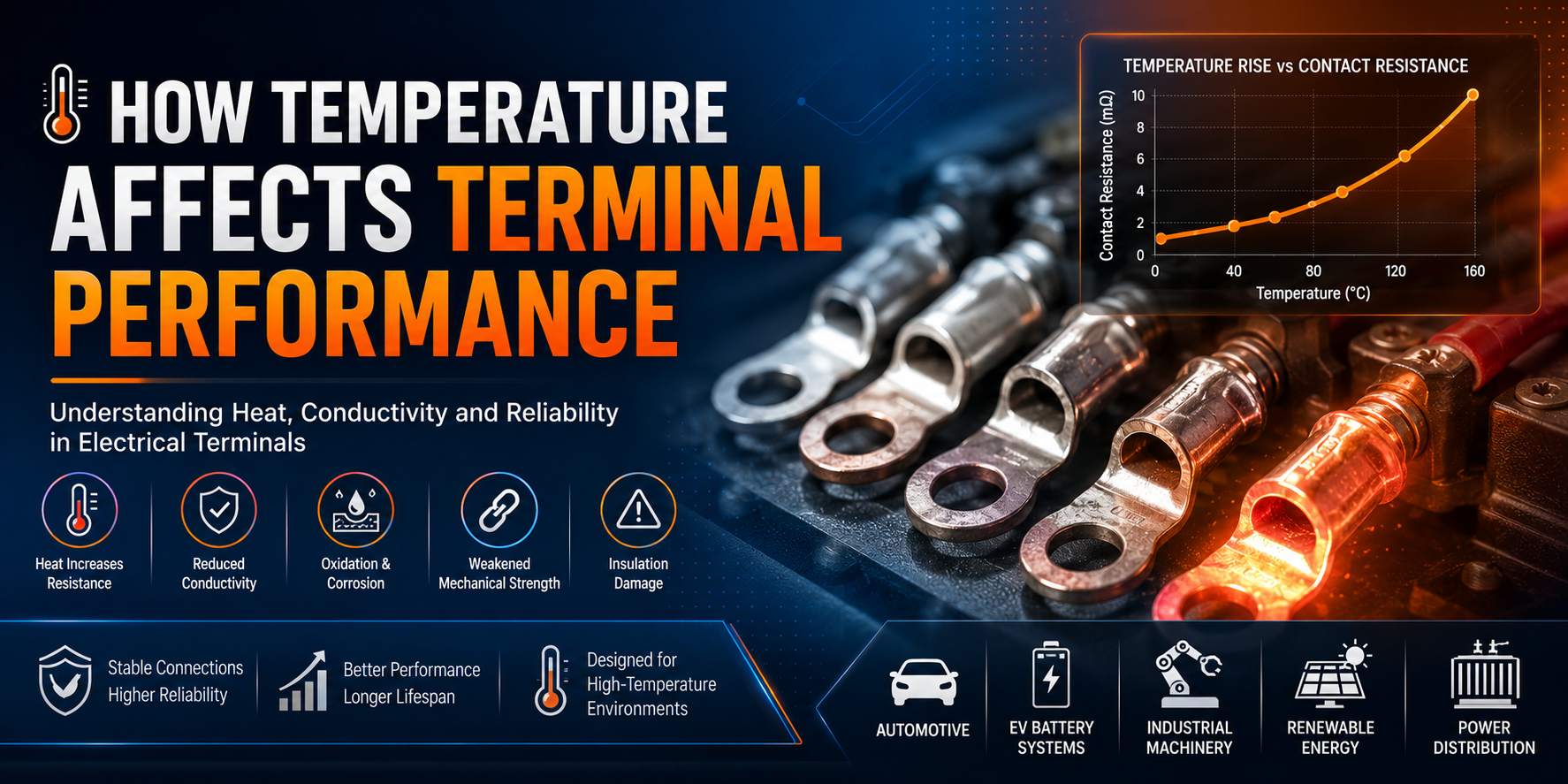
Electrical terminals are designed to provide stable mechanical and electrical connections, but their long-term performance is heavily influenced by temperature.
In modern electrical systems—including automotive electronics, EV battery systems, industrial equipment, renewable energy systems, and power distribution networks—terminals are often exposed to:
- High current loads
- Continuous operation
- Harsh environments
- Elevated ambient temperatures
Under these conditions, excessive heat can become one of the leading causes of terminal failure.
A terminal operating beyond its thermal limit may experience:
- Increased contact resistance
- Oxidation and corrosion
- Reduced conductivity
- Mechanical deformation
- Insulation damage
In severe cases, overheating can lead to system shutdown, equipment damage, or even fire hazards.
Understanding how temperature affects terminal performance is critical for engineers, OEM manufacturers, and procurement teams seeking reliable long-term electrical connections.
Introduction: Why Temperature Matters in Electrical Connections
Electrical terminals are often considered simple components, but in reality, they are one of the most critical points in any electrical system. Every current flowing through a wire must pass through a connection point, and every connection point introduces some level of resistance.
As electrical systems continue evolving toward:
- Higher currents
- Higher voltages
- More compact designs
- Continuous operation
thermal management becomes increasingly important.
Heat affects nearly every aspect of terminal performance:
- Electrical conductivity
- Contact stability
- Material durability
- Plating lifespan
- Insulation integrity
Even a small increase in resistance can produce significant heat under heavy current loads. Over time, this can accelerate wear and eventually lead to connection failure.
This is especially important in industries such as:
- Automotive
- EV battery systems
- Industrial automation
- Renewable energy
- Power distribution
where terminals must operate reliably for many years under demanding conditions.
How Electrical Terminals Generate Heat
Before understanding how temperature impacts terminals, it is important to understand how heat is generated in electrical connections.
Contact Resistance
Every electrical connection has resistance. When current passes through a terminal, electrical energy is partially converted into heat.
The relationship is described by Joule’s Law:
Heat = I²R
Where:
- I = current
- R = resistance
This means:
- Higher current produces exponentially more heat
- Higher resistance dramatically increases temperature rise
Even a slight increase in contact resistance can create major overheating problems in high-current applications.
Current Load
Current load is one of the primary factors affecting terminal temperature.
As current increases:
- More heat is generated
- Temperature rises faster
- Thermal stress increases
Modern systems such as EV charging stations, battery storage systems, and industrial power distribution networks often operate under continuous heavy current loads.
If the selected terminal cannot handle the required current:
- Heat accumulates rapidly
- Conductivity decreases
- Connection reliability deteriorates
This is why proper terminal sizing is critical.
Poor Crimping
Improper crimping is one of the most common causes of terminal overheating.
A poor crimp may create:
- Air gaps
- Uneven compression
- Unstable conductor contact
These issues increase resistance at the crimp area, creating localized “hot spots.”
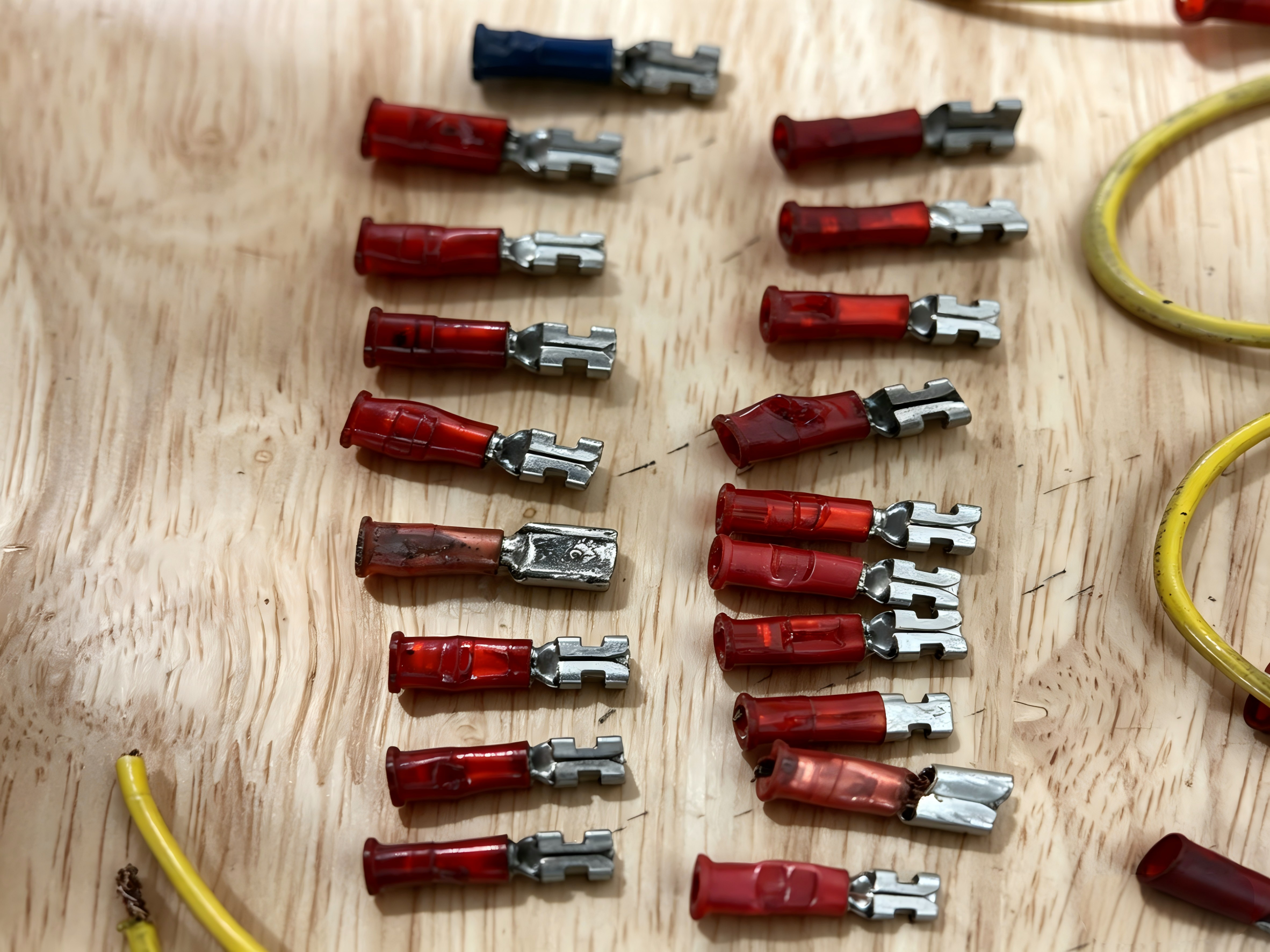
Common crimping defects include:
- Under-crimping
- Over-crimping
- Incorrect crimp height
- Using unsuitable crimping tools
Over time, these defects can lead to insulation damage, oxidation, and eventual terminal failure.
Loose Connections
Loose electrical connections are another major source of heat generation.
When contact pressure decreases:
- Resistance increases
- Heat rises
- Thermal cycling worsens the connection further
This creates a self-accelerating failure process.
In vibration-heavy environments such as vehicles or industrial machinery, loose terminals are especially dangerous.
How High Temperature Affects Terminal Performance
Excessive temperature impacts both the electrical and mechanical performance of terminals.
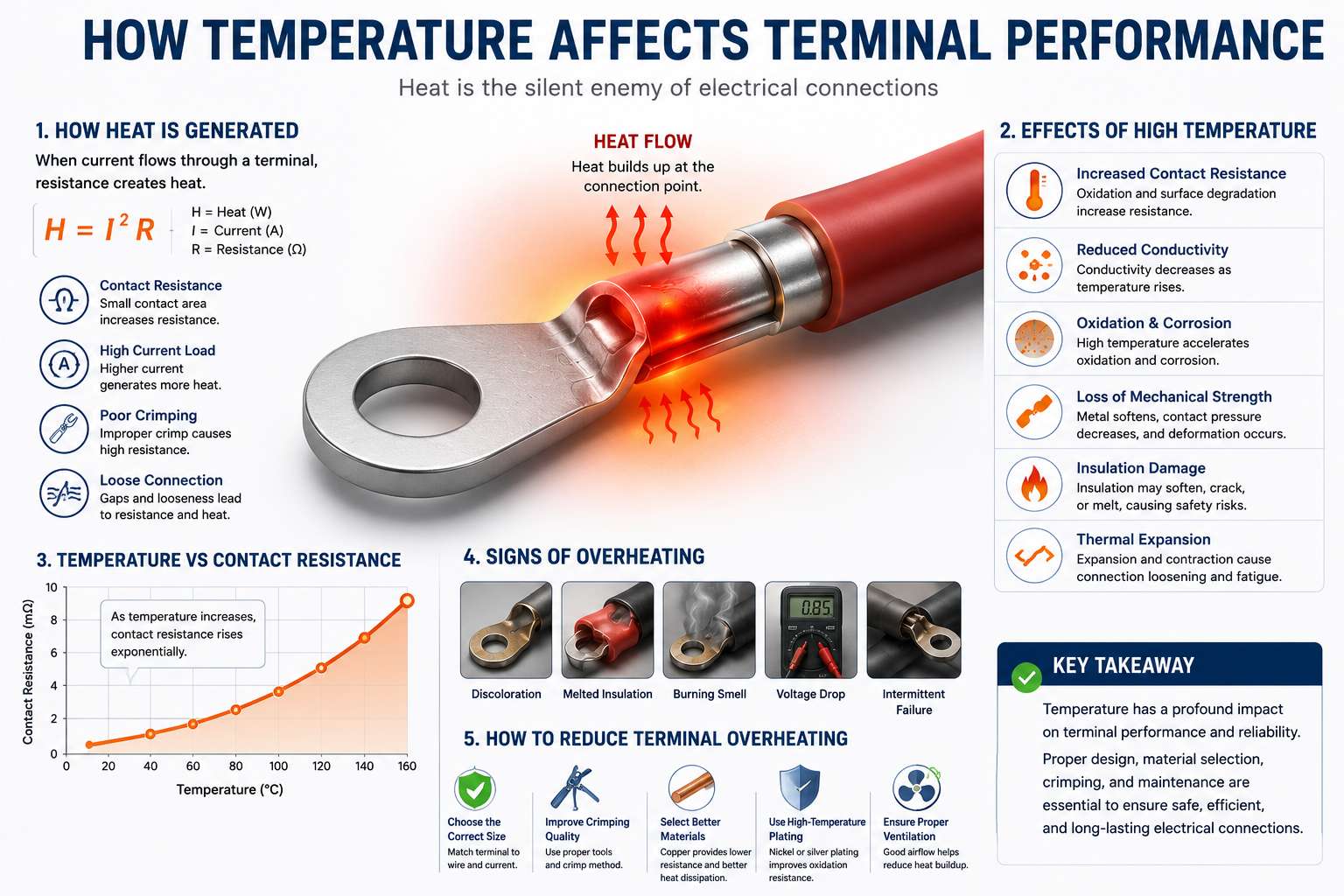
Increased Contact Resistance
As temperature rises, oxidation accelerates and contact surfaces degrade.
This creates a dangerous cycle:
- Resistance creates heat
- Heat increases oxidation
- Oxidation increases resistance
- More resistance creates more heat
Eventually, the terminal may fail completely.
Reduced Conductivity
Electrical conductivity decreases as temperature increases.
Copper, for example, offers excellent conductivity at normal temperatures, but elevated heat increases electron resistance within the material.
As conductivity decreases:
- Voltage drop increases
- Power efficiency decreases
- Heat generation worsens
This becomes especially critical in high-current systems.
Oxidation & Corrosion
Heat significantly accelerates oxidation reactions.
Bare copper terminals are particularly vulnerable because exposure to oxygen forms copper oxide layers on the surface.
Oxidation:
- Increases resistance
- Weakens conductivity
- Reduces long-term reliability
This is why plated terminals are commonly used in demanding applications.
Loss of Mechanical Strength
High temperatures can weaken terminal materials.
Potential effects include:
- Metal softening
- Reduced elasticity
- Lower contact force
- Structural deformation
In connector systems, reduced spring force can severely impact electrical contact stability.
Insulation Damage
Overheating also affects insulation materials surrounding the terminal.
Common issues include:
- PVC softening
- Nylon deformation
- Cracking
- Melting
Damaged insulation increases the risk of:
- Short circuits
- Electrical leakage
- Fire hazards
Thermal Expansion
Metals expand when heated and contract when cooled.
Repeated thermal cycling can cause:
- Connection loosening
- Crimp fatigue
- Mechanical stress buildup
This issue is common in:
- Automotive systems
- EV battery packs
- Renewable energy systems
where temperature fluctuations occur frequently.
Common Signs of Terminal Overheating
Recognizing overheating early can help prevent major system failures.
Discoloration
Overheated terminals often become:
- Brown
- Blue
- Blackened
Discoloration usually indicates prolonged excessive heat exposure.
Melted Insulation
Softened or melted insulation is a clear sign of thermal overload.
This may result from:
- Excessive current
- Poor crimping
- Loose connections
Burning Smell
A burnt odor typically indicates insulation degradation or severe overheating.
Voltage Drop
As resistance increases, voltage stability decreases.
This can cause:
- Equipment malfunction
- Reduced system efficiency
- Intermittent operation
Intermittent Connection Failure
Thermal expansion and unstable contact pressure can create inconsistent electrical connections.
Symptoms may include:
- Signal interruption
- Random shutdowns
- Flickering power delivery
Temperature Limits of Common Terminal Materials
Different materials perform differently under elevated temperatures.
Copper Terminals
Copper is the preferred material for high-current applications because of its:
- Excellent conductivity
- Low resistance
- Superior heat dissipation
Copper terminals typically generate less heat compared with lower-conductivity materials.
Brass Terminals
Brass offers:
- Higher mechanical strength
- Good durability
- Cost efficiency
However, brass has lower conductivity than copper, which can result in higher temperature rise under heavy current loads.
Phosphor Bronze
Phosphor bronze provides:
- Excellent elasticity
- Good fatigue resistance
- Stable spring properties
It is commonly used in connector terminals requiring repeated insertion and removal.
.jpg)
How Plating Affects High-Temperature Performance
Surface plating plays a major role in terminal durability and thermal performance.
Tin Plating
Tin plating is widely used because it:
- Improves corrosion resistance
- Reduces oxidation
- Maintains stable contact surfaces
Suitable for:
- Automotive wiring
- Consumer electronics
- Industrial systems
Nickel Plating
Nickel plating offers superior high-temperature performance.
Advantages include:
- Better oxidation resistance
- Higher thermal stability
- Improved durability
Nickel-plated terminals are often used in:
- Engine compartments
- Industrial machinery
- High-temperature electrical systems
Silver Plating
Silver provides:
- Extremely low contact resistance
- Outstanding conductivity
Used in:
- High-performance power systems
- Aerospace equipment
- Premium industrial applications
High-Temperature Applications for Electrical Terminals
Automotive Engine Compartments
Engine compartments expose terminals to:
- High ambient temperatures
- Oil exposure
- Constant vibration
Reliable terminals are essential for vehicle safety and stability.
EV Battery Systems
Electric vehicles generate substantial heat during:
- Charging
- Discharging
- High-power acceleration
EV terminals require:
- Excellent conductivity
- Thermal stability
- Long-term durability
Industrial Machinery
Industrial equipment often operates continuously under heavy electrical loads.
Terminals must resist:
- Heat buildup
- Mechanical stress
- Long operating cycles
Renewable Energy Systems
Solar and energy storage systems frequently experience:
- Outdoor heat exposure
- UV radiation
- Temperature cycling
Corrosion-resistant plated terminals are commonly required.
Power Distribution Equipment
Power distribution systems generate continuous thermal stress due to high current flow.
Reliable terminal connections directly impact:
- System efficiency
- Operational safety
- Equipment lifespan
How to Reduce Terminal Overheating
Preventing overheating starts with proper terminal selection and installation.
Choose the Correct Terminal Size
Undersized terminals are a major cause of overheating.
Always match:
- Wire size
- Current rating
- Operating conditions
Improve Crimping Quality
Proper crimping minimizes resistance and improves conductivity.
Best practices include:
- Using calibrated crimping tools
- Following correct crimp specifications
- Performing pull-force testing
Select Better Materials
Copper terminals generally offer:
- Lower resistance
- Better conductivity
- Superior heat dissipation
than lower-conductivity alternatives.
Use High-Temperature Plating
Nickel plating and silver plating perform better in elevated-temperature environments.
Ensure Proper Ventilation
Reducing heat accumulation improves overall system stability and lifespan.
Temperature Testing & Reliability Validation
High-quality terminals undergo strict testing procedures to validate performance under thermal stress.
Temperature Rise Testing
Measures terminal temperature increase under electrical load.
Thermal Cycling Testing
Simulates repeated heating and cooling conditions.
Salt Spray Testing
Evaluates corrosion resistance in harsh environments.
Pull-Out Force Testing
Verifies crimp retention strength and mechanical reliability.
Why High-Quality Terminals Matter
Low-quality terminals may reduce initial cost, but often result in:
- Higher failure rates
- Increased maintenance
- System downtime
- Safety risks
High-quality terminals improve:
- Reliability
- Electrical efficiency
- Thermal stability
- Long-term durability
As electrical systems continue moving toward higher power density and EV electrification, reliable terminal performance becomes increasingly important.
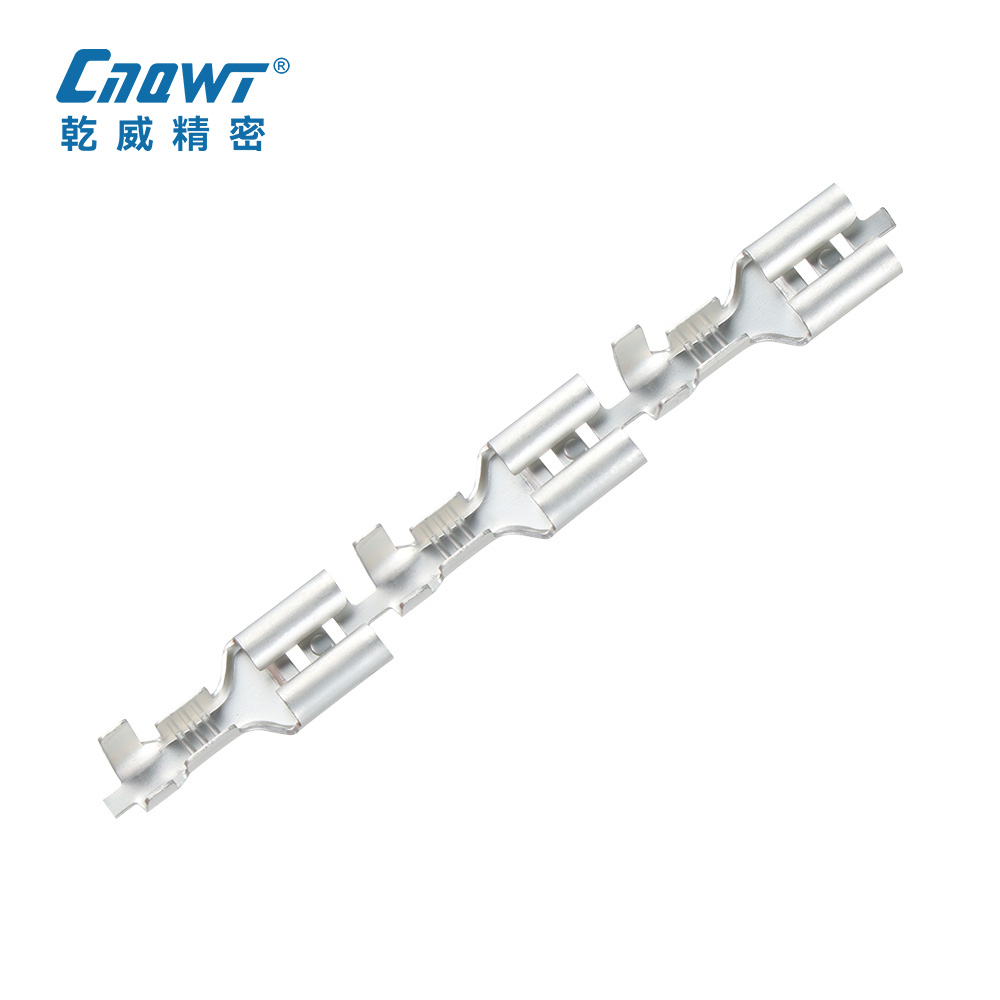
Why Choose Qianwei Precision
Qianwei Precision manufactures high-performance electrical terminals for demanding industrial and automotive applications.
Our advantages include:
- Precision stamping technology
- Stable plating quality
- Strict quality control systems
- 1800+ production molds
- OEM/ODM customization capability
Our product range includes:
- Ring terminals
- Cable lugs
- Spade terminals
- Butt connectors
- Pin terminals
We provide customized terminal solutions for:
- Automotive systems
- Industrial equipment
- Power distribution
- Renewable energy systems
- Consumer electronics
Conclusion
Temperature is one of the most critical factors affecting terminal reliability and electrical performance.
Excessive heat can lead to:
- Increased resistance
- Reduced conductivity
- Corrosion
- Mechanical degradation
- System failure
As electrical systems continue evolving toward:
- Higher currents
- EV electrification
- Continuous operation
- Compact designs
proper terminal selection becomes more important than ever.
Choosing the right material, plating, crimping method, and terminal design is essential for ensuring long-term reliability and safety.
Reliable electrical systems begin with reliable connections.
Looking for High-Reliability Electrical Terminals?
Qianwei Precision provides customized terminal solutions engineered for demanding electrical environments.
- Request free samples
- Get engineering support
- Customize your terminal solution
Contact Qianwei Precision today for professional electrical connection solutions.
FAQs
What causes electrical terminals to overheat?
Electrical terminals usually overheat due to:
- Excessive current load
- Poor crimping quality
- Loose connections
- High contact resistance
- Corrosion or oxidation
Improper terminal sizing is also a common cause of overheating in high-current applications.
How does temperature affect terminal conductivity?
As temperature increases, the electrical conductivity of metal decreases. Higher temperature increases resistance, which can lead to:
- Voltage drop
- Power loss
- Additional heat generation
This is why thermal management is critical in electrical systems.
What are the signs of terminal overheating?
Common signs include:
- Discoloration
- Melted insulation
- Burning smell
- Voltage instability
- Intermittent connection failure
These symptoms often indicate excessive resistance or poor connection quality.
Why is copper better for high-temperature applications?
Copper offers:
- Excellent electrical conductivity
- Low resistance
- Better heat dissipation
Compared with brass or aluminum, copper terminals generally generate less heat under heavy current loads.
Does plating improve terminal heat resistance?
Yes. Surface plating helps improve:
- Corrosion resistance
- Oxidation resistance
- Long-term conductivity stability
Nickel plating is especially suitable for high-temperature environments.
What is the best plating for high-temperature terminals?
Nickel plating is commonly preferred for high-temperature applications because it provides:
- Strong oxidation resistance
- High thermal stability
- Better durability under heat exposure
Silver plating is also used in premium high-performance electrical systems.
Can poor crimping cause terminal overheating?
Yes. Poor crimping creates unstable electrical contact and increases resistance, which generates heat.
Common crimping issues include:
- Under-crimping
- Over-crimping
- Incorrect tooling
- Uneven compression
Proper crimping is essential for reliable terminal performance.
How can I reduce terminal overheating?
You can reduce overheating by:
- Choosing the correct terminal size
- Using high-conductivity materials
- Improving crimping quality
- Using suitable plating
- Ensuring proper ventilation
Regular inspection and maintenance are also important.
Which industries require high-temperature resistant terminals?
High-temperature resistant terminals are commonly used in:
- Automotive systems
- EV battery systems
- Industrial machinery
- Renewable energy systems
- Power distribution equipment
These environments often involve continuous current load and elevated operating temperatures.
Why are high-quality terminals important in power systems?
High-quality terminals help improve:
- Electrical reliability
- System safety
- Conductivity stability
- Equipment lifespan
Low-quality terminals may increase the risk of overheating, downtime, and electrical failure.
How do thermal cycles affect electrical terminals?
Repeated heating and cooling cause thermal expansion and contraction, which can lead to:
- Loose connections
- Crimp fatigue
- Increased resistance
- Reduced mechanical stability
This is especially common in automotive and outdoor electrical systems.
What testing methods are used for high-temperature terminals?
Common testing methods include:
- Temperature rise testing
- Thermal cycling testing
- Pull-out force testing
- Salt spray testing
- Contact resistance testing
These tests help verify long-term terminal reliability under thermal stress.

