

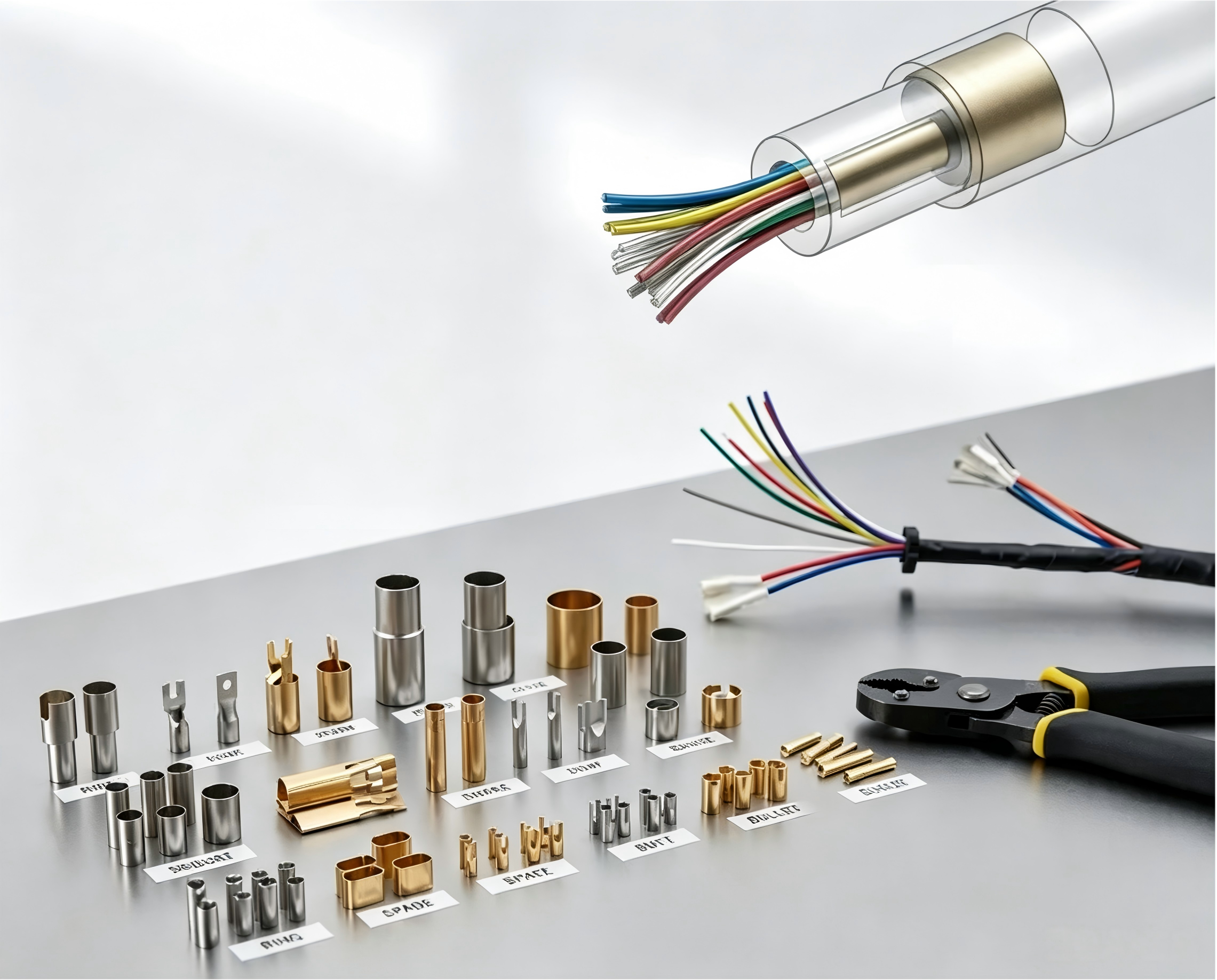
Vehicles rely on thousands of electrical connections to power critical systems, from engine control units and lighting assemblies to advanced driver-assistance systems (ADAS) and electric vehicle battery packs. At the heart of these connections are automotive terminals—small yet essential components that ensure reliable electrical and mechanical performance throughout a vehicle’s lifecycle.
Selecting the wrong terminal can lead to voltage drops, overheating, corrosion, intermittent electrical failures, increased warranty claims, and even safety risks. Whether you are designing a passenger vehicle wiring harness, developing an EV battery system, or sourcing components for commercial vehicles, choosing the right terminal is a critical engineering decision.
In this guide, we will explore how to select terminals for automotive wiring harnesses, the key factors to consider, common mistakes to avoid, and how custom terminal solutions can improve performance and reduce costs.
What Are Automotive Wiring Harness Terminals?
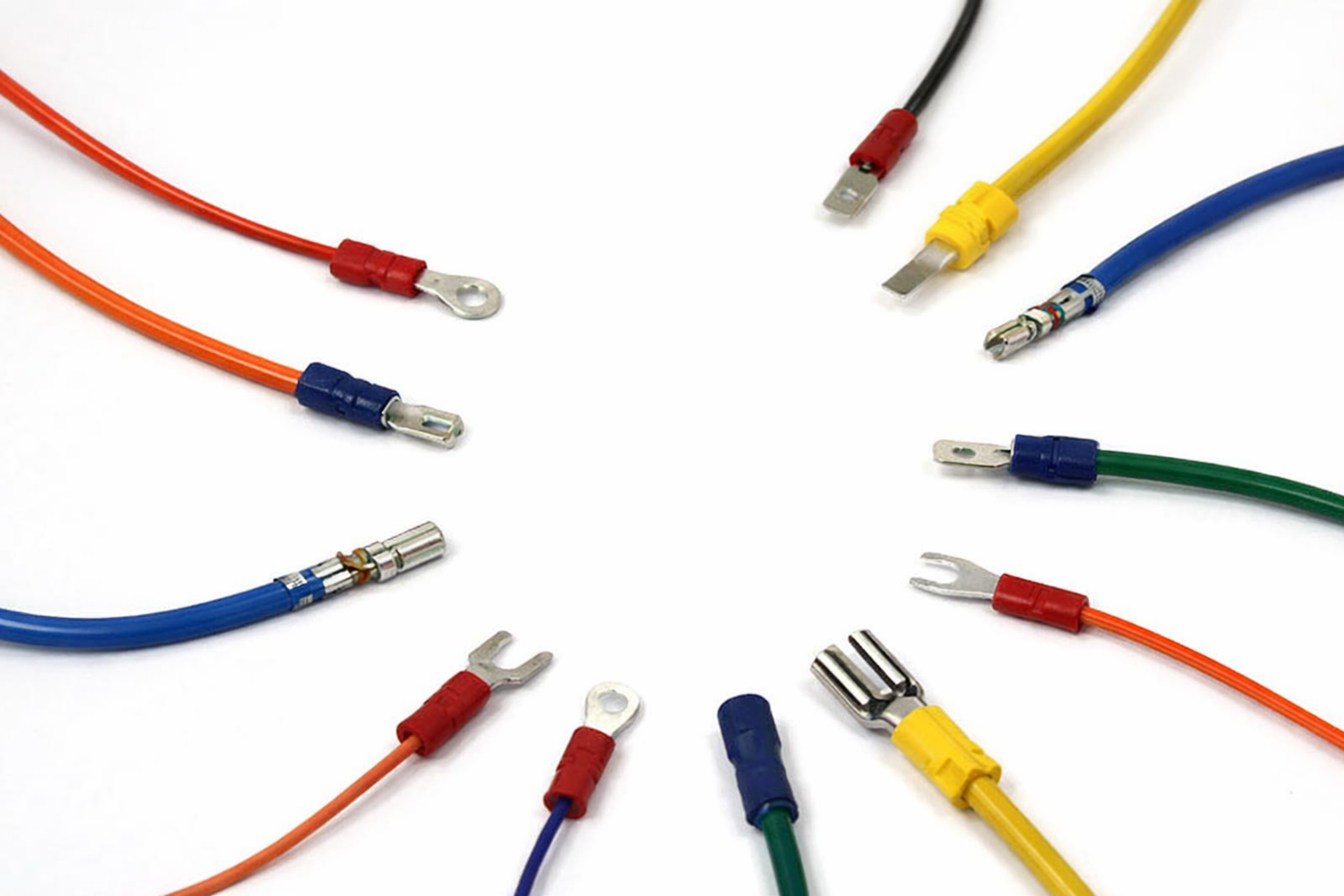
Automotive wiring harness terminals are conductive metal components used to establish secure electrical and mechanical connections between wires, connectors, sensors, switches, control units, and power distribution systems within a vehicle.
A typical automotive electrical connection consists of:
Wire
Terminal
Connector housing
Mating component
The terminal serves as the actual electrical contact point, transferring current while maintaining a stable connection under challenging operating conditions such as vibration, temperature fluctuations, moisture exposure, and mechanical stress.
Without properly selected terminals, even the most advanced wiring harness design can experience reliability issues.
Why Proper Terminal Selection Is Critical
Automotive environments are among the most demanding electrical applications. Terminals must withstand years of continuous operation while maintaining consistent performance.
Electrical Performance
The primary function of a terminal is to conduct electricity efficiently.
Poor terminal selection can result in:
Excessive contact resistance
Voltage drops
Power loss
Heat generation
Premature component failure
A properly designed terminal minimizes resistance and ensures stable current flow throughout the electrical system.
Mechanical Reliability
Vehicles experience constant vibration and movement.
Terminals must withstand:
Engine vibration
Road shock
Repeated mating cycles
Wire movement
Insufficient mechanical retention may cause loose connections and intermittent electrical faults.
Environmental Resistance
Automotive terminals are exposed to:
Moisture
Dust
Road salt
Chemicals
Fuel vapors
Engine fluids
Proper materials and plating help prevent corrosion and maintain long-term performance.
Safety Requirements
Electrical failures can impact:
Airbag systems
Braking systems
Lighting systems
Battery management systems
Reliable terminals contribute directly to vehicle safety and regulatory compliance.
Cost Reduction
High-quality terminal selection helps manufacturers:
Reduce warranty claims
Minimize field failures
Improve vehicle reliability
Lower maintenance costs
Common Types of Automotive Wiring Harness Terminals
Different automotive applications require different terminal designs.
Ring Terminals
Ring terminals feature a circular opening that allows secure attachment using a bolt or screw.
Common Applications
Battery connections
Grounding systems
Power distribution blocks
Advantages
Strong mechanical retention
Excellent vibration resistance
Reliable electrical contact
Spade Terminals
Spade terminals allow quick installation and removal without completely removing the fastener.
Common Applications
Serviceable electrical connections
Control systems
Auxiliary vehicle equipment
Advantages
Easy maintenance
Fast assembly
Blade Terminals
Blade terminals are widely used in automotive connectors and fuse systems.
Common Applications
Fuse boxes
Relays
Switches
Advantages
Compact design
High production efficiency
Pin Terminals
Pin terminals are commonly used in connector housings where precise mating is required.
Common Applications
ECU connections
Sensors
Communication systems
Advantages
Reliable signal transmission
High contact precision
Receptacle Terminals
Receptacle terminals are designed to mate with pin terminals.
Common Applications
Multi-pin connectors
Control modules
Instrument panels
Advantages
Secure connection
Consistent contact pressure
Battery Terminals
Battery terminals are designed to handle high current loads.
Common Applications
Starter systems
Main power distribution
EV battery systems
Advantages
High current capacity
Durable construction
High-Voltage EV Terminals
As electric vehicles continue to grow, high-voltage terminals have become increasingly important.
Common Applications
Battery packs
Charging systems
Power electronics
Inverters
Advantages
Enhanced insulation
High current capability
Improved thermal performance
Key Factors to Consider When Selecting Automotive Terminals
Selecting the right terminal requires evaluating multiple technical parameters.
Current Carrying Capacity
One of the most important considerations is the amount of current the terminal must handle.
Factors affecting current capacity include:
Terminal material
Cross-sectional area
Contact design
Ambient temperature
Using an undersized terminal can result in:
Overheating
Increased resistance
Electrical failure
Engineers should always select terminals with an appropriate safety margin above expected operating current.
Wire Gauge Compatibility
The terminal must match the conductor size.
Common automotive wire sizes include:
22 AWG
20 AWG
18 AWG
16 AWG
14 AWG
12 AWG
10 AWG
Improper matching can lead to:
Poor crimp quality
Reduced pull-out strength
Increased resistance
A properly matched wire-terminal combination ensures optimal performance.
Terminal Material Selection
Material selection significantly affects electrical conductivity, mechanical strength, and corrosion resistance.
Copper
Advantages
Excellent conductivity
Low resistance
Superior current carrying capability
Applications
High-current circuits
EV battery systems
Power distribution
Brass
Advantages
Good conductivity
Excellent formability
Cost-effective
Applications
General automotive terminals
Connector systems
Phosphor Bronze
Advantages
Excellent spring properties
Good fatigue resistance
Reliable contact force
Applications
Connector contacts
Signal terminals
Comparative Material Table
| Material | Conductivity | Mechanical Strength | Typical Application |
| Copper | Excellent | Medium | High-current circuits |
| Brass | Good | Good | General-purpose terminals |
| Phosphor Bronze | Good | Excellent | Connector contacts |
| Beryllium Copper | Excellent | Excellent | Specialized applications |
Terminal Plating Options
Surface plating plays a major role in terminal durability and corrosion resistance.
Tin Plating
Tin plating is the most widely used option in automotive wiring harnesses.
Benefits
Cost-effective
Good solderability
Corrosion resistance
Applications
Standard automotive terminals
Nickel Plating
Nickel plating performs well in high-temperature environments.
Benefits
Excellent wear resistance
Enhanced heat resistance
Applications
Engine compartment terminals
Silver Plating
Silver provides outstanding electrical conductivity.
Benefits
Low contact resistance
High current performance
Applications
Power systems
Specialized electrical connections
Gold Plating
Gold plating offers superior corrosion resistance and signal integrity.
Benefits
Exceptional reliability
Stable low-current performance
Applications
Sensors
Electronic control modules
Temperature Resistance
Automotive environments often experience extreme temperatures.
Examples include:
| Location | Temperature Range |
| Passenger Cabin | -40°C to 85°C |
| Engine Bay | -40°C to 150°C |
| EV Battery Systems | -40°C to 125°C |
The terminal material and plating must withstand the expected operating environment.
Corrosion Resistance
Corrosion remains one of the leading causes of electrical failures.
Common corrosion sources include:
Humidity
Salt spray
Road chemicals
Industrial pollution
Selecting corrosion-resistant materials and plating significantly improves service life.
Vibration Resistance
Vehicles constantly experience:
Road vibration
Engine vibration
Mechanical shock
Terminal designs should provide:
Strong crimp retention
Stable contact force
Secure connector engagement
This is particularly important in commercial vehicles, agricultural equipment, and off-road machinery.
Terminal Selection Guide by Application
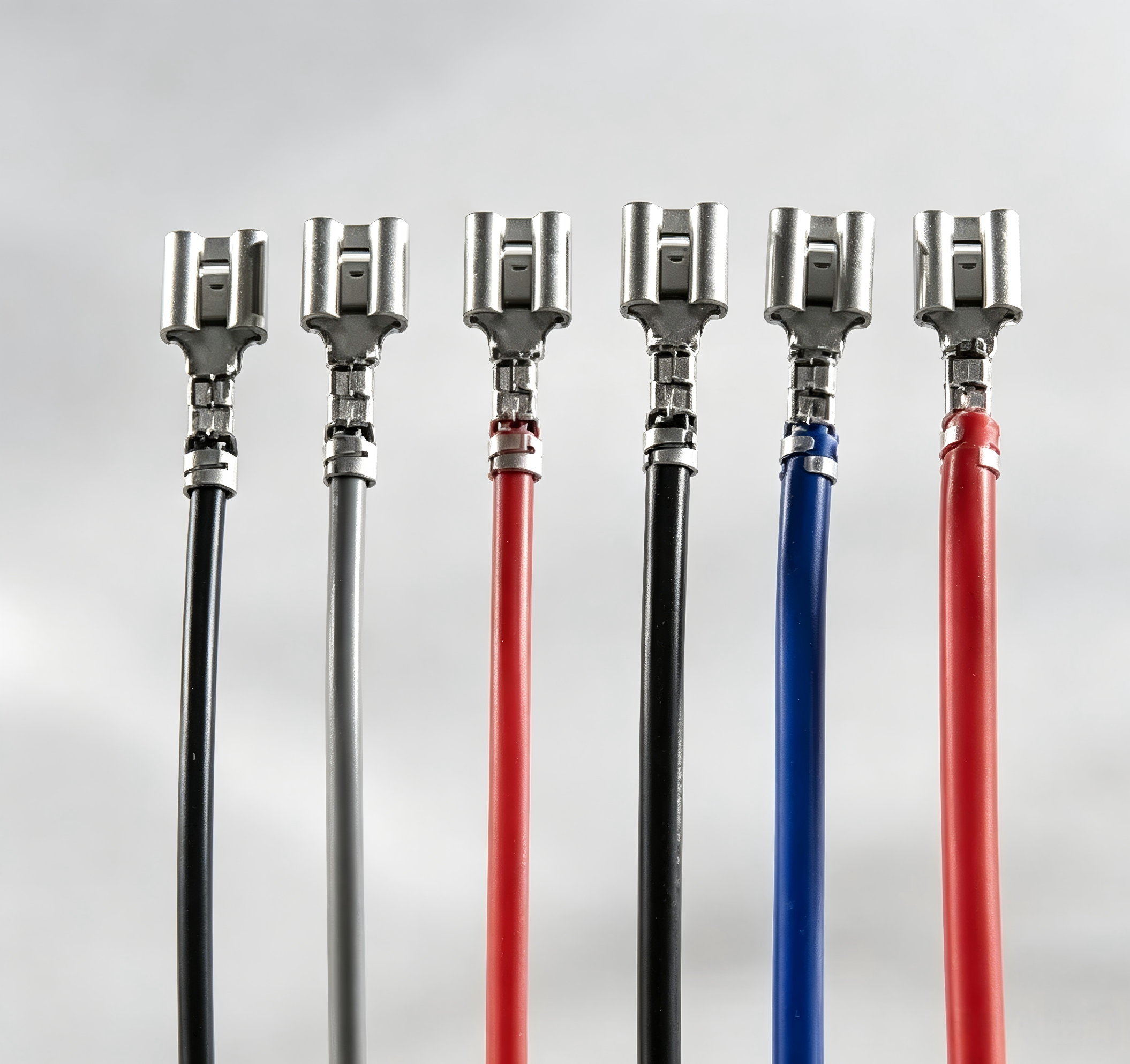
Different automotive applications have different requirements.
Passenger Vehicles
Recommended priorities:
Cost efficiency
Corrosion resistance
High-volume manufacturability
Common materials:
Brass
Tin-plated copper alloys
Commercial Trucks
Recommended priorities:
Vibration resistance
High durability
High current capacity
Common materials:
Copper alloys
Heavy-duty plated terminals
Electric Vehicles
Recommended priorities:
High voltage capability
Thermal management
High conductivity
Common materials:
Copper
Silver-plated copper
Agricultural Machinery
Recommended priorities:
Moisture resistance
Dust protection
Corrosion resistance
Common materials:
Tin-plated brass
Sealed terminal systems
Construction Equipment
Recommended priorities:
Shock resistance
Long service life
High current performance
Common materials:
Heavy-duty copper alloy terminals
Automotive Terminal Standards and Certifications
Compliance with industry standards is essential.
USCAR Standards
USCAR specifications are widely used by North American automotive manufacturers.
These standards define requirements for:
Electrical performance
Mechanical durability
Environmental testing
SAE Standards
SAE standards cover:
Automotive electrical systems
Terminal performance
Vehicle wiring practices
ISO Standards
ISO standards help ensure:
Product consistency
Quality management
Global compatibility
IATF 16949
IATF 16949 is the globally recognized quality management standard for the automotive industry.
Manufacturers operating under this system demonstrate strong quality control and process management.
RoHS and REACH Compliance
Many automotive manufacturers require compliance with:
RoHS
REACH
These regulations help ensure environmental and material safety requirements are met.
Common Mistakes When Selecting Automotive Terminals
Choosing Based Only on Price
The lowest-cost terminal may not provide the best long-term value.
Failures often result in significantly higher costs than the initial savings.
Ignoring Environmental Conditions
Terminals designed for indoor applications may fail quickly when exposed to:
Moisture
Salt spray
High temperatures
Using Incorrect Wire Sizes
Mismatch between wire and terminal dimensions can lead to:
Weak crimps
Increased resistance
Connection failures
Overlooking Plating Requirements
Selecting the wrong plating can accelerate corrosion and reduce terminal lifespan.
Underestimating Current Loads
Future system upgrades and peak operating conditions should always be considered.
How Custom Automotive Terminals Improve Performance
Standard terminals do not always meet the requirements of modern automotive applications.
Custom terminal solutions can provide:
Optimized Electrical Performance
Custom geometries improve conductivity and reduce resistance.
Improved Assembly Efficiency
Terminals can be designed for automated production lines, reducing assembly costs.
Enhanced Reliability
Custom contact designs improve retention force and vibration resistance.
Material Optimization
Manufacturers can select materials based on specific performance requirements.
Reduced Total System Cost
Better terminal design often reduces maintenance and warranty expenses.
Why Choose a Professional Automotive Terminal Manufacturer
Selecting the right manufacturing partner is just as important as selecting the right terminal.
An experienced terminal manufacturer should offer:
Precision Metal Stamping
High-accuracy progressive die stamping ensures consistent quality.
Custom Terminal Design
Engineering support helps optimize performance and manufacturability.
Material Expertise
Professional manufacturers can recommend the best material and plating combinations.
Rapid Prototyping
Prototype development accelerates product validation.
High-Volume Production
Scalable manufacturing ensures stable supply for production programs.
Comprehensive Quality Control
Strict inspection processes help maintain consistent product performance.
Global Export Experience
Reliable logistics and technical support simplify international sourcing.
For automotive OEMs, wiring harness manufacturers, EV companies, and Tier 1 suppliers, partnering with a capable terminal manufacturer can significantly improve product quality and supply chain reliability.
Conclusion
Selecting terminals for automotive wiring harnesses involves much more than simply matching a terminal to a wire. Engineers and procurement teams must carefully evaluate current requirements, wire size compatibility, material properties, plating options, environmental conditions, vibration resistance, and industry standards.
By choosing the right terminal design and working with an experienced terminal manufacturer, automotive companies can improve electrical performance, enhance reliability, reduce warranty costs, and ensure long-term vehicle safety.
Whether you are developing passenger vehicles, commercial trucks, electric vehicles, agricultural machinery, or industrial equipment, investing time in proper terminal selection is one of the most effective ways to build a reliable and high-performing wiring harness system.
FAQs
1.How do I choose the right terminal for an automotive wiring harness?
Consider current requirements, wire gauge, environmental conditions, vibration exposure, material selection, and plating options.
2.What material is best for automotive terminals?
Copper offers the highest conductivity, while brass provides an excellent balance of performance and cost. Phosphor bronze is often used for connector contacts requiring spring properties.
3.What plating is most commonly used for automotive terminals?
Tin plating is the most widely used due to its cost-effectiveness and corrosion resistance.
4.How much current can an automotive terminal carry?
Current capacity depends on terminal design, material, wire size, and operating temperature. Manufacturers should provide detailed specifications.
5.Are brass terminals suitable for automotive applications?
Yes. Brass terminals are commonly used in automotive wiring harnesses because they offer good conductivity, strength, and affordability.
6.What standards apply to automotive wiring harness terminals?
Common standards include USCAR, SAE, ISO, IATF 16949, RoHS, and REACH.
7.What is the difference between open-barrel and closed-barrel terminals?
Open-barrel terminals are typically used in automated crimping processes, while closed-barrel terminals are often used for repair and maintenance applications.
8.Can custom terminals be manufactured for EV battery systems?
Yes. Custom high-voltage and high-current terminals are widely used in EV battery packs, charging systems, and power distribution assemblies.
9.How can terminal corrosion be prevented?
Proper material selection, suitable plating, sealed connector systems, and environmental protection measures help prevent corrosion.
10.What factors affect terminal reliability?
Key factors include material quality, terminal design, crimp quality, plating, environmental conditions, and operating current.

