

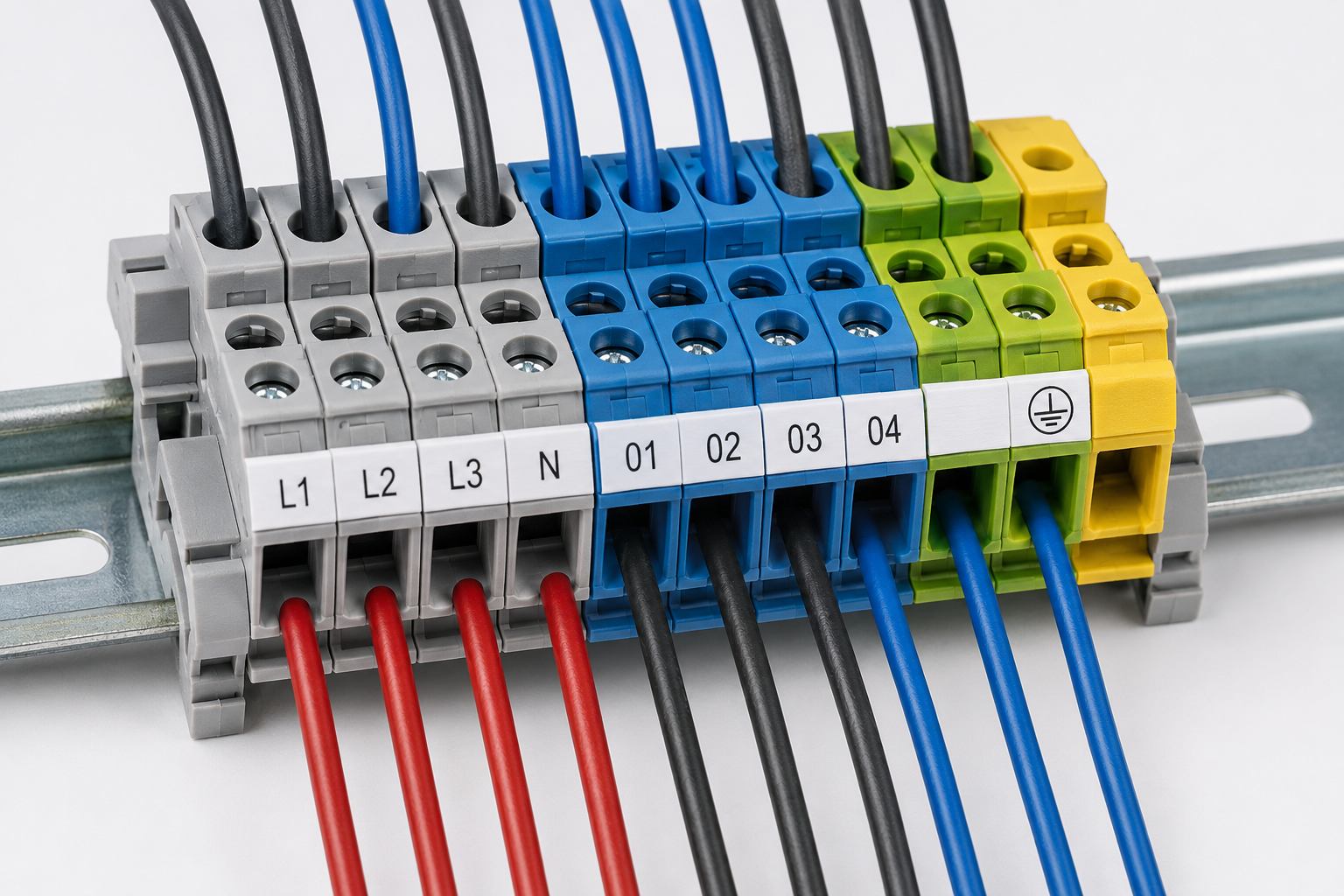
Custom terminals play a critical role in automotive wiring harnesses, industrial equipment, medical devices, consumer electronics, renewable energy systems, and many other applications. As industries continue moving toward miniaturization, automation, and higher reliability standards, standard terminals are not always enough.
Many buyers eventually discover that existing products cannot fully meet their electrical, mechanical, or environmental requirements. At that point, custom terminal manufacturing becomes the preferred solution.
However, OEM terminal projects are very different from purchasing standard catalog products.
A successful custom terminal project depends heavily on the questions asked before development begins.
Many project failures are not caused by manufacturing issues but by incomplete communication during the early stage. Missing technical information can lead to:
- Wrong specifications
- Longer lead times
- Unexpected tooling costs
- Reliability failures
- Production delays
- High redesign expenses
Before placing an order, buyers should fully evaluate product requirements, manufacturing capabilities, tooling, testing, certifications, and supplier support.
This guide explains the key questions every buyer should ask before ordering custom terminals.
Why Asking the Right Questions Matters
Custom terminal development involves engineering, tooling, production, testing, and quality validation.
Unlike standard products, OEM terminals require collaboration between customer and manufacturer.
The earlier requirements are clarified, the smoother the project becomes.
Proper communication helps:
- Reduce development risks
- Shorten lead times
- Avoid tooling modifications
- Improve production efficiency
- Increase long-term reliability
A few additional discussions at the beginning may save months of redesign later.
What Application Will the Terminal Be Used For?
The first and most important question is:
Where will the terminal be used?
Application determines nearly everything:
- Material selection
- Surface plating
- Current rating
- Testing standards
- Environmental protection
- Production process
Different industries have completely different requirements.
Automotive Applications
Automotive terminals require extremely high reliability.
Vehicle systems operate under:
- Continuous vibration
- Temperature cycling
- Humidity exposure
- Long service life requirements
Automotive customers often require:
- High pull-out strength
- Tin plating
- Salt spray resistance
- Vibration validation
- IATF 16949 quality systems
Typical products include:
- Ring terminals
- Battery terminals
- Harness terminals
- Connector terminals
.jpg)
Medical Equipment Applications
Medical projects emphasize precision and traceability.
Requirements may include:
- Tight tolerances
- Stable conductivity
- Clean manufacturing processes
- Full quality records
Medical devices often require long-term consistency and documentation support.
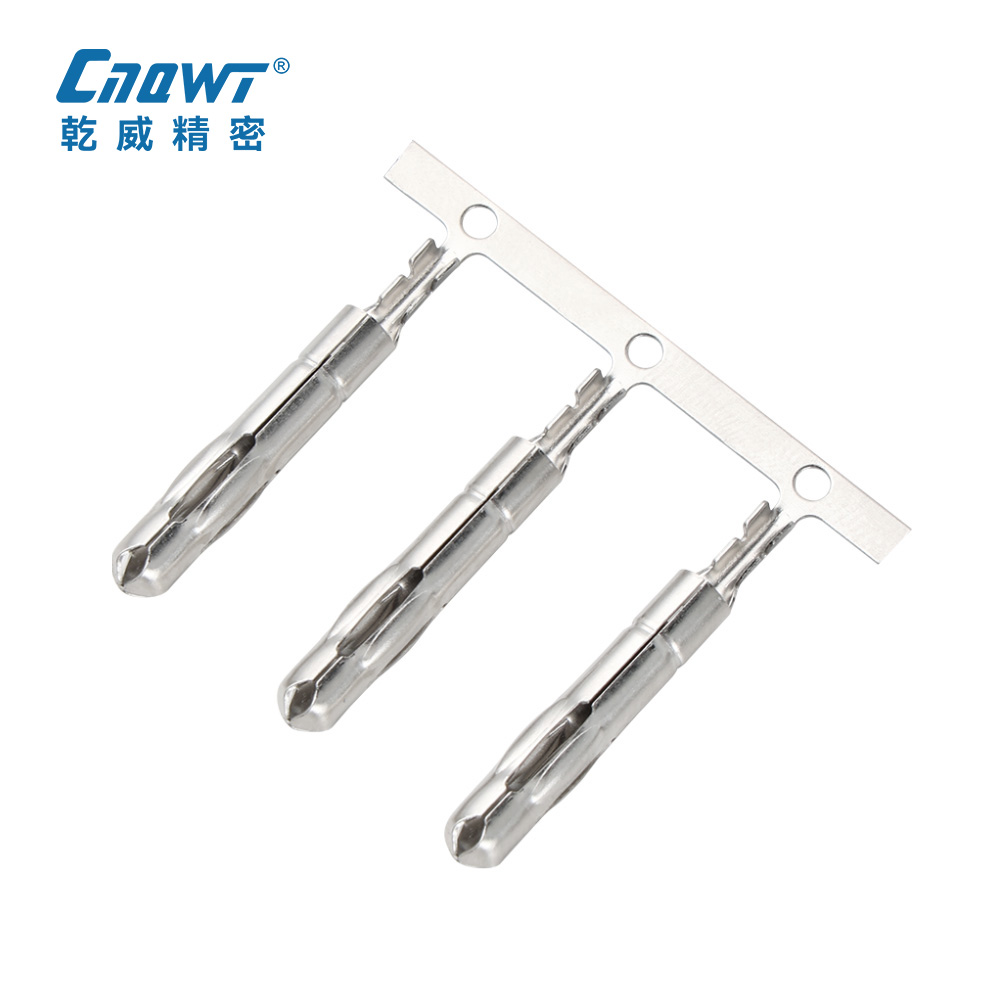
Consumer Electronics Applications
Consumer products prioritize:
- Miniaturization
- Cost optimization
- Mass production efficiency
Typical examples include:
- PCB terminals
- Pin terminals
- Connector contacts
Renewable Energy Systems
Solar and energy storage systems usually involve:
- Outdoor environments
- High current loads
- Corrosion exposure
These applications may require:
- Waterproof designs
- High-current capability
- Corrosion-resistant plating
What Electrical Requirements Must the Terminal Meet?
Electrical performance directly determines terminal reliability.
Before ordering, clarify:
Current Rating
Current capacity affects:
- Temperature rise
- Conductivity
- Safety
Undersized terminals may cause:
- Overheating
- Voltage drop
- Insulation damage
- Failure risks
Always define expected operating current.
Voltage Requirements
Voltage affects:
- Insulation distance
- Material selection
- Design structure
Higher voltage systems usually require additional design considerations.
Conductivity Requirements
Different projects require different conductivity levels.
Questions to ask:
- Maximum allowable resistance?
- Signal transmission or power delivery?
- Continuous or intermittent current?
Operating Temperature
Temperature range significantly affects design.
Examples:
Consumer electronics:
0°C to +70°C
Automotive:
–40°C to +125°C
Industrial equipment:
–40°C to +150°C
Temperature requirements influence:
- Materials
- Plating
- Insulation systems
What Material Should Be Used?
Material selection is one of the most important decisions.
Different materials provide different electrical and mechanical performance.
Copper
Copper offers:
- Excellent conductivity
- Low resistance
- Good current capability
Commonly used for:
- Power terminals
- Automotive systems
- High-current applications
Brass
Brass provides:
- Better strength
- Good machinability
- Moderate conductivity
Widely used in connector components.
Phosphor Bronze
Advantages:
- High elasticity
- Fatigue resistance
- Stable contact force
Often used in spring contacts.
Stainless Steel
Benefits:
- Excellent corrosion resistance
- High strength
Usually selected for mechanical components.
Material selection should consider:
- Conductivity
- Mechanical strength
- Corrosion resistance
- Cost
- Application environment
What Surface Plating Is Required?
Surface treatment directly affects terminal life.
Proper plating improves:
- Conductivity
- Corrosion resistance
- Solderability
- Wear resistance
Tin Plating
Most common solution.
Advantages:
- Good conductivity
- Lower cost
- Excellent solderability
Widely used in automotive terminals.
Nickel Plating
Benefits:
- Better wear resistance
- Improved heat resistance
Suitable for harsh environments.
Silver Plating
Silver offers very high conductivity.
Used in:
- High-current applications
- Power systems
Gold Plating
Advantages:
- Excellent conductivity
- Strong oxidation resistance
Often selected for signal applications.
Questions buyers should ask:
What environment will the product face?
Is corrosion resistance required?
What is the expected service life?
Are Drawings Available?
OEM projects become faster when technical documents are available.
Useful information includes:
- 2D drawings
- 3D models
- Samples
- Product specifications
Common formats:
STEP
IGES
DWG
What If Drawings Are Not Available?
Many customers only provide samples.
Experienced manufacturers can perform:
- Reverse engineering
- Measurement analysis
- Design optimization
This is especially common in replacement projects.
Does the Project Require New Tooling?
Custom terminals often require tooling development.
Questions include:
Do existing molds already exist?
Can current tooling be modified?
Is a new progressive die needed?
Stamping Tool Development
Progressive stamping dies are commonly used.
Tooling quality affects:
- Dimensional consistency
- Production efficiency
- Product stability
Injection Mold Development
Projects involving insulation parts may require injection molds.
Tool Ownership
Very important question:
Who owns the tooling?
Clarify:
- Customer ownership?
- Manufacturer ownership?
- Shared investment?
This avoids future disputes.
What Production Volume Is Expected?
Production quantity affects:
- MOQ
- Tooling strategy
- Cost structure
Projects usually fall into three stages:
Prototype
Trial production
Mass production
Prototype Stage
Purpose:
Validation and testing.
Quantities are usually small.
Trial Orders
Used for process verification.
Mass Production
Large volumes justify tooling investment.
Higher production generally reduces unit cost.
What Certifications Are Required?
Certification requirements vary by industry.
Common certifications include:
UL
RoHS
REACH
ISO 9001
IATF 16949
ISO 13485
Certification capability often reflects supplier maturity.
What Testing Requirements Are Needed?
Reliability testing ensures long-term performance.
Important tests include:
Dimensional Inspection
Verifies tolerances.
Pull-Out Force Testing
Measures mechanical retention strength.
Salt Spray Testing
Evaluates corrosion resistance.
Common standards:
24 h
48 h
96 h
Higher requirements may exceed 500 hours.
Vibration Testing
Important for automotive applications.
Simulates real operating conditions.
Thermal Cycling Testing
Repeated temperature changes verify long-term durability.
Conductivity Testing
Measures electrical resistance.
What Environment Will the Terminal Operate In?
Environmental conditions strongly influence design.
Questions include:
Will it be outdoors?
High humidity?
Chemical exposure?
High vibration?
Extreme temperature?
Outdoor Conditions
Outdoor systems require:
- Waterproofing
- Corrosion resistance
- UV protection
Moisture Exposure
Moisture accelerates oxidation.
Protective plating becomes critical.
Chemical Environments
Industrial applications may require special materials.
High-Vibration Systems
Automotive and machinery applications require stronger retention.
What Packaging Requirements Are Needed?
Packaging affects logistics and automation.
Common options:
Reel Packaging
Suitable for automated production.
Tray Packaging
Protects precision parts.
Bulk Packaging
Lower cost.
Common for industrial terminals.
Customized Labels
Customers may require:
- Part numbers
- QR codes
- Logos
- Barcodes
What Lead Time Is Required?
Lead time affects project planning.
Typical OEM process:
Requirement Analysis
↓
Engineering Design
↓
Tool Development
↓
Samples
↓
Validation
↓
Mass Production
Typical schedule:
Design:
2–4 weeks
Tooling:
4–10 weeks
Validation:
2–6 weeks
Mass production:
Depends on volume.
What Quality System Does the Supplier Have?
Reliable suppliers should maintain quality control throughout production.
Important systems include:
Incoming inspection
Process inspection
Final inspection
Traceability management
Does the Supplier Support Engineering Collaboration?
Good suppliers do more than manufacture.
They help optimize projects.
Support may include:
DFM analysis
Cost reduction
Material optimization
Reliability improvement
Process optimization
Engineering collaboration often reduces overall cost.
What Happens After Delivery?
Many buyers ignore post-delivery support.
Questions to ask:
Technical support available?
Problem response speed?
Future project support?
Continuous improvement plans?
Long-term support creates stronger partnerships.
Common Mistakes When Ordering Custom Terminals
Avoid these mistakes:
Undefined specifications
Ignoring tooling costs
Wrong material selection
Missing reliability tests
Unclear ownership agreements
Unrealistic lead time expectations
OEM Ordering Checklist
Technical:
✓ Application
✓ Current
✓ Voltage
✓ Material
✓ Plating
Engineering:
✓ Drawings
✓ Samples
✓ Specifications
Commercial:
✓ MOQ
✓ Tool ownership
✓ Lead time
Quality:
✓ Certifications
✓ Testing
✓ Packaging
Why Choose Qianwei Precision?
Qianwei Precision provides OEM and ODM terminal manufacturing solutions for automotive, industrial, medical, and connector applications.
Our capabilities include:
- Precision stamping
- Injection molding
- Electroplating
- Mold development
- Reliability testing
- Engineering support
With over 1800+ mass-production stamping and injection molds, Qianwei offers efficient customization and rapid tooling support.
Conclusion
Ordering custom terminals is not simply purchasing a product.
It is an engineering collaboration process.
Asking the right questions before development helps reduce risks, shorten lead times, and improve product reliability.
The more complete the information provided at the beginning, the smoother the project becomes.
Successful OEM terminal projects start with clear communication.
For customized terminal solutions, Qianwei Precision provides engineering support from design to mass production.
FAQs
What information should I provide before ordering custom terminals?
The basic information usually includes:
- Application scenario
- Current rating
- Voltage requirements
- Material preference
- Surface plating
- Operating environment
- Drawings or samples
- Expected quantity
The more detailed the information, the faster the development process.
Do I need technical drawings for custom terminal manufacturing?
Drawings are recommended but not always required.
Customers can provide:
- 2D drawings
- 3D files
- Physical samples
- Technical specifications
If drawings are unavailable, some manufacturers can support reverse engineering.
Can custom terminals be developed from samples only?
Yes.
Many OEM projects start with customer samples.
Manufacturers can perform:
- Measurement analysis
- Structure evaluation
- Reverse engineering
- Design optimization
Sample-based development is common for replacement projects.
What materials are commonly used for custom terminals?
Common materials include:
- Copper – high conductivity
- Brass – balanced strength and cost
- Phosphor bronze – good elasticity
- Stainless steel – corrosion resistance
Material selection depends on electrical and environmental requirements.
Does custom terminal production require new tooling?
Not always.
If existing molds are available, tooling investment may be avoided.
However, fully customized terminals often require:
- Progressive stamping dies
- Injection molds
- Tool modifications
Tooling requirements depend on product complexity.
Who owns the tooling in OEM terminal projects?
Tool ownership should be confirmed before production.
Possible arrangements include:
- Customer-owned tooling
- Manufacturer-owned tooling
- Shared investment models
This should be clearly defined in project agreements.
What is the MOQ for custom terminals?
MOQ varies depending on:
- Product complexity
- Tooling requirements
- Manufacturing process
- Material type
Prototype orders usually have lower quantities, while mass production requires higher volumes.
What tests are recommended for custom terminals?
Common reliability tests include:
- Dimensional inspection
- Pull-out force testing
- Salt spray testing
- Vibration testing
- Thermal cycling testing
- Conductivity testing
Testing requirements depend on the application.
How long does custom terminal development take?
Typical OEM development timeline:
Design review: 2–4 weeks
Tooling development: 4–10 weeks
Sample validation: 2–6 weeks
Mass production depends on project volume.
Complex projects may require additional validation time.
What certifications should a terminal supplier have?
Common certifications include:
- UL
- RoHS
- REACH
- ISO 9001
- IATF 16949
- ISO 13485
Required certifications depend on the industry and application.
Can custom terminals be optimized for cost reduction?
Yes.
Experienced suppliers often provide engineering support such as:
- Material optimization
- Design simplification
- Tooling improvement
- Process optimization
These changes can reduce long-term manufacturing costs.
Why is application information important before ordering?
Application determines:
- Material selection
- Current capacity
- Surface treatment
- Reliability requirements
- Testing standards
For example, automotive terminals and consumer electronics terminals have completely different design requirements.

