

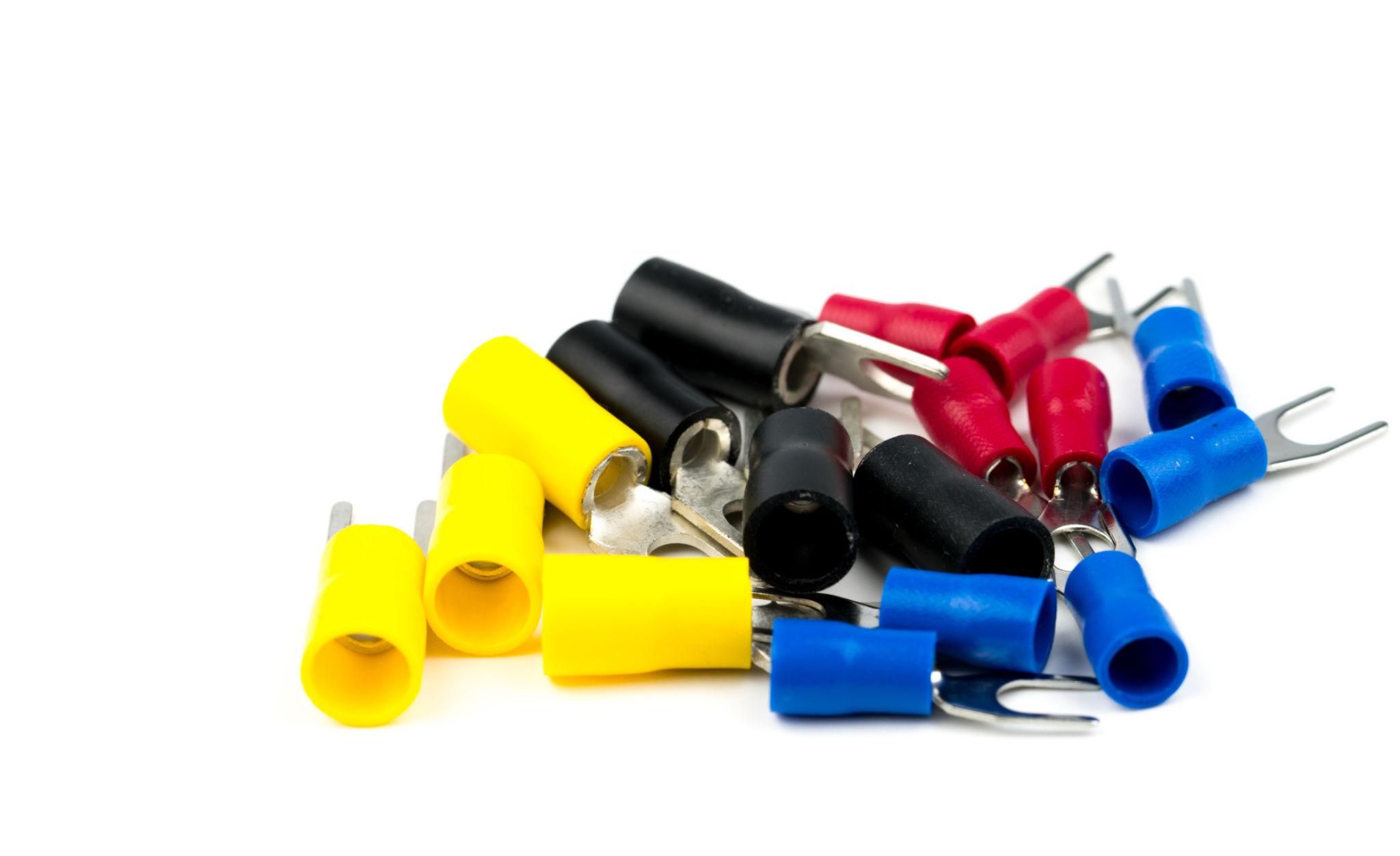
Electrical connections are only as reliable as the components that hold them together. Among the many types of wire terminals available, spade terminals, also known as fork terminals, are one of the most practical and widely used solutions for fast, secure electrical connections.
From automotive wiring harnesses and industrial control panels to household appliances and renewable energy systems, spade terminals make installation and maintenance easier while ensuring dependable electrical performance. Their distinctive fork-shaped design allows technicians to connect or disconnect wires without completely removing the mounting screw, saving valuable time during assembly and servicing.
In this guide, we’ll explain what spade (fork) terminals are, explore their different types, discuss their advantages and applications, and provide practical installation tips to help you achieve safe and reliable electrical connections.
What Is a Spade (Fork) Terminal?
A spade terminal, sometimes called a fork terminal, is a crimp-style electrical terminal designed with an open-ended, U-shaped connector. After being crimped onto the end of a wire, the fork-shaped opening slides underneath a screw or stud and is secured by tightening the fastener.
Unlike ring terminals, which require the screw to be completely removed before installation, spade terminals can be installed or removed by simply loosening the screw. This feature makes them especially useful for applications that require regular maintenance or replacement.
A typical spade terminal consists of three parts:
- A conductor barrel for crimping onto the wire
- A fork-shaped contact area that fits around a screw or stud
- Optional insulation that protects against accidental contact and environmental exposure
Once properly installed, the terminal provides both a strong mechanical connection and a low-resistance electrical path for current flow.

How Spade Terminals Work
The installation process is straightforward. After stripping the wire, the conductor is inserted into the terminal barrel and secured using a crimping tool. The fork end is then placed beneath the screw head or around the mounting stud before the screw is tightened.
This design creates two important functions:
- A secure mechanical attachment that resists vibration and pull-out
- A stable electrical connection that minimizes contact resistance
Because the screw does not need to be fully removed, maintenance personnel can replace damaged wires much more quickly than with fully enclosed terminal designs.
Types of Spade (Fork) Terminals
Although all spade terminals share the same basic design, they are available in various insulation options, materials, and surface finishes to meet different application requirements.
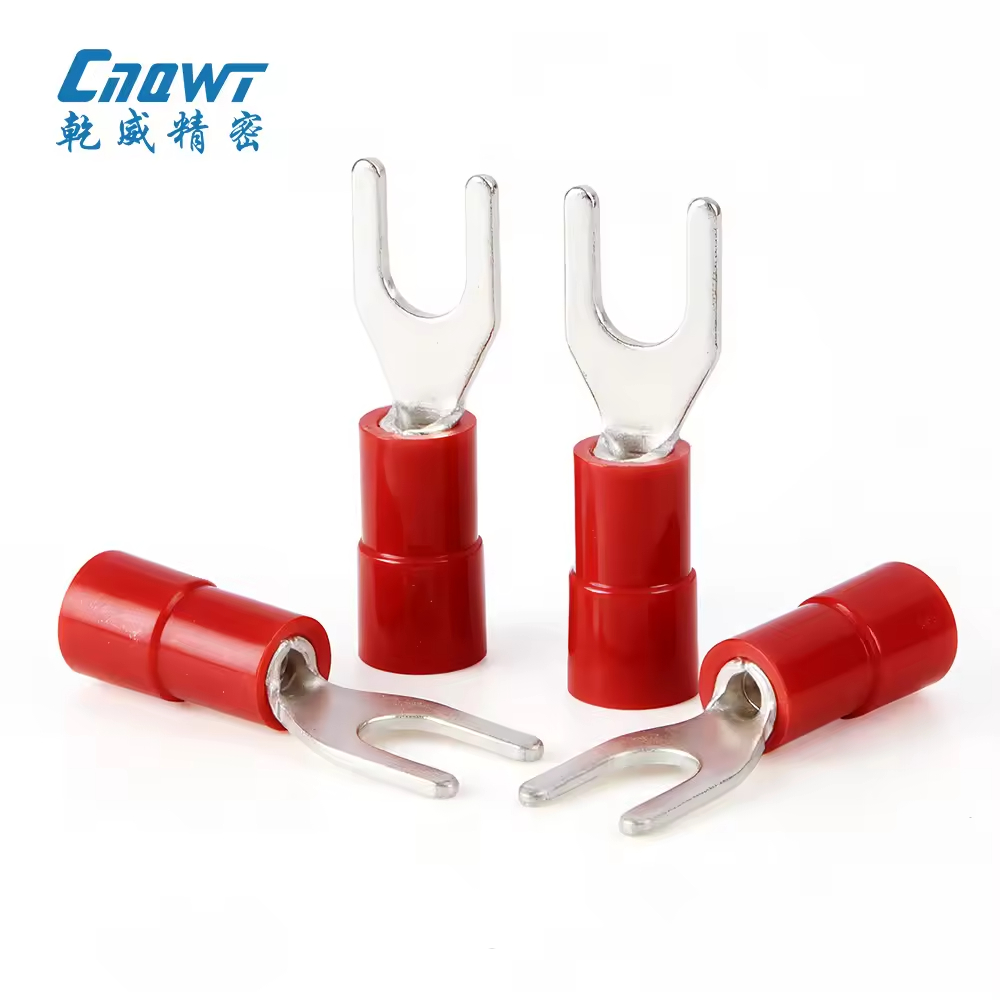
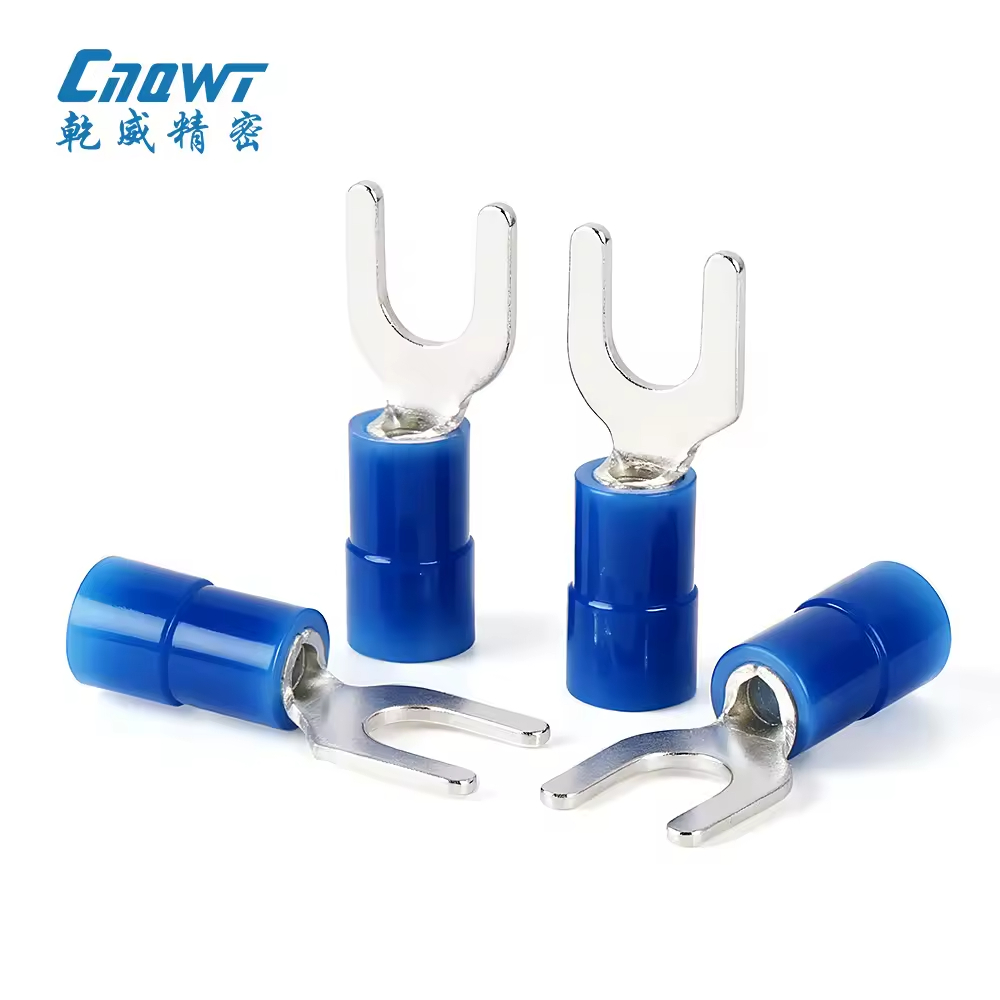
Insulated Spade Terminals
Insulated spade terminals include a protective sleeve surrounding the crimp barrel. The insulation improves electrical safety by reducing the risk of accidental short circuits while also protecting the crimped area from abrasion and moisture.
Common insulation materials include:
- PVC
- Nylon
- Heat-shrink tubing
PVC-insulated terminals are widely used for general-purpose electrical work because they are economical and easy to identify through color coding. Nylon insulation provides greater flexibility and durability, making it suitable for applications exposed to vibration. Heat-shrink insulated terminals offer the highest level of environmental protection by sealing the wire connection against moisture and contaminants.
Typical applications include:
- Household appliances
- Automotive wiring
- Marine equipment
- Electrical distribution panels
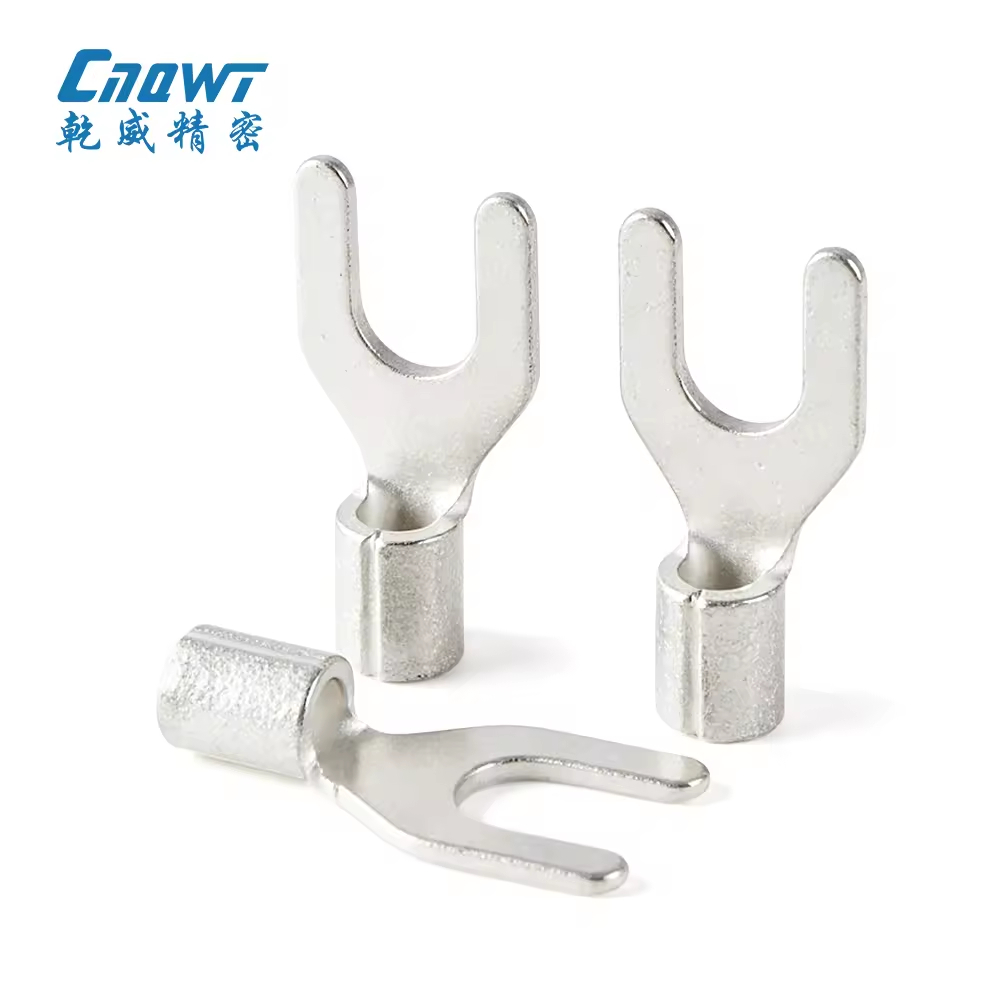
Non-Insulated Spade Terminals
Non-insulated terminals are commonly selected for industrial equipment and custom wiring harnesses where additional insulation is provided by the assembly itself.
Without the insulation sleeve, these terminals can withstand higher temperatures and fit into tighter installation spaces. They are also preferred when specialized heat-shrink tubing or over-molded protection will be applied later during manufacturing.
Typical applications include:
- Industrial machinery
- Control cabinets
- Automotive wire harnesses
- Electronic assemblies
Terminal Materials
The material used to manufacture a spade terminal has a significant impact on conductivity, mechanical strength, and service life.
Copper offers excellent electrical conductivity and is suitable for many low- and medium-current applications.
Brass provides a balance between conductivity and mechanical strength, making it a popular choice for general industrial use.
Phosphor bronze combines good conductivity with superior elasticity and fatigue resistance. It is frequently used in automotive and electronic connectors where reliable contact force is essential.
Each material should be selected according to the electrical load, operating environment, and expected service life.
Surface Plating Options
Most spade terminals receive a protective surface finish to improve corrosion resistance and electrical performance.
Common plating options include:
- Tin plating
- Nickel plating
- Silver plating
Tin plating is the most common choice because it provides reliable corrosion protection, excellent solderability, and cost-effective performance. Nickel plating performs well in high-temperature environments, while silver plating offers outstanding conductivity for high-current applications.
Common Applications of Spade Terminals
Because they are easy to install and maintain, spade terminals are used across a wide variety of industries.
Automotive Wiring
Modern vehicles contain hundreds of electrical connections supporting lighting systems, sensors, switches, battery management systems, and control modules.
Spade terminals are frequently used for:
- Fuse boxes
- Relay connections
- Lighting circuits
- Ground connections
- Dashboard wiring
Their vibration resistance and quick serviceability make them especially valuable during vehicle maintenance.
Industrial Control Panels
Industrial automation equipment relies on dependable electrical connections to ensure uninterrupted operation.
Spade terminals are commonly found in:
- PLC control panels
- Relays
- Contactors
- Circuit breakers
- Power distribution systems
Because maintenance technicians can replace wiring without removing the entire fastener, downtime during repairs is significantly reduced.
Household Appliances
Many home appliances use spade terminals because they provide reliable electrical connections while simplifying assembly.
Typical products include:
- Refrigerators
- Air conditioners
- Washing machines
- Ovens
- Water heaters
Manufacturers often choose spade terminals because they support efficient high-volume production while maintaining consistent connection quality.
Renewable Energy Systems
Solar power systems, battery storage equipment, and inverters require durable electrical connections capable of operating under changing environmental conditions.
High-quality spade terminals help ensure stable power transmission while resisting corrosion caused by outdoor exposure.
Consumer Electronics
Power supplies, charging equipment, and various electronic devices also incorporate compact spade terminals where fast assembly and dependable performance are required.
Advantages of Spade (Fork) Terminals
Quick Installation
One of the biggest advantages of a spade terminal is installation speed.
Since the screw only needs to be loosened rather than completely removed, technicians can complete electrical connections much faster. This improves productivity on assembly lines and reduces labor costs during installation.
Easy Maintenance
Maintenance is equally efficient.
When repairs or component replacements are necessary, wires can be disconnected and reconnected quickly without dismantling the entire connection point. This helps minimize equipment downtime and simplifies routine servicing.
Reliable Electrical Performance
A properly crimped and correctly installed spade terminal provides a stable electrical connection with low contact resistance.
Benefits include:
- Consistent current flow
- Reduced voltage drop
- Improved energy efficiency
- Lower operating temperatures
Reliable electrical contact also reduces the likelihood of intermittent faults that can be difficult to diagnose.
Strong Mechanical Retention
The combination of a properly crimped conductor barrel and a securely tightened mounting screw provides excellent mechanical strength.
Quality spade terminals resist:
- Vibration
- Mechanical shock
- Wire pull-out
- Connection loosening
These characteristics make them suitable for demanding industrial and automotive environments.
Cost-Effective Solution
Spade terminals are relatively inexpensive while offering excellent performance and long service life.
Their ease of installation reduces labor costs, and their durability helps lower maintenance expenses over the lifetime of the equipment.
How to Install a Spade Terminal Correctly
Correct installation is essential for achieving maximum performance.
Step 1: Select the Correct Terminal
Choose a terminal that matches:
- Wire gauge
- Current rating
- Voltage requirements
- Screw or stud size
- Operating environment
Using an incorrectly sized terminal can lead to poor electrical contact or mechanical failure.
Step 2: Strip the Wire
Remove only the required amount of insulation.
Avoid nicking or cutting conductor strands, as damaged wires reduce both conductivity and mechanical strength.
Step 3: Crimp the Terminal
Insert the stripped conductor fully into the crimp barrel before using the appropriate crimping tool.
A proper crimp creates a gas-tight connection that minimizes oxidation while providing excellent pull-out strength.
Avoid:
- Under-crimping
- Over-crimping
- Using incorrect crimping dies
- Reusing damaged terminals
Step 4: Secure the Connection
Position the fork beneath the screw head before tightening the fastener to the recommended torque.
An overly loose connection may increase contact resistance, while excessive tightening could deform the terminal.
Step 5: Inspect the Installation
After installation, perform a visual inspection and a pull test to verify the connection.
When appropriate, continuity or resistance testing should also be carried out to confirm electrical performance.
Common Installation Mistakes to Avoid
Even high-quality terminals can fail if installed incorrectly.
Common mistakes include:
- Choosing the wrong wire size
- Using the wrong crimping tool
- Failing to fully insert the conductor
- Loose screw connections
- Selecting unsuitable terminal materials
- Ignoring environmental conditions such as moisture or corrosion
- Using terminals beyond their current rating
Careful installation and routine inspection greatly improve long-term reliability.
How to Choose the Right Spade Terminal
Selecting the right terminal involves more than matching the wire diameter.
Consider the following factors:
- Wire Size: Ensure compatibility with the conductor gauge.
- Current Rating: Select a terminal capable of carrying the required electrical load.
- Operating Environment: Consider temperature, humidity, vibration, and exposure to chemicals.
- Insulation Type: Choose insulated or non-insulated versions based on safety and environmental requirements.
- Material: Select copper, brass, or phosphor bronze according to conductivity and mechanical performance.
- Surface Plating: Choose tin, nickel, or silver plating depending on corrosion resistance and electrical needs.
- Compliance: Verify that the terminal meets applicable industry standards and quality requirements.
Choosing the correct terminal improves safety, reduces maintenance costs, and extends the service life of the electrical system.
Why Choose Qianwei Precision?
Reliable electrical connections begin with high-quality manufacturing.
At QW Terminals, we specialize in the design and production of precision electrical terminals for automotive, industrial, consumer electronics, and home appliance applications.
Our manufacturing capabilities include:
- Precision metal stamping
- In-house tooling development
- Automated production lines
- Strict dimensional inspection
- Comprehensive quality testing
- OEM and ODM customization
- High-volume manufacturing with consistent quality
From standard spade terminals to custom-engineered solutions, our experienced engineering team works closely with customers to develop products that meet demanding performance and reliability requirements.
Whether you need terminals for a new product design or large-scale production, QW Terminals provides dependable solutions backed by professional technical support and quality management.
Conclusion
Spade (fork) terminals are a simple yet highly effective solution for creating secure, reliable electrical connections. Their open-ended design allows for faster installation and easier maintenance, making them a preferred choice in automotive systems, industrial control panels, household appliances, renewable energy equipment, and many other applications.
To maximize performance, it’s essential to choose the correct terminal size, material, insulation, and surface plating, while following proper crimping and installation procedures. A high-quality spade terminal not only improves electrical conductivity but also enhances mechanical stability, reduces maintenance, and extends the lifespan of the entire electrical system.
If you’re looking for standard or custom spade terminal solutions, Qianwei Precision offers the manufacturing expertise, engineering support, and quality assurance needed to help you build safer and more reliable electrical connections.
FAQs
What is the difference between a spade terminal and a ring terminal?
A spade terminal has an open-ended fork that can be installed by loosening a screw, while a ring terminal has a fully enclosed opening that requires the screw to be completely removed before installation. Ring terminals generally provide greater resistance to accidental disconnection, whereas spade terminals offer faster installation and maintenance.
Are insulated spade terminals better than non-insulated terminals?
It depends on the application. Insulated terminals provide additional electrical protection and are suitable for general-purpose wiring, while non-insulated terminals are often preferred in industrial assemblies where higher temperatures or custom insulation methods are required.
Can spade terminals be reused?
If a terminal has been damaged, deformed, or shows signs of corrosion, it should be replaced. Reusing compromised terminals may reduce the reliability and safety of the electrical connection.
What crimping tool should I use?
Always use a crimping tool designed for the specific terminal type and wire size. Proper tooling ensures consistent crimp quality and reliable long-term performance.

