

Introduction: Why Spade Terminal Size Is Critical
In modern electrical systems—especially in consumer electronics, home appliances, and automotive wiring—connections must be both reliable and serviceable. Unlike permanent connections, many systems require components that can be easily installed, removed, or maintained without compromising performance. This is where spade terminals (fork terminals) play a crucial role.
However, selecting the correct spade terminal is not as simple as picking a general size. The wrong choice can result in loose connections, increased resistance, overheating, and even system failure. In high-volume production environments, these small mismatches can lead to large-scale defects and costly rework.
For engineers and procurement professionals, understanding how to choose the right spade terminal size is essential to achieving both performance reliability and manufacturing efficiency.
What Is a Spade Terminal?
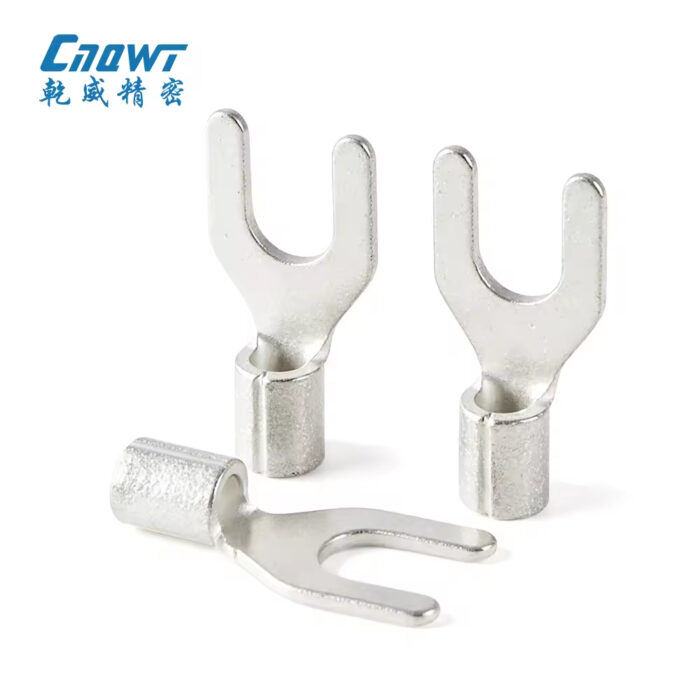
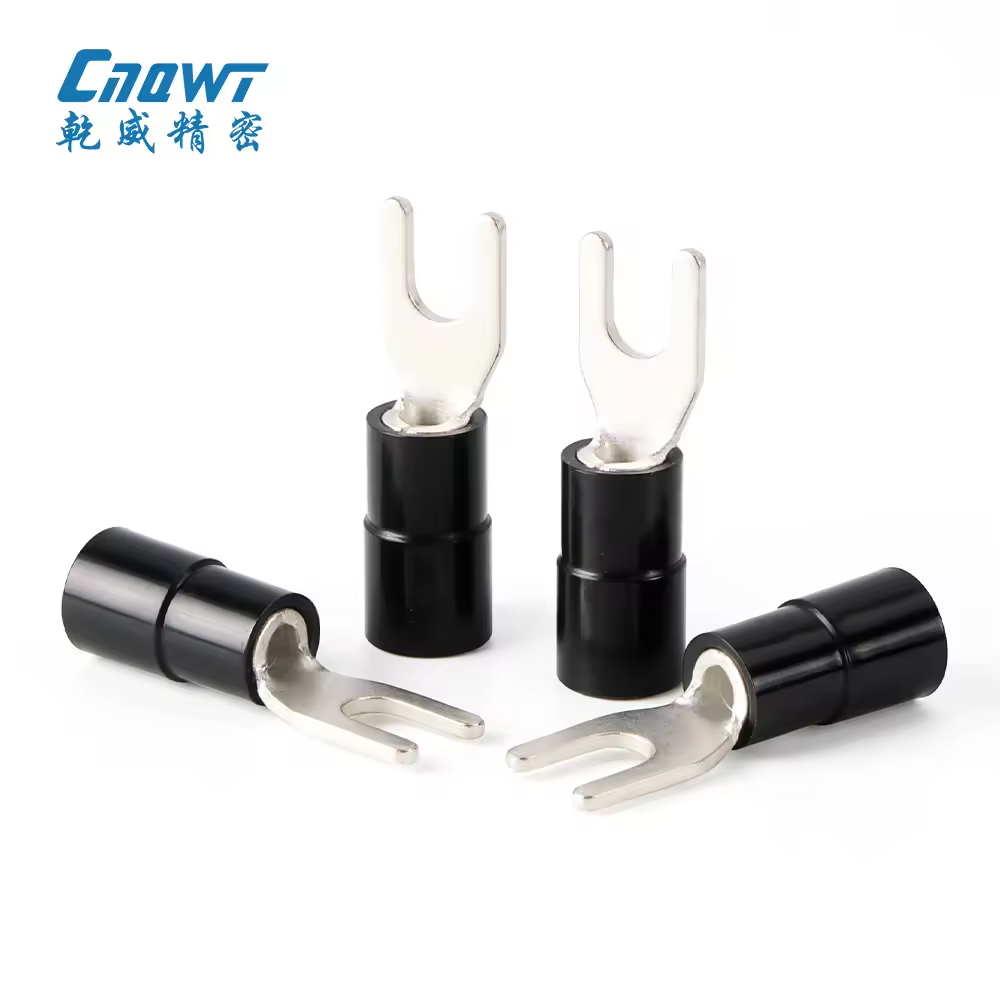
A spade terminal, also known as a fork terminal, is a type of electrical connector designed for quick connection and disconnection. It features a U-shaped fork that allows it to be installed or removed without fully removing the screw or bolt.
A typical spade terminal consists of:
- Fork (U-shaped opening) – fits around a stud or screw
- Barrel – where the wire is inserted and crimped
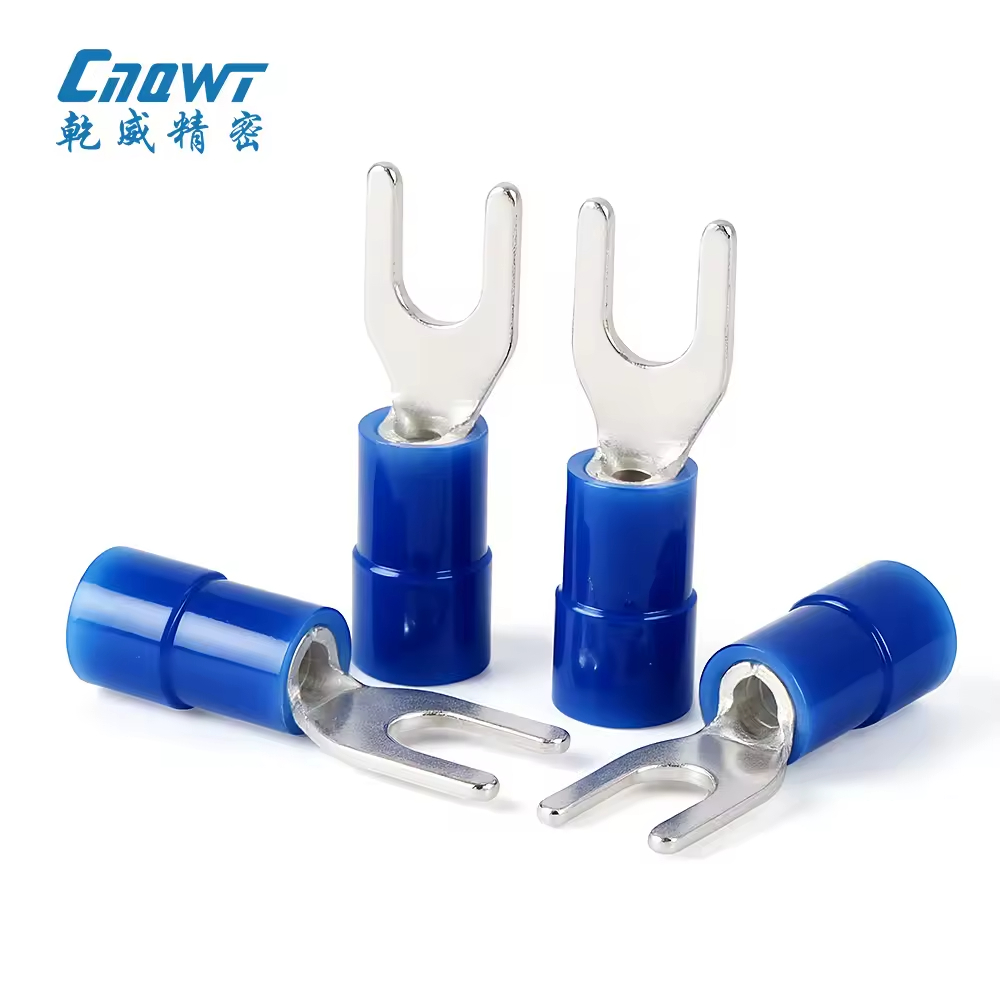
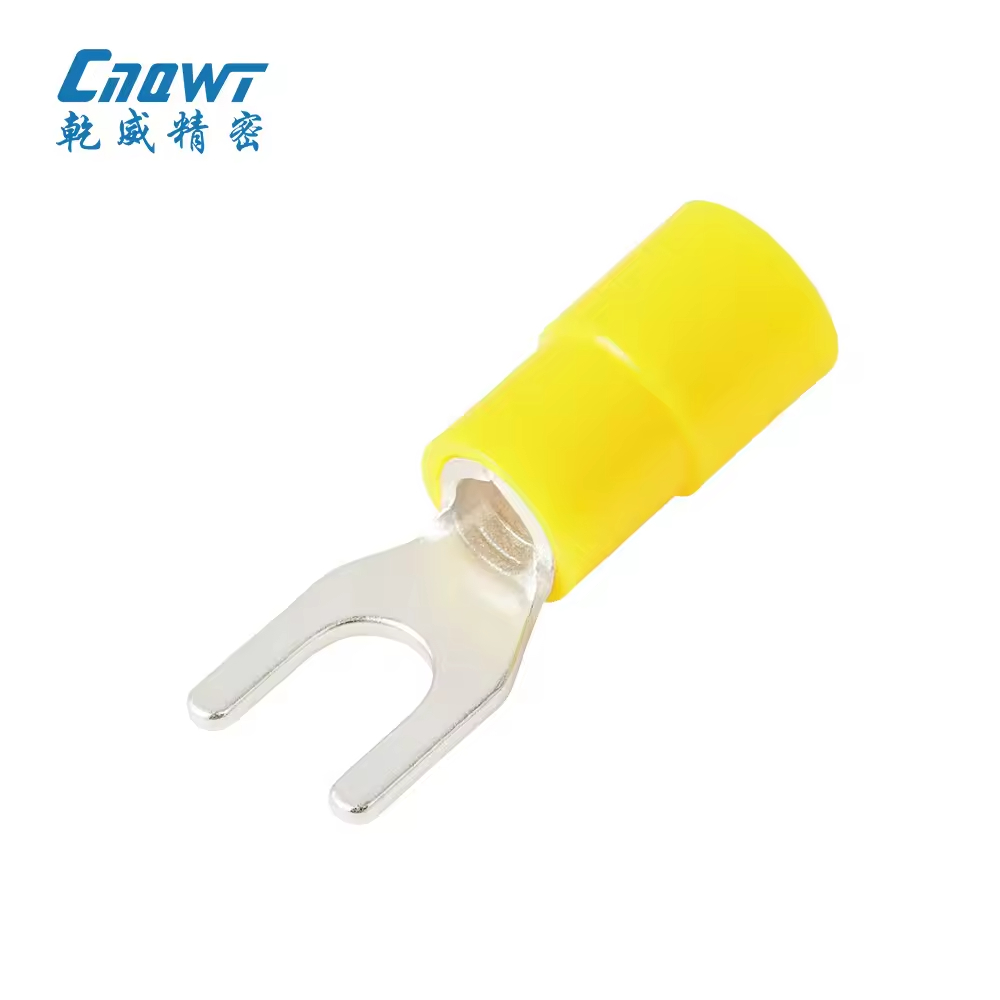
- Insulation (optional) – protects against short circuits
This design makes spade terminals especially useful in applications where maintenance and speed are important.
Why Proper Sizing Matters
Choosing the correct spade terminal size directly affects:
Electrical Performance
A properly sized terminal ensures:
- Low contact resistance
- Stable current flow
- Minimal heat generation
An oversized fork or loose crimp can lead to poor conductivity and overheating.
Mechanical Stability
If the fork opening is too large:
- The connection may loosen under vibration
If too small:
- It cannot be installed properly
Correct sizing ensures secure fastening and long-term stability.
Assembly Efficiency
In mass production:
- Correct sizing reduces installation errors
- Improves assembly speed
- Minimizes rework
Key Factors in Choosing Spade Terminal Size
Wire Size (AWG / mm²)
The most important factor is the wire size.
The terminal barrel must match the conductor cross-section:
- Too large → weak crimp
- Too small → wire damage
Stud Size (Screw Size)
The fork opening must match the screw or bolt size.
Common sizes:
- M3 / M4 / M5 / M6 / M8
A mismatch can cause:
- Poor contact pressure
- Increased vibration risk
Current Rating
Spade terminals must handle the required current load.
Factors affecting current capacity:
- Contact area
- Material conductivity
- Crimp quality
Insulated vs Non-Insulated
- Insulated terminals:
- Safer
- Easier identification (color-coded)
- Non-insulated terminals:
- Better heat resistance
- Used in industrial environments
Application Environment
Different environments require different designs:
- Automotive → vibration resistance
- Home appliances → easy maintenance
- Consumer electronics → compact size
Spade Terminal Size Chart
Below is a commonly used reference:
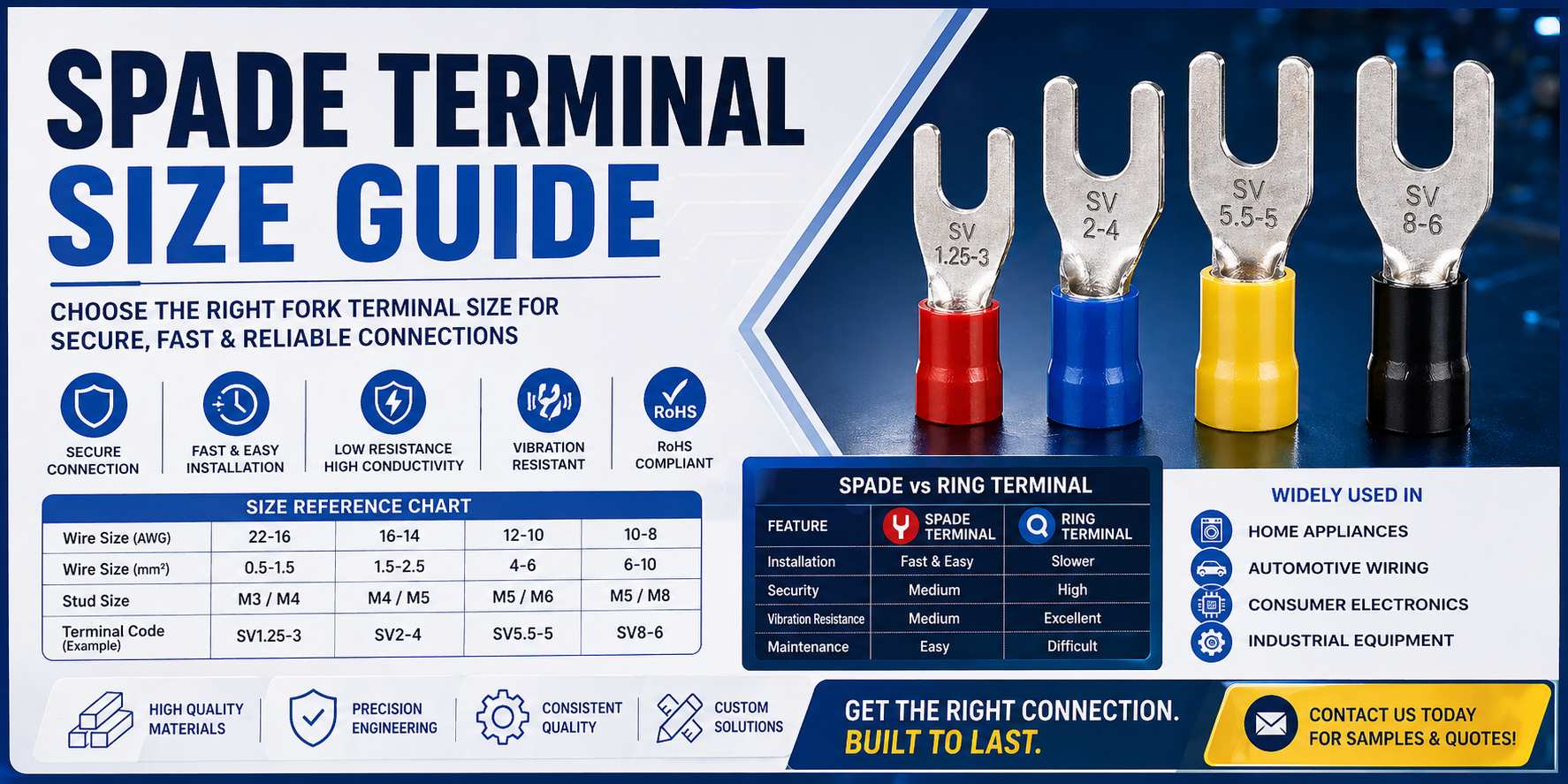
| Wire Size (AWG) | mm² | Stud Size | Terminal Code |
|---|---|---|---|
| 22–16 | 0.5–1.5 | M3/M4 | SV1.25-3 |
| 16–14 | 1.5–2.5 | M4/M5 | SV2-4 |
| 12–10 | 4–6 | M5/M6 | SV5.5-5 |
| 10–8 | 6–10 | M6/M8 | SV8-6 |
Example:
- SV2-4 → fits 1.5–2.5 mm² wire and M4 stud
How to Read Spade Terminal Codes
Most spade terminals follow a structured naming system.
Example:
- SV5.5-6
- 5.5 → wire size (mm² range)
- 6 → stud size (mm)
Understanding this system simplifies both design and procurement.
Types of Spade Terminals
Insulated Spade Terminals
- PVC or nylon insulation
- Color-coded for wire size
- Widely used in consumer electronics
Non-Insulated Spade Terminals
- No insulation
- Higher temperature tolerance
- Used in industrial environments
Heavy-Duty Spade Terminals
- Thicker material
- Larger current capacity
- Suitable for demanding applications
Step-by-Step: How to Choose the Right Spade Terminal
To ensure optimal performance:
- Identify wire size (AWG/mm²)
- Confirm stud size
- Determine current requirements
- Choose insulation type
- Select appropriate material and plating
- Match with correct crimping tool
👉 If unsure, always consult with a terminal manufacturer.
Spade vs Ring Terminals: Key Differences
Choosing between spade and ring terminals depends on application needs.
| Feature | Spade Terminal | Ring Terminal |
|---|---|---|
| Installation | Fast | Slower |
| Security | Medium | High |
| Vibration Resistance | Medium | Excellent |
| Maintenance | Easy | Difficult |
When to Use Spade Terminals
- Frequent maintenance required
- Fast installation needed
When to Use Ring Terminals
- High vibration environments
- Permanent connections
👉 In many systems, both are used together depending on function.
Common Mistakes to Avoid
Even experienced users make these mistakes:
- Choosing the wrong wire size
- Oversized fork opening
- Poor crimping technique
- Using incorrect tools
- Ignoring vibration conditions
These issues often result in hidden failures that appear after deployment.
Crimping Best Practices
A high-quality crimp ensures both electrical and mechanical performance.
Best practices:
- Use calibrated crimping tools
- Follow correct crimp height
- Ensure full wire insertion
- Inspect crimp visually
A proper crimp should:
- Be tight and uniform
- Show no insulation damage
- Provide strong pull-out force
Applications of Spade Terminals
Spade terminals are widely used in:
Home Appliances
- Washing machines
- Air conditioners
- Refrigerators
Automotive Wiring
- Quick connection systems
- Maintenance-friendly designs
Consumer Electronics
- Internal wiring
- Power modules
How to Choose a Reliable Supplier
A reliable supplier ensures consistent quality.
Look for:
- Precision tooling capability
- Stable material sourcing
- Consistent plating quality
- Customization support
Why Choose Qianwei Precision
Qianwei Precision specializes in high-quality electrical terminals, including:
- Spade terminals
- Ring terminals
- Cable lugs
- Butt connectors
- TE terminals
With:
- 1800+ production molds
- Advanced automated manufacturing
- Strict quality control
We help global customers achieve reliable, scalable connection solutions.
Conclusion: Fast Connections Still Require Precision
Spade terminals are designed for convenience—but convenience should never compromise reliability. Correct sizing, proper crimping, and quality manufacturing are essential to ensuring long-term performance.
In electrical systems, speed and reliability must go hand in hand.
👉 Ready to Choose the Right Spade Terminal?
If you are sourcing spade terminals for your project:
- Request free samples
- Get expert selection support
- Receive custom solutions
Contact Qianwei Precision today and ensure every connection is secure, efficient, and built to last.
FAQs
1. What is a spade terminal used for?
A spade terminal is used to create quick-connect electrical connections that can be easily installed or removed without fully unscrewing the fastener. It is commonly used in appliances, automotive wiring, and consumer electronics.
2. How do I choose the right spade terminal size?
Select based on:
- Wire size (AWG or mm²)
- Stud/screw size
- Current requirement
All three must match to ensure a secure and low-resistance connection.
3. What happens if the spade terminal is too large?
An oversized terminal may not fit tightly on the stud, leading to:
- Loose connections
- Increased resistance
- Vibration-related failure
4. What happens if the spade terminal is too small?
A terminal that is too small may:
- Not fit the wire or stud
- Damage the conductor during crimping
- Cause poor electrical contact
5. Are spade terminals suitable for high-vibration environments?
Spade terminals can be used in moderate vibration environments, but for high vibration, ring terminals are more secure because they cannot slip off the stud.
6. What is the difference between insulated and non-insulated spade terminals?
- Insulated terminals provide protection against short circuits and are easier to identify by color.
- Non-insulated terminals offer better heat resistance and are used in high-temperature or industrial environments.
7. What material is best for spade terminals?
Tin-plated copper is the most common choice due to its excellent conductivity and corrosion resistance.
8. How important is crimping for spade terminals?
Crimping is critical. A proper crimp ensures:
- Strong mechanical hold
- Low electrical resistance
- Long-term reliability
Poor crimping can lead to overheating or failure.
9. Can I reuse a spade terminal?
Reusing spade terminals is not recommended because:
- The crimp may weaken
- Contact reliability may decrease
Always use new terminals for critical connections.
10. When should I use a spade terminal instead of a ring terminal?
Use a spade terminal when:
- Quick installation or maintenance is required
Use a ring terminal when:
- Maximum security and vibration resistance are needed

