

Electrical connections are critical to the safety, efficiency, and long-term reliability of modern electrical systems. Whether in automotive wiring, industrial control panels, marine equipment, renewable energy systems, or consumer electronics, choosing the correct terminal type directly affects conductivity, durability, and environmental protection.
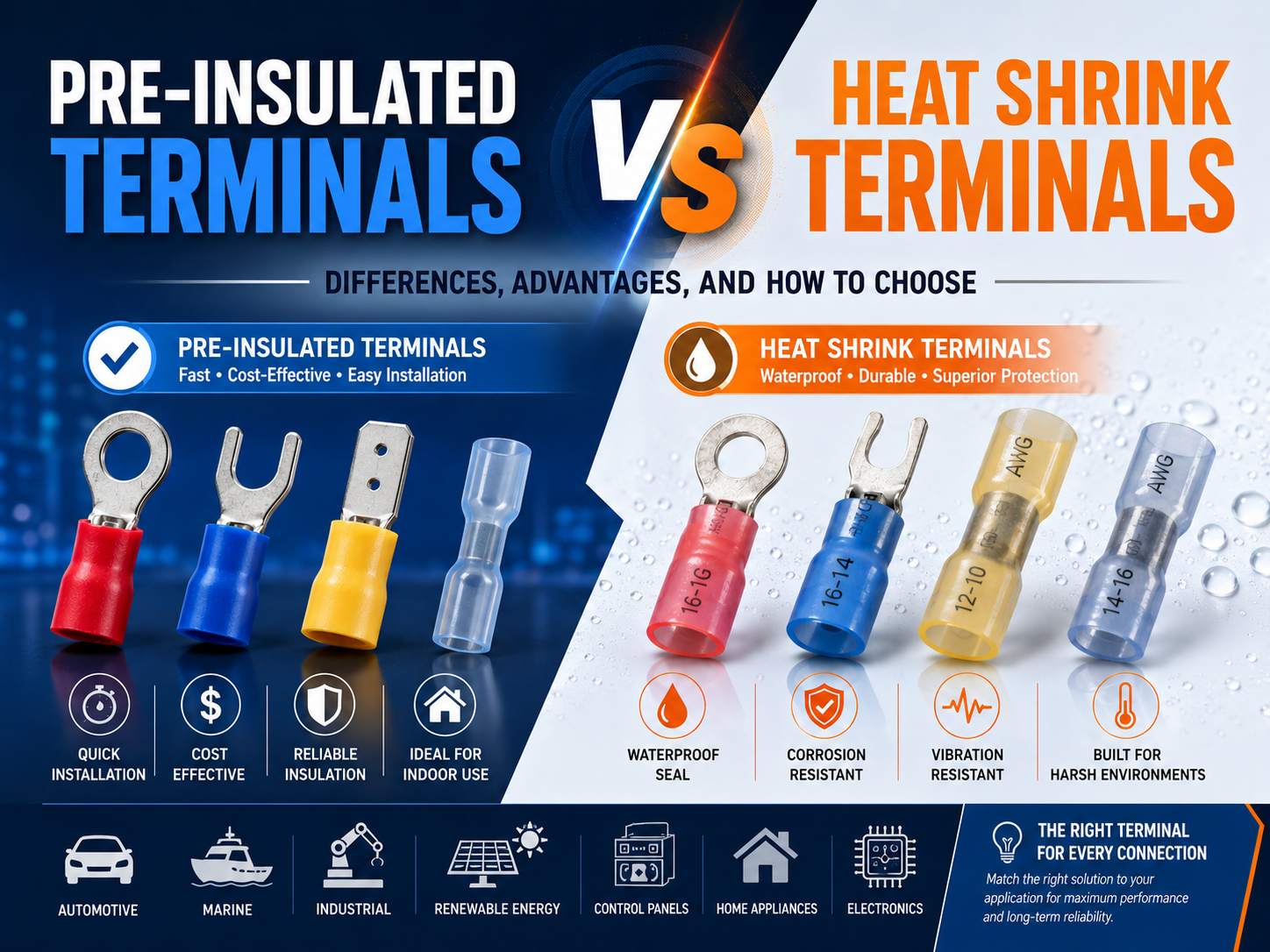
Among the most commonly used wire termination solutions are pre-insulated terminals and heat shrink terminals. While both are designed to create secure electrical connections, they differ significantly in insulation structure, sealing capability, installation process, and application suitability.
For engineers, OEM manufacturers, distributors, and procurement teams, understanding the differences between these two terminal types is essential for selecting the right solution for specific operating environments.
This article provides a comprehensive comparison of pre-insulated terminals and heat shrink terminals, covering structure, performance, advantages, limitations, applications, testing methods, and selection guidelines.
What Are Pre-Insulated Terminals?
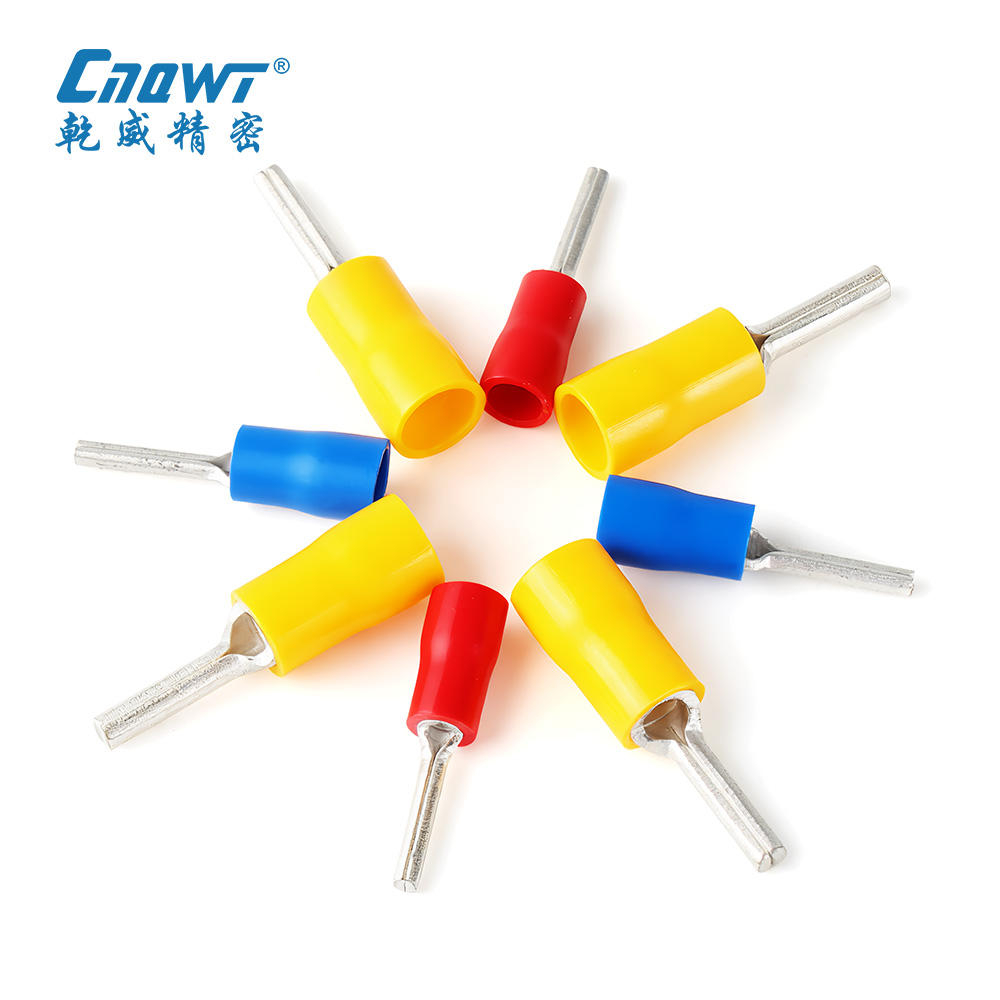
Pre-insulated terminals are crimp terminals that come with a factory-installed insulation sleeve. The insulation is typically made from PVC or nylon and is permanently attached to the metal terminal body.
These terminals are widely used because they simplify installation and provide basic electrical insulation without requiring additional processing.
A typical pre-insulated terminal consists of:
- A conductive metal terminal body
- A crimp barrel
- An insulated sleeve
- A wire insertion opening
The insulation helps prevent accidental short circuits and provides basic protection against mechanical damage.
Common Types of Pre-Insulated Terminals
Pre-insulated terminals are available in various configurations to support different connection requirements.
Common types include:
Ring Terminals
Ring terminals provide secure bolt-mounted connections and are commonly used in control panels and automotive systems.
Spade Terminals
Spade terminals allow easier installation and removal without fully removing mounting screws.
Butt Connectors
Butt connectors join two wires end-to-end and are frequently used in wire repair applications.
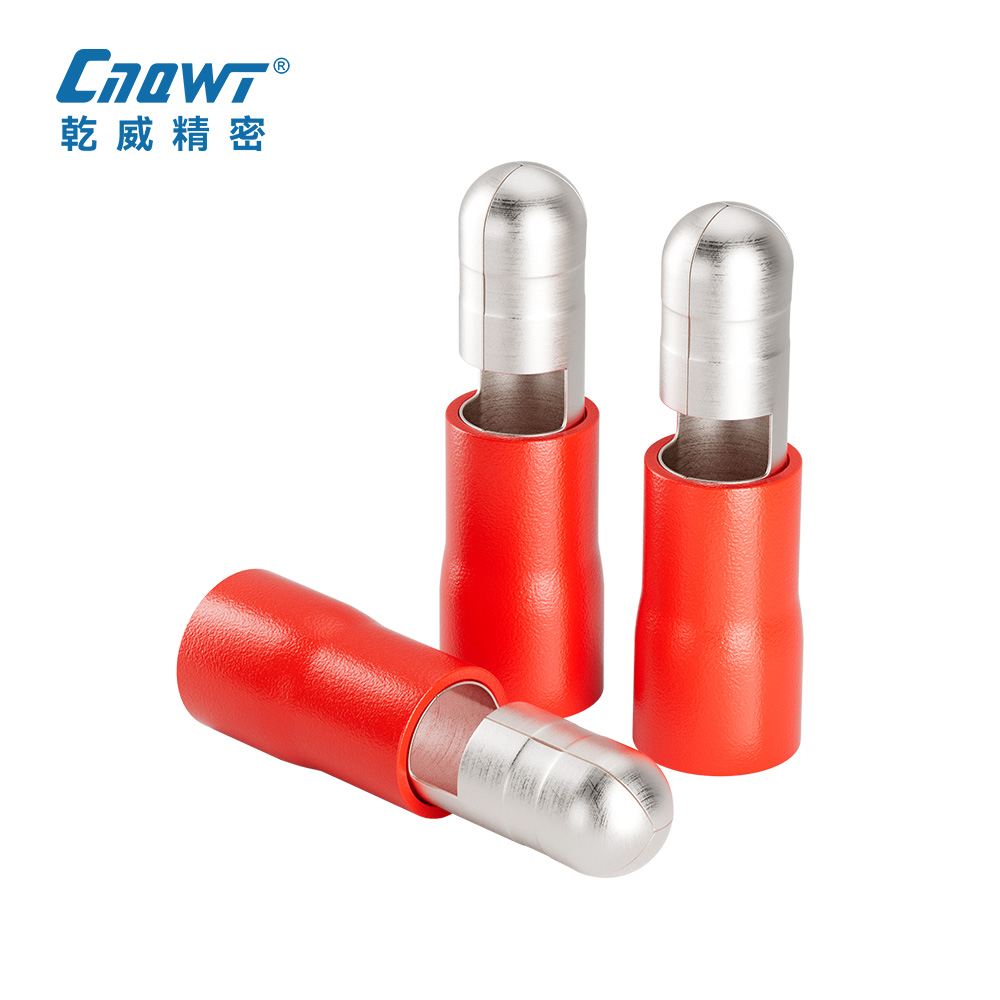
Bullet Connectors
Bullet connectors support detachable wire connections in automotive and appliance wiring.
These terminal types are widely used in standard indoor electrical systems where moisture exposure is limited.
What Are Heat Shrink Terminals?
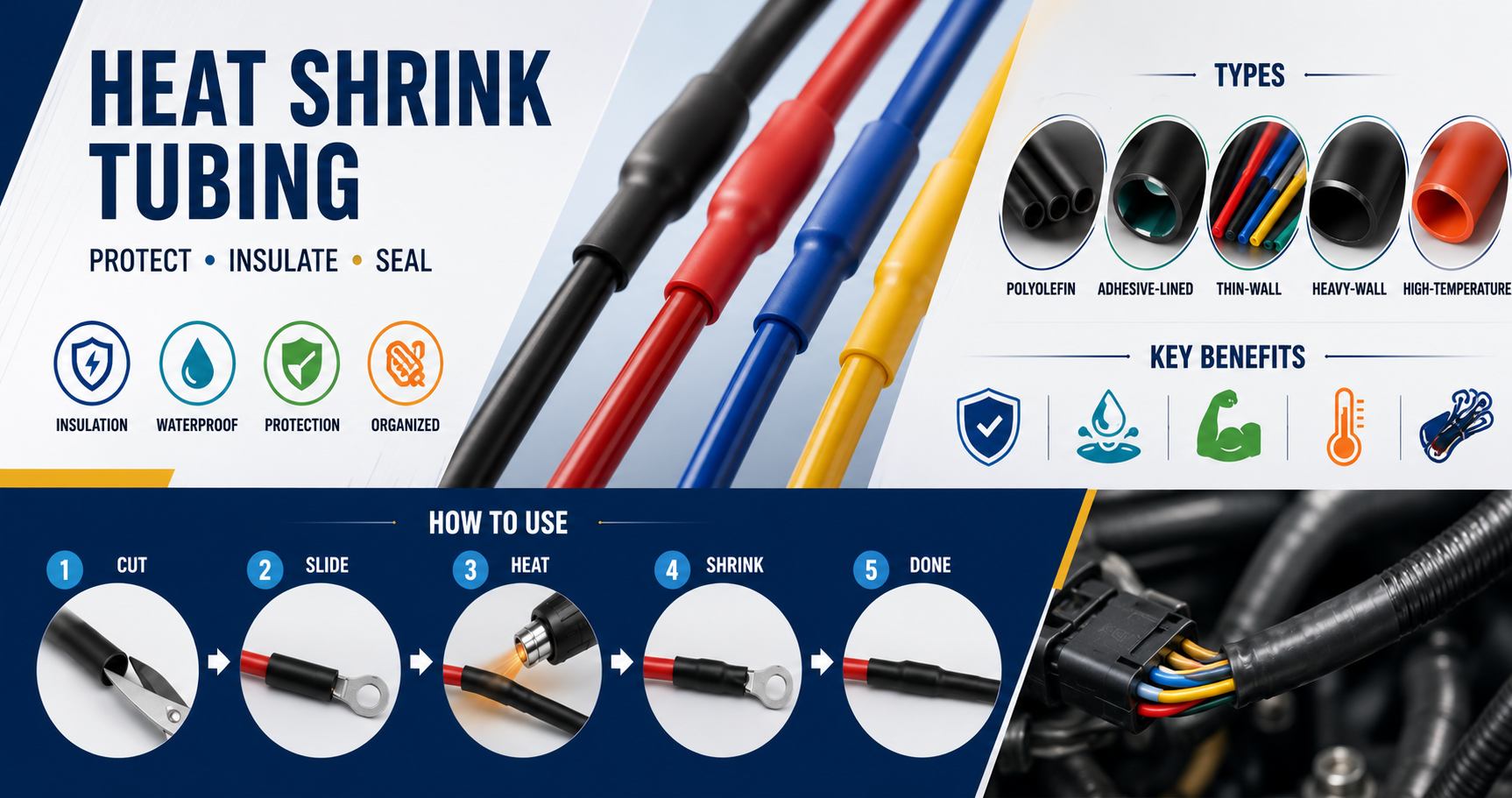
Heat shrink terminals are advanced crimp terminals that incorporate heat-shrinkable tubing around the connection area. Many versions also include adhesive-lined tubing that melts during heating to create a waterproof seal.
After crimping the wire into the terminal, heat is applied using a heat gun. The tubing shrinks tightly around the wire insulation and terminal barrel, creating additional environmental protection and strain relief.
Heat shrink terminals are designed for demanding applications where moisture, vibration, corrosion, or temperature fluctuations are major concerns.
How Heat Shrink Terminals Work
The installation process for heat shrink terminals typically includes four steps:
- Insert the wire into the terminal barrel
- Crimp the connection using a proper crimping tool
- Apply heat evenly to the tubing
- Allow the tubing to shrink and seal the connection
As the tubing shrinks, it forms a tight protective layer around the wire and terminal. Adhesive-lined versions further improve waterproof performance by sealing gaps and preventing moisture ingress.
Common Types of Heat Shrink Terminals
Heat shrink terminals are available in similar configurations to standard insulated terminals.
Common products include:
- Heat shrink ring terminals
- Heat shrink butt connectors
- Heat shrink spade terminals
- Waterproof crimp connectors
- Heat shrink disconnect terminals
These products are commonly used in marine systems, automotive wiring, renewable energy installations, and outdoor electrical equipment.
Key Differences Between Pre-Insulated and Heat Shrink Terminals
Although both products provide insulated electrical connections, their performance characteristics differ significantly.
Insulation Method
Pre-insulated terminals use fixed insulation sleeves made from PVC or nylon. The insulation provides electrical separation but does not fully seal the connection.
Heat shrink terminals use heat-activated polyolefin tubing that shrinks around the wire after installation. This creates a tighter and more secure protective layer.
Waterproof Performance
Waterproof capability is one of the biggest differences between the two products.
Pre-insulated terminals provide only basic insulation and limited moisture resistance.
Heat shrink terminals provide superior environmental sealing, especially adhesive-lined designs that prevent water penetration.
For outdoor or marine applications, waterproof performance is often critical to long-term reliability.
Mechanical Strength
Heat shrink terminals generally provide better strain relief and vibration resistance.
The heat-shrunk tubing supports the wire insulation and reduces movement at the crimp area, lowering the risk of fatigue failure.
Pre-insulated terminals are adequate for standard applications but may loosen more easily under continuous vibration.
Electrical Reliability
Heat shrink terminals usually offer better long-term electrical reliability in harsh environments because the sealed structure reduces corrosion and oxidation.
Pre-insulated terminals perform well in dry indoor environments but may experience reduced reliability in humid or corrosive conditions.
Temperature Resistance
Material selection affects temperature performance.
PVC-insulated terminals generally have lower temperature resistance.
Heat shrink tubing made from polyolefin materials typically supports higher operating temperatures and improved thermal stability.
This makes heat shrink terminals more suitable for automotive engine compartments and industrial equipment.
Installation Process
Pre-insulated terminals are faster and easier to install because no heating process is required.
The installation sequence is simple:
Insert wire → Crimp → Complete
Heat shrink terminals require additional processing:
Insert wire → Crimp → Apply heat → Inspect seal
Although installation takes longer, the added environmental protection often justifies the extra step.
Cost Comparison
Pre-insulated terminals are generally less expensive and more suitable for high-volume applications where environmental sealing is unnecessary.
Heat shrink terminals cost more due to:
- Additional materials
- Adhesive-lined tubing
- More complex manufacturing
- Extra installation labor
However, in harsh environments, heat shrink terminals may reduce maintenance and replacement costs over time.
Advantages of Pre-Insulated Terminals
Pre-insulated terminals remain popular because they offer several practical advantages.
Fast Installation
Their simple installation process improves assembly efficiency and reduces labor costs.
Cost Efficiency
They are more economical for large-scale production and general-purpose wiring.
Wide Availability
Standardized sizes and configurations make sourcing easy.
Suitable for Indoor Applications
Pre-insulated terminals work well in:
- Control cabinets
- Household appliances
- Indoor industrial systems
- Consumer electronics
In low-moisture environments, they provide reliable performance at a lower cost.
Advantages of Heat Shrink Terminals
Heat shrink terminals are preferred in applications requiring enhanced protection and durability.
Superior Waterproof Protection
The sealed structure prevents moisture intrusion and improves reliability.

Better Corrosion Resistance
Environmental sealing reduces oxidation and corrosion risks.
Enhanced Vibration Resistance
Additional strain relief helps maintain connection integrity in high-vibration environments.
Longer Service Life
Heat shrink terminals typically perform better over extended operating periods in harsh conditions.
Improved Safety
Sealed insulation reduces the likelihood of short circuits caused by moisture exposure.
Limitations of Pre-Insulated Terminals
Despite their advantages, pre-insulated terminals also have limitations.
Limited Environmental Protection
They are not ideal for wet or corrosive environments.
Lower Mechanical Protection
PVC insulation may crack or degrade over time.
Reduced Vibration Resistance
Applications involving continuous movement may require stronger sealing and strain relief.
Limitations of Heat Shrink Terminals
Heat shrink terminals also present some challenges.
Higher Cost
Both material and installation costs are higher.
Additional Installation Step
Heat application increases assembly time.
Tool Requirements
Proper heat guns and crimping tools are necessary for reliable installation.
Improper heating may damage tubing or produce incomplete sealing.
Application Comparison by Industry
Different industries prioritize different performance requirements.
Automotive Wiring
Heat shrink terminals are widely used in engine compartments, battery systems, and exposed wiring areas because of their vibration and moisture resistance.
Pre-insulated terminals may still be used inside protected cabin areas.
Marine Applications
Marine environments involve constant moisture and salt exposure.
Heat shrink terminals are generally the preferred choice because waterproof sealing significantly reduces corrosion risk.
Industrial Control Panels
Indoor industrial control systems often prioritize assembly efficiency and cost control.
Pre-insulated terminals are commonly used in these applications.
Consumer Electronics
Consumer electronics usually operate in stable indoor environments.
Pre-insulated terminals provide adequate performance at lower cost.
Renewable Energy Systems
Solar and outdoor energy systems face UV exposure, temperature cycling, and humidity.
Heat shrink terminals are often recommended for improved environmental durability.
Material Comparison
Terminal performance also depends heavily on conductive and insulation materials.
Conductive Materials
Common conductor materials include:
Copper for excellent conductivity.
Brass for balanced cost and mechanical strength.
Tinned copper for improved corrosion resistance.
Insulation Materials
Pre-insulated terminals commonly use:
- PVC
- Nylon
Heat shrink terminals commonly use:
- Polyolefin tubing
- Adhesive-lined shrink materials
Higher-quality materials generally improve durability and environmental resistance.
How to Choose the Right Terminal Type
Selecting the correct terminal depends on operating conditions, reliability requirements, and budget considerations.
Evaluate the Operating Environment
Consider factors such as:
- Humidity
- Water exposure
- Temperature extremes
- Chemical exposure
- Outdoor operation
Harsh environments typically favor heat shrink terminals.
Consider Installation Efficiency
High-volume production lines may prioritize faster installation methods.
Pre-insulated terminals can improve assembly speed and reduce labor costs.
Assess Reliability Requirements
Critical systems with high reliability requirements often benefit from the enhanced sealing capability of heat shrink terminals.
Analyze Total Cost
Short-term material savings should be balanced against long-term maintenance and replacement costs.
Heat shrink terminals may provide better lifecycle value in demanding environments.
Verify Compliance Standards
Applications may require compliance with standards from organizations such as:
- UL
- IEC
Automotive projects may also require additional validation and reliability testing.
Common Mistakes When Selecting Terminals
Incorrect terminal selection can lead to premature failure and increased maintenance costs.
Common mistakes include:
Choosing based only on unit price.
Using indoor terminals in outdoor environments.
Ignoring moisture exposure.
Using incorrect wire gauge combinations.
Using improper crimping tools.
Skipping environmental testing.
A proper application analysis helps avoid these issues.
Testing Methods for Insulated Terminals
Manufacturers use various testing methods to verify terminal reliability.
Pull Force Testing
Measures crimp retention strength.
Insulation Resistance Testing
Evaluates insulation integrity and leakage resistance.
Salt Spray Testing
Assesses corrosion resistance performance.
Waterproof Testing
Validates sealing effectiveness under moisture exposure.
Temperature Cycling Testing
Evaluates durability under repeated thermal expansion and contraction.
These tests help ensure long-term performance consistency.
Quality Control in Terminal Manufacturing
Reliable manufacturers implement strict quality control throughout production.
Typical procedures include:
Raw material inspection.
Plating thickness verification.
Crimp quality monitoring.
Automated optical inspection.
Electrical performance testing.
Environmental reliability validation.
A strong quality management system improves consistency and reduces defect rates.
Future Trends in Insulated Terminal Technology
The insulated terminal market continues evolving with new application demands.
Key trends include:
Eco-friendly insulation materials.
Higher temperature resistance.
Growing demand from EV and renewable energy sectors.
Automated crimping technologies.
Improved waterproof sealing systems.
As electrical systems become more advanced, terminal reliability requirements will continue increasing.
Conclusion
Pre-insulated terminals and heat shrink terminals both play important roles in modern electrical systems, but they are designed for different operating conditions and performance expectations.
Pre-insulated terminals provide cost-effective and efficient solutions for standard indoor applications where environmental exposure is limited.
Heat shrink terminals offer superior waterproof protection, corrosion resistance, vibration durability, and long-term reliability in harsh environments.
Choosing the right terminal type requires evaluating operating conditions, installation requirements, reliability expectations, and lifecycle costs.
For OEM manufacturers and engineers, selecting a reliable terminal supplier with strong engineering support, material expertise, and quality control capability is equally important to achieving stable electrical performance and long-term system reliability.

