

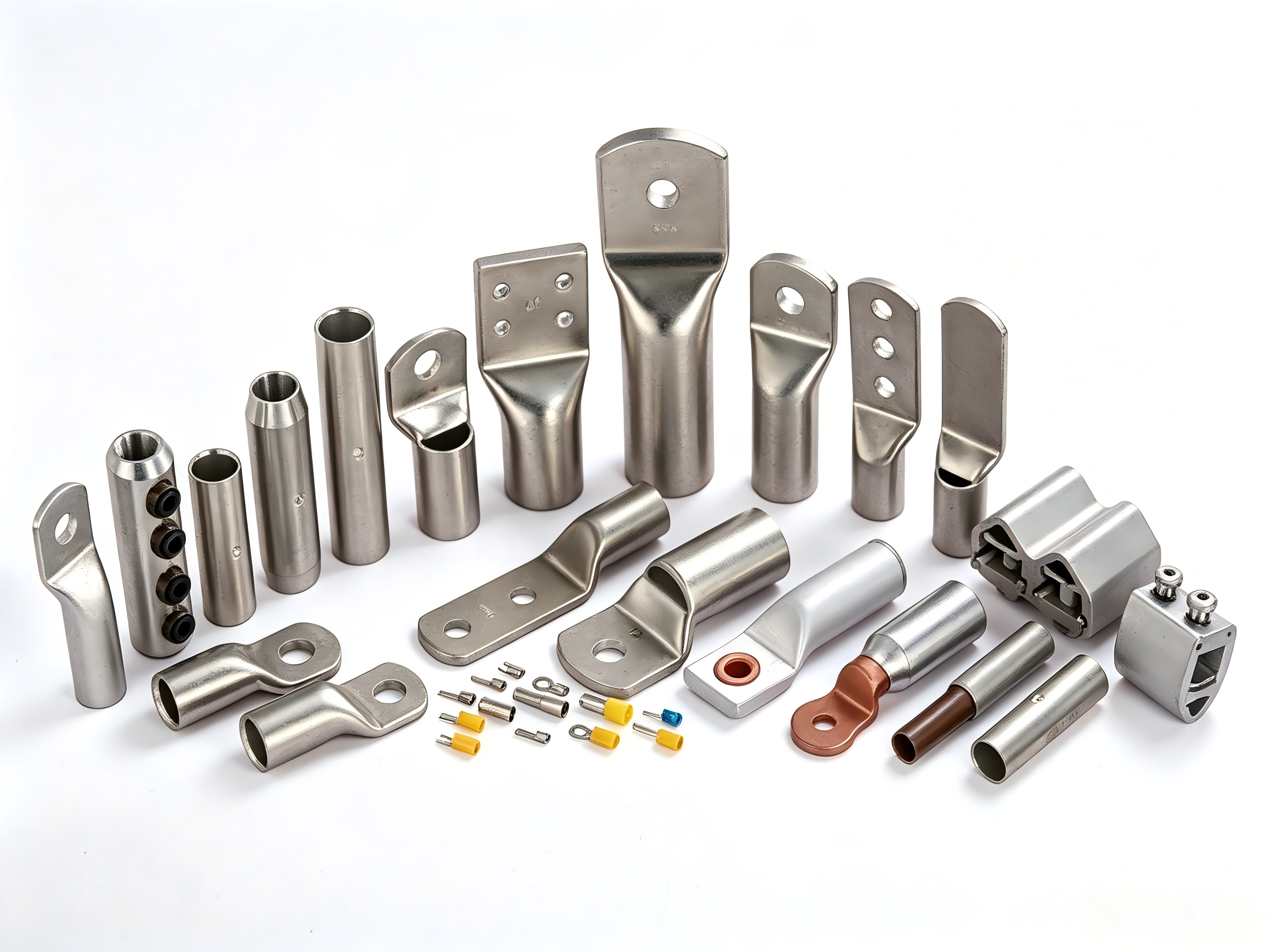
When comparing copper cable lugs and aluminum lugs, there is no universal winner. The right choice depends on your electrical requirements, environmental conditions, budget, and installation type.
Copper cable lugs offer superior conductivity, mechanical strength, and corrosion resistance, making them ideal for critical electrical systems. Aluminum cable lugs provide significant cost savings and weight reduction, making them suitable for utility networks and large-scale power distribution projects.
For most industrial, renewable energy, switchgear, and control panel applications, copper cable lugs remain the preferred choice due to their long-term reliability and performance.
What Are Cable Lugs?
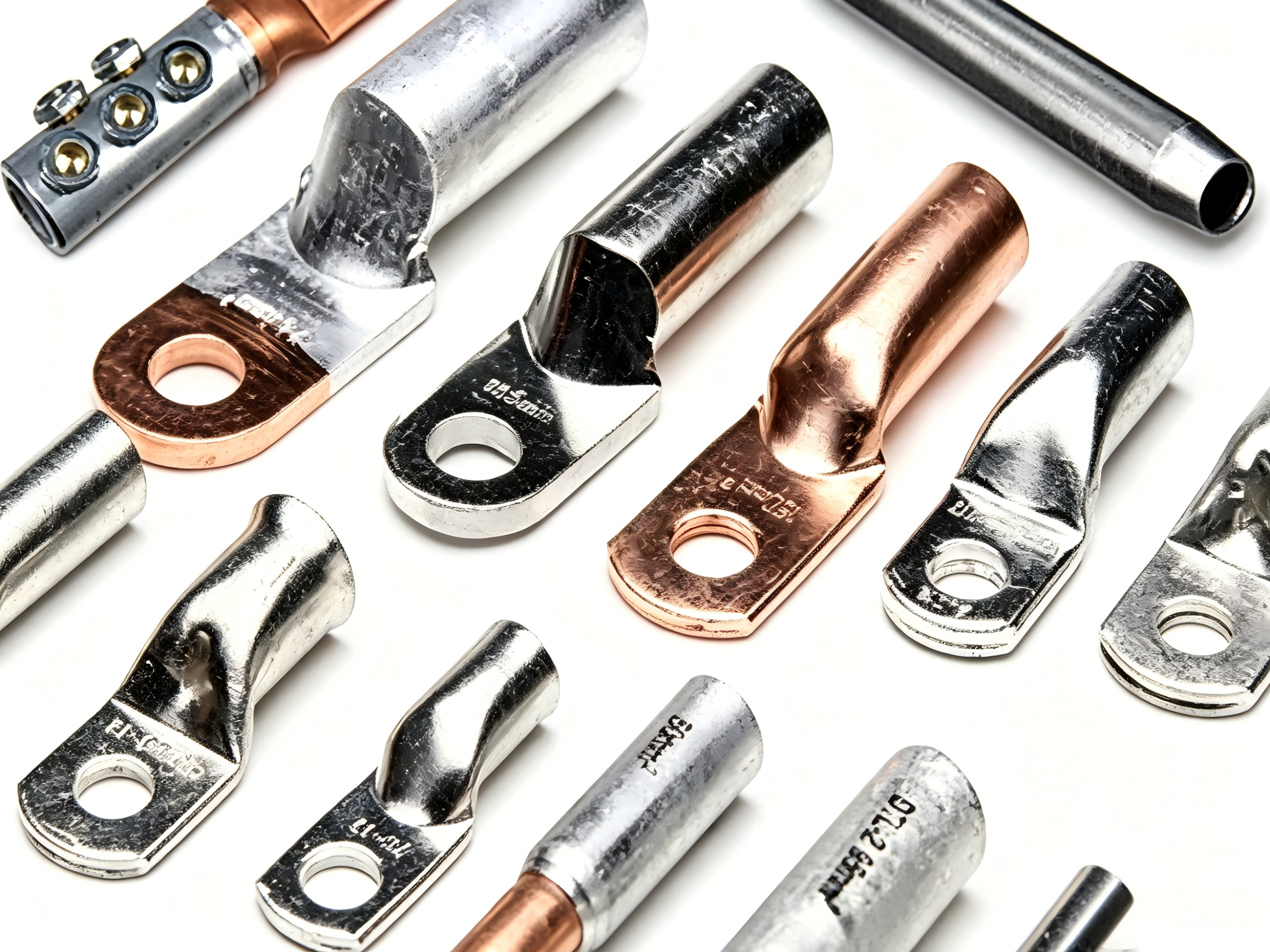
Cable lugs are electrical connectors designed to terminate and connect cables securely to electrical equipment, busbars, switchgear, transformers, motors, and distribution systems.
A properly selected cable lug ensures:
- Reliable electrical conductivity
- Low contact resistance
- Mechanical stability
- Long service life
- Enhanced system safety
Among all available materials, copper and aluminum are the two most widely used options.
Understanding the differences between them is essential for engineers, procurement teams, OEM manufacturers, and electrical contractors.
What Are Copper Cable Lugs?
Copper cable lugs are manufactured from high-conductivity electrolytic copper and are commonly used in low-voltage, medium-voltage, and high-voltage electrical systems.
Most premium copper lugs are produced from 99.9% pure copper and often feature a tin-plated surface to improve corrosion resistance.
Key Characteristics of Copper Cable Lugs
- Excellent electrical conductivity
- High current-carrying capacity
- Strong mechanical performance
- Superior thermal conductivity
- Excellent corrosion resistance
- Long service life
Common Applications
Copper cable lugs are widely used in:
- Industrial automation systems
- Switchgear assemblies
- Electrical control panels
- Solar power installations
- Battery energy storage systems
- Data centers
- Telecommunications infrastructure
- Railway electrical systems
Due to their outstanding electrical performance, copper lugs are often specified in mission-critical applications where reliability cannot be compromised.
What Are Aluminum Cable Lugs?
Aluminum cable lugs are manufactured from electrical-grade aluminum alloys and are primarily used with aluminum conductors.
Their lower material cost and lightweight construction make them attractive for large-scale electrical installations.
Key Characteristics of Aluminum Cable Lugs
- Lower material cost
- Lightweight design
- Good conductivity-to-weight ratio
- Suitable for large conductor sizes
- Commonly used in utility networks
Common Applications
Aluminum cable lugs are frequently used in:
- Power transmission systems
- Utility substations
- Overhead power lines
- Large-scale infrastructure projects
- Public utility distribution networks
Because aluminum is significantly lighter than copper, it is often selected for applications involving long cable runs and large conductor sizes.
Copper Cable Lugs vs Aluminum Lugs: Detailed Comparison
Electrical Conductivity
Electrical conductivity is one of the most important factors when selecting a cable lug.
Copper has approximately 100% International Annealed Copper Standard (IACS) conductivity.
Aluminum typically offers around 61% IACS conductivity.
What Does This Mean?
Copper allows electrical current to flow more efficiently while generating less resistance and heat.
As a result:
- Lower voltage drop
- Reduced energy loss
- Improved system efficiency
- Better performance under high loads
Winner: Copper Cable Lugs
For applications requiring maximum conductivity and efficiency, copper is the clear choice.
Corrosion Resistance
Environmental conditions can significantly impact electrical connection performance.
Copper naturally develops a protective oxide layer that slows further corrosion.
Additionally, tin-plated copper lugs provide enhanced protection in harsh environments.
Aluminum also forms an oxide layer. However, aluminum oxide is less conductive and may increase contact resistance if not properly managed.
Recommended Environments for Copper
- Coastal regions
- Offshore installations
- Chemical plants
- Renewable energy systems
- High-humidity locations
Winner: Copper Cable Lugs
Copper generally provides superior long-term corrosion resistance and connection reliability.
Mechanical Strength
Electrical connections are often exposed to vibration, thermal cycling, and mechanical stress.
Copper offers significantly higher tensile strength than aluminum.
Benefits of Higher Strength
- Better crimp retention
- Improved vibration resistance
- Reduced risk of deformation
- Longer operational lifespan
This advantage is particularly important in transportation, industrial machinery, and renewable energy applications.
Winner: Copper Cable Lugs
Copper provides greater mechanical durability under demanding operating conditions.
Weight Comparison
Weight becomes an important consideration in large-scale installations.
Aluminum weighs approximately one-third as much as copper.
Advantages of Lower Weight
- Easier transportation
- Reduced structural loading
- Lower installation costs
- Improved handling during installation
Winner: Aluminum Cable Lugs
For weight-sensitive projects, aluminum offers a clear advantage.
Cost Comparison
Material cost remains one of the primary reasons organizations consider aluminum alternatives.
Copper prices are significantly higher than aluminum prices.
For large-volume projects, the cost difference can become substantial.
Typical Cost Factors
| Factor | Copper Lug | Aluminum Lug |
| Material Cost | Higher | Lower |
| Installation Cost | Moderate | Moderate |
| Maintenance Cost | Lower | Higher Potential |
| Lifecycle Value | Excellent | Good |
While aluminum offers lower upfront costs, copper often delivers better long-term value through reduced maintenance and longer service life.
Winner: Aluminum for Initial Cost, Copper for Lifecycle Value
When Should You Choose Copper Cable Lugs?
Copper cable lugs are recommended when performance, safety, and reliability are the primary priorities.
Ideal Applications
- Industrial control systems
- Switchgear manufacturing
- Renewable energy projects
- Battery storage systems
- EV charging infrastructure
- Data centers
- Telecommunications equipment
- Critical power distribution systems
If downtime is expensive or safety is critical, copper is typically the preferred solution.
When Should You Choose Aluminum Cable Lugs?
Aluminum cable lugs are recommended when reducing project cost and weight are key objectives.
Ideal Applications
- Utility transmission systems
- Electrical substations
- Municipal infrastructure projects
- Long-distance power distribution
- Large conductor installations
For large-scale utility projects, aluminum can provide substantial economic benefits.
Copper vs Aluminum Cable Lugs by Industry
| Industry | Recommended Material |
| Solar Power | Copper |
| Wind Energy | Copper |
| Data Centers | Copper |
| Industrial Manufacturing | Copper |
| Battery Energy Storage | Copper |
| Telecommunications | Copper |
| Utility Transmission | Aluminum |
| Public Infrastructure | Aluminum |
| Overhead Distribution | Aluminum |
| Cost-Sensitive Projects | Aluminum |
Common Mistakes When Selecting Cable Lugs
Selecting Based on Price Alone
The lowest-cost option may not deliver the lowest lifecycle cost.
Ignoring Environmental Conditions
Corrosion resistance should always be evaluated before material selection.
Using Incorrect Lug Sizes
Improper sizing can increase resistance and generate excessive heat.
Mixing Copper and Aluminum Without Proper Connectors
Direct contact between copper and aluminum can lead to galvanic corrosion.
Bimetallic connectors should be used when joining dissimilar metals.
Overlooking Industry Standards
Always verify compliance with relevant standards and certifications.
FAQs
1.Are copper cable lugs better than aluminum lugs?
Copper cable lugs generally provide better conductivity, strength, and corrosion resistance.
2.Why are copper lugs more expensive?
Copper is a higher-value raw material with superior electrical performance.
3.Can aluminum lugs be used with copper cables?
Special bimetallic connectors are recommended to prevent galvanic corrosion.
4.Which cable lug lasts longer?
Copper cable lugs typically provide a longer service life in demanding environments.
5.Are aluminum lugs suitable for solar applications?
Copper lugs are generally preferred for solar systems due to superior reliability.
6.Which material offers the best conductivity?
Copper provides significantly higher conductivity than aluminum.
How to Choose the Right Cable Lug Manufacturer
The performance of a cable lug depends not only on the material but also on manufacturing quality.
When evaluating suppliers, consider the following:
Material Quality
Ensure the manufacturer uses high-purity copper or certified aluminum alloys.
Production Capabilities
Look for manufacturers with advanced stamping, forming, and plating capabilities.
Quality Control
Verify inspection procedures, dimensional control, and electrical testing standards.
Customization Support
Many applications require customized terminals, cable lugs, and connector solutions.
Industry Experience
A supplier with extensive experience can provide valuable engineering support and design recommendations.
Why Manufacturing Quality Matters
Even the best material cannot compensate for poor manufacturing practices.
High-quality cable lugs should provide:
- Consistent dimensions
- Accurate crimp barrels
- Reliable conductivity
- Excellent surface finish
- Long-term durability
Precision manufacturing directly impacts electrical performance, safety, and product lifespan.
Conclusion
Copper cable lugs remain the preferred solution for applications requiring maximum conductivity, corrosion resistance, and long-term reliability. Aluminum cable lugs offer a cost-effective and lightweight alternative for utility and infrastructure projects.
The best choice depends on your specific application, operating environment, performance requirements, and budget objectives.
For OEM manufacturers, electrical contractors, renewable energy developers, and industrial equipment suppliers, partnering with an experienced custom terminal manufacturer ensures optimal product selection and long-term system reliability.
If you are looking for high-quality copper cable lugs, aluminum lugs, custom terminals, or specialized electrical connection solutions, working with Qianwei Precision can help improve performance, reduce costs, and ensure compliance with industry standards.

