

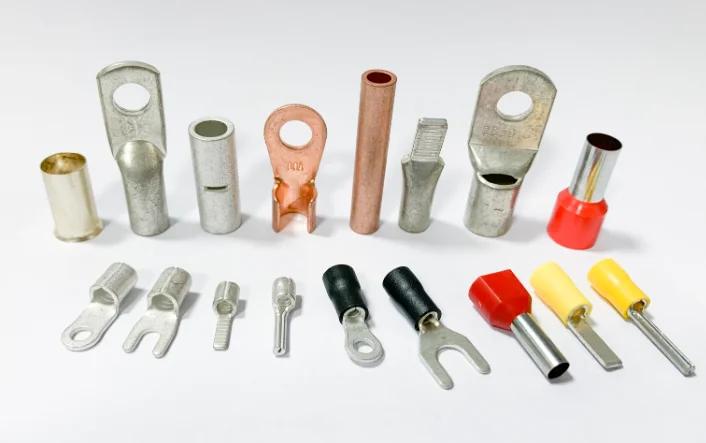
Electrical terminals are among the smallest components in an electrical system, yet they play a critical role in ensuring safety, reliability, and performance. Whether in automotive wiring harnesses, industrial automation equipment, energy storage systems, consumer electronics, or AI data centers, electrical terminals provide the secure connections required for efficient power and signal transmission.
A poorly selected or improperly installed terminal can result in increased contact resistance, overheating, voltage drops, equipment failure, and even safety hazards. For engineers, purchasing managers, and OEM manufacturers, understanding terminal types, materials, and application requirements is essential for making informed decisions.
This comprehensive guide explores the fundamentals of electrical terminals, their classifications, materials, applications, testing methods, and selection criteria to help you choose the right terminal solution for your project.
What Is an Electrical Terminal?
An electrical terminal is a conductive connector attached to the end of a wire, cable, or conductor to establish a secure connection with another electrical component, such as a screw, stud, relay, terminal block, busbar, connector housing, or PCB.
Electrical terminals serve as the interface between conductors and electrical equipment, ensuring stable current flow while maintaining mechanical integrity.
How Electrical Terminals Work
Electrical terminals create an electrical pathway between conductors and equipment by providing:
- Low-resistance electrical contact
- Mechanical retention
- Vibration resistance
- Environmental protection
Depending on the application, terminals may be attached through:
- Crimping
- Soldering
- Welding
- Screw fastening
- Spring clamp systems
Core Functions of Electrical Terminals
Provide Reliable Electrical Conductivity
Terminals ensure current flows efficiently with minimal resistance.
Deliver Mechanical Strength
A properly installed terminal prevents wire pull-out and maintains connection stability.
Improve Safety
Insulated terminals help prevent accidental short circuits and electrical shocks.
Simplify Maintenance
Terminals allow faster installation, replacement, and troubleshooting compared to direct wire connections.
Why Electrical Terminals Are Important
Electrical systems are becoming increasingly complex and power-intensive. As a result, connection reliability has become more critical than ever.
Ensuring Reliable Electrical Connections
Stable connections reduce the risk of intermittent failures and equipment downtime.
Reducing Contact Resistance
Poor contact surfaces generate heat and waste energy. High-quality terminals minimize resistance and improve efficiency.
Improving Safety and System Stability
Reliable terminals reduce risks associated with loose connections, arcing, and overheating.
Simplifying Maintenance and Replacement
Many terminal designs enable quick replacement without rewiring the entire system.
Supporting High-Current and High-Voltage Applications
Modern EVs, battery energy storage systems, and AI data centers require terminals capable of carrying hundreds of amps safely.
Main Categories of Electrical Terminals
Electrical terminals are generally divided into insulated and non-insulated types.
Insulated Terminals
Insulated terminals feature a protective sleeve covering part of the metal connector.
Common Insulation Materials
PVC (Polyvinyl Chloride)
- Cost-effective
- Widely used
- Suitable for general-purpose applications
Nylon
- Higher durability
- Better temperature resistance
- Improved flexibility
Heat-Shrink Insulation
- Excellent sealing performance
- Enhanced moisture protection
- Superior strain relief
Advantages of Insulated Terminals
- Enhanced safety
- Protection against moisture and dust
- Reduced corrosion risk
- Better wire support
- Improved vibration resistance
Typical Applications
- Automotive wiring harnesses
- Marine equipment
- Consumer electronics
- Home appliances
- Outdoor electrical systems
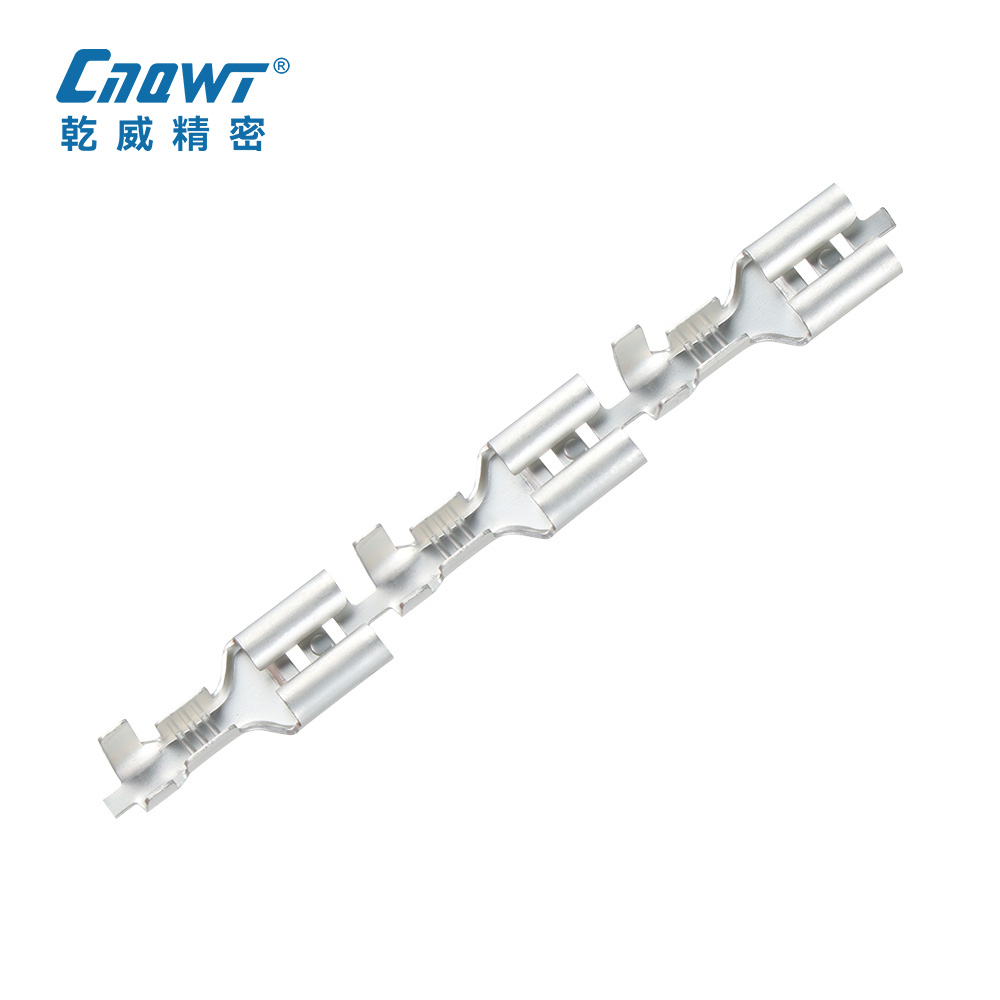
Non-Insulated Terminals
Non-insulated terminals consist of exposed metal without protective sleeves.
Advantages
- Lower cost
- Compact size
- Better fit in confined spaces
- Flexible insulation options
Limitations
- Lower protection against accidental contact
- Additional insulation may be required
Typical Applications
- Control cabinets
- Industrial machinery
- Electrical panels
- Internal equipment wiring
Insulated vs Non-Insulated Terminals
| Feature | Insulated | Non-Insulated |
|---|---|---|
| Safety | Excellent | Moderate |
| Cost | Higher | Lower |
| Installation | Easier | Requires care |
| Environmental Protection | Better | Limited |
| Space Efficiency | Moderate | Excellent |
Common Types of Electrical Terminals
Different terminal designs are optimized for different installation methods and operating environments.
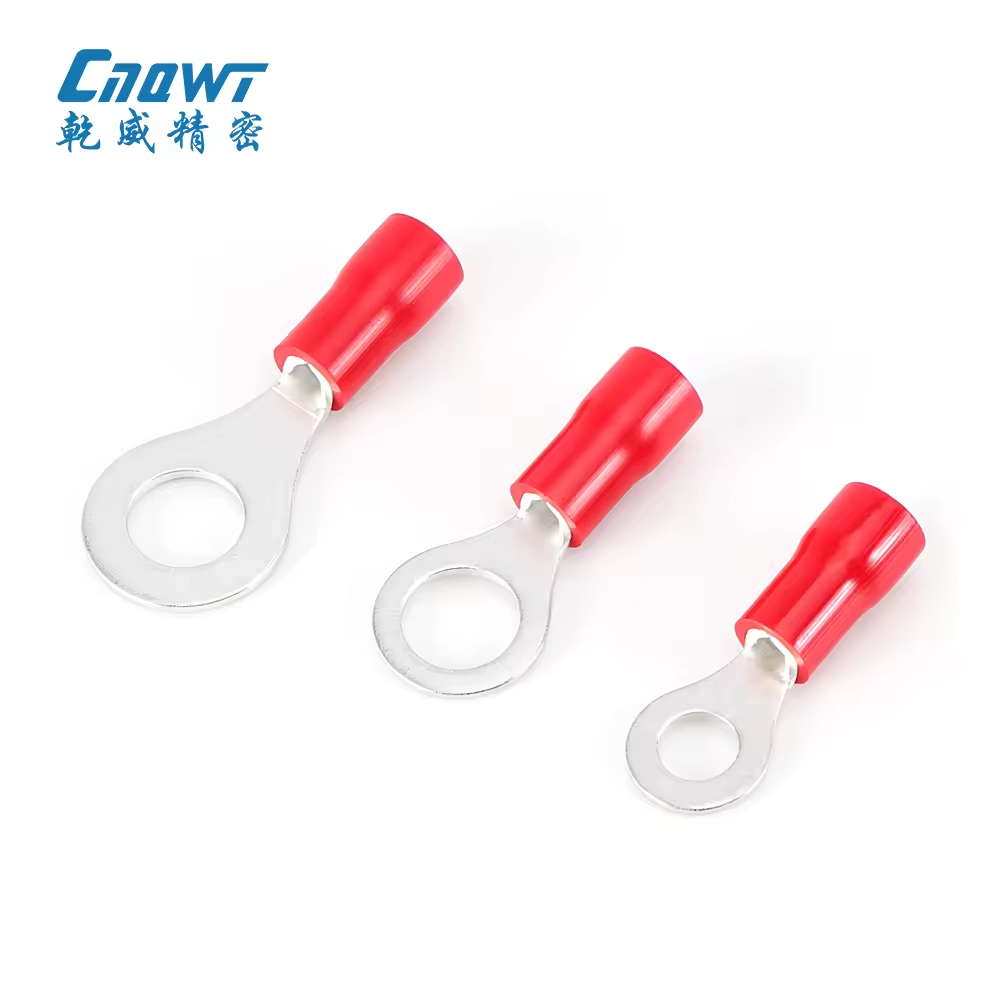
Ring Terminals
Ring terminals feature a fully enclosed circular connection point.
Benefits
- Extremely secure connection
- High vibration resistance
- Excellent pull-out strength
- Suitable for high-current circuits
Applications
- Battery connections
- Grounding systems
- Power distribution panels
- Industrial equipment
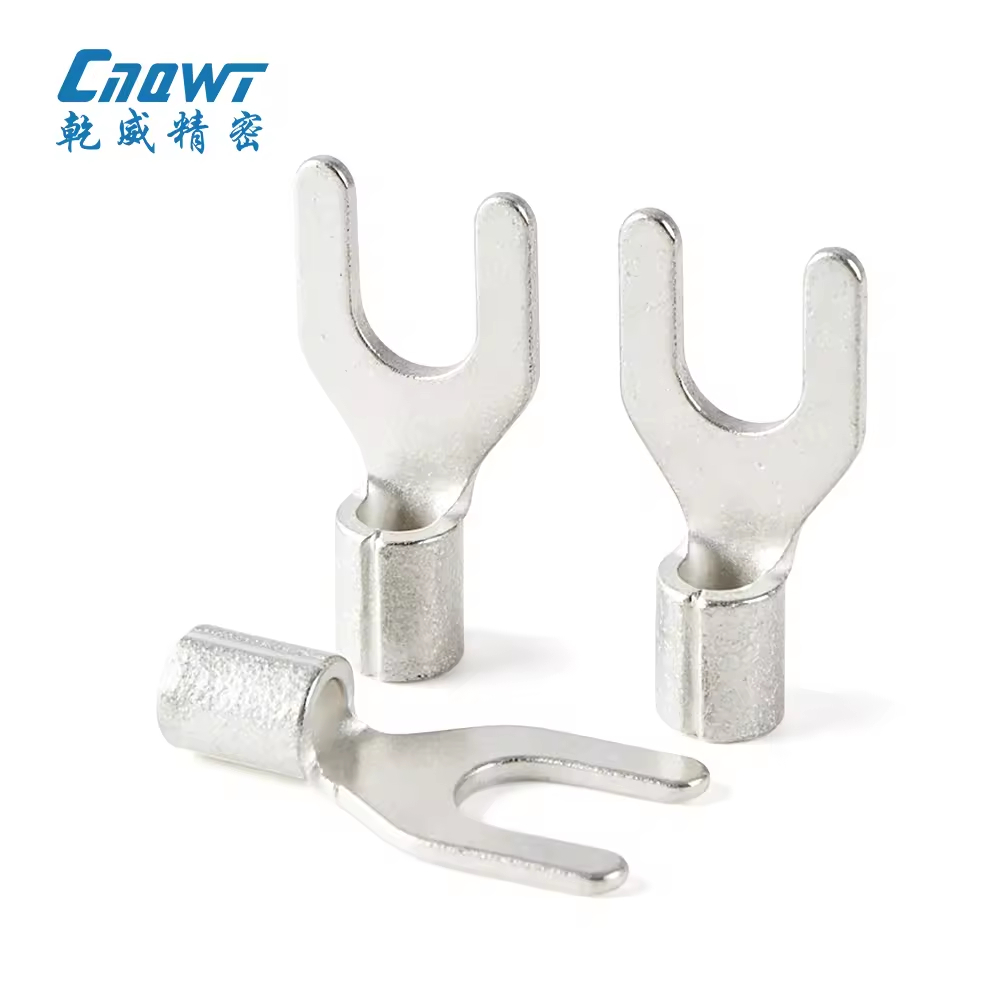
Spade (Fork) Terminals
Spade terminals use an open-ended fork design.
Benefits
- Fast installation
- Easy maintenance
- No need to fully remove mounting screws
Applications
- Control panels
- Electrical cabinets
- Appliance wiring
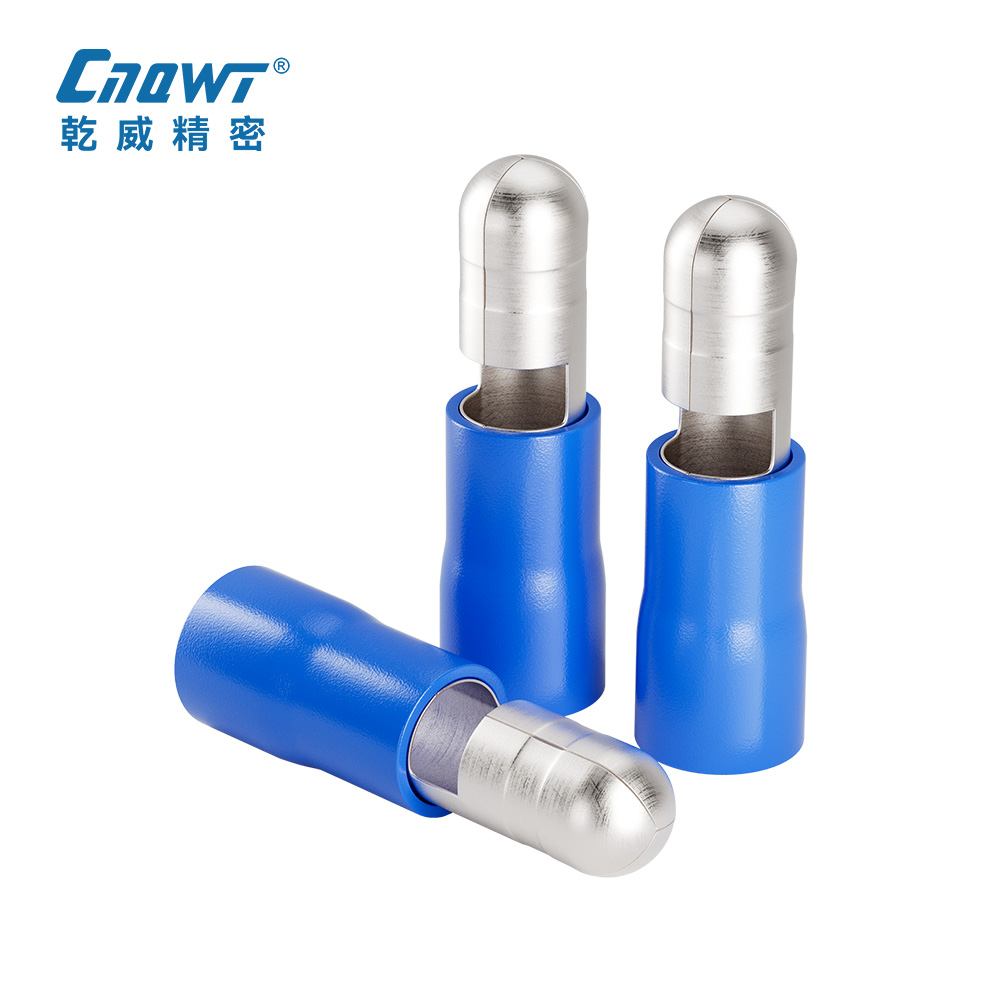
Bullet Terminals
Bullet terminals consist of a male and female connector pair.
Benefits
- Quick connect/disconnect
- Compact design
- Reduced contamination exposure
Applications
- Automotive harnesses
- Motorcycles
- Marine systems
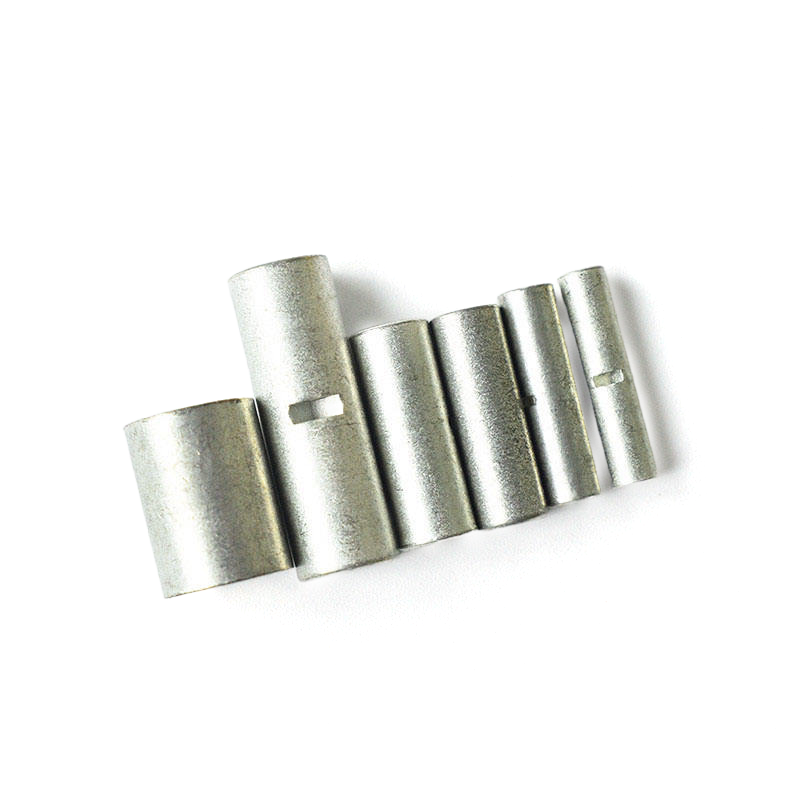
Butt Splice Connectors
Butt connectors join two wires end-to-end.
Benefits
- Fully enclosed connection
- Strong mechanical retention
- Reliable conductivity
Applications
- Wire repair
- Harness extensions
- Maintenance work
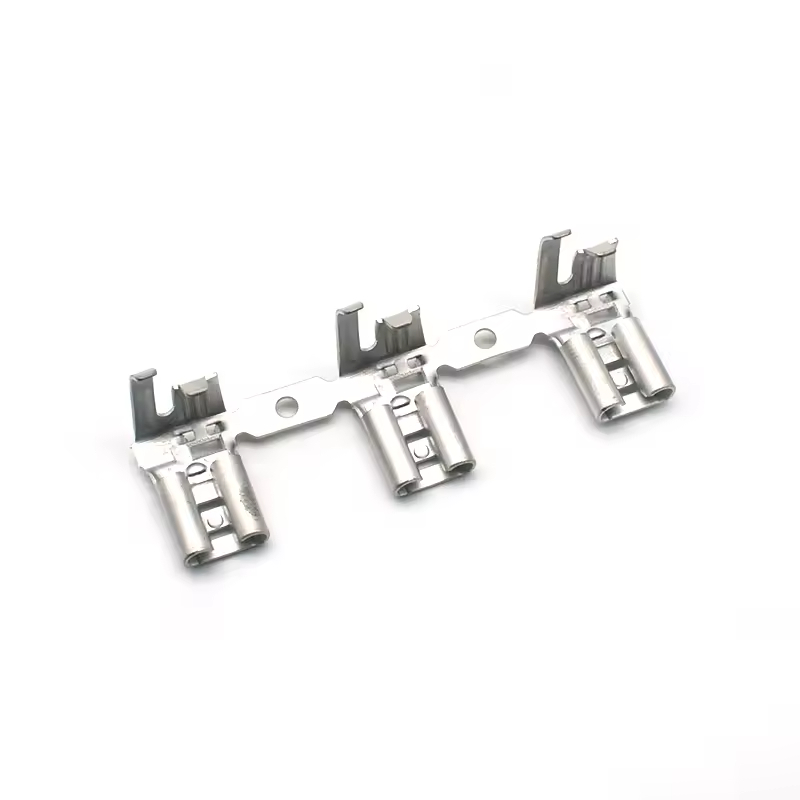
Flag Terminals
Flag terminals provide a 90-degree wire exit angle.
Benefits
- Space-saving design
- Improved cable routing
- Reduced wire stress
Applications
- Automotive modules
- Home appliances
- Compact electronic assemblies
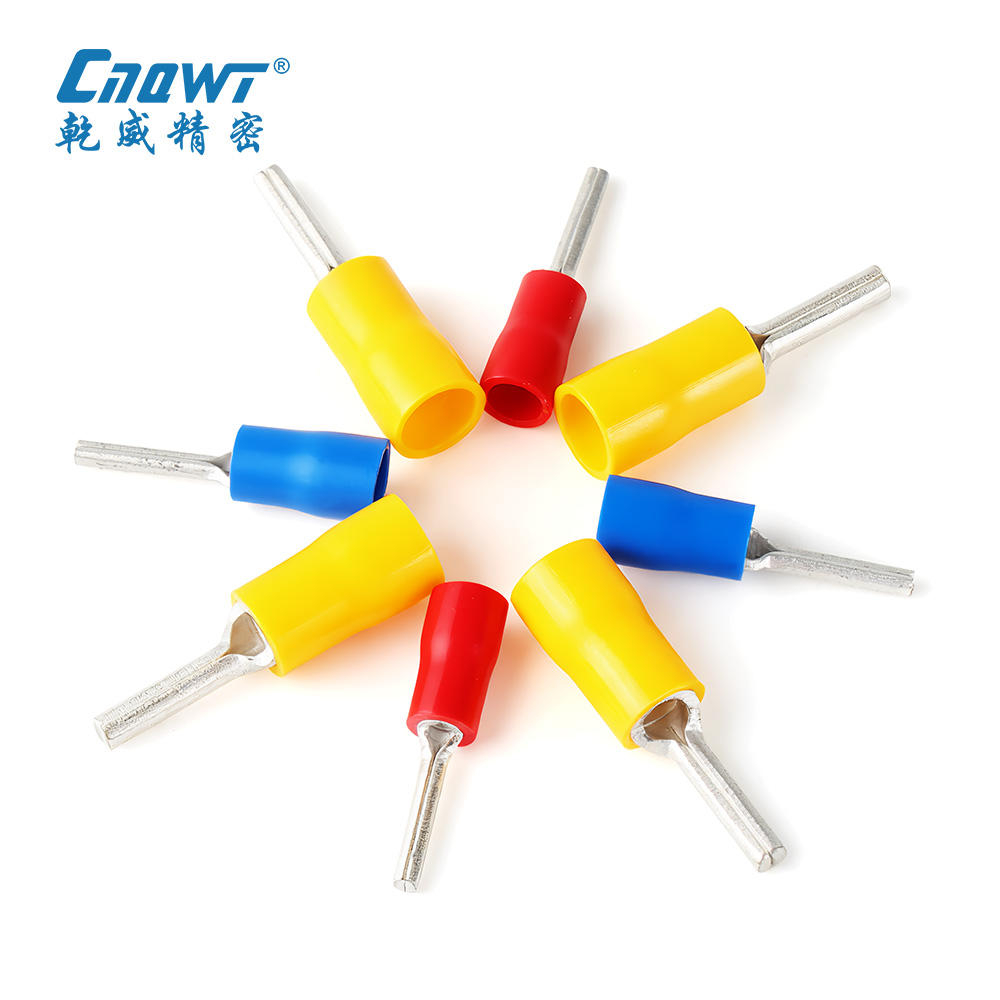
Pin Terminals
Pin terminals are designed for insertion into terminal blocks.
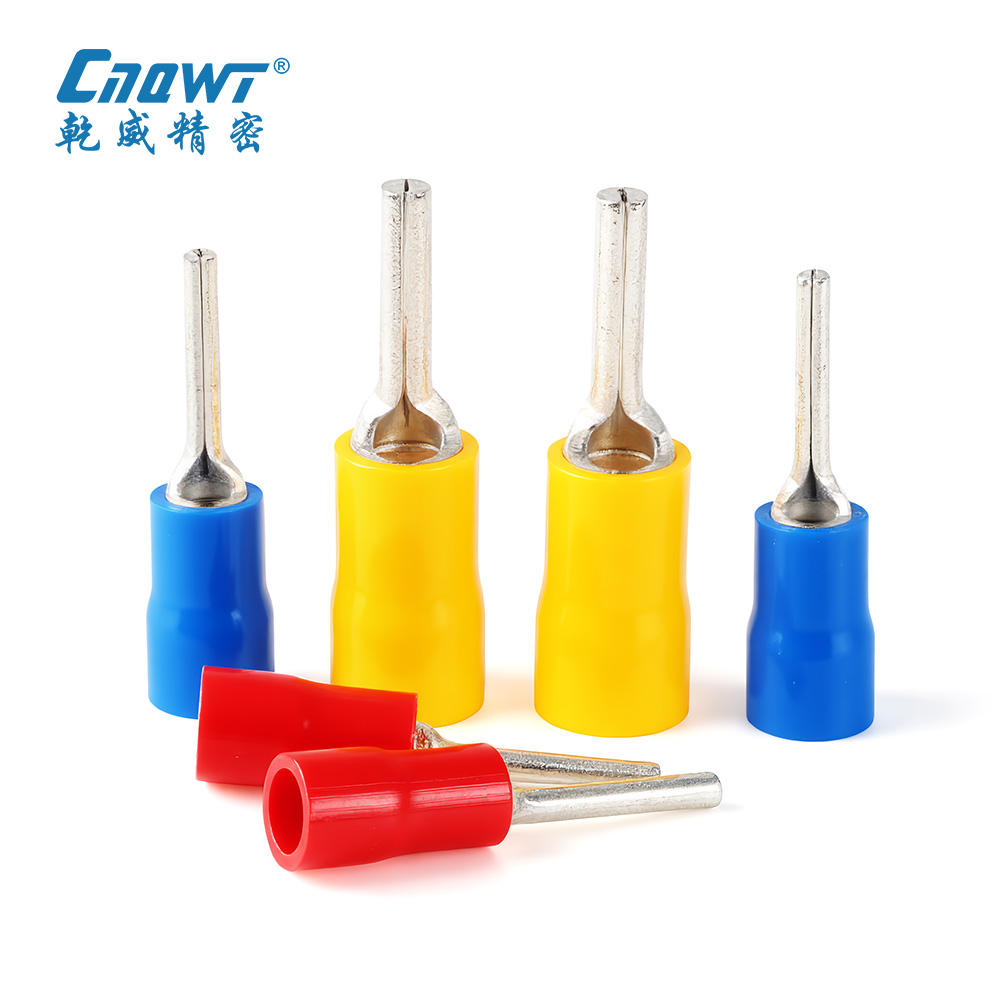
Benefits
- Secure insertion
- Improved conductor organization
Applications
- PLC systems
- Control cabinets
- Industrial automation
Quick Disconnect Terminals
Quick disconnect terminals enable tool-free connection and removal.
Benefits
- Fast assembly
- Simplified maintenance
- Reduced downtime
Applications
- Appliances
- Industrial equipment
- Automotive systems
Electrical Terminal Materials Explained
Material selection directly affects conductivity, corrosion resistance, durability, and cost.
Copper Terminals
Copper is widely regarded as the best conductor among commonly used terminal materials.
Advantages
- Excellent conductivity
- High current carrying capacity
- Superior thermal performance
Applications
- Battery terminals
- Energy storage systems
- High-current equipment
Brass Terminals
Brass combines copper and zinc to improve strength.
Advantages
- Good conductivity
- Better mechanical strength
- Cost-effective
Applications
- Consumer electronics
- Connectors
- Automotive systems
Phosphor Bronze Terminals
Phosphor bronze offers improved elasticity and fatigue resistance.
Advantages
- Excellent spring properties
- High wear resistance
- Long service life
Applications
- Connector contacts
- Signal transmission systems
- Precision electronics
Aluminum Terminals
Aluminum provides lightweight and economical solutions.
Advantages
- Lower cost
- Lightweight
- Suitable for large conductors
Applications
- Power transmission
- Utility infrastructure
- Large-scale energy projects
Surface Plating Options for Electrical Terminals
Surface plating improves corrosion resistance and electrical performance.
Tin Plating
The most widely used plating option.
Benefits
- Cost-effective
- Good conductivity
- Excellent solderability
- Corrosion protection
Nickel Plating
Benefits
- High wear resistance
- Elevated temperature performance
- Strong corrosion protection
Silver Plating
Benefits
- Outstanding conductivity
- Excellent high-current performance
Applications
- Power distribution
- High-current systems
Gold Plating
Benefits
- Exceptional corrosion resistance
- Stable low-resistance contacts
Applications
- Aerospace
- Medical equipment
- Precision electronics
Plating Comparison
| Plating | Conductivity | Corrosion Resistance | Cost |
|---|---|---|---|
| Tin | Good | Good | Low |
| Nickel | Moderate | Excellent | Medium |
| Silver | Excellent | Good | High |
| Gold | Excellent | Excellent | Very High |
Electrical Terminal Applications by Industry
Automotive Wiring Harnesses
Modern vehicles contain thousands of electrical connections.
Common terminal types include:
- Ring terminals
- Bullet terminals
- Waterproof terminals
- Crimp terminals
Energy Storage Systems (ESS)
Battery energy storage systems require high-current connections.
Key requirements include:
- Low resistance
- Thermal stability
- Vibration resistance
Copper and tin-plated terminals are widely used.
Electric Vehicle Battery Packs
EV battery systems demand:
- High-current capacity
- Compact design
- Excellent thermal performance
Specialized battery terminals and busbar connections are essential.
Industrial Automation Equipment
Automation systems require reliable signal and power transmission.
Applications include:
- PLC cabinets
- Robotics
- Sensors
- Industrial controls
Consumer Electronics
Miniaturized terminals support compact device designs while maintaining reliability.
Telecommunications Equipment
Communication infrastructure requires stable signal transmission and corrosion resistance.
AI Data Centers
AI servers and GPU clusters consume enormous amounts of power.
High-current terminals are increasingly used in:
- Power distribution units
- Server racks
- Battery backup systems
- UPS equipment
This sector is becoming one of the fastest-growing markets for precision electrical terminals.
How to Choose the Right Electrical Terminal
Selecting the correct terminal involves multiple engineering considerations.
Current Rating
The terminal must safely carry the required current without overheating.
Voltage Rating
Ensure compliance with system voltage requirements.
Wire Gauge Compatibility
The terminal barrel size must match conductor dimensions.
Environmental Conditions
Temperature
Consider operating and peak temperatures.
Moisture
Waterproof solutions may be required.
Chemicals
Corrosion-resistant materials are necessary in harsh environments.
Vibration
Automotive and industrial systems often require enhanced retention strength.
Installation Method
Crimp Connections
The most common method due to speed and reliability.
Solder Connections
Suitable for specialized electronics applications.
Screw Connections
Common in industrial and control panel installations.
Common Causes of Electrical Terminal Failure
Understanding failure modes helps improve system reliability.
Improper Crimping
Poor crimp quality creates resistance and weak mechanical retention.
Corrosion
Environmental exposure degrades electrical contact surfaces.
Overheating
Excess current can damage terminals and insulation.
Loose Connections
Vibration and thermal cycling may loosen improperly secured terminals.
Vibration Damage
Repeated movement causes fatigue and eventual failure.
Material Fatigue
Long-term mechanical stress weakens terminal structures.
Electrical Terminal Testing and Quality Control
Quality testing ensures performance and reliability.
Pull-Out Force Testing
Measures wire retention strength.
Contact Resistance Testing
Evaluates electrical conductivity.
Salt Spray Testing
Assesses corrosion resistance.
Thermal Cycling Testing
Verifies performance under repeated temperature changes.
Vibration Testing
Simulates real-world operating conditions.
Dimensional Inspection
Ensures compliance with engineering specifications.
Future Trends in Electrical Terminal Technology
The electrical connection industry continues to evolve rapidly.
High-Current Terminals for Energy Storage
Growing renewable energy deployment is increasing demand for high-current connections.
AI Data Center Power Connectivity
AI infrastructure requires higher power density and improved thermal performance.
Miniaturized Electronics
Smaller devices demand compact terminal solutions without sacrificing reliability.
Smart Manufacturing
Advanced stamping technologies improve precision and consistency.
Sustainable Materials and Plating
Manufacturers are adopting environmentally friendly production processes.
Why Choose Qianwei Precision for Electrical Terminal Manufacturing
Choosing the right manufacturing partner is as important as selecting the right terminal.
Precision Stamping Expertise
Qianwei specializes in high-precision metal stamping for electrical terminals and connector contacts.
Custom Terminal Development
Customized solutions are available based on drawings, samples, or performance requirements.
OEM and ODM Services
Comprehensive support is provided from concept development to mass production.
Advanced Mold Design Capabilities
In-house tooling expertise ensures consistent quality and shorter lead times.
Comprehensive Testing Services
Qianwei performs rigorous quality verification, including:
- Pull-Out Force Testing
- Contact Resistance Testing
- Salt Spray Testing
- Thermal Cycling Testing
- Vibration Testing
- Dimensional Inspection
These testing capabilities help ensure long-term reliability across demanding applications.
Conclusion
Electrical terminals are essential components that directly impact the safety, reliability, and performance of electrical systems. From automotive wiring and industrial automation to energy storage systems and AI data centers, selecting the correct terminal type, material, and plating solution is critical for long-term success.
By understanding terminal classifications, application requirements, material characteristics, and testing standards, engineers and purchasing professionals can make informed decisions that reduce failure risks and improve product reliability.
Whether you need standard terminals or custom-engineered solutions, partnering with an experienced manufacturer can help optimize performance, reduce costs, and accelerate product development. Qianwei provides precision terminal manufacturing, custom development, and comprehensive testing services to support a wide range of industries worldwide.
FAQ
What is an electrical terminal?
An electrical terminal is a conductive connector used to securely connect wires or cables to electrical equipment.
What are the main types of electrical terminals?
Common types include ring terminals, spade terminals, hook terminals, bullet terminals, butt connectors, flag terminals, pin terminals, and quick disconnect terminals.
What is the difference between insulated and non-insulated terminals?
Insulated terminals provide additional protection against electrical contact and environmental exposure, while non-insulated terminals are more compact and cost-effective.
Which material is best for electrical terminals?
Copper is generally preferred for high-conductivity applications, while brass and phosphor bronze offer additional mechanical advantages.
Why is tin plating commonly used on terminals?
Tin plating improves corrosion resistance, conductivity, and solderability while remaining cost-effective.
What causes electrical terminal failure?
Common causes include improper crimping, corrosion, overheating, vibration damage, loose connections, and material fatigue.
How are electrical terminals tested?
Typical tests include pull-out force testing, contact resistance testing, thermal cycling, salt spray testing, vibration testing, and dimensional inspection.
What terminals are used in energy storage systems?
High-current copper terminals, battery terminals, busbar terminals, and tin-plated terminals are commonly used.
Can electrical terminals be customized?
Yes. Custom terminals can be designed based on wire size, current requirements, installation methods, and application environments.
Which industries use electrical terminals?
Electrical terminals are widely used in automotive, energy storage, industrial automation, telecommunications, consumer electronics, and AI data center applications.

