

Electrical terminals play a critical role in modern electrical systems. Whether used in automotive wiring harnesses, industrial machinery, renewable energy systems, or consumer electronics, terminals must provide stable conductivity, reliable mechanical retention, and long-term durability.
However, even high-quality terminals can fail if they are not properly matched with the correct insulation type.
Many electrical failures are caused by:
- Incorrect insulation selection
- Poor crimp compatibility
- Inadequate temperature resistance
- Moisture intrusion
- Improper environmental protection
As electrical systems become more compact, powerful, and demanding, matching terminals with suitable insulation materials has become increasingly important.
The right insulation combination improves:
- Electrical safety
- Waterproof performance
- Corrosion resistance
- Mechanical durability
- Long-term reliability
This guide explains how to correctly match terminals with insulation types for different industries and operating environments.
What Are Insulated Electrical Terminals?
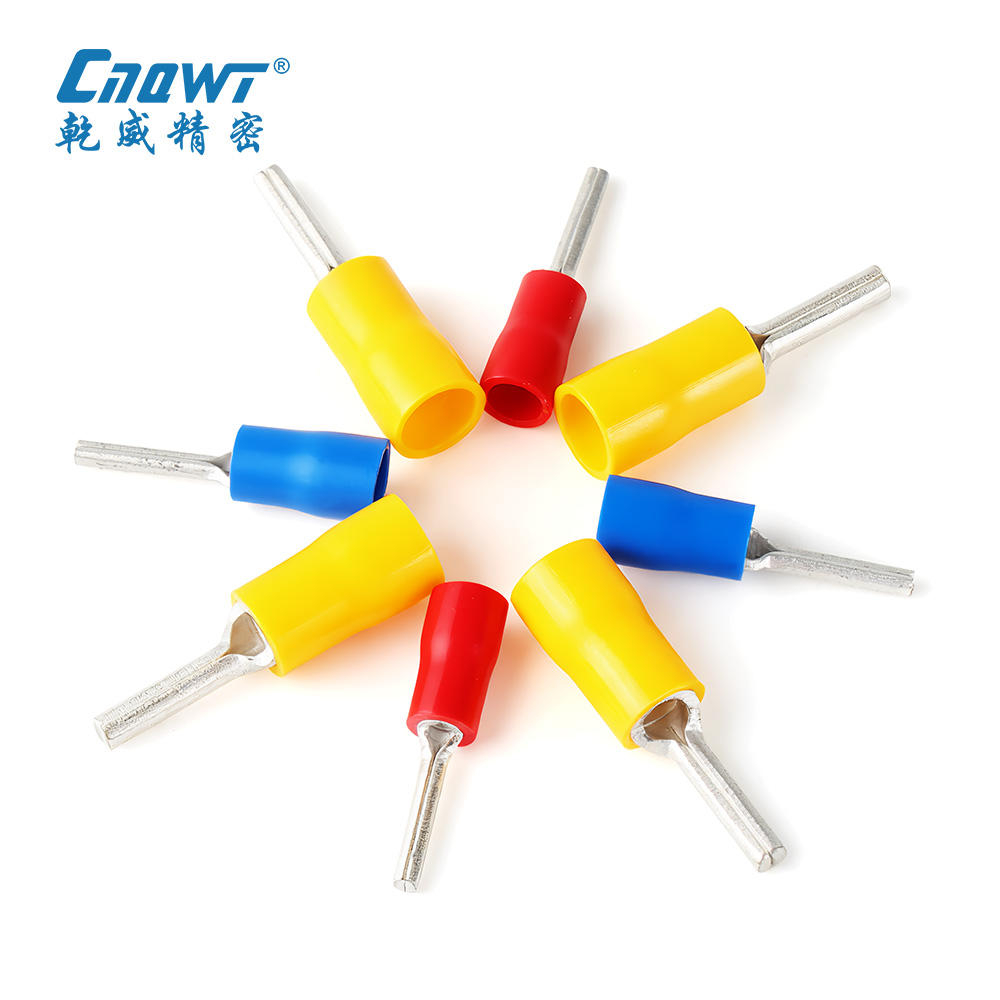
Insulated terminals are electrical connectors that include a protective insulating sleeve around the crimp barrel or connection area.
The insulation layer helps:
- Prevent accidental short circuits
- Improve electrical safety
- Protect against environmental exposure
- Strengthen mechanical durability
Insulated terminals are widely used in:
- Automotive wiring
- Industrial equipment
- Consumer electronics
- Power distribution systems
Depending on the application, insulation materials may vary in:
- Temperature resistance
- Waterproof capability
- Mechanical strength
- Chemical resistance
Main Functions of Terminal Insulation
Electrical Protection
The primary purpose of insulation is preventing unintended electrical contact.
Proper insulation reduces the risk of:
- Short circuits
- Electric shock
- Arc generation
Mechanical Protection
Insulation also helps protect the wire connection from:
- Abrasion
- Mechanical vibration
- Wire bending stress
Environmental Protection
Certain insulation materials improve resistance to:
- Moisture
- Dust
- Corrosion
- UV exposure
Wire Strain Relief
Insulated terminals help reduce stress concentration near the crimp area, improving long-term wire reliability.
Common Types of Terminal Insulation
Different insulation materials are designed for different operating conditions.
Choosing the correct insulation type is essential for reliable performance.
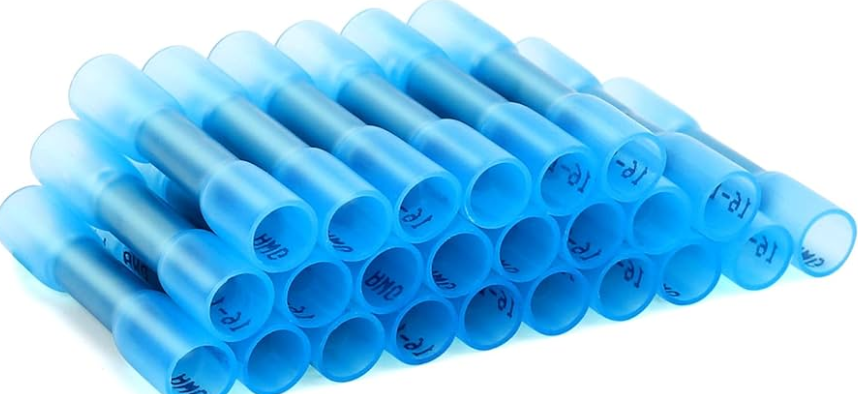
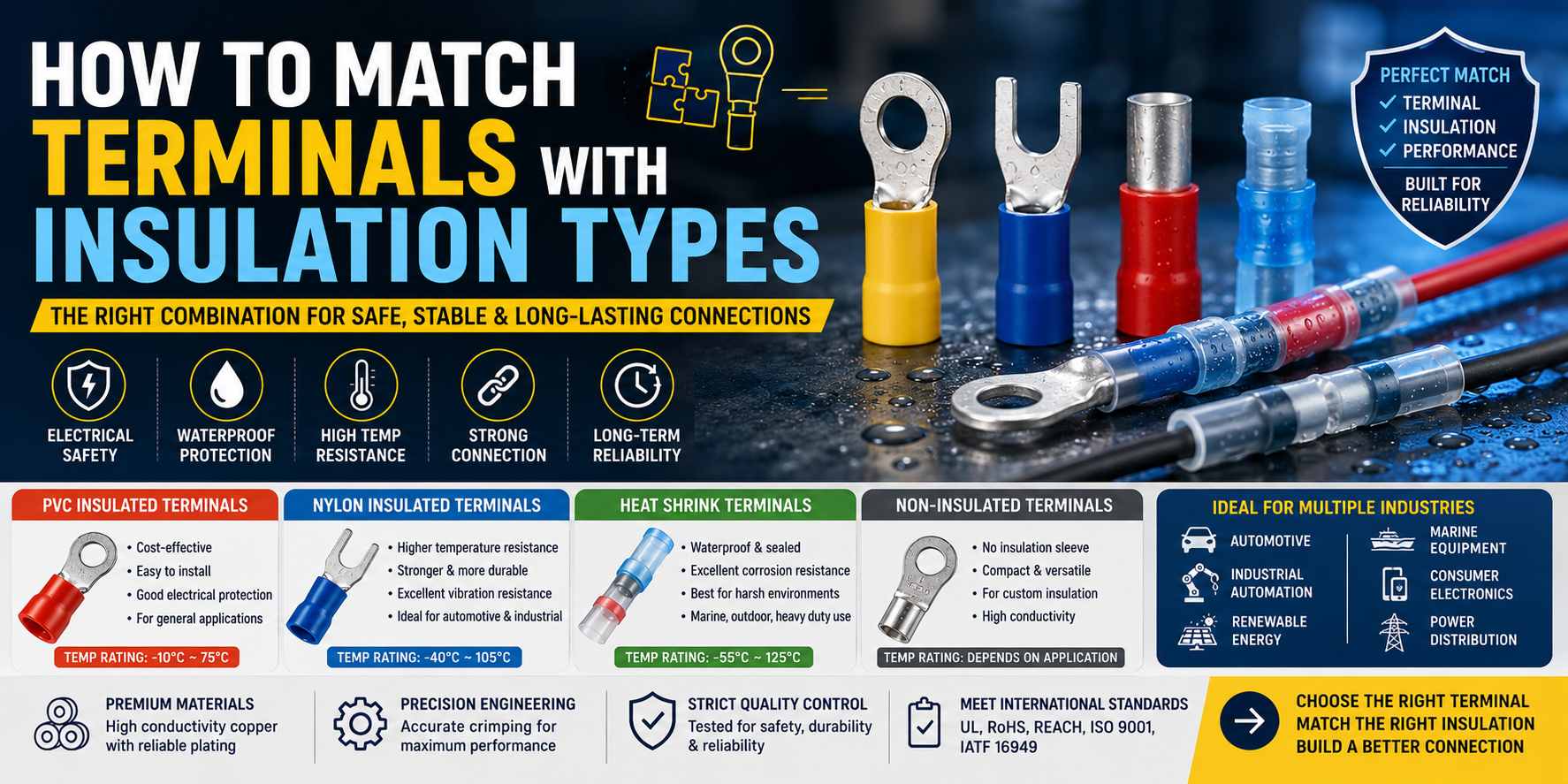
PVC Insulated Terminals
PVC (Polyvinyl Chloride) insulated terminals are among the most widely used terminal types.
Features
- Low manufacturing cost
- Easy color identification
- Good flexibility
- Widely available
Advantages
- Economical solution
- Suitable for general electrical applications
- Easy installation
Limitations
PVC has relatively limited:
- Heat resistance
- Chemical resistance
- UV durability
Typical temperature rating:
- Approximately 75°C to 105°C
Typical Applications
- Consumer electronics
- Household appliances
- Low-cost electrical assemblies
Nylon Insulated Terminals
Nylon insulation provides better performance than standard PVC insulation.
Features
- Higher mechanical strength
- Better abrasion resistance
- Improved temperature resistance
- Better flexibility
Advantages
- More durable in industrial environments
- Better vibration resistance
- Longer service life
Best Applications
Nylon insulated terminals are commonly used in:
- Automotive systems
- Industrial control equipment
- Machinery wiring harnesses
Temperature Performance
Nylon generally performs better under elevated temperatures compared with PVC.
Heat Shrink Insulated Terminals
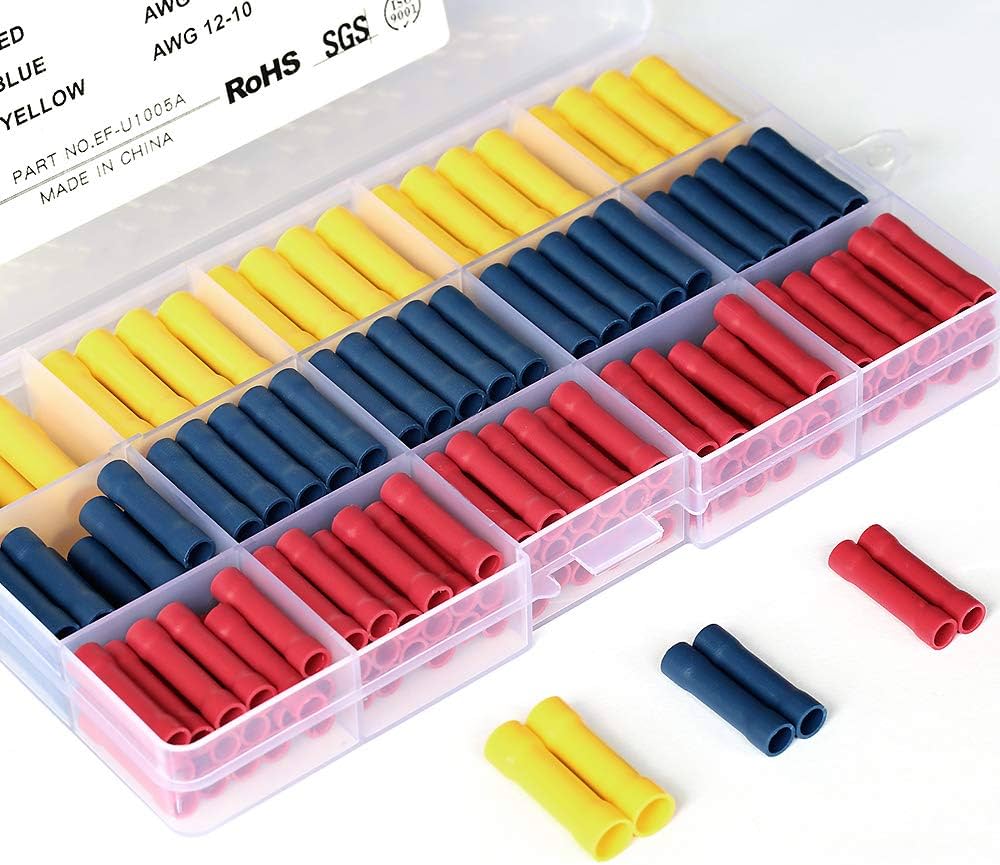
Heat shrink terminals provide the highest level of environmental protection among common insulated terminals.
Features
- Heat-activated sealing
- Waterproof protection
- Adhesive-lined insulation
- Excellent environmental resistance
Advantages
- Superior moisture protection
- Strong corrosion resistance
- Better strain relief
- Improved vibration durability
Best Outdoor Applications
Heat shrink terminals are widely used in:
- Marine systems
- Solar power systems
- Outdoor electrical installations
- Heavy-duty automotive wiring
Why They Are Popular
Once heated, the insulation tightly seals around the wire, creating a waterproof barrier against moisture and contaminants.
Non-Insulated Terminals
Non-insulated terminals do not include a built-in insulation sleeve.
Features
- Compact design
- Better flexibility for custom insulation solutions
- Suitable for automated assembly
Advantages
- Better conductivity in some applications
- Easier visual inspection of crimp quality
- Suitable for high-temperature environments
Industrial Applications
Non-insulated terminals are commonly used in:
- Industrial equipment
- Power distribution systems
- Automotive OEM harnesses
Additional insulation such as heat shrink tubing is often applied separately.
Why Matching Terminals with Insulation Types Matters
Selecting the wrong insulation type can create serious reliability problems.
Electrical Safety
Improper insulation may lead to:
- Short circuits
- Electrical leakage
- Arc faults
Correct insulation improves operational safety.
Proper Crimping Performance
Different insulation materials have different thickness and flexibility characteristics.
Incorrect matching may cause:
- Weak crimps
- Insufficient compression
- Damaged insulation
Proper compatibility ensures stable mechanical retention.
Environmental Protection
Outdoor or humid environments require insulation capable of resisting:
- Water
- Dust
- Corrosion
PVC terminals may not provide sufficient protection for harsh outdoor applications.
Temperature Resistance
Operating temperature directly affects insulation durability.
Low-temperature materials used in high-heat environments may:
- Soften
- Crack
- Melt
- Degrade prematurely
Long-Term Reliability
The correct insulation combination improves:
- Connection stability
- Mechanical durability
- System lifespan
How to Match Terminals with Wire Insulation Types
Several factors must be considered when matching terminals with insulation types.
Match According to Wire Diameter
The terminal barrel must match the wire conductor size.
AWG Compatibility
Terminals are typically designed for specific AWG ranges.
Using oversized or undersized terminals may result in:
- Loose crimps
- Poor conductivity
- Mechanical instability
Crimp Barrel Sizing
The crimp barrel must properly compress both:
- The conductor
- The insulation support area
Correct barrel sizing improves pull-out strength and conductivity stability.
Match According to Insulation Thickness
Different wires may have different insulation wall thicknesses even if conductor size is identical.
Thicker insulation may not fit properly into standard terminal sleeves.
Important considerations include:
- Insulation OD (Outer Diameter)
- Compression force
- Crimp tooling compatibility
Match According to Operating Temperature
Standard Temperature Applications
For normal indoor environments:
- PVC insulated terminals are usually sufficient
High-Temperature Applications
Automotive engine compartments and industrial equipment often require:
- Nylon insulation
- High-temperature heat shrink materials
These materials maintain stability under elevated temperatures.
Match According to Environmental Conditions
Indoor Applications
Standard PVC insulation may be acceptable in:
- Dry indoor environments
- Consumer electronics
Outdoor Applications
Outdoor systems require stronger environmental protection.
Recommended solutions include:
- Heat shrink terminals
- Waterproof connectors
- Tin-plated terminals
Moisture & Corrosion Exposure
Humid environments demand corrosion-resistant combinations such as:
- Tin-plated copper terminals
- Heat shrink insulation
Match According to Voltage Requirements
Low Voltage Systems
Consumer electronics and control systems often use compact insulated terminals.
Industrial Power Systems
Higher voltage systems require:
- Better insulation performance
- Greater creepage distance
- Improved heat resistance
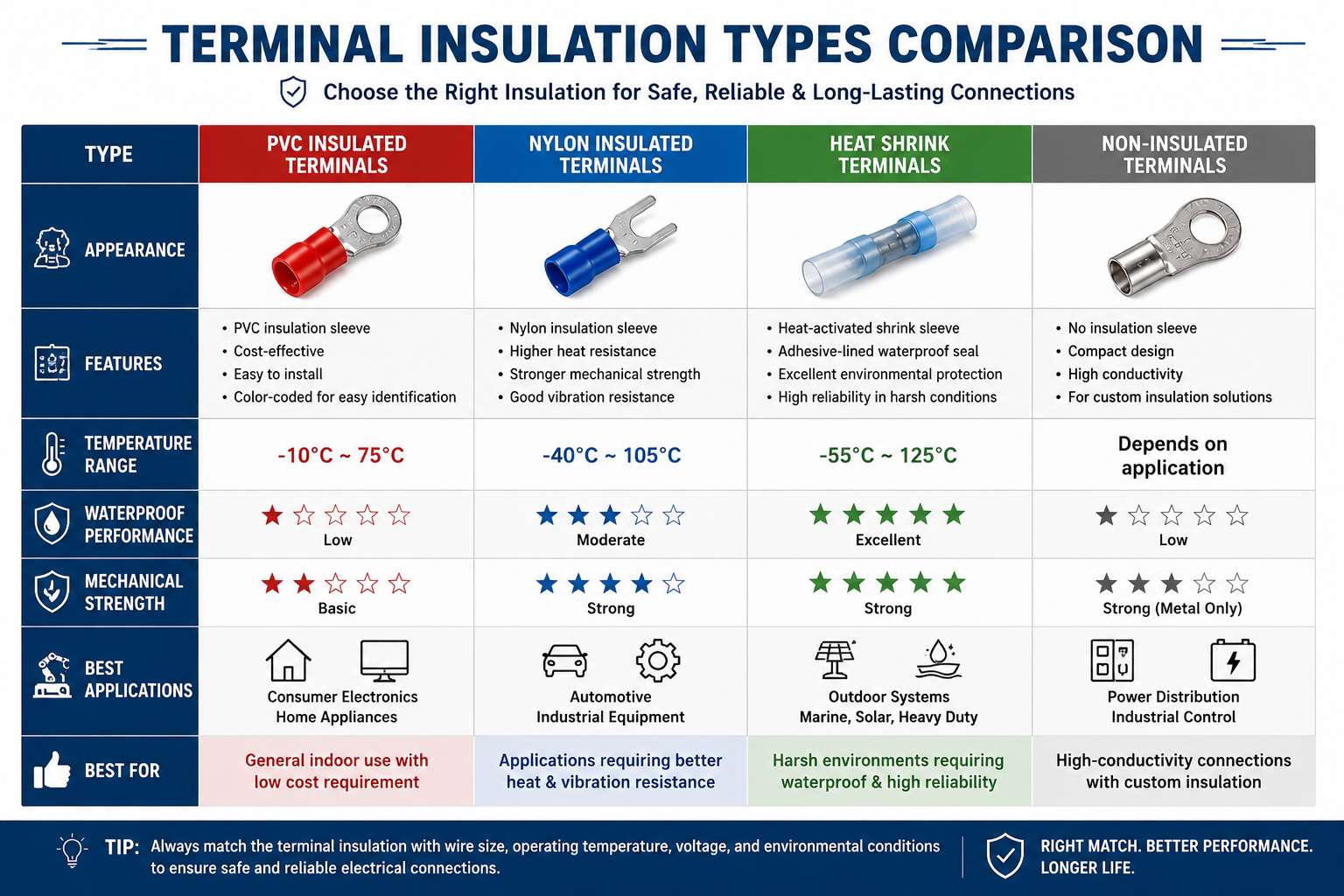
PVC vs Nylon vs Heat Shrink Terminals
| Feature | PVC | Nylon | Heat Shrink |
|---|---|---|---|
| Cost | Low | Medium | Higher |
| Temperature Resistance | Moderate | Better | Excellent |
| Waterproof Performance | Low | Moderate | Excellent |
| Mechanical Strength | Basic | Strong | Strong |
| Outdoor Use | Limited | Good | Best |
Each insulation type serves different application requirements.
Choosing the Right Insulation for Different Industries
Automotive Wiring Harnesses
Automotive systems require:
- Heat resistance
- Vibration resistance
- Long-term durability
Recommended:
- Nylon insulated terminals
- Heat shrink terminals
Renewable Energy Systems
Solar and energy storage systems operate outdoors continuously.
Recommended:
- Heat shrink terminals
- Tin-plated copper terminals
Industrial Automation
Industrial machinery often experiences:
- Oil contamination
- Vibration
- Elevated temperatures
Recommended:
- Nylon insulated terminals
Consumer Electronics
Consumer devices prioritize:
- Cost efficiency
- Compact size
- Easy assembly
Recommended:
- PVC insulated terminals
Marine Applications
Marine systems face:
- Saltwater exposure
- High humidity
- Severe corrosion risk
Recommended:
- Heat shrink terminals
- Tin-plated copper terminals
- Waterproof connectors
Heat Shrink Terminals for Outdoor Applications
Heat shrink terminals are among the most reliable solutions for harsh environments.
Waterproof Advantages
The heat shrink layer seals tightly around the wire and terminal.
This helps block:
- Water
- Moisture
- Dirt
- Salt contamination
Corrosion Resistance
By preventing moisture intrusion, heat shrink terminals greatly reduce corrosion risk.
Vibration Protection
The additional insulation layer improves mechanical stability under vibration.
Long-Term Outdoor Reliability
Heat shrink terminals are commonly used in:
- Marine equipment
- Solar installations
- Agricultural machinery
- Heavy-duty vehicles
Common Mistakes When Matching Terminals & Insulation
Choosing the Wrong Wire Size
Incorrect wire size matching weakens the crimp connection.
Ignoring Temperature Ratings
Using low-temperature insulation in high-heat environments leads to premature failure.
Using PVC in Harsh Outdoor Environments
PVC may degrade under:
- UV exposure
- Moisture
- High temperature
Poor Crimping Tool Selection
Incorrect tooling may damage insulation or create unstable crimps.
Ignoring Waterproof Requirements
Outdoor applications require proper sealing solutions.
How Crimping Quality Affects Insulated Terminals
Even high-quality insulated terminals can fail if crimping quality is poor.
Under-Crimping Problems
Insufficient compression may cause:
- Loose connections
- High resistance
- Overheating
Over-Crimping Problems
Excessive compression may:
- Damage insulation
- Break conductor strands
- Reduce terminal lifespan
Importance of Professional Crimping Tools
Professional tooling ensures:
- Correct compression force
- Stable conductivity
- Reliable pull-out strength
Best Materials for Insulated Terminals
Copper
Provides excellent conductivity and low resistance.
Tin-Plated Copper
Offers:
- Corrosion resistance
- Stable conductivity
- Better outdoor durability
Brass
Provides higher mechanical strength but slightly lower conductivity than copper.
Why Tin-Plated Terminals Work Better with Insulated Connectors
Tin plating improves:
- Corrosion protection
- Moisture resistance
- Long-term conductivity stability
This is especially important in outdoor and humid environments.
Testing Standards for Insulated Terminals
Reliable insulated terminals should undergo strict testing.
Common tests include:
- Pull-out force testing
- Insulation resistance testing
- Temperature rise testing
- Waterproof testing
- Salt spray testing
These tests help verify long-term reliability.
Why Choose Qianwei Precision
Qianwei Precision specializes in high-quality electrical terminals for industrial and automotive applications.
Our Advantages
- Precision stamping technology
- Stable tin plating processes
- Strict quality control systems
- 1800+ production molds
- OEM & customization support
Product Range
We manufacture:
- Ring terminals
- Cable lugs
- Spade terminals
- Butt connectors
- Pin terminals
Our products are widely used in:
- Automotive systems
- Renewable energy systems
- Industrial equipment
- Consumer electronics
Conclusion
Matching terminals with the correct insulation type is essential for ensuring:
- Electrical safety
- Waterproof performance
- Heat resistance
- Long-term durability
Different applications require different insulation solutions.
By selecting suitable:
- Materials
- Insulation types
- Crimping methods
- Surface plating
manufacturers can significantly improve electrical connection reliability and reduce system failure risks.
Reliable electrical systems begin with properly matched terminal solutions.
Looking for Reliable Insulated Terminal Solutions?
Qianwei Precision provides customized terminal solutions engineered for automotive, industrial, and outdoor applications.
- Request free samples
- Get engineering support
- Customize your terminal solution
Contact Qianwei Precision today for professional electrical connection solutions.
FAQs
What is the difference between PVC and nylon insulated terminals?
PVC insulated terminals are more economical and commonly used in general electrical applications, while nylon insulated terminals provide:
- Better heat resistance
- Higher mechanical strength
- Improved flexibility
- Better vibration durability
Nylon terminals are typically preferred for automotive and industrial environments.
Are heat shrink terminals waterproof?
Yes. Heat shrink terminals are designed to provide waterproof sealing after heating.
The adhesive-lined insulation helps block:
- Water
- Moisture
- Dust
- Corrosion contaminants
They are widely used in marine, automotive, and outdoor electrical systems.
Which insulated terminal is best for outdoor use?
Heat shrink insulated terminals are generally considered the best option for outdoor environments because they provide:
- Excellent waterproof protection
- Strong corrosion resistance
- Better vibration durability
- Long-term environmental protection
Tin-plated copper heat shrink terminals are especially popular for harsh environments.
How do I choose the correct insulated terminal size?
You should match the terminal according to:
- Wire gauge (AWG)
- Conductor size
- Insulation outer diameter
- Current rating
Using the wrong size may lead to poor crimping, overheating, or unstable electrical connections.
What happens if terminal insulation is mismatched?
Incorrect insulation matching may cause:
- Weak crimping
- Insulation damage
- Reduced waterproof performance
- Overheating
- Electrical failure
Proper compatibility is essential for long-term reliability.
Are nylon terminals better for automotive applications?
Yes. Nylon insulated terminals are widely used in automotive systems because they offer:
- Better heat resistance
- Stronger mechanical durability
- Improved vibration resistance
They perform better than standard PVC terminals in demanding automotive environments.
Why are heat shrink terminals used in marine systems?
Marine environments involve:
- Saltwater exposure
- High humidity
- Corrosion risk
Heat shrink terminals provide sealed waterproof protection that helps prevent moisture intrusion and corrosion buildup.
Can insulated terminals handle high temperatures?
Some insulated terminals are specifically designed for high-temperature applications.
Nylon and heat shrink insulated terminals generally provide better heat resistance than standard PVC insulated terminals.
For extreme temperatures, specialized high-temperature materials may be required.
What is the best insulation type for industrial equipment?
Nylon insulated terminals are commonly recommended for industrial equipment because they provide:
- Strong mechanical durability
- Better abrasion resistance
- Improved heat resistance
- Reliable vibration performance
For harsh outdoor industrial environments, heat shrink terminals may be even more suitable.
Why is proper crimping important for insulated terminals?
Proper crimping ensures:
- Low contact resistance
- Strong pull-out force
- Stable electrical conductivity
- Long-term reliability
Poor crimping may lead to overheating, loose connections, and premature terminal failure.
Can insulated terminals be used outdoors?
Yes, but the insulation type matters.
For outdoor use, recommended solutions include:
- Heat shrink insulated terminals
- Waterproof connectors
- Tin-plated copper terminals
Standard PVC terminals may not provide sufficient long-term outdoor durability.
Why are tin-plated terminals commonly used with insulated connectors?
Tin plating helps improve:
- Corrosion resistance
- Conductivity stability
- Moisture protection
- Long-term reliability
This makes tin-plated terminals ideal for outdoor, automotive, and industrial insulated connector applications.


One thought on “How to Match Terminals with Insulation Types”