

Why Cold Welding Matters in Crimping
Crimping is one of the most widely used methods for creating electrical connections in wire harnesses, automotive systems, industrial equipment, and consumer electronics. However, not all crimped connections are equal. Some deliver long-term reliability, while others fail due to resistance, overheating, or mechanical weakness.
The key factor that determines the quality of a crimped connection is cold welding.
In terminal crimping, cold welding is what transforms a simple mechanical compression into a high-performance, gas-tight electrical connection. Without it, even a visually acceptable crimp can fail under real-world conditions.
In this guide, you will learn:
What cold welding in crimping actually means
How it works at a material level
Why it is critical for electrical reliability
How to ensure consistent cold welding in production
What Is Cold Welding in Terminal Crimping?
Cold welding in terminal crimping refers to the process where the wire strands and terminal material are compressed under high pressure, breaking surface oxides and forming a gas-tight metal-to-metal bond without heat.
This creates a solid-state connection that behaves almost like a single continuous piece of metal, ensuring low electrical resistance and long-term stability.
How Cold Welding Works in Crimping
To understand cold welding, it’s important to look at what happens during the crimping process at a microscopic level.
1. Surface Oxide Breakdown
All metals naturally form oxide layers when exposed to air. These oxides are non-conductive and can prevent proper electrical contact.
During crimping:
High force is applied
The oxide layers on both the wire and terminal are fractured and displaced
2. Plastic Deformation
The conductor strands and terminal barrel undergo plastic deformation:
The metal flows and reshapes
Air gaps are eliminated
The contact area increases dramatically
3. Metal-to-Metal Contact
Once oxides are removed and materials deform:
Clean metal surfaces come into direct contact
Atomic bonding occurs at the interface
4. Gas-Tight Seal Formation
The compressed joint becomes:
Airtight
Moisture-resistant
This prevents:
Oxidation
Corrosion
Electrical degradation over time
Key Insight
Cold welding is not just compression—it is controlled deformation that creates a permanent metallurgical bond.
Why Cold Welding Matters for Electrical Connections
Cold welding is the difference between a temporary connection and a reliable, long-term electrical interface.
1. Low Electrical Resistance
A properly cold-welded crimp:
Minimizes contact resistance
Ensures efficient current flow
Poor crimping leads to:
Voltage drop
Energy loss
2. Prevention of Corrosion
Because the connection is gas-tight:
Oxygen and moisture cannot enter
Oxidation is prevented
3. Mechanical Strength
Cold welding creates:
High pull-out force
Strong vibration resistance
This is critical in:
Automotive systems
Industrial machinery
4. Thermal Stability
Bad connections generate heat.
Cold-welded connections:
Maintain stable conductivity
Prevent overheating
Real-World Failure Example
A crimp without proper cold welding may:
Pass initial inspection
Fail after months due to corrosion or vibration
Conditions Required for Proper Cold Welding
Achieving cold welding is not automatic. It requires precise control of several factors.
1. Correct Crimp Force
Too little force → incomplete oxide breakage
Too much force → conductor damage
Optimal force ensures:
Proper compression
Uniform deformation
2. Terminal Material Quality
Material properties directly impact cold welding:
Copper → excellent conductivity and deformation
Brass → good strength but harder to deform
Surface plating (tin, silver) also affects:
Contact quality
Oxidation resistance
3. Proper Wire Selection
Correct wire gauge must match terminal design
Strand structure influences deformation
Mismatch leads to:
Air gaps
Weak bonding
4. Tooling Precision
Crimping tools must provide:
Consistent pressure
Accurate geometry
Poor tooling results in:
Inconsistent crimps
Variable quality
5. Clean Surfaces
Contaminants such as:
Oil
Dirt
Oxidation
Can prevent proper bonding.
What Happens If Cold Welding Is Not Achieved
Failure to achieve cold welding leads to several critical issues.
1. Air Gaps in the Connection
Allow oxygen and moisture to enter
Lead to corrosion
2. Increased Electrical Resistance
Poor conductivity
Voltage instability
3. Heat Generation
Resistance causes heat buildup
Can lead to insulation damage or fire risk
4. Mechanical Weakness
Low pull-out strength
Higher failure under vibration
5. Long-Term Reliability Issues
Even if the crimp initially works, it may:
Degrade over time
Cause system failure
Cold Welding vs Soldering: Which Is Better?
| Factor | Crimping (Cold Welding) | Soldering |
| Electrical resistance | Low | Low (initially) |
| Vibration resistance | Excellent | Poor |
| Process consistency | High | Operator-dependent |
| Heat impact | None | Can damage insulation |
| Long-term reliability | High | Medium |
Conclusion
For most industrial and automotive applications, crimping with proper cold welding is superior to soldering.
How to Identify a Good vs Bad Crimp
1. Visual Inspection
A good crimp should show:
Uniform compression
No exposed strands
No cracks in terminal
2. Pull-Out Test
Measures mechanical strength:
A strong crimp resists separation
Weak crimp fails under load
3. Cross-Section Analysis
The most accurate method:
Reveals internal structure
Confirms absence of air gaps
4. Electrical Testing
Low resistance indicates good contact
High resistance signals poor crimp
Key Factors That Affect Cold Welding Quality
This is where many manufacturers fail—and where expertise matters.
1. Terminal Design
Barrel thickness
Geometry
Material hardness
These determine how well deformation occurs.
2. Material Consistency
Variations in:
Alloy composition
Plating thickness
Lead to inconsistent results.
3. Manufacturing Precision
High-quality terminals require:
Tight dimensional tolerances
Consistent stamping quality
4. Process Stability
Mass production requires:
Repeatable crimping conditions
Controlled tooling performance
Key Insight
Cold welding quality starts before crimping—it starts with terminal design and manufacturing.
How to Choose the Right Terminal for Reliable Crimping
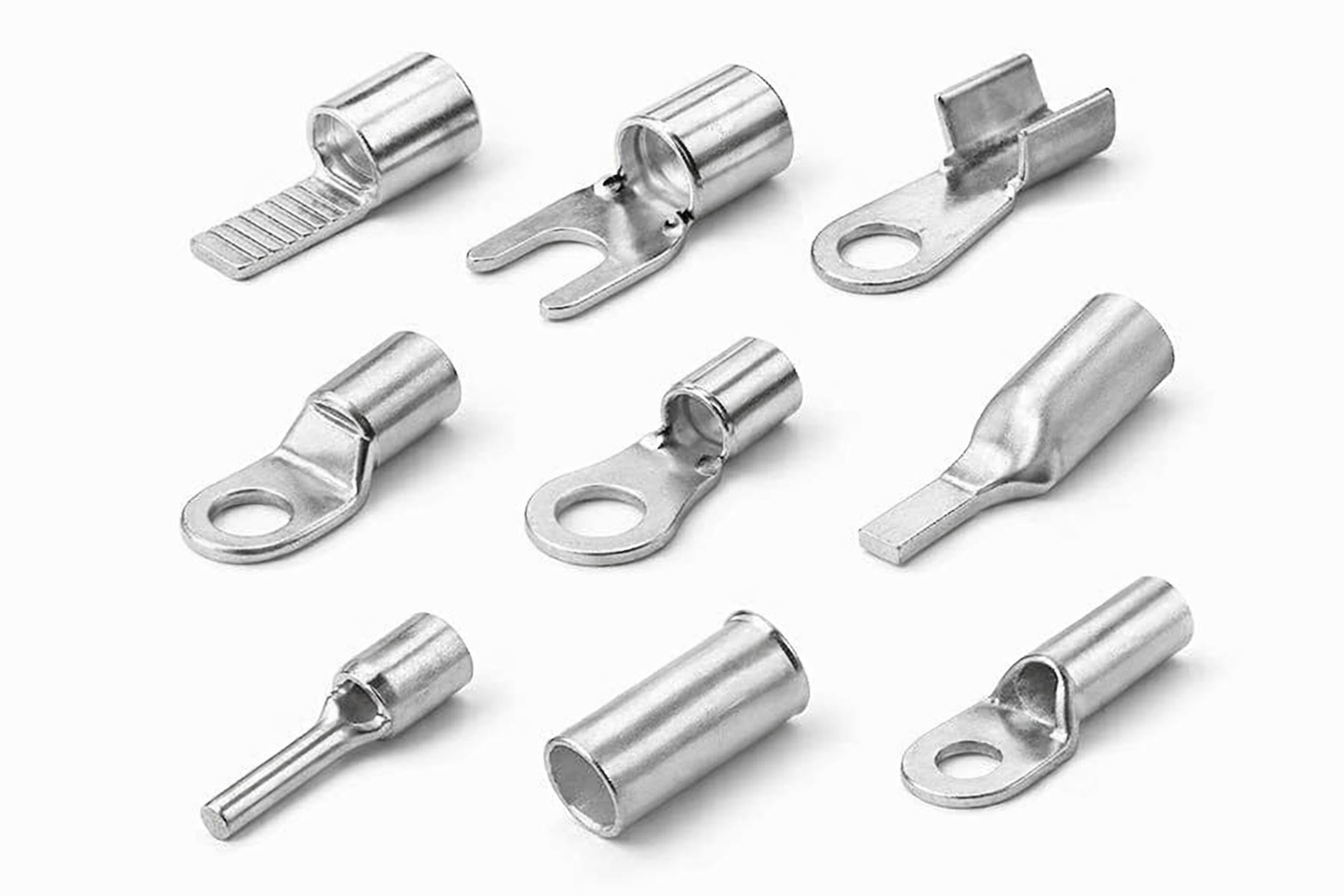
When selecting terminals, consider:
1. Material Selection
High-conductivity copper alloys preferred
2. Dimensional Accuracy
Ensures proper fit with wire
3. Compatibility
Must match wire gauge and application
4. Surface Treatment
Tin plating improves corrosion resistance
5. Production Consistency
Critical for large-scale manufacturing
Why Consistent Cold Welding Depends on Your Supplier
Not all terminal manufacturers can deliver consistent cold welding performance.
A reliable supplier should provide:
1. Engineering Support
Terminal design optimization
Application-specific recommendations
2. Material Control
Stable alloy composition
Controlled plating processes
3. Precision Manufacturing
High-accuracy stamping
Tight tolerance control
4. Quality Validation
Crimp testing
Cross-section analysis
Pull-out force verification
Positioning Insight
A good terminal supplier doesn’t just supply parts—they ensure crimping success in your production line.
Conclusion: Cold Welding Is the Foundation of Reliable Crimping
Cold welding is what transforms a crimped connection into a high-performance electrical interface.
Without it, connections are:
Unstable
Prone to failure
Unsafe in critical applications
With proper cold welding, you achieve:
Low resistance
High strength
Long-term reliability
The key takeaway:
Reliable crimping is not just about tools or force—it starts with proper terminal design and manufacturing quality.
Get Expert Support for Your Terminal Crimping Projects
At Qianwei Precision, we specialize in designing and manufacturing terminals that ensure consistent cold welding performance in real production environments.
What We Offer
Custom terminal design support
Stable material and plating control
High-precision stamping
Crimp performance validation
FAQs
1. Can cold welding be visually confirmed?
Not completely. While visual inspection helps, true cold welding is best verified through cross-section analysis and electrical testing.
2. Does wire type affect cold welding?
Yes. Strand size, material, and structure all influence how well the wire deforms and bonds during crimping.
3. Is higher crimp force always better?
No. Excessive force can damage conductors and reduce connection quality. Optimal force is required.
4. Do all terminals support cold welding equally?
No. Terminal material, design, and manufacturing quality significantly impact cold welding performance.
5. How does plating affect crimping?
Plating (such as tin) improves corrosion resistance but must be controlled to avoid interfering with metal-to-metal bonding.
6. What standards apply to crimping quality?
Common standards include IPC/WHMA-A-620 and UL requirements for electrical connections.
7. Can poor tooling prevent cold welding?
Yes. Inconsistent or worn tools can result in insufficient compression and unreliable connections.

